Understanding the difference between steel bar and steel rebar is critical for structural integrity, cost efficiency, and compliance—especially when selecting materials like steel rail, steel tube, steel roof sheet, steel conduit, steel pile, steel profile, steel sheet, or carbon steel. At Hongteng Fengda, a leading structural steel manufacturer and exporter from China, we supply both ASTM/EN/GB-compliant steel bar and steel rebar—each engineered for distinct tensile strength requirements and application scopes. Whether you're a project manager specifying reinforcement, a procurement professional sourcing bulk steel rebar, or a quality controller verifying material certifications, this comparison clarifies performance boundaries, standards alignment, and real-world suitability across construction, industrial, and infrastructure projects.
Definition & Core Functional Distinction
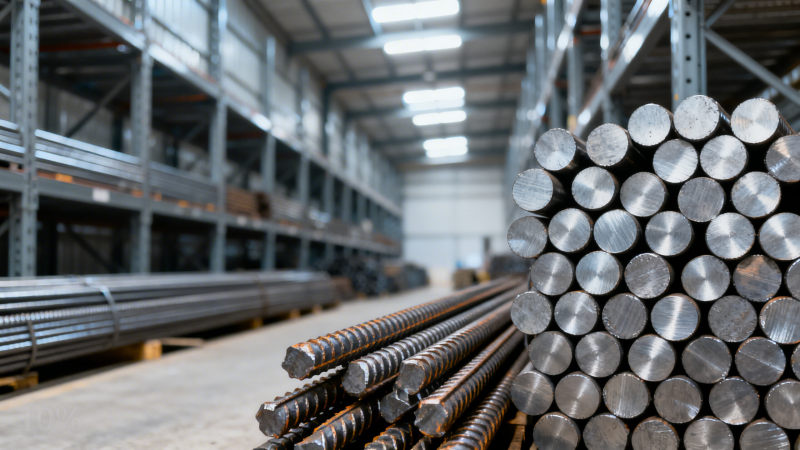
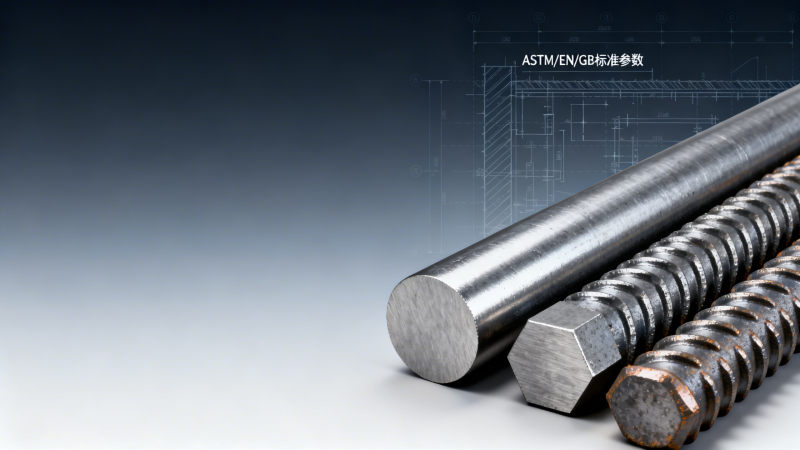
Steel bar and steel rebar are both hot-rolled carbon steel products—but their geometry, surface treatment, and mechanical behavior serve fundamentally different purposes. A steel bar refers broadly to solid, smooth-surfaced long products—round, square, or hexagonal—used primarily as raw stock for machining, fabrication, or structural framing (e.g., steel beams, steel profiles). In contrast, steel rebar (reinforcing bar) features deformed surfaces—typically ribs or lugs—to enhance bond strength with concrete. This deformation is not cosmetic; it directly governs load transfer in reinforced concrete systems.
While both fall under the broader category of carbon steel, their chemical composition, heat treatment, and dimensional tolerances follow divergent international specifications. Steel bars adhere to ASTM A276 or GB/T 699 for general-purpose applications, whereas steel rebar must comply with stricter standards like ASTM A615 (North America), EN 10080 (Europe), or GB/T 1499.2 (China)—all mandating precise yield strength, elongation, and bend test performance. Confusing these categories during procurement can trigger rejection at site inspection—or worse, compromise structural safety.
Tensile Strength: Measured Performance, Not Just Spec Sheets
Tensile strength is where functional divergence becomes quantifiable. Steel bars—especially those used in mechanical components or cold-formed steel profiles—prioritize uniform ductility and machinability over ultra-high yield points. Typical tensile strength ranges from 400 MPa (Q235-grade) to 600 MPa (S460ML), depending on grade and heat treatment. Steel rebar, however, is engineered for predictable, high-yield performance under cyclic loading. Grade 40 rebar (ASTM A615) delivers ≥400 MPa yield strength, while Grade 60 achieves ≥415 MPa—with strict minimum elongation (≥14%) to prevent brittle failure.
Crucially, rebar’s tensile capacity isn’t just about ultimate strength—it’s about consistency across batches and resistance to stress corrosion cracking in alkaline concrete environments. That’s why Hongteng Fengda subjects every coil and bundle to third-party tensile testing per ISO 6892-1, with full traceability down to heat number and rolling shift. For users and quality controllers, this means fewer field rejections and faster sign-off cycles.
Application Scenarios: Where Each Material Excels
Steel bars anchor non-concrete applications: they form the backbone of steel roof sheet support frames, serve as core shafts in steel conduit systems, and act as tension members in steel rail fastening assemblies. Their smooth finish enables precision threading, welding, and bending—ideal for OEM components requiring tight geometric tolerances. Meanwhile, steel rebar exclusively reinforces concrete: from high-rise foundations and bridge piers to precast wall panels and seismic retrofitting. Its ribbed surface ensures mechanical interlock, preventing slippage even under dynamic loads.
Notably, hybrid use cases exist—like steel pile jackets or composite steel-concrete columns—where both materials coexist. Here, compatibility matters: mismatched thermal expansion coefficients or galvanic corrosion risks (e.g., uncoated rebar near stainless steel tubes) demand expert coordination. Hongteng Fengda supports such integrated projects with cross-material engineering reviews and joint certification packages—ensuring seamless interoperability across steel rail, steel tube, and steel rebar subsystems.
Standards Compliance & Procurement Confidence
Global buyers face fragmented regulatory landscapes. A steel bar certified to EN 10025 may lack ASTM A615 rebar equivalency—even if chemically identical. Hongteng Fengda bridges this gap by maintaining dual-certified production lines: every batch carries mill test reports (MTRs) compliant with ASTM, EN, JIS, *and* GB standards simultaneously. For procurement professionals managing multi-region tenders, this eliminates retesting delays and customs clearance bottlenecks.
We also offer optional zinc-coated variants—including Galvanized Stainless Steel Wire—for auxiliary applications like mesh reinforcement, temporary fencing, or corrosion-prone formwork ties. With tensile strength spanning 350–550 MPa and zinc coating up to 25 g/m², it extends service life without sacrificing ductility or cold-forming capability.
Why Choose Hongteng Fengda?
As a structural steel manufacturer and exporter from China, Hongteng Fengda merges deep metallurgical expertise with agile global logistics. Our ISO 9001-certified facilities produce angle steel, channel steel, steel beams, cold-formed steel profiles, and customized components—all traceable to raw material heats and process parameters. We don’t just ship steel; we deliver risk-mitigated solutions: fixed lead times, consistent quality batches, and responsive technical support—from initial specification review to post-delivery weldability validation.
Whether you’re specifying steel rebar for a Dubai metro extension or sourcing steel bar for North American prefab housing, our team speaks your language—literally and technically. Contact us today for material submittals, sample shipments, or OEM design collaboration. Let’s build certainty, together.
- channel steel
- angle steel
- ss steel wire
- stainless steel wire
- galvanized stainless steel wire
- structural steel
- steel beams
- steel profiles
- Structural Steel
- Steel Beams
- stainless steel tube
- Profile
- Rebar
- Galvanized
- Steel Beam
- Steel Wire
- carbon steel
- steel sheet
- steel rebar
- steel profile
- steel pile
- steel bar
- steel conduit
- steel roof sheet
- steel tube
- steel rail
Related recommendations
 How long does acero prepintado retain gloss and color stability in direct desert sunlight?Acero prepintado gloss & color stability in desert sun? Discover real-world performance data, PVDF vs. polyester longevity, and spec-critical insights for GCC projects.
 Does acero pregalvanizado maintain coating integrity after cold bending to 90 degrees?Acero pregalvanizado maintains coating integrity after 90° cold bending — when engineered right. Discover how Hongteng Fengda guarantees real-world performance, adhesion & corrosion resistance.
 Do the advantages of galvanized steel include reduced fire risk compared to untreated carbon steel?Advantages of galvanized steel include measurable fire-risk reduction vs. untreated carbon steel—learn how zinc delays ignition, buys critical escape time, and enhances safety without false 'fireproof' claims.
 What is the minimum bend radius for 12mm steel wire rope without permanent deformation?12mm steel wire rope capacity depends on bend radius — discover the safe 72–96mm minimum to prevent permanent deformation, fatigue & failure. Expert rigging insights inside.

Please give us a message


Please enter what you want to find