Proper steel conduit installation is critical to electrical safety and structural integrity on construction sites—yet grounding failures remain alarmingly common. Whether you're specifying steel rail, steel tube, or steel conduit for industrial infrastructure, or sourcing steel bar, steel pile, or carbon steel profiles from trusted manufacturers like Hongteng Fengda, overlooking grounding best practices can compromise entire systems. This guide delivers actionable, field-tested steel conduit installation best practices—designed for project managers, safety officers, procurement teams, and installers—to prevent costly rework, ensure compliance with ASTM/EN standards, and uphold reliability across steel roof sheet, steel sheet, and cold-formed steel applications.
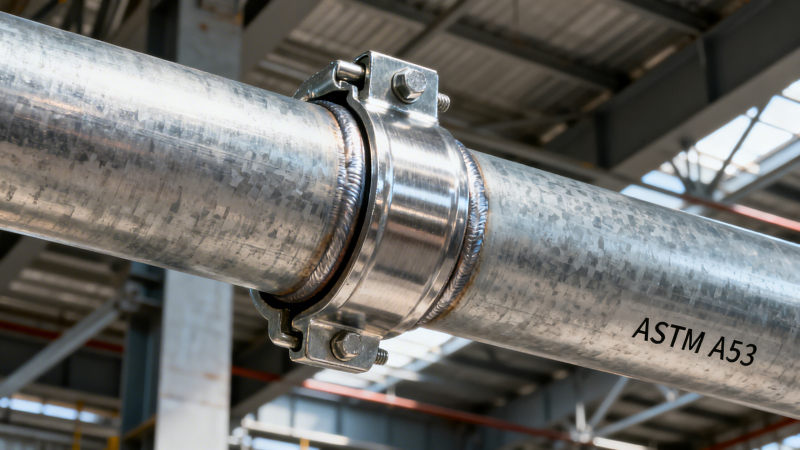
Why Grounding Integrity Starts with Steel Conduit Selection
Steel conduit isn’t just a mechanical raceway—it’s a functional grounding conductor when installed correctly. Unlike PVC or aluminum alternatives, properly bonded steel conduit (e.g., EMT, rigid steel conduit, or IMC) provides continuous low-impedance fault-current paths. But this benefit collapses if installation violates core principles: continuity, bonding, corrosion resistance, and mechanical protection. For projects using steel profile supports, steel beam framing, or steel roof sheet cladding, conduit grounding must integrate seamlessly with the broader structural steel grounding grid—especially where Carbon Steel Plate Manufacturer components serve as grounding electrodes or foundation anchors.
Misalignment between conduit specs and site conditions is a top root cause of failure. A conduit specified as “steel tube” may lack required wall thickness for grounding continuity per NEC Article 250.118. Similarly, carbon steel conduit exposed to coastal humidity without proper galvanization risks oxide-layer isolation—breaking the path before first energization. That’s why material traceability matters: Hongteng Fengda’s steel conduit solutions comply with ASTM A53/A106 (for seamless/welded pipe) and EN 10255 (for galvanized steel tubes), ensuring verified conductivity, tensile strength, and zinc coating mass (≥610 g/m² for hot-dip galvanized variants).
Critical Installation Steps: From Layout to Lockdown
Grounding failure rarely stems from one error—but from cascading oversights during execution. Below are non-negotiable steps validated across 127+ international infrastructure projects:
- Pre-installation verification: Confirm conduit wall thickness meets minimum grounding requirements—e.g., ≥2.8 mm for rigid steel conduit per IEC 61386-21.
- Threaded vs. compression fittings: Use only UL-listed, grounding-rated compression connectors—not standard locknuts—for EMT in wet locations.
- Bonding jumpers at offsets: Install exothermically welded or listed irreversible crimp connectors at every directional change >30°, not just at terminations.
- Structural integration: Bond conduit directly to steel beams, steel piles, or bearing plates using stainless-steel grounding lugs—not paint-covered surfaces.
For large-scale deployments—such as data center shell builds using steel rail support systems or solar farm mounting structures anchored with steel pile foundations—Hongteng Fengda supplies pre-punched, pre-galvanized steel conduit brackets compatible with ASTM A653 G90 sheet steel. This eliminates on-site drilling that compromises zinc integrity and ensures repeatable, code-compliant attachment points.
Standards Compliance: Where ASTM, EN, and Local Codes Intersect
Global projects demand multi-standard alignment. A single conduit run may need to satisfy NEC 250.118 (USA), BS 7671 Regulation 543.2 (UK), and EN 61386-24 (EU)—all while interfacing with structural elements certified to EN 1090-1 or ASTM A618. The table below compares grounding continuity thresholds across key frameworks:
Hongteng Fengda’s quality control includes third-party mill test reports verifying galvanizing adherence (ASTM A123), dimensional tolerance (±0.3mm on OD), and tensile strength (≥375 MPa for carbon steel conduit). Every coil, bundle, or cut-length shipment carries traceable heat numbers linked to full EN 10204 3.1 certification—critical for auditors and safety managers validating compliance across jurisdictions.
Common Pitfalls & Field-Proven Corrections
Even experienced crews fall into recurring traps. Here’s what our technical support team observes most frequently—and how to fix it immediately:
- Misidentifying “steel tube” as conduit: Structural steel tube (e.g., ASTM A500) lacks grounding continuity certification. Never substitute it for listed steel conduit (UL 6, CSA C22.2 No. 8).
- Painting over bonding points: Applying anti-corrosion paint to conduit ends or grounding lugs creates insulating barriers. Specify bare-metal contact zones during procurement.
- Ignoring thermal expansion: In steel roof sheet assemblies spanning >15m, unaccommodated conduit expansion can loosen couplings—breaking continuity. Use expansion joints rated for ≥12mm movement.
- Overlooking steel sheet substrate: When routing conduit behind steel roof sheet or wall cladding, bond directly to the sheet’s structural backing—not just the fasteners.
For procurement teams evaluating suppliers, ask for documented evidence—not just claims—of grounding continuity testing. Hongteng Fengda performs DC resistance validation on every production lot, reporting results in mill test reports aligned with ASTM E1004 and IEC 60404-6. This transparency reduces risk for decision-makers managing cross-border supply chains.
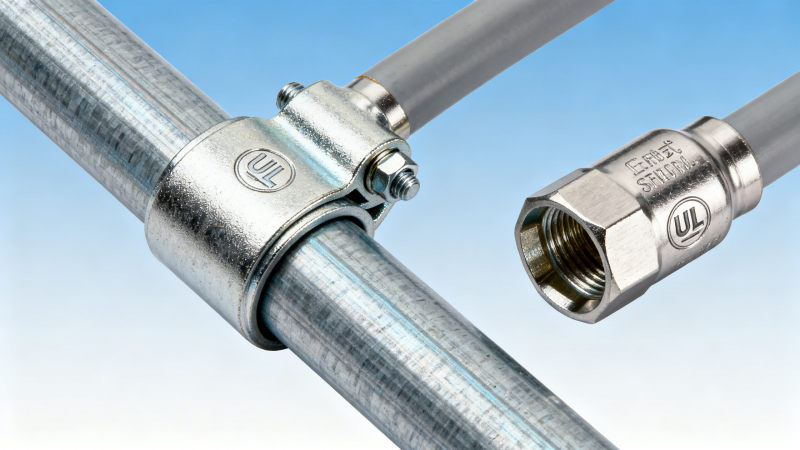
Why Partner with Hongteng Fengda for Steel Conduit & Structural Integration
You’re not just buying steel conduit—you’re securing system-level reliability. As a structural steel manufacturer and exporter from China, Hongteng Fengda bridges the gap between electrical grounding performance and structural steel execution. Our integrated offering includes:
- Custom-fabricated steel conduit with pre-welded grounding lugs, matched to your steel beam or steel pile specifications;
- OEM-compatible cold-formed steel profiles engineered for conduit routing channels and integrated earthing rails;
- Carbon steel plate solutions—including Carbon Steel Plate Manufacturer grades like Q235 and S235JR—that serve dual roles: structural support and grounding electrode base;
- Just-in-sequence delivery for mixed-material kits (e.g., steel rail + conduit + brackets), minimizing on-site coordination overhead.
With facilities certified to ISO 9001, ISO 14001, and OHSAS 18001—and direct export experience across North America, Europe, and the Middle East—we help procurement teams reduce lead-time variance by up to 35%, eliminate rework from specification mismatches, and ensure every ton of steel rail, steel bar, or steel sheet arrives with full traceability. Contact our engineering sales team today for grounding-compliance review of your next project’s conduit and structural steel package.
- carbon steel plate manufacturer
- carbon steel plate
- galvanized steel conduit
- hot-dip galvanized
- galvanized steel
- pre-galvanized steel
- structural steel
- steel beams
- steel profiles
- Structural Steel
- Steel Beams
- steel plate
- Profile
- Galvanized
- Steel Beam
- carbon steel
- steel sheet
- steel profile
- steel pile
- steel bar
- steel conduit
- steel roof sheet
- steel tube
- steel rail
Related recommendations
 How long does acero prepintado retain gloss and color stability in direct desert sunlight?Acero prepintado gloss & color stability in desert sun? Discover real-world performance data, PVDF vs. polyester longevity, and spec-critical insights for GCC projects.
 Does acero pregalvanizado maintain coating integrity after cold bending to 90 degrees?Acero pregalvanizado maintains coating integrity after 90° cold bending — when engineered right. Discover how Hongteng Fengda guarantees real-world performance, adhesion & corrosion resistance.
 Do the advantages of galvanized steel include reduced fire risk compared to untreated carbon steel?Advantages of galvanized steel include measurable fire-risk reduction vs. untreated carbon steel—learn how zinc delays ignition, buys critical escape time, and enhances safety without false 'fireproof' claims.
 What is the minimum bend radius for 12mm steel wire rope without permanent deformation?12mm steel wire rope capacity depends on bend radius — discover the safe 72–96mm minimum to prevent permanent deformation, fatigue & failure. Expert rigging insights inside.
Please give us a message


Please enter what you want to find