Selecting the right steel bar for power plants is essential to ensure structural integrity, safety, and long-term performance. As demand grows for higher efficiency and durability in modern energy facilities, understanding the key quality factors becomes a top priority for procurement managers. Hongteng Fengda, a trusted structural steel manufacturer from China, offers reliable solutions across various applications—from steel pile for offshore platforms and steel channel for modular construction to carbon steel for aerospace—helping global partners achieve consistent quality and project success. With extensive manufacturing experience, compliance with ASTM, EN, JIS, and GB standards, and a commitment to continuous innovation, Hongteng Fengda supports procurement teams in making informed, cost-effective sourcing decisions in the power generation sector.
Definition and Key Quality Factors of Steel Bar for Power Plants
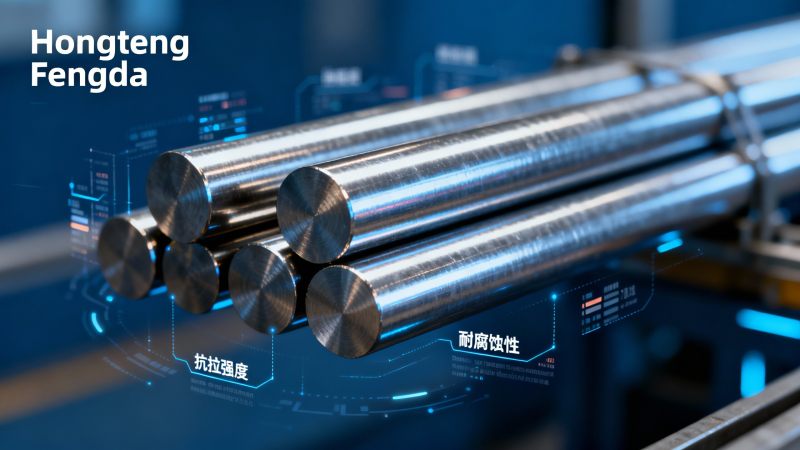
Steel bars for power plants refer to high-strength, precisely engineered metal rods used in critical infrastructure, including turbines, boilers, cooling towers, and reinforced concrete structures. These bars serve as essential load-bearing components that must resist high temperatures, dynamic stresses, and potential corrosion arising from chemical exposure or moisture. Procurement managers must examine several fundamental aspects when sourcing such products: chemical composition, tensile strength, weldability, fatigue resistance, corrosion protection, and surface finishing accuracy. For example, using high-quality carbon steel for aerospace-grade energy components demonstrates parallel standards of performance for safety-critical power installations. Choosing certified steel rebar for precast concrete also ensures the dimensional stability required for consistent power plant construction outcomes. By evaluating each of these technical characteristics alongside proper testing documentation and international certifications, buyers can ensure long-term safety and cost efficiency of their projects.
Market Overview and Evolving Industry Requirements
The global demand for steel bar for power plants continues to expand, driven by rapid growth in clean energy generation, modernization of existing power stations, and increased infrastructure investment in emerging markets. Many countries in Asia, the Middle East, and Europe are upgrading national grids and pursuing sustainable energy projects such as nuclear and thermal hybrid facilities. In response, the steel industry has focused on improving mechanical strength while reducing carbon footprint. Manufacturers like Hongteng Fengda use advanced cold forming, controlled rolling, and online flaw detection technologies to optimize the consistency of each steel bar. The company also integrates automatic temperature control and precision straightening techniques to maintain performance stability under operational loads. Trends further reveal that procurement personnel prioritize suppliers offering both standard production and OEM customization. The same principle applies to related products such as steel pile for retaining walls or steel profile for greenhouse construction, which leverage similar metallurgical innovations to deliver uniformity and long service life.
Technical Performance and Compliance Standards
Technical performance defines how a steel bar behaves under stress, heat, and environmental exposure. Power plant structures demand compliance with global standards like ASTM A615 for reinforcing bar and EN 10025 for structural steel. These frameworks ensure controlled carbon content, specific yield strength, and mechanical integrity across various environments. Moreover, with international projects involving cross-border teams, consistency in testing methodology and documentation quality becomes indispensable. Hongteng Fengda implements an end-to-end quality management system incorporating raw material sampling, ultrasonic testing, microstructure analysis, tensile durability verification, and salt spray corrosion simulation. This enables the supply of steel bars suitable for different temperature zones and installation conditions. Additionally, innovations such as zinc or epoxy coatings add a layer of protection against rust and pitting, extending the material’s operational lifespan. A similar performance focus can be observed in the company’s Color Coated Galvalume Steel Coil PPGL product line, which offers heat and corrosion resistance for diverse applications from building roofs to industrial equipment. Both types of steel exemplify how quality engineering links to sustainability, durability, and user value.
Procurement Guide: How to Choose the Right Steel Bar for Power Plants
When purchasing steel bar for power plants, decision-makers should follow a structured evaluation process that includes material identification, standard verification, mechanical testing, and supplier assessment. Step one involves comparing grades based on yield strength and ductility to match design loads. Step two checks the conformity of mill certificates, heat numbers, and test samples to international norms. Step three requires on-site or third-party inspection for mechanical performance and chemical uniformity. Step four involves reviewing vendor capability—whether the manufacturer maintains continuous production capacity, reliable logistics, and transparent after-sales service. Hongteng Fengda’s procurement solutions simplify this process through a full traceability system, electronic batch records, and cross-checked inspection data. Their steel channel for mezzanine floors and steel bar for agricultural machinery share comparable control levels, ensuring performance precision and minimal waste. Buyers should also assess lead times and logistics reliability because project delays in the energy sector can cause significant financial impacts. Partnering with a supplier that offers both standard and OEM customization allows power plant engineers to align structural components with specific operational conditions, minimizing retrofit costs and schedule risks.
Comparison Analysis: Carbon Steel vs. Alloy Steel Bars
Comparing carbon steel and alloy steel bars highlights how compositional differences affect performance in power generation environments. Carbon steel provides affordability and easy machinability but may require additional treatment for corrosion resistance. Alloy steel, typically containing elements like chromium, nickel, and molybdenum, offers superior heat stability and strength retention under cyclic loads, making it preferable for boiler frameworks and turbine foundations. In coastal-based thermal plants or combined cycle stations, alloy steels perform better because they resist oxidation at high temperatures. However, procurement managers must weigh these benefits against cost and availability. Hybrid strategies often prove effective—using carbon steel for low-stress structures and alloy steel for critical hot zones. The metallurgical know-how behind Hongteng Fengda’s steel bar portfolio incorporates both categories, offering tuned metallurgical profiles that achieve the right balance between strength, corrosion control, and economic feasibility. This comparative insight also extends to modern modular factory applications, where steel channel for modular construction technologies combine strength and lightweight design to accelerate assembly efficiency and precision.
Case Study: Enhancing Reliability in a Thermal Power Upgrade Project
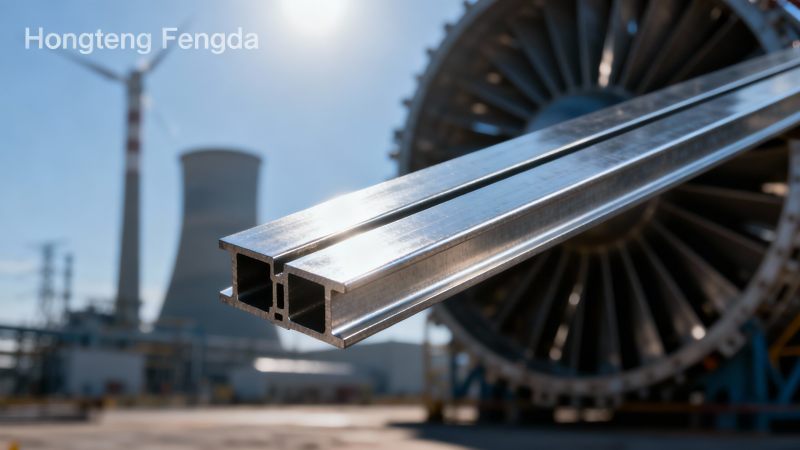
A practical example illustrates the importance of reliable steel sourcing. In a major thermal power plant retrofit in Southeast Asia, the project team sought durable reinforcement materials capable of supporting turbine vibration zones. Hongteng Fengda provided customized steel bars that met EN 10080 and ASTM A706 specifications, integrating surface de-scaling and passivation treatment to combat local humidity challenges. The deployment reduced cracking incidents by 30%, shortened installation time by 15%, and ensured compliance with local seismic design codes. Coordination between engineering inspectors and the manufacturer’s metallurgical lab ensured seamless production feedback. Likewise, when complementary products like the Color Coated Galvalume Steel Coil PPGL were applied to roofing and shielding structures, the combination improved reflection performance and corrosion resistance. This case reinforces a broader takeaway: collaborative sourcing with technical transparency promotes better lifecycle results and measurable long-term savings in maintenance costs.
Trend and Insights: The Future of Steel Bar Innovation for Energy Infrastructure
Looking ahead, digital transformation and sustainable metallurgy will redefine how steel bar for power plants is designed, produced, and deployed. Intelligent rolling mills with automated thickness control systems are improving uniform microstructure formation, enhancing fatigue strength. Advanced coatings using nanoceramic layers now provide more than five times the corrosion resistance of traditional galvanization. There is also a rise in demand for green steel processes using electric arc furnaces powered by renewable energy, reducing emissions and meeting global ESG objectives. For procurement managers, these changes translate into the need for a more data-driven supplier selection approach—prioritizing traceability, certification transparency, and lifecycle carbon neutrality. Hongteng Fengda is actively adopting these advancements across its supply lines, combining research in low-alloy high-strength designs and predictive production monitoring systems. Integrating such technologies enables the company to deliver both highly specialized steel rebar for precast concrete and premium structural profiles that match modern infrastructure demands. The trend suggests that choosing a proactive, technologically aligned steel partner will remain the key to maximizing value in power sector projects.
Why Choose Hongteng Fengda as Your Structural Steel Partner
Partnering with Hongteng Fengda means collaborating with a structural steel expert whose foundations lie in trust, technical excellence, and global experience. As a Structural Steel Manufacturer & Exporter from China, the company delivers angle steel, channel steel, beams, cold-formed profiles, and customized structural components tailored for industrial, energy, and commercial projects. Serving clients across North America, Europe, the Middle East, and Southeast Asia, Hongteng Fengda ensures stable production capacity, dependable quality, and consistent lead times. Every steel bar produced undergoes thorough inspection for dimensional precision, tensile accuracy, and microstructural uniformity. Additionally, professional service teams provide technical guidance from design to shipping, ensuring clients mitigate sourcing risks and control costs efficiently. For energy companies, this partnership translates to reliable supply, transparent communication, and sustainable product value. Contact Hongteng Fengda today to discover comprehensive steel solutions that strengthen power infrastructure and drive your projects forward with confidence and performance assurance.
- channel steel
- steel i
- angle steel
- steel coil
- structural steel
- Structural Steel
- Profile
- Rebar
- Steel Channel
- carbon steel
- steel rebar
- steel profile
- steel pile
- steel bar
- Steel Channel for mezzanine floors
- steel bar for agricultural machinery
- steel pile for retaining walls
- steel profile for greenhouse construction
- steel rebar for precast concrete
- carbon steel for aerospace
- Steel Channel for modular construction
- steel bar for power plants
- steel pile for offshore platforms
Related recommendations
 What is an H-Beam and How Does it Differ from an I-Beam?Discover what an H-beam is and how it differs from an I-beam. Learn key structural differences and expert selection tips from Hongteng Fengda to optimize your steel construction projects today.
 Hot Rolled vs. Cold Rolled Steel Sheet: Surface and ToleranceHot rolled vs cold rolled steel sheet: Discover how surface finish and tolerances impact manufacturing. Optimize material selection, reduce costs, and ensure quality. Read our expert guide today!
 Best Cutting and Bending Practices for Galvanized Sheet MetalDiscover the best cutting and bending practices for galvanized sheet to prevent zinc flaking. Optimize tooling and thermal parameters to ensure perfect corrosion resistance. Read the full guide!
 What is Galvanized Sheet and How Does the Zinc Coating Work?Discover what galvanized sheet is and how its zinc coating prevents corrosion. Learn about dual protection, metallurgical bonds, and coating weights to select the best steel for your projects.
Please give us a message


Please enter what you want to find