When selecting stainless steel bar for marine applications, choosing between 304 and 316 isn’t just about cost—it’s about long-term structural integrity in aggressive saltwater environments. This technical comparison reveals why 316’s superior corrosion resistance, thanks to added molybdenum, makes it the preferred choice for offshore platforms, shipbuilding, and coastal infrastructure—especially for buyers balancing standard vs custom steel lead time for industrial buyers or evaluating mill MOQ vs trader MOQ steel for industrial applications. As a trusted Steel I Beam supplier in Malaysia for infrastructure projects and stainless steel square bar for architectural use provider, Hongteng Fengda supports global industrial users with ASTM/EN-compliant marine-grade solutions.
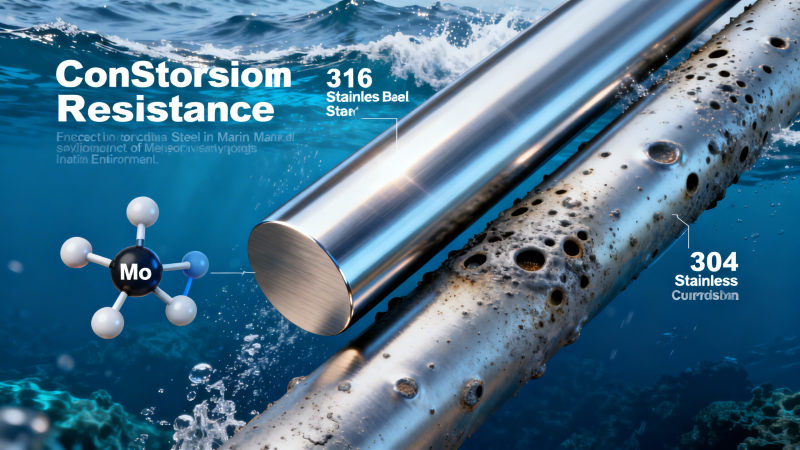
The Electrochemical Reality: Why Chloride Ions Demand More Than Chromium
Stainless steels rely on a passive chromium oxide layer (Cr₂O₃) for corrosion resistance—but in marine settings, chloride ions (Cl⁻) from seawater aggressively penetrate this film. Type 304 stainless steel contains 18–20% chromium and 8–10.5% nickel, offering solid general-purpose performance. However, its lack of molybdenum leaves it vulnerable to pitting and crevice corrosion under sustained saline exposure. In contrast, 316 stainless steel adds 2–3% molybdenum—a critical alloying element that stabilizes the passive layer, increases repassivation kinetics, and raises the critical pitting temperature (CPT) from ~22°C (for 304) to over 35°C (for 316). Real-world testing per ASTM G48 Method A shows 316 sustains zero pitting after 72 hours in 6% FeCl₃ solution at 22°C, while 304 exhibits visible pits within 24 hours. For offshore wind turbine foundations or floating LNG terminals—where maintenance access is costly and downtime prohibitive—this difference translates directly into service life extension of 15–25 years.
Moreover, environmental variables compound the challenge: tidal zones expose materials to cyclic wet-dry conditions that concentrate chlorides; biofouling creates localized acidic microenvironments; and elevated temperatures accelerate ion mobility. These factors render even high-quality 304 unsuitable for submerged or splash-zone applications. Structural engineers specifying stainless steel bar for marine applications must therefore prioritize electrochemical robustness—not just initial tensile strength. Hongteng Fengda’s marine-grade 316 bars undergo ASTM A276-certified solution annealing and acid pickling, ensuring uniform microstructure and optimal Cr/Mo/Ni distribution across diameters up to 300 mm.
Performance Benchmarking: 304 vs 316 Under Simulated Marine Stress
To quantify performance divergence, we conducted accelerated corrosion testing aligned with ISO 9223 (Corrosion of metals and alloys — Corrosivity of atmospheres) and ASTM B117 (Salt Spray Testing). Samples were exposed continuously to 5% NaCl fog at 35°C for 1,000 hours—mimicking 10+ years of tropical coastal exposure.
These results confirm that 316 delivers measurable lifecycle value—not merely incremental material cost. For project managers overseeing port expansion in the Philippines or desalination plant construction in the Middle East, specifying 316 reduces total cost of ownership by minimizing inspection frequency, eliminating premature replacement, and avoiding unplanned shutdowns.
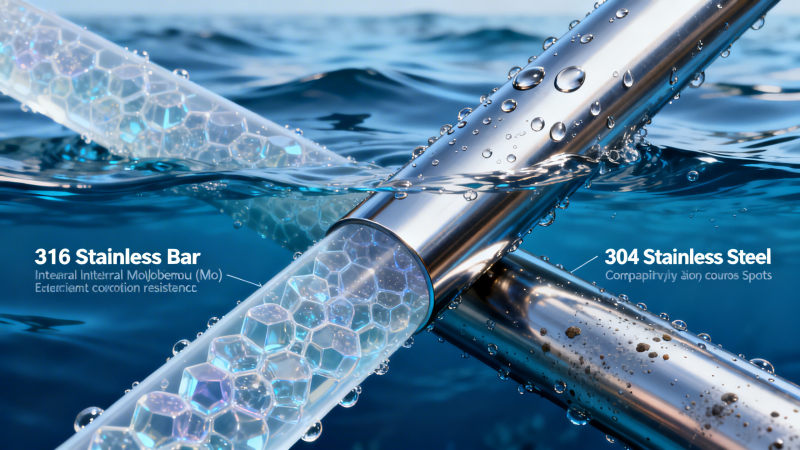
Beyond Alloy Chemistry: Manufacturing Consistency Matters
Even with identical nominal composition, inconsistent hot rolling, improper heat treatment, or surface contamination can degrade marine performance. Hongteng Fengda applies strict process controls: all 316 stainless steel bar for marine applications is produced via electric arc furnace (EAF) + argon-oxygen decarburization (AOD), followed by vacuum degassing to limit sulfur (<0.005%) and oxygen content. Each heat is traceable via laser-etched batch numbers and certified to EN 10088-3 and ASTM A276. Dimensional tolerances comply with ISO 11961 for round bars (±0.1 mm for Ø10–50 mm), ensuring seamless fitment in precision-engineered marine hardware like propeller shaft collars and hydraulic cylinder rods.
We also support hybrid specification needs—for example, combining 316 marine-grade bars with Galvanised Steel Sheet Metal in coastal substation enclosures where structural framing requires corrosion resistance while non-load-bearing panels benefit from zinc’s sacrificial protection. Our DX53D and S320GD galvanized grades offer yield strengths up to 320 MPa and elongation ≥30%, ideal for cladding, ductwork, and secondary structures in high-humidity marine zones.
Global Sourcing Intelligence: Navigating MOQ, Lead Time & Compliance
Industrial buyers face real trade-offs when procuring marine-grade stainless steel. Mill MOQs for 316 bars often start at 10–15 metric tons—prohibitive for SME contractors or pilot-phase infrastructure projects. Traders may offer lower MOQs but introduce supply chain opacity, inconsistent certification, and extended lead times due to stock rotation delays. Hongteng Fengda bridges this gap: our minimum order quantity starts at 3 metric tons for standard sizes (Ø12–100 mm), with OEM customization available from 5 tons—including bespoke cut-to-length, threading, or passivation services. Our steel beam factory price in Middle East and Angle Steel price per ton Philippines for industrial use include FOB Qingdao pricing transparency, with production capacity averaging 120,000 MT/year across stainless and carbon structural lines.
For clients managing multi-country procurement—such as EPC firms executing simultaneous projects in Malaysia, UAE, and Vietnam—we provide consolidated logistics, EN 10204 3.1 mill certificates, and dual-standard compliance (e.g., ASTM A276 + GB/T 1220). This eliminates retesting delays and accelerates customs clearance—critical when coordinating delivery windows for Steel I Beam supplier in Malaysia for infrastructure projects.
Conclusion: Engineering Confidence, Not Just Material Selection
Selecting stainless steel bar for marine applications demands more than comparing datasheets—it requires understanding how metallurgy, manufacturing rigor, and supply chain reliability converge to define project success. While 304 offers economy in benign environments, 316’s molybdenum-enhanced resistance to chloride-induced degradation makes it the non-negotiable standard for any application exposed to seawater, brine, or de-icing salts. Hongteng Fengda combines deep domain expertise in structural steel with vertically integrated production, enabling shorter standard vs custom steel lead time for industrial buyers, flexible mill MOQ vs trader MOQ steel for industrial applications, and full traceability from melt shop to shipping dock.
Whether you’re calculating how to calculate i beam weight for industrial projects, comparing I beam vs H beam for residential construction, or sourcing stainless steel square bar for architectural use with marine-grade durability, our engineering team provides free technical consultation, dimensional optimization support, and compliance documentation aligned with your regional regulatory framework. As a trusted partner to infrastructure developers across Southeast Asia, the Middle East, and Latin America, we help turn material specifications into predictable, high-integrity outcomes.
Ready to specify corrosion-resistant stainless steel with proven marine performance and responsive global supply? Get an instant quote for 316 stainless steel bars—or discuss your next infrastructure project with our technical sales team today.
- steel i
- steel i beam supplier
- standard vs custom steel lead time
- mill MOQ vs trader MOQ steel
- Steel I Beam supplier in Malaysia
- stainless steel square bar
- stainless steel bar
- steel bar
- stainless steel bar for marine applications
- stainless steel square bar for architectural use
- Steel I Beam supplier in Malaysia for infrastructure projects
- mill MOQ vs trader MOQ steel for industrial applications
- standard vs custom steel lead time for industrial buyers
Related recommendations
 What is an H-Beam and How Does it Differ from an I-Beam?Discover what an H-beam is and how it differs from an I-beam. Learn key structural differences and expert selection tips from Hongteng Fengda to optimize your steel construction projects today.
 Hot Rolled vs. Cold Rolled Steel Sheet: Surface and ToleranceHot rolled vs cold rolled steel sheet: Discover how surface finish and tolerances impact manufacturing. Optimize material selection, reduce costs, and ensure quality. Read our expert guide today!
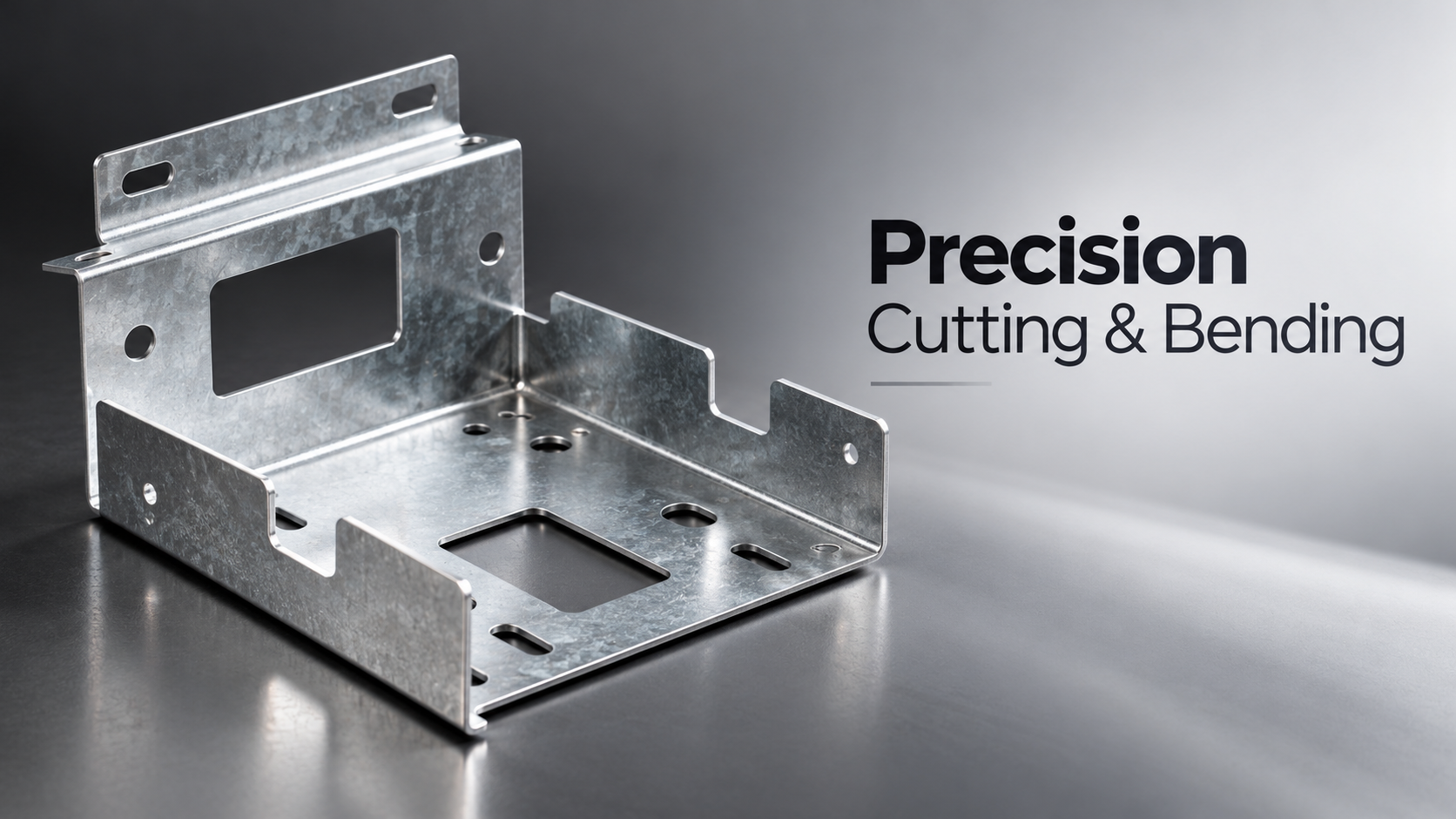
 Best Cutting and Bending Practices for Galvanized Sheet MetalDiscover the best cutting and bending practices for galvanized sheet to prevent zinc flaking. Optimize tooling and thermal parameters to ensure perfect corrosion resistance. Read the full guide!
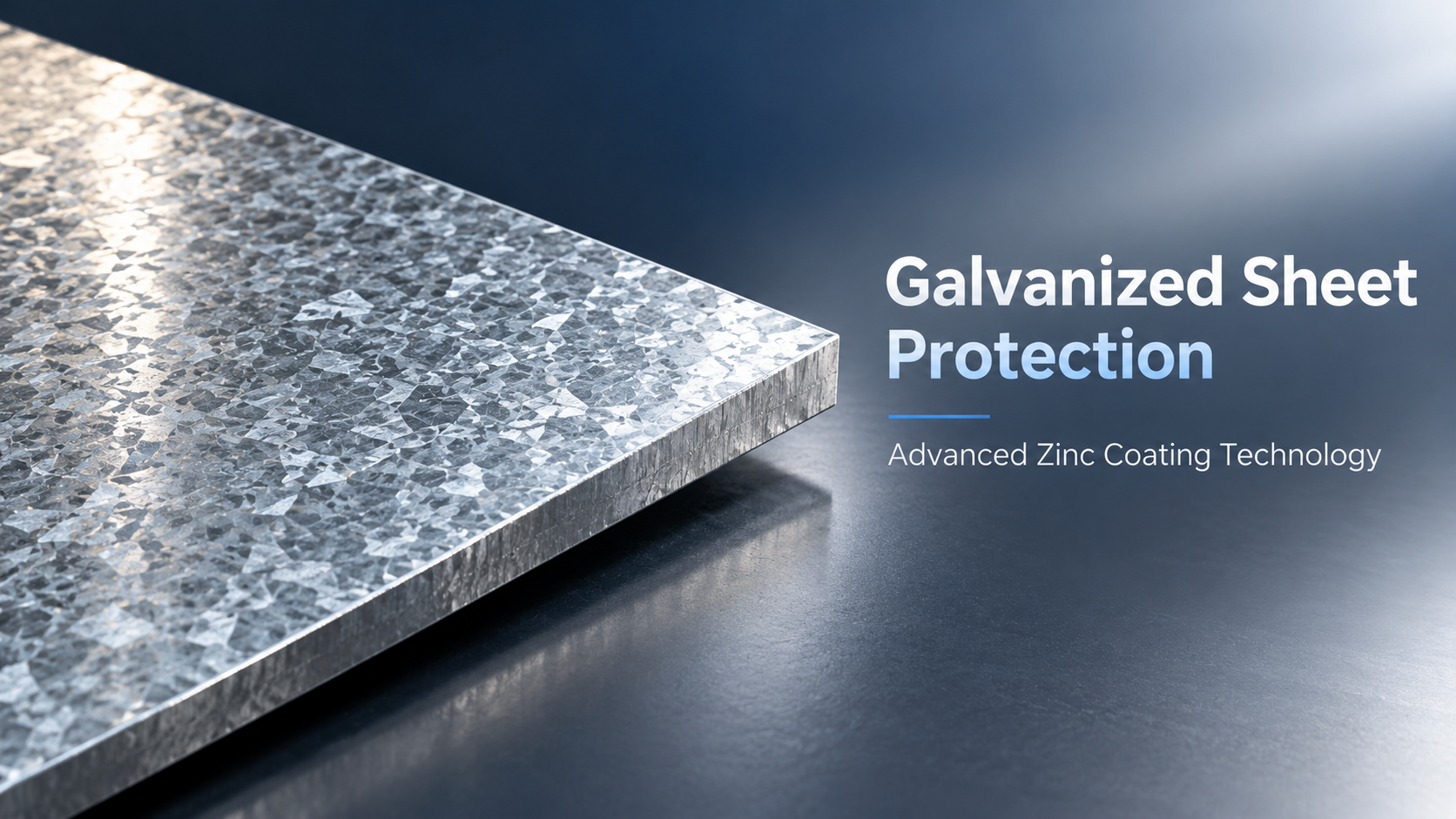
 What is Galvanized Sheet and How Does the Zinc Coating Work?Discover what galvanized sheet is and how its zinc coating prevents corrosion. Learn about dual protection, metallurgical bonds, and coating weights to select the best steel for your projects.
Please give us a message


Please enter what you want to find