For procurement managers sourcing structural steel for industrial applications, choosing between mill MOQ vs trader MOQ steel for industrial applications isn’t just about volume—it’s a strategic decision impacting lead time, cost control, and project continuity. Whether you’re evaluating standard vs custom steel lead time for industrial buyers, comparing I beam vs H beam for residential construction, or seeking a Steel I Beam supplier in Malaysia for infrastructure projects, understanding MOQ trade-offs is critical. At Hongteng Fengda—a certified structural steel manufacturer exporting to the Middle East, Philippines, and beyond—we help global buyers balance flexibility and reliability—without compromising ASTM/EN compliance, factory-grade pricing, or on-time delivery.
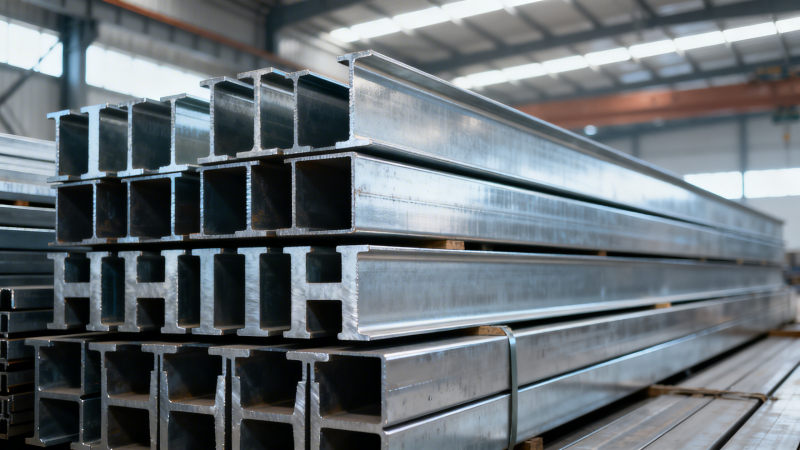
Understanding the Core Trade-Off: Mill MOQ vs Trader MOQ
Mill MOQ (Minimum Order Quantity) refers to the smallest batch a primary steel producer—such as a rolling mill or integrated steel plant—is willing to commit to manufacturing and delivering directly. This threshold is typically high (e.g., 20–50 metric tons per grade/specification), reflecting production line setup costs, raw material batching, and quality certification overheads. In contrast, trader MOQ represents the minimum quantity a steel distributor or trading company will accept—often as low as 1–5 tons—and may include mixed grades, lengths, or surface finishes.
The distinction carries profound implications for industrial procurement. A mill MOQ guarantees traceability to original heat numbers, full mill test reports (MTRs), and direct alignment with international standards like ASTM A6/A6M, EN 10025, or GB/T 706. However, it demands longer planning horizons—standard vs custom steel lead time for industrial buyers often extends from 8–14 weeks for mill-direct orders, especially when custom dimensions or coatings are involved. Trader MOQ, while enabling faster turnaround (3–6 weeks), introduces supply chain layers that may dilute documentation integrity and complicate root-cause analysis during non-conformance events.
Hongteng Fengda bridges this gap by operating as a vertically integrated structural steel manufacturer—not a trading intermediary—with flexible MOQ policies calibrated to project scale. For example, our Channel In Steel inventory supports both bulk mill-run orders (Q235B, Q345B, up to 50 tons) and smaller-volume, multi-specification shipments (as low as 3 tons), backed by full EN 10219 and ASTM A500 MTRs. This hybrid capability reduces procurement risk without sacrificing compliance or cost transparency.
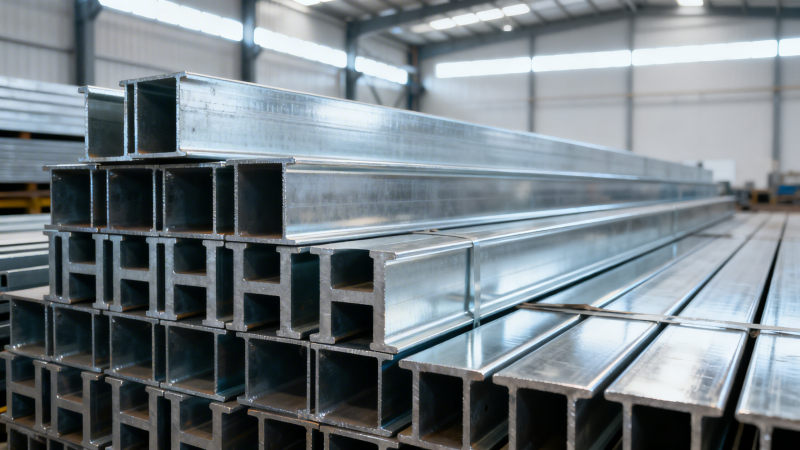
Lead Time Realities: Standard vs Custom Steel Lead Time for Industrial Buyers
Lead time is rarely static—it’s a function of specification complexity, material availability, finishing requirements, and logistics coordination. Standard sections (e.g., ASTM A6 I-beams, EN 10025 S355JR channels) benefit from rolling schedules and stock rotation, yielding typical delivery windows of 6–10 weeks ex-factory. Custom configurations—such as non-standard heights, tapered flanges, or duplex stainless steel channel profiles—require dedicated billet reheating, die changes, and extended QA cycles, pushing timelines to 12–20 weeks.
A practical benchmark: For Channel In Steel in Q235B with hot-dip galvanizing and 80–160mm height range, our average lead time stands at 7–9 weeks—including surface treatment and third-party inspection (SGS/BV). This compares favorably against regional traders quoting 10–14 weeks for equivalent specs due to reprocessing delays and customs clearance bottlenecks.
Regional Cost & Compliance Considerations Across Key Markets
Pricing dynamics vary significantly across geographies—not only due to freight and duties, but also regulatory expectations. In the Middle East, for instance, steel beam factory price in Middle East contracts often require dual certification (ASTM + SASO), corrosion resistance validation (ISO 12944 C4/C5), and third-party witnessing—adding 5–8% to landed cost. Similarly, Angle Steel price per ton Philippines for industrial use must comply with PS Standard 179:2020 and withstand tropical humidity; galvanized or stainless variants (e.g., 304 or 316) command premiums of 15–25% over carbon grades—but deliver lifecycle savings in coastal facilities.
For marine applications, stainless steel bar for marine applications must meet stringent pitting resistance equivalence (PREN ≥ 35 for 316, ≥ 40 for duplex). Our Channel In Steel offerings include 201, 304, 316, and duplex variants—all tested per ASTM A240 and certified for salt-spray exposure (ASTM B117). Likewise, stainless steel square bar for architectural use undergoes surface finish grading (No. 4, HL, or BA) and dimensional tolerance checks per JIS G4305, ensuring aesthetic consistency across façade systems.
Technical Precision Matters: From Weight Calculations to Structural Suitability
Industrial procurement isn’t just about price and MOQ—it’s about engineering confidence. How to calculate I beam weight for industrial projects determines load-bearing capacity, crane scheduling, and foundation design. The formula W = (H × tf × 2 + w × tw) × L × ρ (where ρ = 7.85 kg/m³) applies universally, yet real-world tolerances matter: our Channel In Steel maintains thickness tolerance of ±0.02 mm and height tolerance of ±2 mm—critical for bolted connections in steel structure construction purlin or wall beam assemblies.
When evaluating I beam vs H beam for residential construction, engineers consider moment of inertia, torsional rigidity, and weld preparation. While both satisfy ASTM A992, H-beams offer superior axial load distribution for columns, whereas I-beams excel in bending-dominated roof beams. For lightweight roof or mechanical column applications, our cold-formed U channel steel provides optimized strength-to-weight ratios—especially in Q345B and duplex grades where yield strength exceeds 345 MPa with minimal section depth.
Why Global Procurement Teams Choose Hongteng Fengda
We combine mill-grade authority with trader-level agility. As a structural steel manufacturer exporting to North America, Europe, the Middle East, and Southeast Asia, we maintain stable production capacity across 12 rolling lines and 3 galvanizing baths—ensuring consistent steel beam factory price in Middle East deliveries and reliable Angle Steel price per ton Philippines for industrial use. Our certifications (ISO 9001, CE, UL, BV) are not paper exercises—they govern every stage from raw material receipt to packaging and loading supervision.
Whether you need a Steel I Beam supplier in Malaysia for infrastructure projects requiring BS 4-1 compliance, or are comparing 201 vs 304 stainless steel cost for food industry applications where hygiene and corrosion resistance are non-negotiable, our technical sales team provides application-specific guidance—not generic quotes. We co-develop solutions: from calculating exact i beam weight for industrial projects to advising on optimal channel steel thickness (1.5–25 mm) for bracket or arm fabrication under dynamic loads.
Ready to align your procurement strategy with engineering integrity and commercial realism? Contact Hongteng Fengda today for a tailored MOQ assessment, lead time confirmation, and compliant quotation—backed by 18 years of structural steel export experience.
- channel in steel
- channel steel
- steel i
- steel i beam supplier
- h beam
- angle steel
- structural steel
- U channel steel
- Steel structure construction
- Structural Steel
- I-Beam
- U Channel Steel
- Profile
- H-beam
- standard vs custom steel lead time
- mill MOQ vs trader MOQ steel
- S355JR
- Galvanized
- Steel I Beam supplier in Malaysia
- Angle Steel price per ton Philippines
- how to calculate i beam weight
- I beam vs H beam
- steel beam factory price
- Steel Beam
- Steel Channel
- 201 vs 304 stainless steel cost
- stainless steel square bar
- stainless steel bar
- steel bar
- i beam weight
- stainless steel bar for marine applications
- stainless steel square bar for architectural use
- 201 vs 304 stainless steel cost for food industry
- steel beam factory price in Middle East
- I beam vs H beam for residential construction
- how to calculate i beam weight for industrial projects
- Angle Steel price per ton Philippines for industrial use
- Steel I Beam supplier in Malaysia for infrastructure projects
- mill MOQ vs trader MOQ steel for industrial applications
- standard vs custom steel lead time for industrial buyers
Related recommendations
 How to Select the Correct Steel Sheet Grade for Auto PartsSelect the ideal steel sheet for auto parts by balancing performance and cost. Discover expert sourcing strategies to avoid manufacturing traps and optimize procurement. Read our guide now!
 Choosing the Right Zinc Coating Weight for Galvanized SheetOptimize your galvanized sheet selection by choosing the right zinc coating weight. Discover expert strategies to balance corrosion resistance, formability, and project costs.
 How to Specify Wall Thickness for Structural Steel TubingMaster wall thickness specification for structural steel tubing. Balance engineering loads, global tolerances, and costs. Read our expert guide to optimize procurement and ensure project safety!
 How much does 2 inch ss pipe price increase when upgrading from Schedule 40 to Schedule 80 for high-pressure systems?2 inch ss pipe price increases 18–35% when upgrading from Sch 40 to Sch 80—discover why, when it’s truly needed, and how to avoid overpaying.
Please give us a message


Please enter what you want to find