When selecting between I beam vs H beam load capacity for warehouse or high-rise projects, structural integrity, cost efficiency, and supply reliability are critical—especially amid fluctuating steel beam factory price for warehouse construction and tight project timelines. As a trusted Steel I Beam supplier in Malaysia for commercial buildings and global exporter, Hongteng Fengda helps procurement teams navigate key trade-offs: standard vs custom steel lead time for export, mill MOQ vs trader MOQ steel for construction projects, and precise load calculations like how to calculate I beam weight for bridge construction—all backed by ASTM/EN-compliant quality assurance.
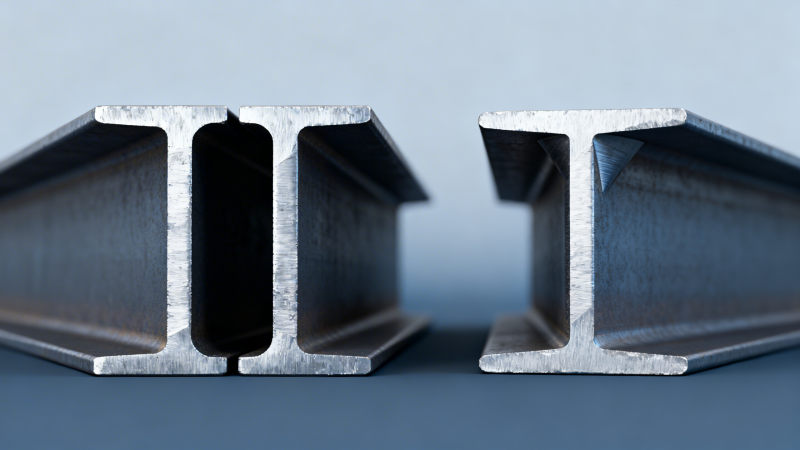
Understanding Load Capacity: I Beam vs H Beam — Geometry, Stress Distribution & Real-World Performance
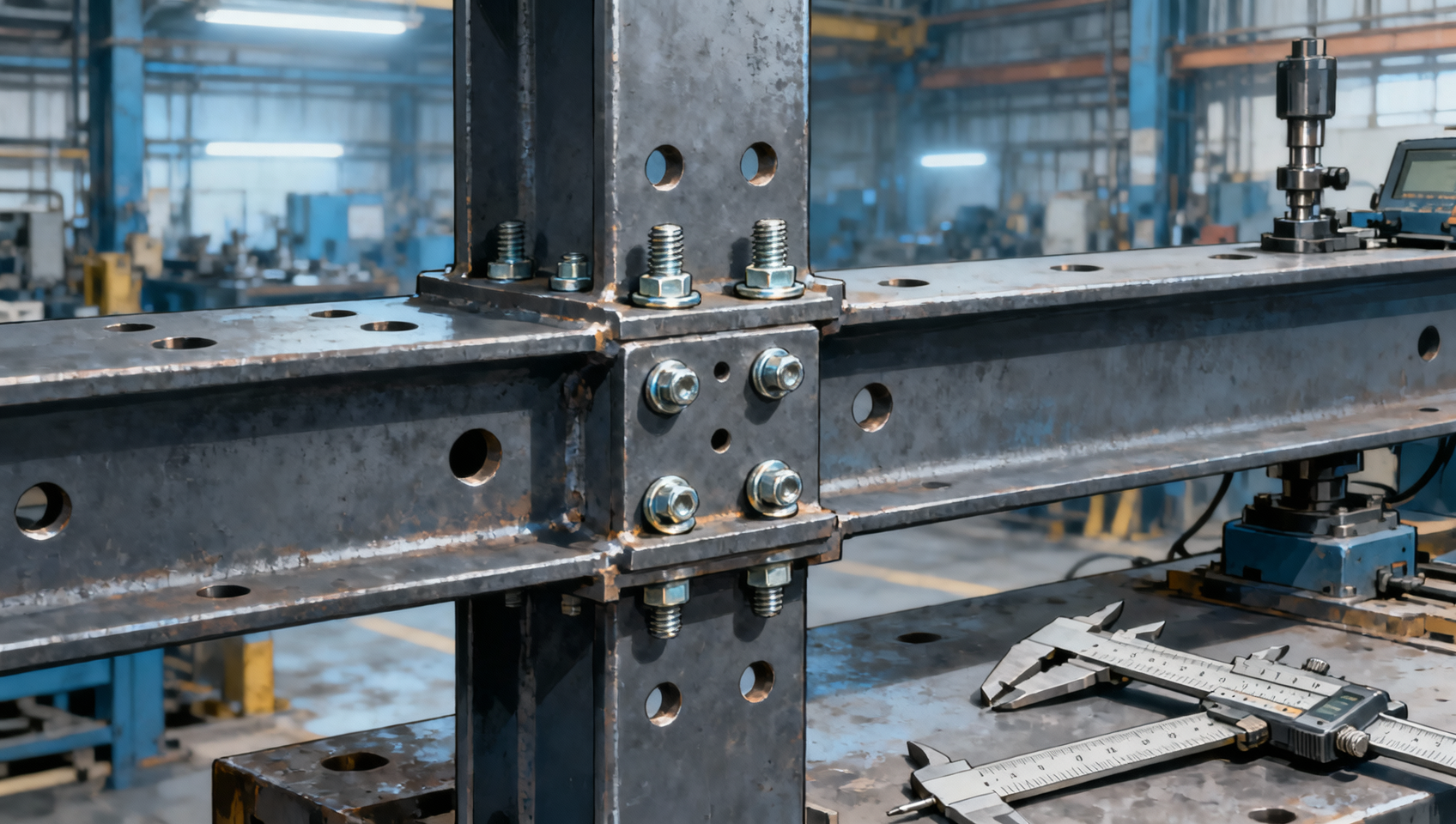
The fundamental distinction between I beams and H beams lies not only in naming conventions but in dimensional proportions and manufacturing standards—both of which directly govern their load-bearing behavior under axial compression, bending moments, and lateral torsional buckling. While both profiles share the same “I-shaped” cross-section, H beams feature equal flange and web thicknesses, with parallel flanges and consistent width across the entire height—making them structurally symmetrical and ideal for multi-directional loading scenarios common in high-rise cores and heavy industrial mezzanines. In contrast, traditional I beams (often conforming to ASTM A6 or GB/T 706) have tapered flanges and thinner webs, resulting in higher section modulus per unit weight—but reduced torsional rigidity and lower resistance to lateral deflection.
Load capacity is not a single-value metric; it depends on span length, support conditions (fixed, pinned, cantilevered), unbraced segment length, and material grade. For example, an S355JR H beam with dimensions 300×300×10×15 mm can carry up to 1,420 kN in pure axial compression over a 4m effective length, whereas a comparable IPE400 (170×93.5×5.3×8.0 mm) yields only ~680 kN under identical conditions. This divergence becomes even more pronounced in moment-resisting frames where H beams’ uniform geometry enhances plastic hinge formation and ductility—critical for seismic resilience in Southeast Asian high-rises. Our engineering team routinely validates such comparisons using EN 1993-1-1 and AISC 360 methodologies before recommending final sections.
Material Selection & Certification: Why Compliance Matters Beyond Yield Strength
Choosing between I and H beams isn’t just about geometry—it’s also about traceability, weldability, and long-term corrosion performance. At Hongteng Fengda, every structural steel product—including our Flat Rolled Steel Coil—undergoes third-party verification against ASTM A36, EN S235JR, and GB Q235B standards. These certifications ensure minimum yield strength (235–250 MPa), tensile strength (360–510 MPa), and elongation (>20% at 200mm), all essential for calculating reliable I beam vs H beam load capacity margins. Crucially, certified materials eliminate variability in Charpy impact values—a decisive factor when specifying beams for cold-climate warehouses in Northern Europe or typhoon-prone coastal infrastructure in the Philippines.
We also support dual-certification requests—for instance, supplying S235JR + ASTM A36 dual-grade coils used in hybrid fabrication shops across Malaysia and Vietnam. This flexibility reduces rework risks during erection and ensures seamless integration with imported connection hardware compliant with ISO 898-1 or ASTM F3125 specifications. Unlike commodity traders offering uncertified stock, our mill-direct production enables full heat-lot documentation, mill test reports (MTRs), and batch-specific chemical analysis—non-negotiable for safety-critical applications overseen by project managers and quality assurance officers.
Supply Chain Intelligence: Navigating Mill MOQ vs Trader MOQ and Standard vs Custom Steel Lead Time for Export
This transparency empowers procurement professionals and project managers to balance speed versus control. For fast-track warehouse developments in Johor Bahru or Riyadh, we offer pre-inspected, CE-marked H beams ready for immediate dispatch—while maintaining full mill MOQ vs trader MOQ steel for construction projects clarity. Our logistics hub in Qingdao ensures consolidated LCL/FCL shipments to ports including Port Klang, Jebel Ali, and Rotterdam—with real-time container tracking and customs documentation support.
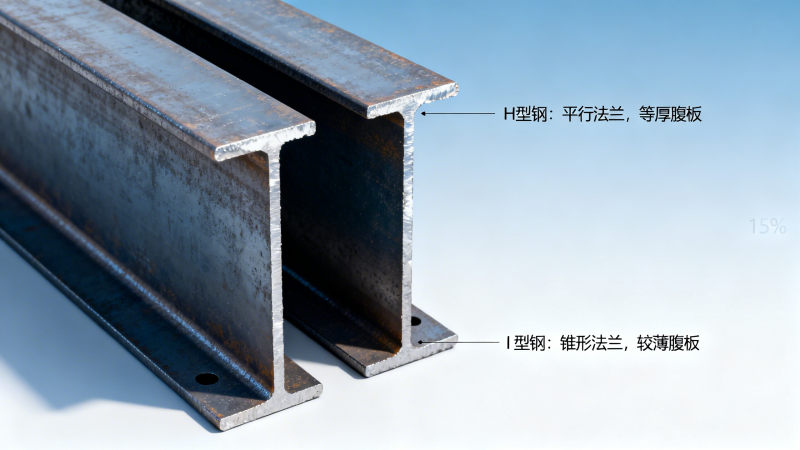
From Theory to Practice: How to Calculate I Beam Weight for Bridge Construction & Optimize Structural Efficiency
Accurate weight estimation is foundational—not just for crane planning and transport logistics, but for iterative load-path analysis. The formula for theoretical weight per meter is: W = (2 × Flange Width × Flange Thickness + Web Height × Web Thickness) × Density, where density = 7.85 g/cm³. For example, an IPE300 (300×150×6.5×10.2 mm) weighs approximately 42.2 kg/m. However, real-world tolerances per EN 10034 allow ±4% variation—meaning actual delivered weight could range from 40.5 to 43.9 kg/m. That seemingly small variance impacts total dead load by over 12 tons across a 300-meter bridge span.
At Hongteng Fengda, we provide certified weight reports per heat lot and integrate BIM-ready section properties (Ix, Iy, Zx, Zy, rₓ, rᵧ) into our technical dossiers. We also assist clients in comparing alternatives: e.g., replacing two IPE400s with one HEA400 reduces connection complexity and increases net floor area—without compromising I beam vs H beam load capacity. Such optimization supports lean construction goals while aligning with regional steel beam factory price for warehouse construction benchmarks across ASEAN and GCC markets.
Trusted Partnership Across Continents: From Angle Steel Price Per Ton Philippines for Construction to Stainless Steel Bar Manufacturer in Europe
Our operational footprint spans six continents—not as a transactional vendor, but as an embedded partner. In the Philippines, we deliver angle steel at competitive price per ton—backed by CIF Manila terms and local VAT handling. In Germany and Poland, we serve as a qualified stainless steel bar manufacturer in Europe for precision machining clients requiring 201 vs 304 stainless steel cost per kg transparency and strict intergranular corrosion testing per ASTM A262 Practice E. For industrial clients sourcing stainless steel square bar for industrial applications, we offer cold-drawn 316L bars with Ra ≤ 0.8 µm surface finish and ±0.05 mm tolerance—ideal for hydraulic cylinder rods and food-grade conveyors.
Whether you’re evaluating steel I beam supplier in Malaysia for commercial buildings or benchmarking mill MOQ vs trader MOQ steel for construction projects, Hongteng Fengda delivers consistency, compliance, and collaborative engineering. With ISO 9001-certified processes, in-house metallurgical lab, and dedicated project coordinators fluent in English, Mandarin, Arabic, and Bahasa, we reduce sourcing friction—not just for today’s order, but for your next five-year framework agreement.
Ready to optimize your structural steel strategy? Contact Hongteng Fengda today for a free technical consultation, comparative load capacity analysis, and tailored quotation—including Flat Rolled Steel Coil options for secondary framing, cladding substrates, or custom press-brake components.
- steel i
- h beams
- steel i beam supplier
- h beam
- angle steel
- flat rolled steel coil
- rolled steel coil
- steel coil
- ASTM A36
- structural steel
- Structural Steel
- Profile
- standard vs custom steel lead time
- mill MOQ vs trader MOQ steel
- S355JR
- Steel I Beam supplier in Malaysia
- Angle Steel price per ton Philippines
- how to calculate i beam weight
- I beam vs H beam
- steel beam factory price
- Steel Beam
- 201 vs 304 stainless steel cost
- stainless steel square bar
- stainless steel bar
- steel bar
- i beam weight
- stainless steel bar manufacturer in Europe
- stainless steel square bar for industrial applications
- 201 vs 304 stainless steel cost per kg
- steel beam factory price for warehouse construction
- I beam vs H beam load capacity
- how to calculate i beam weight for bridge construction
- Angle Steel price per ton Philippines for construction
- Steel I Beam supplier in Malaysia for commercial buildings
- mill MOQ vs trader MOQ steel for construction projects
- standard vs custom steel lead time for export
Related recommendations
 Key Structural Steel Properties That Affect Load Capacity and DurabilityStructural steel properties determine load capacity, deflection, fatigue resistance, and corrosion durability. Explore key factors for safer, longer-lasting steel designs.
 Choosing Structural Steel Cutting Methods for Clean Edges and Fast ThroughputStructural steel cutting guide: compare plasma, laser, oxy-fuel, and saw methods to achieve cleaner edges, better fit-up, and faster fabrication throughput.
 Structural Steel Drilling: Hole Tolerances That Protect Connection PerformanceStructural steel drilling guide: control hole tolerances, alignment, edge quality, and inspection to protect bolted connection performance and avoid costly site rework.
 What Makes Stainless Steel Plates Suitable for Heavy-Duty Industrial Equipment?Stainless steel plates deliver corrosion resistance, strength, and fabrication versatility for heavy-duty industrial equipment. Discover how to select the right grade, thickness, finish, and design.
Please give us a message


Please enter what you want to find