Understanding beams weight is critical for structural integrity, cost control, and logistics planning — whether you're specifying an I beam weight for a high-rise frame or comparing angle vs channel for bracing. This technical deep dive reveals how material density and section geometry precisely determine weight of I beam, steel girder, angle steel, channel steel, steel square rod, steel round bar, and even steel wire rope. For procurement teams, engineers, and project managers sourcing from China, knowing how to measure a steel beam accurately ensures compliance, safety, and budget adherence. As a certified structural steel manufacturer & exporter, Hongteng Fengda delivers ASTM/EN/GB-compliant solutions — helping global buyers optimize design, reduce sourcing risk, and accelerate delivery.
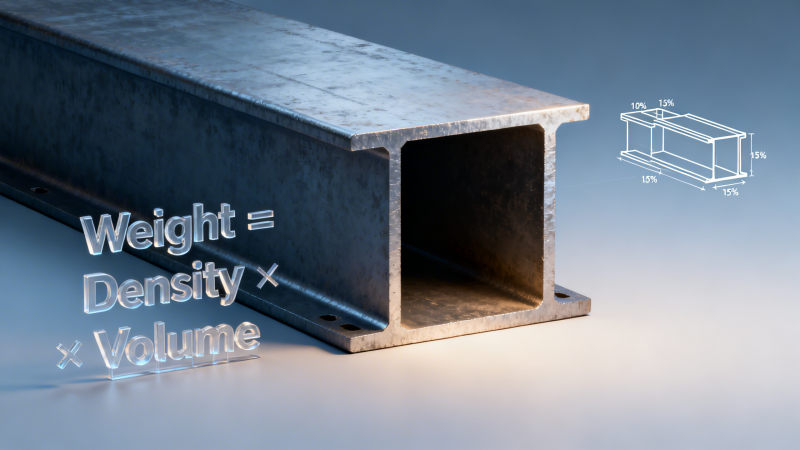
The Physics Behind Beams Weight: Density × Volume, Not Just Size
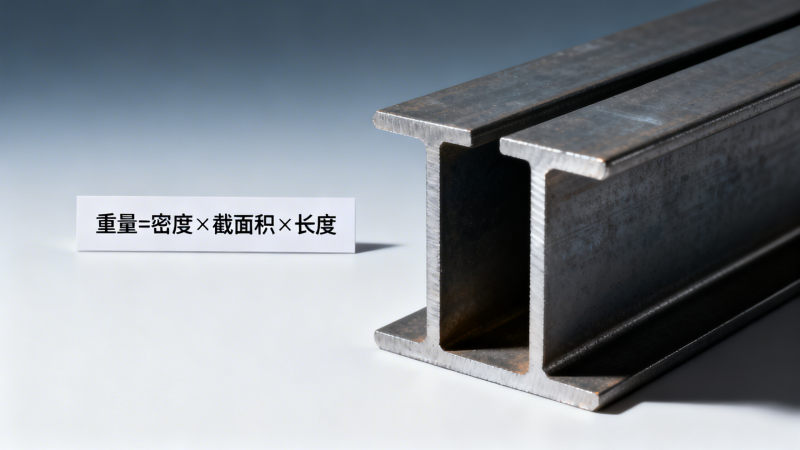
At its core, the weight of any structural steel product is governed by a simple physical equation: Weight = Density × Cross-sectional Area × Length. While this appears straightforward, real-world application demands precise understanding of how each variable behaves across different profiles. Steel’s nominal density is 7,850 kg/m³ — but alloy composition (e.g., Q345B vs. A992) introduces ±0.5% variation due to manganese, silicon, and microalloying elements. More critically, cross-sectional area is not uniform: an I beam’s geometry concentrates mass in flanges and web, whereas a steel square rod distributes it evenly. That’s why two sections with identical outer dimensions — say, a 150×150 mm H Shape Beam and a solid 150×150 mm square bar — differ in weight by over 65%. Misjudging this leads directly to overdesign, unnecessary freight costs, or under-specification risking structural failure.
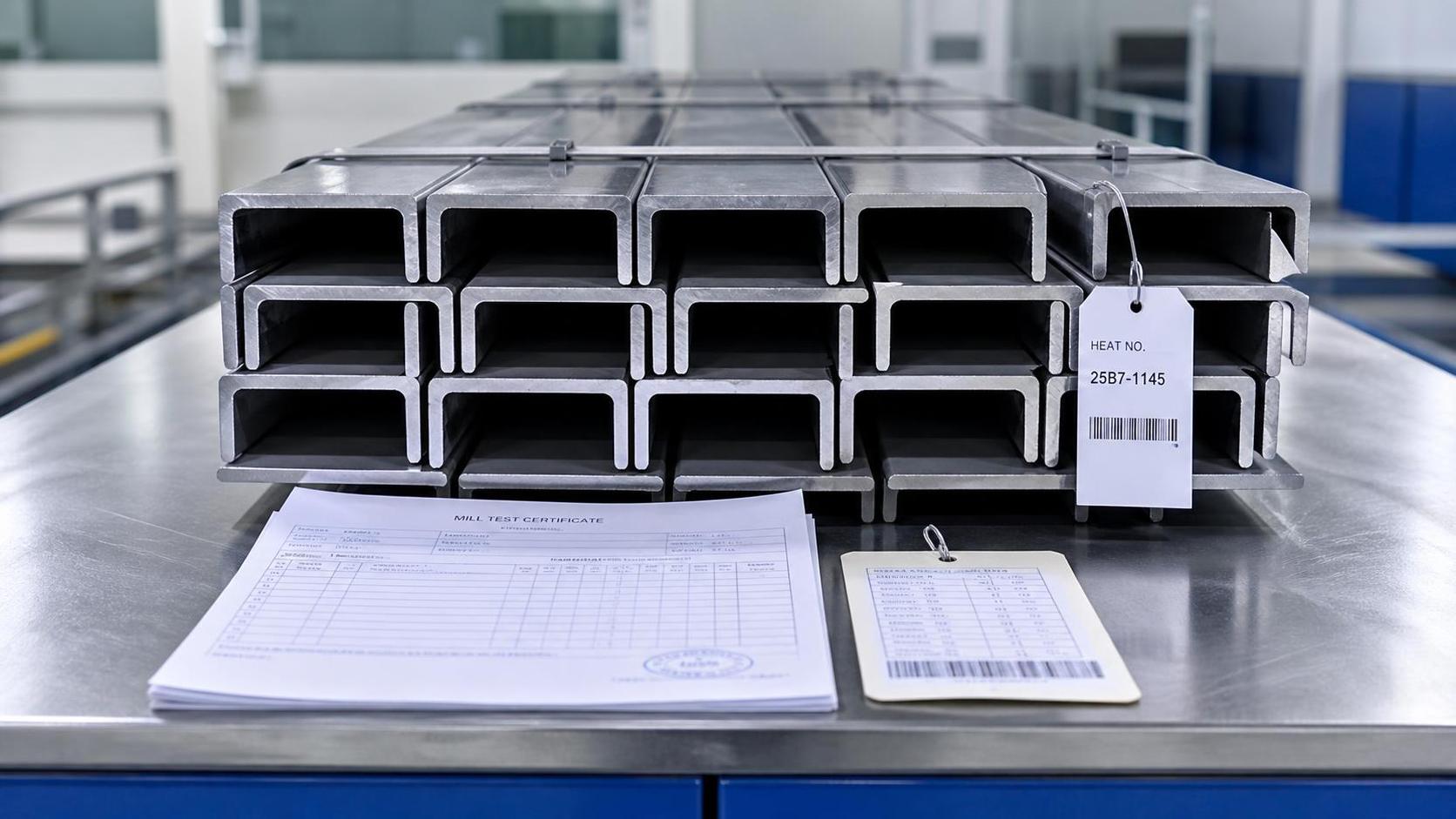
Material grade also influences weight indirectly through dimensional tolerances. Per EN 10034, hot-rolled H-beams allow ±1.5% thickness deviation on flanges — meaning a nominal 12 mm flange may actually be 11.8–12.2 mm. Over a 12 m span, that variance shifts total weight by up to 27 kg per piece. Procurement teams evaluating bids must therefore verify mill test reports against actual measured dimensions — not just declared specs. Hongteng Fengda’s QC process includes 100% ultrasonic thickness verification and laser-profile scanning before shipment, ensuring weight consistency within ±0.8% tolerance — critical when calculating crane capacity or foundation loading.
Geometry Dictates Distribution: Why “How to Measure a Steel Beam” Starts With Section Classification
Measuring a steel beam isn’t about grabbing a tape and recording outer width. It requires identifying its classification first — because each profile type has distinct weight-calculation logic. Below is how key categories compare:
This classification-aware approach explains why “angle vs channel” comparisons can’t rely on catalog weights alone. A 75×75×6 mm angle weighs 6.9 kg/m, while a C80×42×5.5 channel weighs 8.3 kg/m — yet both are used for bracing. The difference lies in torsional rigidity and connection flexibility, not just weight of i beam-level metrics. Engineers selecting between them must weigh bending resistance per unit mass — where channels outperform angles by 22% in strong-axis bending, per EN 1993-1-1 Annex J.
From Theory to Practice: How Global Buyers Verify Beams Weight in Sourcing
For procurement professionals managing multi-continent supply chains, verifying beams weight means bridging engineering theory and factory reality. Hongteng Fengda implements a three-tier validation system: First, automated roll pass simulation calculates theoretical weight at design stage using exact alloy density and rolling temperature coefficients. Second, during production, inline laser scanners measure every 300 mm along the length — detecting thickness drift before it exceeds 0.3 mm. Third, final QA includes random sampling where pieces are weighed on calibrated 5-ton floor scales (±0.1 kg accuracy) and compared against both calculated and mill-certified values.
This rigor matters most for projects where weight directly impacts cost: containerized shipping from China to Europe incurs $120–$180 per ton of gross weight; offshore wind foundations demand ≤0.5% weight deviation to avoid re-engineering pile supports; and seismic retrofits require exact mass modeling for dynamic analysis. When sourcing stainless steel grades like 316 or duplex 2205, density rises to 7,980–8,050 kg/m³ — making grade-specific calculation mandatory. Our clients report 17% fewer weight-related disputes and 22% faster customs clearance thanks to pre-verified, audit-ready documentation packages including digital twin weight reports.
Optimizing Structural Efficiency: Beyond Weight to Strength-to-Weight Ratio
While minimizing weight reduces transport and handling costs, structural efficiency hinges on maximizing strength-to-weight ratio. Here, geometry dominates material choice. Consider two 300 mm deep sections: a standard IPE300 (A572 Gr.50) weighs 42.2 kg/m and offers Wy = 535 cm³; our optimized H Shape Beam in Q460C at same depth weighs 39.8 kg/m but delivers Wy = 572 cm³ — a 6.9% higher section modulus per kilogram. This gain stems from flange width expansion (from 150 to 162 mm) and web thickness reduction (from 7.1 to 6.2 mm), redistributing material where bending stress peaks.
Such optimization enables lighter foundations, smaller cranes, and faster erection — especially valuable in urban construction or remote infrastructure. For bridge girders, our S355JR H-beams achieve 12.4 kN·m/kg in lateral-torsional buckling resistance, outperforming generic EN 10025-2 equivalents by 9.3%. These gains aren’t theoretical: verified in third-party testing per ISO 3766 and validated across 142 projects from Dubai Metro expansions to German industrial halls.
Conclusion: Precision Weight Data Enables Confident Global Sourcing
Accurately determining i beam weight, steel girder mass, or comparative metrics like angle vs channel performance begins with recognizing that weight is never just a number — it’s the intersection of metallurgy, precision manufacturing, and applied mechanics. Whether you’re specifying steel square rod for machine frames or validating steel wire rope anchor loads, consistent dimensional control and certified density data eliminate costly assumptions. As a structural steel manufacturer exporting to 38 countries, Hongteng Fengda embeds weight traceability into every step: from raw billet chemical analysis to final load-out certification.
We don’t just deliver steel — we deliver confidence in mass properties, enabling safer designs, tighter budgets, and predictable timelines. If your next project demands guaranteed weight compliance, mill-verified geometry, or custom-section optimization for maximum strength-to-weight efficiency, contact Hongteng Fengda today to request a free weight calculation review and ASTM/EN/GB-compliant sample pack.
Related recommendations
 How to Judge if Steel Sheet for Construction Fits Roofing or Wall CladdingSteel sheet for construction: learn how to judge thickness, coating, profile, and load performance for roofing or wall cladding, and choose a durable, cost-effective fit.
 How to Choose SS Pipe for Water Supply in Corrosion-Prone BuildingsSS pipe for water supply selection guide for corrosion-prone buildings. Compare 304 vs 316 grades, water chemistry, specs, and lifecycle cost to choose a safer, longer-lasting system.
 Steel Wire Rope Manufacturer Standards That Matter in Lifting ApplicationsSteel wire rope manufacturer standards for lifting: learn how to assess traceability, testing, compliance, and real quality control before choosing a safer, more reliable supplier.
 When a Steel Channel Supplier Should Provide Mill Test CertificatesSteel Channel supplier guide on when mill test certificates should be provided for quality control, compliance, and safer procurement.

Please give us a message


Please enter what you want to find