When sourcing steel round bar for structural integrity—whether for beams weight calculations, i beam weight verification, or custom steel girder fabrication—procurement teams must distinguish tensile strength from yield strength. Confusing the two risks underperformance in load-bearing applications, especially when specifying steel square rod, angle vs channel, or cold-formed profiles. At Hongteng Fengda, a trusted structural steel manufacturer & exporter from China, we ensure all steel round bar, steel angle, and channel steel comply with ASTM, EN, and GB standards—with certified test reports for both properties. Learn what to verify before order to avoid costly delays, safety compromises, or non-compliance on global projects.
Understanding the Fundamental Difference: Tensile Strength vs. Yield Strength
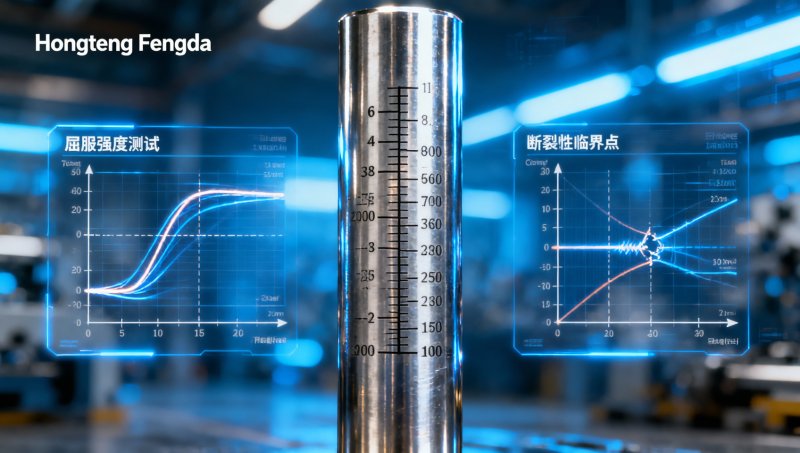
Tensile strength and yield strength are two cornerstone mechanical properties defined in international material standards—including ASTM A615, EN 10025-2, and GB/T 14981—and they serve distinct engineering purposes. Yield strength (typically denoted as Re or Fy) is the stress at which a material begins to deform plastically. Below this threshold, deformation is elastic and reversible; beyond it, permanent strain occurs. For structural applications such as steel girder fabrication or cold-formed steel profile assembly, exceeding yield strength during service can cause irreversible bending or misalignment—especially critical when calculating beams weight distribution across multi-span bridges or industrial mezzanines.
Tensile strength (Rm or Fu), by contrast, represents the maximum stress a material can withstand before necking and fracture. While important for ultimate failure analysis, it does not govern serviceability limits. In practice, design codes like Eurocode 3 and AISC 360 mandate that working stresses remain well below yield strength—often at 60–75% of Fy—to maintain structural stability and accommodate dynamic loads. Procurement teams who mistake tensile strength for allowable design stress risk over-specifying materials (increasing cost) or under-specifying them (compromising safety). This distinction becomes especially consequential when sourcing steel round bar for high-precision machining, where dimensional stability under load directly affects how to measure a steel beam in field alignment or influences weight of i beam recalculations after welding-induced distortion.
Why Certification Reports Must Specify Both Values — Not Just One
A mill test report (MTR) or certificate of conformity is not merely administrative paperwork—it’s your first line of technical due diligence. Reputable suppliers like Hongteng Fengda provide MTRs compliant with ISO/IEC 17025, listing both yield and tensile strength values alongside elongation, reduction of area, and impact toughness (e.g., Charpy V-notch at –20°C per EN 10025-2). Crucially, these values must be tied to the exact heat number and batch ID—not generic “typical” ranges. For instance, Q235B-grade steel round bar may show Fy = 235 MPa min, but actual tested results often fall between 245–265 MPa. That 10–15% variance impacts cold-forming tolerance, weldability, and post-fabrication straightness—factors essential when integrating steel angle into truss systems or aligning steel square rod in modular scaffolding frames.
Moreover, discrepancies between reported and verified values signal deeper quality control gaps. If an MTR states Fy = 250 MPa but third-party lab testing yields only 228 MPa, the batch likely violates ASTM A276 or GB/T 14981 tolerances. Such non-conformance triggers rework, project delays, and contractual liability—particularly on infrastructure contracts requiring traceability to ISO 9001:2015 and EN 1090-1 EXC2 execution class. That’s why Hongteng Fengda cross-verifies every shipment against internal QC protocols *and* independent SGS/BV audits—ensuring consistency whether you’re ordering standard channel steel or custom steel girder components for Middle Eastern power plants or Southeast Asian logistics hubs.
How Material Grade Impacts Strength Ratios—and Why It Matters for Your Application
Not all steel round bar behaves identically—even within the same nominal grade. The ratio of tensile-to-yield strength (Rm/Re) reflects metallurgical refinement and processing history. High-ratio steels (e.g., >1.35) indicate controlled rolling and fine grain structure, offering better ductility and fatigue resistance—ideal for seismic-resistant steel girder connections or rotating shafts made from steel wire rope anchor points. Low-ratio steels (<1.20) suggest higher carbon content or inconsistent thermal treatment, increasing brittleness risk during bending or drilling operations.
Consider this comparative snapshot for common structural grades used in global procurement:
Note how S355JR and A36 offer superior strength margins—critical when optimizing steel saving without sacrificing safety. This precision also supports accurate how to measure a steel beam in BIM coordination, where digital twin models rely on certified mechanical properties for load-path simulation.
Beyond Round Bars: Cross-Verification Across Product Families
While steel round bar is central to this discussion, procurement integrity extends across your entire structural portfolio. Whether evaluating steel angle for bracing, channel steel for railings, or cold-formed profiles for façade support, consistent strength verification prevents systemic weaknesses. For example, mismatched yield strengths between connecting steel square rod and base plates can induce localized stress concentrations—leading to premature fatigue cracks in vibration-prone environments like machinery foundations or shipbuilding decks.
That’s why Hongteng Fengda maintains unified testing protocols across product lines—from hot-rolled I-beams to specialized surface-enhanced solutions like the 235JR Patterned steel plate. Its anti-skid pattern, formed on Q235B or S235 substrates, retains full mechanical compliance while adding functional value for floor around equipment and transportation walkways. With thicknesses from 2–8mm and strict dimensional tolerances (+/−0.02mm thickness), it delivers bending resistance and metal saving without compromising core strength metrics—demonstrating how performance enhancement and structural reliability coexist.
Actionable Verification Checklist Before Finalizing Your Order
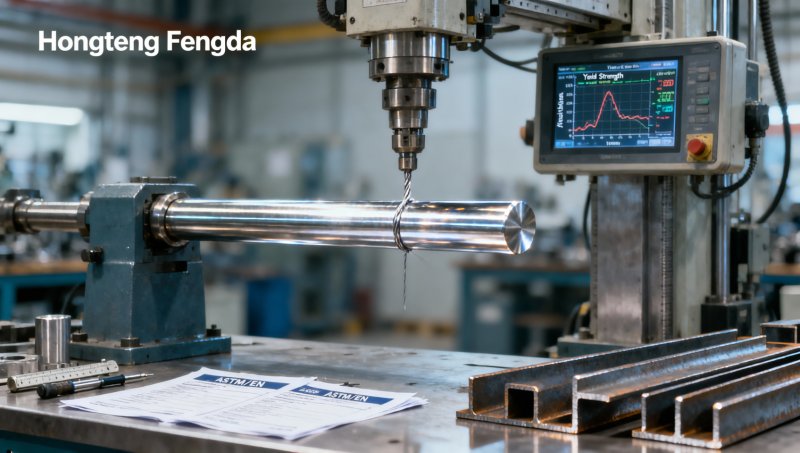
Before approving purchase orders for steel round bar—or any structural component—follow this field-tested verification protocol:
- Confirm heat-specific MTRs: Require documented yield/tensile values per ASTM E29 rounding rules—not “as per spec” summaries.
- Validate standard alignment: Ensure grade designation (e.g., 235JR vs. S235JR) matches project-specified code (EN 10025-2, GB/T 700).
- Cross-check dimensional data: Verify measured weight of i beam against theoretical tables using certified density (7.85 g/cm³) and actual section dimensions—not nominal sizes.
- Assess traceability scope: Confirm batch-level traceability covers raw material origin, rolling temperature logs, and final inspection stamps.
- Review supplementary tests: For critical applications, request Charpy impact data, ultrasonic testing (UT) reports, or hydrogen-induced cracking (HIC) resistance if specified.
At Hongteng Fengda, every export shipment includes bilingual documentation (English + Mandarin), pre-shipment inspection options, and direct access to our metallurgical QA team—ensuring your beams weight assumptions, i beam weight validations, and steel girder fabrication plans rest on verifiable science, not supplier assurances.
Partner with Confidence—From Specification to Shipment
Distinguishing tensile strength from yield strength isn’t academic—it’s operational discipline. It determines whether your steel angle holds up under cyclic loading, whether your steel round bar resists torsional buckling in crane jibs, and whether your steel square rod maintains alignment in automated assembly lines. Hongteng Fengda combines ISO-certified manufacturing, real-time production monitoring, and decades of export experience to eliminate ambiguity in structural steel procurement. We don’t just supply steel—we safeguard your engineering intent.
Ready to source steel round bar, channel steel, or customized structural components backed by certified mechanical data and global compliance? Contact Hongteng Fengda today for a technical consultation, sample request, or project-specific quotation. Let’s build certainty—into every beam, every girder, every specification.
Please give us a message


Please enter what you want to find