Understanding structural steel properties is essential for choosing the right materials, ensuring safe structural steel erection, and controlling long-term project costs. From strength and weldability to corrosion resistance and structural steel connection performance, these factors directly affect design, procurement, and construction results. This guide explains the structural steel properties that matter most and how a reliable structural steel manufacturer can help global buyers make better decisions.
Which Structural Steel Properties Actually Matter in Real Projects?
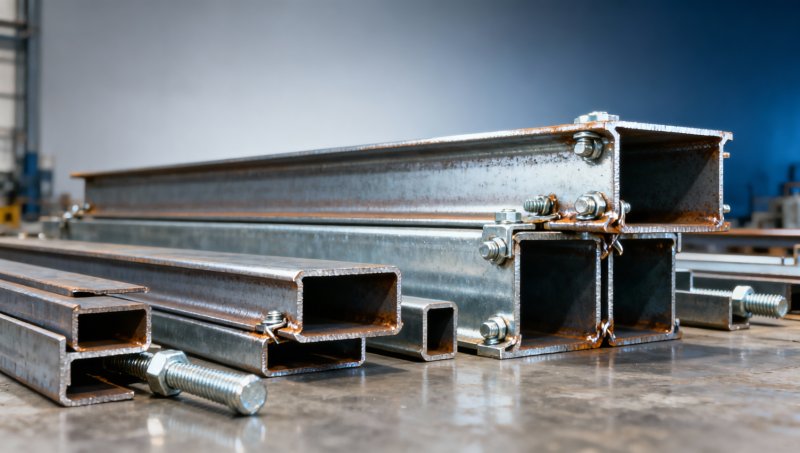
When buyers, engineers, and project managers evaluate structural steel, the most important question is usually not “What is structural steel?” but “Which properties will affect safety, fabrication efficiency, service life, and total cost?” In real-world construction and industrial use, a few core properties have the biggest impact on project outcomes: strength, ductility, toughness, weldability, dimensional accuracy, corrosion resistance, and consistency with international standards.
These properties matter because structural steel is not selected in isolation. It must perform through design, transportation, cutting, drilling, welding, bolting, erection, inspection, and long-term service. A steel section with strong mechanical values on paper may still create problems if it is difficult to weld, has unstable tolerances, or does not suit the connection method used on site.
For that reason, the best material choice is usually the one that balances structural performance, fabrication practicality, environmental resistance, and procurement reliability.
Strength: The First Filter for Load-Bearing Performance
Strength is one of the first properties engineers and buyers check because it directly relates to how much load a structural member can carry. In structural applications, yield strength and tensile strength are especially important.
Yield strength indicates the stress level at which steel begins to deform permanently. This is critical in beams, columns, channels, and angle sections used in buildings and industrial frames. Tensile strength shows how much pulling force the steel can withstand before failure. Together, these values help determine whether a steel section can safely support dead loads, live loads, wind loads, equipment loads, or other service demands.
However, higher strength is not always automatically better. In some projects, a very high-strength grade can increase fabrication difficulty or cost without creating enough practical benefit. For many buyers, the smarter approach is to match the steel grade to the structural use, local code requirements, and fabrication process.
Common material grades used in structural sections include Q195, Q235, Q345, A36, SS400, and S235JR. These grades are selected based on design requirements, regional specifications, and expected performance in service.
Ductility and Toughness: Why Safe Steel Must Do More Than Carry Load
A structure does not only need to be strong; it also needs to behave predictably under stress. This is where ductility and toughness become important.
Ductility is the ability of steel to deform before fracturing. This property is valuable because it gives warning before failure and helps structures absorb unexpected stress, vibration, or movement. In seismic areas, dynamic load environments, and connection-heavy structures, ductility becomes even more important.
Toughness refers to the steel’s ability to absorb energy and resist brittle fracture, especially under impact or low-temperature conditions. If a project is located in a cold climate or exposed to shock loads, low toughness can become a serious risk.
For project teams, this means mechanical property review should go beyond basic strength data. Material test certificates, impact performance where required, and conformity to applicable ASTM, EN, JIS, or GB standards all help reduce performance uncertainty.
Weldability and Connection Performance: Critical for Fabrication and Erection
In many projects, fabrication efficiency and connection reliability are just as important as raw mechanical strength. Poor weldability can slow production, increase rework, and create quality control issues. This is why weldability is one of the structural steel properties that matter most for fabricators, contractors, and quality teams.
Steel with good weldability allows smoother joining, more stable heat-affected zone performance, and lower risk of cracking during fabrication. This is especially relevant for customized structural steel components, connection plates, support frames, and site-adjusted assemblies.
Connection performance also matters in bolted and welded systems. Structural steel connections transfer forces between members, so the material must support drilling, punching, cutting, and fastening without excessive distortion or local weakness. Dimensional consistency is essential here. Even small tolerance issues can create alignment problems during erection, causing delays on site.
This is one reason many buyers prefer manufacturers that offer processing services such as bending, welding, punching, decoiling, and cutting under controlled quality systems. Consistency in section shape, hole position, edge condition, and coating quality can save significant installation time later.
Corrosion Resistance and Surface Protection: Important for Service Life and Maintenance Cost
Corrosion resistance has a direct effect on lifecycle cost. Even when the base steel grade is suitable, inadequate surface protection can shorten service life, increase maintenance frequency, and raise total ownership cost.
The right protection method depends on the project environment. For indoor dry conditions, basic finishing may be sufficient. For outdoor use, industrial zones, coastal regions, humid climates, or agricultural environments, galvanized coating or other protective surface treatments are often preferred.
Buyers should review not only the steel grade but also the final surface condition, such as galvanized, powder coating, or black varnish, depending on use conditions. Surface treatment should also be considered together with fabrication sequence. For example, if punching, cutting, or welding will occur after coating, planning is needed to maintain protection quality.
For distributors, contractors, and end users, corrosion protection is not just a technical detail. It is a financial decision that affects maintenance planning, replacement cycles, appearance, and customer satisfaction over time.
Why Dimensional Accuracy and Processing Capability Matter More Than Many Buyers Expect
Many sourcing problems are caused not by wrong material grade, but by inconsistent dimensions, poor straightness, unstable thickness, or processing mismatch. Structural steel that is difficult to fit into the intended assembly can increase installation labor, cause connection errors, and delay project schedules.
This is particularly important for light structural systems and secondary framing members. For example, C Sections Steel is widely used in purlins and wall beams of steel structure buildings, lightweight roof trusses, brackets, and mechanical light industry manufacturing. In such applications, accuracy in thickness, length, perforation, and shape directly affects assembly efficiency.
Typical specifications may include thickness from 1mm to 12mm, lengths such as 6m, 9m, and 12m, with large-quantity customization available. Depending on project needs, production can involve hot roll, cold roll, cold drawn, perforation, and additional services like bending, welding, punching, decoiling, and cutting. Buyers evaluating these sections should check whether the supplier can hold tolerance requirements, support custom sizing, and maintain stable quality across batches.
For engineers and procurement teams, this is often where supplier value becomes visible: not only supplying steel, but supplying steel that arrives ready for efficient use.
Standards, Certification, and Traceability: The Basis for Technical and Commercial Confidence
For technical evaluators, procurement teams, and business decision-makers, compliance is a major part of risk control. Structural steel should be assessed against the standards required by the destination market and project specification. Common reference systems include ASTM, EN, JIS, and GB.
Certifications and third-party inspection support can strengthen confidence, especially for export projects. Documents such as CE, SGS, BV, and ISO-related quality records are often important during supplier approval, project bidding, and incoming inspection.
Traceability also matters. A reliable manufacturer should be able to provide clear documentation for material grade, heat number, size, inspection records, and processing status. This helps quality control personnel, project owners, and downstream users verify that the delivered product matches approved specifications.
For global sourcing, documentation quality can be as important as production quality. Incomplete or inconsistent paperwork can delay customs clearance, project approval, or site acceptance.
How to Evaluate Structural Steel More Effectively Before You Buy
If you are selecting structural steel for a project, a practical evaluation framework can help avoid costly mistakes. Focus on these questions:
1. Is the steel grade appropriate for the load and design code?
Check yield strength, tensile strength, and any special performance requirements such as impact resistance.
2. Will the material suit the fabrication method?
Confirm weldability, punching suitability, cutting behavior, and connection performance.
3. Is the corrosion protection suitable for the service environment?
Review galvanized or other surface treatment options based on indoor, outdoor, humid, coastal, or industrial exposure.
4. Can the supplier maintain dimensional consistency?
Verify thickness range, length options, tolerance control, and customization capability.
5. Does the supplier meet compliance and documentation requirements?
Ensure alignment with ASTM, EN, JIS, GB, and any project-specific certification or inspection requirements.
6. Can the supplier support stable delivery for export projects?
Lead time reliability, production capacity, packaging, and communication quality all influence project success.
For many international buyers, the supplier decision is ultimately about reducing sourcing risk. A capable structural steel manufacturer should help control technical risk, schedule risk, and quality risk at the same time.
What a Reliable Structural Steel Manufacturer Contributes Beyond the Product
Choosing the right manufacturer can improve more than material quality. It can also improve sourcing efficiency, project coordination, and long-term cost control.
Hongteng Fengda, as a structural steel manufacturer and exporter from China, supplies angle steel, channel steel, steel beams, cold formed steel profiles, and customized structural steel components for global construction, industrial, and manufacturing projects. With modern manufacturing facilities and strict quality control, the company supports major international standards and serves customers across North America, Europe, the Middle East, and Southeast Asia.
For overseas buyers, this kind of supplier capability matters because it supports consistent production, dependable lead times, and lower procurement uncertainty. Whether the requirement is for standard sections or OEM-based structural components, a manufacturer with export experience can better support specification matching, document coordination, and stable supply.
That creates value not only for engineers and contractors, but also for purchasing managers, distributors, quality teams, and business decision-makers who must balance performance, price, and execution reliability.
Conclusion: The Best Structural Steel Choice Is the One That Performs Through the Whole Project
The structural steel properties that matter most are the ones that affect the entire project lifecycle: strength for load-bearing safety, ductility and toughness for reliable behavior, weldability and connection performance for fabrication and erection, corrosion resistance for service life, and dimensional accuracy for smooth installation.
For buyers and project teams, the key is to look beyond basic product descriptions and evaluate how the steel will actually perform in design, processing, installation, and long-term use. When material properties, standards compliance, processing capability, and supplier reliability are all aligned, projects are easier to execute and less likely to face quality or cost surprises.
In short, the right structural steel is not simply the cheapest or strongest option. It is the one that delivers safe performance, efficient fabrication, dependable supply, and better value over time.
Please give us a message


Please enter what you want to find