Corrugated steel sheet is becoming a preferred choice in modern construction, offering exceptional durability and design flexibility for roofing, façades, and structural protection. It combines high strength, corrosion resistance, and aesthetic versatility, allowing architects and builders to deliver structures that are both resilient and visually appealing. As a reliable structural steel manufacturer and exporter, Hongteng Fengda provides high-quality steel products including steel channel for mezzanine floors, carbon steel for pressure vessels, and pre-painted steel sheet to meet global industrial and architectural needs. From steel rebar for earthquake resistance to steel pile for port construction, our solutions deliver strength, safety, and aesthetic appeal across diverse projects. The rise in demand for advanced steel materials reflects continuous innovation in façade engineering, where corrugated surfaces now play an essential role not only in protection but also in energy efficiency and design evolution.
Definition and Material Overview
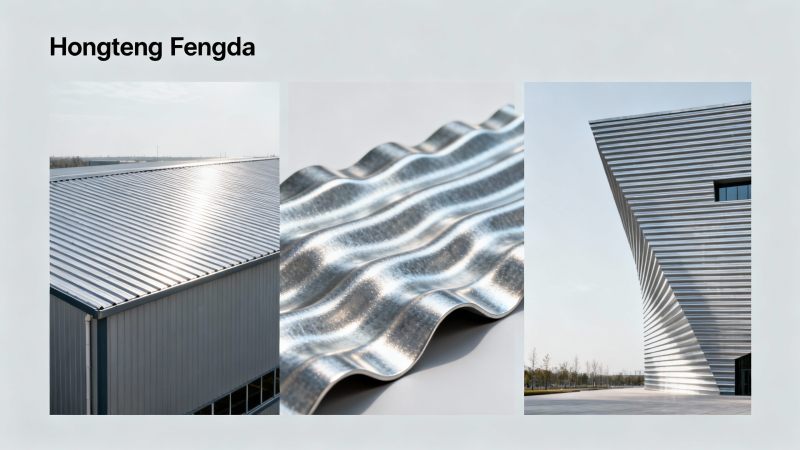
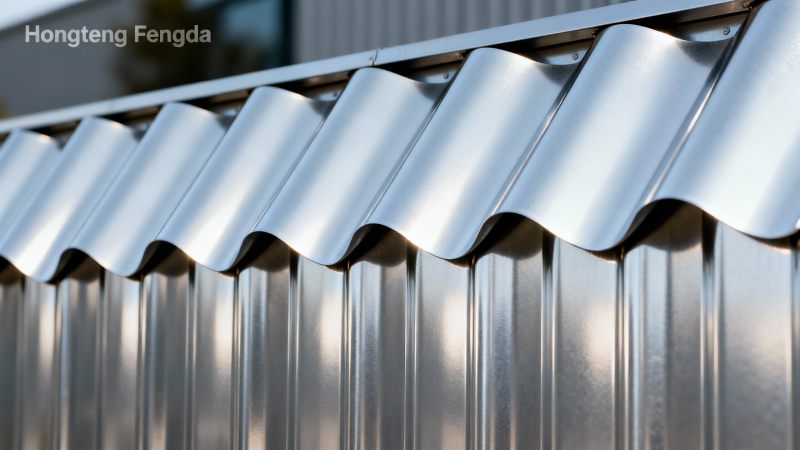
Corrugated steel sheet is a type of profiled metal sheet formed by rolling cold-formed steel into wave-like patterns that enhance rigidity and span capability without increasing the material’s thickness. Compared to plain steel sheets, the corrugation design significantly improves load-bearing performance, making it ideal for both structural and decorative applications. It is widely used in combination with steel channel for structural support systems where lightweight solutions are required. The raw material typically involves galvanized, galvalume, or pre-painted steel sheet substrates depending on the project specification. The choice between carbon steel for automotive industry and stronger alloyed variants depends on surface requirements, corrosion exposure, and mechanical strength. Corrugated steel sheet’s flexibility makes it suitable for residential roofing, industrial cladding, and architectural façades. In addition to improving energy efficiency through reflective coatings, it also contributes to sustainable building certifications by enabling recyclable design. Many engineers value this material not just for its strength-to-weight ratio but also for its cost-effectiveness and ease of installation, especially when compared to aluminum or fiber cement panels.
Market Overview and Industry Development
The global corrugated steel market shows consistent growth due to infrastructure expansion, urbanization, and the modernization of building materials. In regions such as North America, Europe, and Southeast Asia, corrugated panels are integral to both new construction and renovation efforts. The steel profile for architectural design continues evolving toward lighter, stronger, and more weather-resistant formulations. Manufacturers are adopting high-performance coatings that enhance corrosion protection, allowing pre-painted steel sheets to maintain vibrant color stability in harsh environments. Alongside this trend, the expansion of port infrastructure has increased the consumption of steel pile for port construction, while rail and roadway expansion drives demand for steel bar for railway construction. To meet these various applications, companies like Hongteng Fengda maintain modern production facilities with precise cold forming technologies, ensuring consistency in profile geometry and coating adherence. The market’s demand pattern also reflects a rise in customized shapes and modular façade panels, offering architects new levels of creative freedom. Moreover, governments’ focus on sustainable construction stimulates innovation in recyclable materials and eco-friendly production processes, accelerating the adoption of steel rebar for earthquake resistance systems across seismic regions.
Application Scenarios in Roofing and Façade Design
Corrugated steel sheet plays a critical role in modern architectural and industrial projects. For roofing protection, corrugated panels provide exceptional drainage efficiency, heat reflectivity, and load resistance. They are used extensively in commercial warehouses, agricultural buildings, and energy stations. When applied as façade cladding, these sheets enhance the visual identity of buildings, creating dynamic patterned surfaces that reflect light and shadow. Corrugated façades are popular in contemporary projects like art centers and educational campuses due to their sleek appearance and long-term durability. In infrastructure, the integration with steel channel for mezzanine floors allows for optimized structural performance when supporting additional loads or mezzanine platforms in factories or logistic hubs. Additionally, combining corrugated sheets with materials such as Tube Carbon Steel in framework construction provides superior strength and ductility, especially for high-stress environments such as bridges or pipeline engineering. These solutions demonstrate how combining different steel forms can deliver comprehensive protection, efficient construction schedules, and long-lasting performance under diverse weather and mechanical conditions.
Technical Performance and Structural Advantages
From a technical standpoint, corrugated steel sheet possesses outstanding load carrying capacity relative to its weight. The alternating wave structure improves the moment of inertia, reducing deflection without increasing steel thickness. This allows engineers to achieve wide spans and lower overall structural mass. When compared with conventional flat sheets, corrugated options provide superior rigidity, enabling architects to minimize sub-frame requirements and reduce project cost. These panels are also compatible with carbon steel for pressure vessels in industrial facilities, where chemical resistance and thermal stability are prioritized. The coating technologies used include polyester, PVDF, and epoxy systems, ensuring UV protection and color retention under long-term exposure. The yield strength ranges from 230 MPa to over 550 MPa depending on the base material, with elongation levels ensuring formability for complex designs. When paired with mechanical supports made from durable materials such as S355-grade tube sections, the resulting structure achieves higher torsional resistance and improved safety margins. For instance, structural enhancements using Tube Carbon Steel not only reduce the weight of the structure but also improve stiffness and corrosion resistance. This synergy between sheet and tube systems is essential in shipbuilding, pipeline engineering, and transportation machinery applications that require robust yet efficient designs.
Comparison with Other Materials
When evaluating corrugated steel sheet against other materials like aluminum, fiberglass, or fiber cement panels, several factors define its superiority. Steel offers higher tensile strength, fire resistance, and recyclability. Aluminum may provide lighter weight but lacks equivalent stiffness and is costlier under fluctuating metal prices. Fiberglass and PVC alternatives fail to match steel in terms of temperature endurance and impact resistance. Furthermore, unlike some composite claddings, corrugated steel can be easily fabricated, welded, or coated for extended service life. Its compatibility with steel channel for structural support provides a continuous metal-to-metal bonding, enhancing mechanical integrity. It also performs better than timber or plastic roofing in long-term wind load and fire code compliance. From a lifecycle cost perspective, the longevity of pre-painted steel sheet systems reduces maintenance frequency and replacement cost, providing significant total cost savings over 20-30 years of use. For engineering teams and project managers, this durability translates to predictable timelines and reduced risk during procurement and installation phases.
Procurement Guide and Selection Tips
Selecting the right corrugated steel sheet involves evaluating key parameters such as coating type, base metal thickness, and profile design. Procurement officers and quality control managers must consider compliance to standards such as ASTM A653, EN 10346, and JIS G3302. These ensure the sheet’s mechanical and corrosion performance meets design expectations. The choice of materials also depends on application: lighter gauge pre-painted steel sheet is suitable for decorative façades, whereas thicker galvanized panels are recommended for industrial roofs. When integrating systems, it is beneficial to use compatible structural components such as steel channel for mezzanine floors and steel profile for architectural design to ensure assembly consistency and load transfer accuracy. Price fluctuations in the carbon steel for automotive industry sector also influence sourcing decisions, thus long-term supplier partnerships play an essential role. Working with Hongteng Fengda allows purchasers to maintain stable supply and consistent quality due to strict QC procedures and modern rolling equipment. Each batch undergoes mechanical and coating tests, guaranteeing uniformity even under large-scale production. Moreover, customized profiling and color options enable architects to realize branding-inspired facades while maintaining technical reliability.
Cost, Alternatives, and Sustainability Aspects
Cost analysis in corrugated steel sheet selection often centers on material longevity, installation speed, and maintenance cost. Although initial cost may be slightly higher than alternative materials, long-term advantages make it an economically wise choice. Its reusability aligns with global sustainability initiatives promoting circular construction materials. Compared with non-metallic panels, steel’s recyclability rate exceeds 90%, reducing waste and carbon footprint. Furthermore, production advancements such as energy-efficient galvanizing lines and water-based coating systems lower emission levels. For areas facing high seismic activity, integrating steel rebar for earthquake resistance in combination with corrugated panels creates structural assemblies capable of withstanding lateral forces while maintaining architectural integrity. This adaptability ensures that both industrial and residential developers can achieve safety compliance without sacrificing design freedom. In addition, by sourcing from established producers such as Hongteng Fengda, customers reduce risks associated with substandard imports and benefit from transparent certification traceability under EN, ASTM, and JIS standards. The growing focus on eco-conscious procurement highlights the significance of durable steel innovations in building a sustainable future.
Standards and Quality Certification
Hongteng Fengda ensures that all corrugated steel sheets meet major international standards including ASTM, EN, JIS, and GB. Each production stage—from raw material inspection to coating application—is managed under strict quality control procedures. This comprehensive testing regimen guarantees that products conform to yield strength, elongation, and tensile benchmarks required by engineers and architects worldwide. Certified steel channel for structural support, carbon steel for pressure vessels, and pre-painted steel sheet underline our capability to deliver globally recognized performance reliability. Additionally, third-party inspections are regularly conducted to verify compliance and ensure traceability. Similar protocols apply to other structural components such as Tube Carbon Steel, where specifications like S355JRH or S275J2H guarantee mechanical consistency and superior welding performance. Maintaining adherence to DIN, BS, and ASME standards allows Hongteng Fengda to confidently supply industries spanning from construction to chemical processing, power generation, and ship fabrication. Such certifications not only enhance market credibility but also assure buyers that each batch adheres to uniform structural properties, essential for large-scale projects and OEM fabrication.
Trend and Future Insights
Future trends show corrugated steel sheet evolving beyond traditional uses toward intelligent wall systems and energy-efficient surfaces. Integration with photovoltaic layers and ventilated façade systems enables buildings to achieve better thermal control and renewable energy collection. Advanced coatings featuring self-cleaning and anti-microbial functions are under development, enhancing durability in hygiene-critical environments such as food plants and hospitals. With rapid global urbanization, modular steel structures—powered by components like steel profile for architectural design and steel channel for mezzanine floors—will dominate sustainable urban expansion. As the digital construction era progresses, Building Information Modeling (BIM) will further optimize steel material application, reducing waste and improving precision. For decision-makers and investors, the move toward smart, recyclable building envelopes presents new growth opportunities. Corrugated sheet innovation, in conjunction with reinforced products like carbon steel for pressure vessels or steel bar for railway construction, ensures multi-sector adaptability. The future emphasizes coordination between material science, eco-friendly production, and customizable design, positioning corrugated steel as both a structural foundation and aesthetic statement for next-generation architecture.
Why Choose Hongteng Fengda
Choosing Hongteng Fengda means partnering with a structural steel manufacturer and exporter that combines technical excellence, reliable supply, and global service capability. Our portfolio extends beyond corrugated steel sheets to include steel beams, steel channels, cold-formed profiles, and bespoke OEM components. We serve clients across North America, Europe, the Middle East, and Southeast Asia, ensuring stable production capacity, consistent quality, and timely delivery. Each product—from steel pile for port construction to Tube Carbon Steel assemblies—is backed by compliance with ASTM, EN, JIS, and GB standards, embodying our commitment to quality and transparency. Project managers, engineers, and procurement leaders appreciate our responsiveness and customer-focused technical consultation. Whether designing mezzanine platforms or constructing energy-efficient façades, Hongteng Fengda provides integrated solutions that combine structural integrity with aesthetic value. Our mission is to be your long-term trusted steel partner, delivering products that reduce sourcing risks, optimize project performance, and create lasting value. For inquiries or customized solutions, reach out to Hongteng Fengda and experience how professional manufacturing transforms your vision into durable reality.
- steel i
- tube carbon steel
- structural steel
- steel beams
- Structural Steel
- Construction Materials
- Steel Beams
- Profile
- Rebar
- S355JR
- Galvanized
- Steel Beam
- Steel Channel
- carbon steel
- steel sheet
- steel rebar
- steel profile
- steel pile
- steel bar
- corrugated steel sheet
- carbon steel for automotive industry
- Steel Channel for structural support
- steel bar for railway construction
- steel pile for port construction
- steel profile for architectural design
- steel rebar for earthquake resistance
- pre-painted steel sheet
- carbon steel for pressure vessels
- Steel Channel for mezzanine floors
Related recommendations
 What Is a Steel Profile? Common Shapes, Uses, and Selection BasicsProfile selection starts with shape, but performance depends on load, fabrication, and standards. Learn common steel profile types, uses, and smart selection basics.
 Steel Roofing Types Explained: Corrugated, Standing Seam, and Metal ShinglesSteel Roofing guide comparing corrugated panels, standing seam, and metal shingles. Discover costs, durability, weather performance, and how to choose the best roof for your home.
 How Hot-Dip Galvanized Coating Thickness Affects Service LifeHot-dip galvanized coating thickness directly affects steel service life. Learn how the right zinc layer improves corrosion protection, controls cost, and supports smarter project decisions.
 Pipe Stainless Grades Explained: 304 vs 316 for Corrosion ResistancePipe stainless grades explained: compare 304 vs 316 for corrosion resistance, cost, and service life. Learn which stainless pipe grade fits marine, chemical, and water system applications.
Please give us a message


Please enter what you want to find