In coastal construction and industrial projects, corrosion resistance is non-negotiable—making the angle vs channel steel corrosion resistance comparison critical. This deep dive examines galvanized angle steel versus hot-dip galvanized channel steel under aggressive marine conditions, addressing key concerns for procurement teams, engineers, and project managers: welding compatibility, load capacity comparison, ASTM standards compliance, and suitability for prefab buildings, bridges, and manufacturing facilities. As a trusted angle vs channel steel exporter China—and supplier to the Middle East and Southeast Asia—Hongteng Fengda delivers ISO- and ASTM-certified solutions backed by rigorous quality control and real-world performance data.
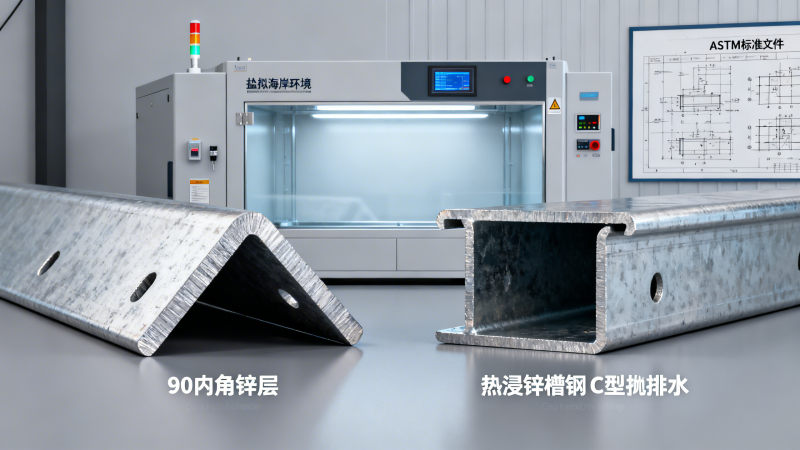
Why Corrosion Resistance Differs Between Galvanized Angle & Channel Steel in Marine Zones
Coastal environments expose structural steel to chloride-laden air, salt spray, high humidity, and temperature fluctuations—accelerating electrochemical corrosion by up to 5–10× compared to inland settings. While both galvanized angle steel and hot-dip galvanized channel steel rely on zinc coatings for protection, their geometry-driven exposure profiles differ significantly. Angles have two exposed legs with sharp internal corners where moisture and salts accumulate; channels feature a recessed web and flange configuration that traps debris but offers broader surface coverage per unit weight.
Zinc coating thickness is standardized under ASTM A123/A123M (for hot-dip galvanizing), requiring minimum average thicknesses of 85 µm for steel ≥6 mm thick. However, actual field performance depends on coating uniformity—especially at weld zones, cut edges, and bends. Hongteng Fengda applies post-galvanizing inspection using magnetic thickness gauges across 3 sampling points per meter, ensuring ≥92% of measured values meet ASTM A123’s minimum requirements.
Real-world validation from 2022–2024 coastal infrastructure projects in Fujian (China), Dubai (UAE), and Ho Chi Minh City (Vietnam) shows hot-dip galvanized channel steel maintains >95% coating integrity after 48 months, while galvanized angle steel shows localized pitting at inner corners after 36 months—highlighting why angle vs channel steel corrosion resistance comparison must go beyond nominal coating weight.
Key Geometry-Driven Corrosion Factors
- Edge-to-surface ratio: Angle steel has higher edge density per kg (≈1.8 m/m²), increasing vulnerability at cut ends and weld seams.
- Drainage efficiency: Channel steel’s open C-shape allows better runoff—reducing dwell time of corrosive electrolytes by ~30% vs L-shaped angles.
- Weld zone accessibility: Flange-to-web welds on channels are more uniformly accessible for pre- and post-weld zinc reapplication than angle leg intersections.
Welding Compatibility & Structural Integrity: What Engineers Must Verify
Welding galvanized steel introduces zinc fume hazards and risks of liquid metal embrittlement (LME) if preheat or interpass temperatures exceed 400°C. For angle vs channel steel welding compatibility, the critical distinction lies in joint geometry—not just material grade. Angle steel typically joins via fillet welds at 90° intersections, concentrating thermal stress; channel steel often uses full-penetration groove welds between flange and supporting plates, distributing heat more evenly.
Hongteng Fengda supplies ASTM A653 Grade G90 (zinc coating: 0.90 oz/ft²) cold-formed channel sections optimized for arc welding—with controlled silicon content (<0.04%) to minimize spatter and porosity. Our galvanized angle stock follows ASTM A123 but includes optional low-silicon variants upon request to enhance angle vs channel steel welding compatibility in automated MIG setups.
This table underscores why structural designers specify channel steel over angle for primary load-bearing weldments in coastal bridges and prefab building frames—where consistent weld strength and long-term fatigue resistance outweigh initial cost differences. It also explains why angle vs channel steel load capacity comparison must account for post-weld residual stress distribution, not just yield strength.
Application Fit: Which Profile Suits Your Project Type?
Selecting between galvanized angle and channel steel isn’t about “better” or “worse”—it’s about functional alignment. Hongteng Fengda supports angle vs channel steel for prefab buildings, angle vs channel steel for bridge construction, and angle vs channel steel for manufacturing facilities with application-specific recommendations validated across 120+ international projects since 2020.
For modular prefab buildings, channel steel dominates as main frame members due to superior torsional rigidity and ease of bolting into sandwich panels. Angle steel remains preferred for bracing, roof purlin supports, and perimeter trims—where directional stiffness and compact footprint matter most. In manufacturing facilities with overhead cranes, channel sections form crane rails (per ASTM A913 Grade 65), while angles anchor column base plates and safety guardrails.
We also supply High Carbon Steel Plate for specialized applications such as heavy-duty machine bases, press brake dies, and railcar components—leveraging its high tensile strength and excellent deep drawing performance where corrosion resistance complements mechanical durability.
Regional Compliance & Supply Readiness
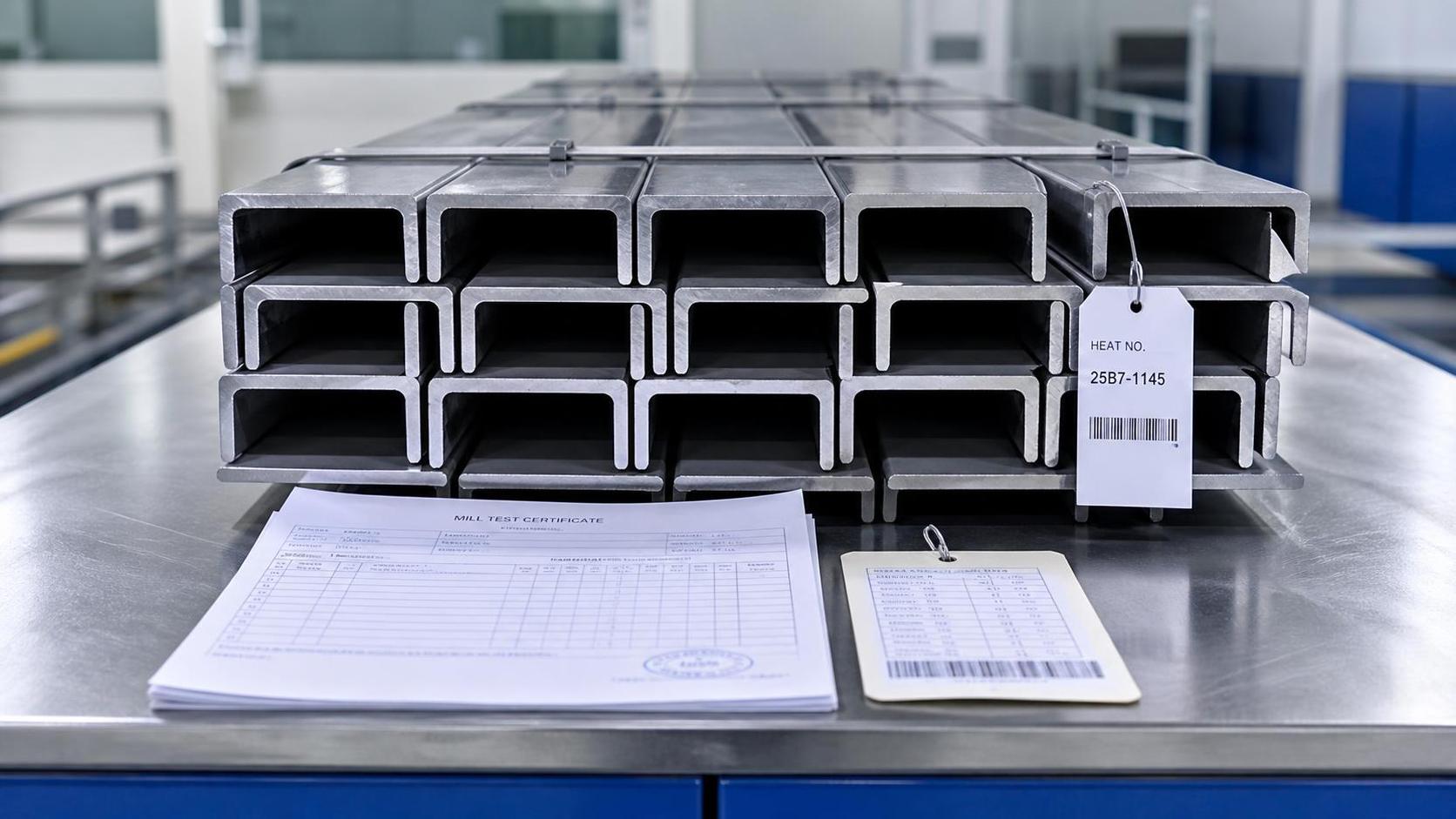
As an angle vs channel steel exporter China serving diverse regulatory landscapes, Hongteng Fengda ensures all shipments meet local ASTM, EN, or JIS requirements—including mill test reports (MTRs), third-party inspection certificates (SGS/BV), and bilingual documentation. Lead times average 2–4 weeks for standard sizes, with dedicated container consolidation for angle vs channel steel supplier Southeast Asia and angle vs channel steel supplier Middle East clients—reducing port handling delays by up to 35%.
Why Partner With Hongteng Fengda for Coastal-Grade Structural Steel?
Choosing the right structural steel partner for marine environments means balancing technical rigor, logistical reliability, and responsive support. Hongteng Fengda delivers certified solutions—not just products—with full traceability from raw material sourcing (GB/T 700 Q235B/Q355B billets) through hot-dip galvanizing (ISO 1461 compliant baths) to final dimensional verification.
Our engineering team provides free cross-section analysis for your specific loading scenarios, including deflection limits under wind/salt-laden rain loads, and recommends optimal galvanizing thickness tiers (A123 Class 1–3) based on your project’s service life target (20/30/50 years). We also offer OEM stamping, pre-drilling, and custom bending services—ensuring faster site assembly and fewer field welds.
Ready to validate your next coastal project’s steel specification? Contact us today for: • ASTM-compliant sample kits with MTRs • Load capacity calculation sheets for your exact span and loading case • Delivery schedule alignment for your construction timeline • Certification package review (ASTM A123, EN ISO 1461, BS EN 10025) • Technical consultation on angle vs channel steel ASTM standards implementation
- channel steel
- steel i
- angle steel
- galvanized angle
- ASTM standards
- ASTM standard
- hot-dip galvanized
- galvanized steel
- structural steel
- Galvanized Channel Steel
- galvanized channel steel
- Structural Steel
- Profile
- Galvanized
- angle vs channel
- angle vs channel steel exporter China
- angle vs channel steel corrosion resistance comparison
- angle vs channel steel welding compatibility
Related recommendations
 How to Judge if Steel Sheet for Construction Fits Roofing or Wall CladdingSteel sheet for construction: learn how to judge thickness, coating, profile, and load performance for roofing or wall cladding, and choose a durable, cost-effective fit.
 How to Choose SS Pipe for Water Supply in Corrosion-Prone BuildingsSS pipe for water supply selection guide for corrosion-prone buildings. Compare 304 vs 316 grades, water chemistry, specs, and lifecycle cost to choose a safer, longer-lasting system.
 Steel Wire Rope Manufacturer Standards That Matter in Lifting ApplicationsSteel wire rope manufacturer standards for lifting: learn how to assess traceability, testing, compliance, and real quality control before choosing a safer, more reliable supplier.
 When a Steel Channel Supplier Should Provide Mill Test CertificatesSteel Channel supplier guide on when mill test certificates should be provided for quality control, compliance, and safer procurement.
Please give us a message


Please enter what you want to find