Selecting the right carbon steel plate for shipbuilding is critical—especially when it comes to minimum yield strength, thickness tolerance, and surface finish requirements. As a trusted carbon steel plate manufacturer and supplier from China, Hongteng Fengda delivers ASTM-, EN-, and GB-compliant plates tailored for marine structural applications. Whether you’re a procurement professional, project manager, or quality assurance specialist, our high carbon steel plate solutions meet rigorous international standards—ensuring safety, durability, and regulatory compliance. Explore how top-tier carbon steel plate suppliers like Hongteng Fengda support global shipyards with precision-engineered, traceable, and certified materials.
Technical Performance: Yield Strength, Thickness Tolerance & Surface Finish

In shipbuilding, structural integrity under dynamic loading, hydrostatic pressure, and cyclic fatigue demands strict adherence to mechanical and dimensional specifications. Carbon steel plate for shipbuilding must satisfy three non-negotiable technical pillars: minimum yield strength (typically ≥235 MPa for Grade A/B per ASTM A131 or EN 10025-2), thickness tolerance (±0.08 mm for plates ≤10 mm thick; ±0.12 mm for 10–20 mm; ±0.15 mm for >20 mm per ISO 4063 and GB/T 709), and surface finish (free of laminations, blisters, scale pits, or rolling cracks—surface roughness Ra ≤12.5 μm after descaling). These parameters directly influence weldability, fracture toughness at low temperatures (−20°C impact testing per Charpy V-notch), and long-term corrosion resistance in saline environments. For example, Grade DH36 plates used in hull bottom plating require minimum yield strength of 355 MPa and guaranteed −40°C impact energy ≥27 J—conditions that only advanced controlled-rolling and thermo-mechanical processing (TMCP) can consistently deliver. At Hongteng Fengda, every heat-lot carbon steel plate undergoes ultrasonic testing (UT Level B per EN 10160), tensile verification, and mill certificate traceability back to raw material origin and heat treatment batch.
Standards & Certification: Global Compliance Without Compromise
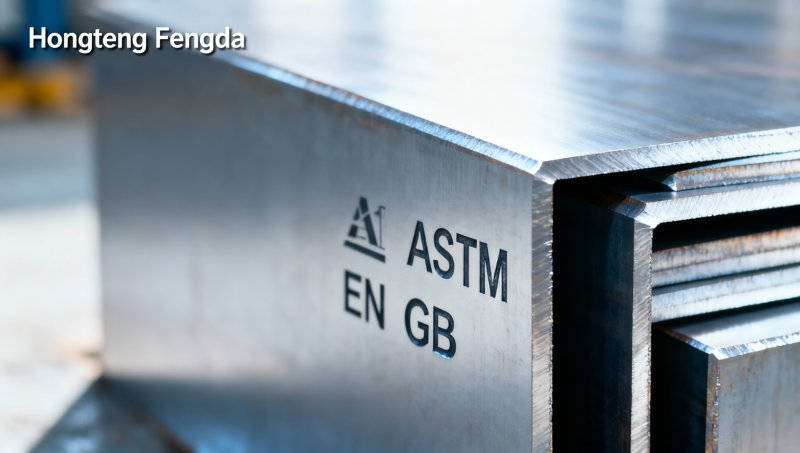
Compliance isn’t optional—it’s foundational. Shipbuilding carbon steel plate must conform to multiple overlapping standards depending on vessel class, flag state, and classification society approval (e.g., ABS, DNV, LR, CCS, BV). ASTM A131 covers U.S.-flagged vessels and specifies Grades A, B, D, E, AH32, DH36, EH40, and FH47; EN 10207 governs European inland waterway craft; while GB/T 712 remains mandatory for Chinese-built commercial ships and offshore support vessels. Crucially, dual-certification (e.g., ASTM A131 + EN 10025-2) is increasingly requested by multinational shipyards to streamline procurement across regional supply chains. Hongteng Fengda maintains active third-party certifications from SGS, Bureau Veritas (BV), and China Classification Society (CCS), with full documentation—including MTRs (Mill Test Reports), chemical analysis reports, and NDT logs—digitally accessible via secure client portal. All plates are marked with permanent laser-engraved heat numbers, grade, thickness, and standard designation—ensuring full auditability from mill to dockyard.
Procurement Guide: What Buyers Must Verify Before Order Placement
Procurement professionals face mounting pressure to balance cost, lead time, and risk mitigation—especially amid volatile scrap pricing and tightening environmental regulations on steel production. When sourcing carbon steel plate for shipbuilding, verify these five checkpoints before finalizing purchase: (1) Heat number traceability to furnace batch and ladle analysis; (2) Independent certification of thickness tolerance—not just nominal thickness; (3) Surface inspection report confirming absence of edge cracks or subsurface defects; (4) Mill test report showing actual yield/tensile values—not just “meets spec” statements; (5) Packaging and marking compliance with ISO 8502-3 for rust prevention during maritime transit. Avoid suppliers offering “standard grade” without specifying exact sub-grade (e.g., “Q345B” ≠ “Q345C”—the latter requires −20°C impact testing). As a leading carbon steel plate supplier, Hongteng Fengda provides pre-shipment third-party inspection options (SGS or BV) and offers flexible MOQs—from single coil samples for qualification to full containerized shipments—with documented lead times under 35 days for standard grades. We also integrate seamlessly with ERP systems for real-time inventory visibility and automated PO acknowledgment.
Application Scenarios & Why Structural Integrity Can’t Be Compromised
Carbon steel plate serves as the backbone of modern marine architecture—not just in hull shells and decks, but in bulkheads, rudder frames, propeller shaft tunnels, and offshore jack-up leg structures. Each application imposes unique stress profiles: deck plating endures point loads from cranes and cargo stacking; side shell plates resist lateral wave slamming; and double-bottom floors absorb grounding impact energy. A deviation of just 0.1 mm in thickness tolerance may reduce buckling resistance by up to 4% in slender panels—a margin that classification societies explicitly penalize during structural review. Similarly, uncontrolled surface oxidation or mill scale residue compromises weld penetration and promotes hydrogen-induced cracking in high-strength grades like EH40. That’s why Hongteng Fengda employs automated shot blasting (Sa2.5 per ISO 8501-1) and phosphating pre-treatment for all plates destined for welding-intensive fabrication. For integrated structural solutions, we also supply complementary products such as Channel Steel Supplier in Q235B and Q345B grades—ideal for longitudinal stiffeners, bracket supports, and modular cabin framing—ensuring full material consistency across multi-component assemblies.
Why Choose Hongteng Fengda: Beyond the Spec Sheet
Choosing a carbon steel plate manufacturer means choosing a partner who understands your deadlines, your QA protocols, and your zero-defect culture. Hongteng Fengda combines deep metallurgical expertise with agile manufacturing: our 1.2-million-ton annual capacity includes dedicated TMCP lines for high-strength marine grades, AI-powered thickness monitoring, and fully automated packaging for salt-spray resistant delivery. Unlike generic exporters, we assign dedicated technical account managers—metallurgists with 10+ years’ experience in marine certification—who co-develop material submittals, assist with classification society audits, and provide on-site support during first-article inspections. With ISO 9001:2015, ISO 14001, and OHSAS 18001 certified operations—and warehouses strategically located in Tianjin, Qingdao, and Shanghai—we guarantee consistent quality, reliable lead times, and responsive communication across all time zones. Whether you’re an OEM shipbuilder in Norway, a Tier-1 fabricator in Singapore, or a procurement consortium in Brazil, contact us today to request a free material suitability assessment, sample shipment, or customized compliance roadmap for your next vessel program.
Related recommendations
 What is an H-Beam and How Does it Differ from an I-Beam?Discover what an H-beam is and how it differs from an I-beam. Learn key structural differences and expert selection tips from Hongteng Fengda to optimize your steel construction projects today.
 Hot Rolled vs. Cold Rolled Steel Sheet: Surface and ToleranceHot rolled vs cold rolled steel sheet: Discover how surface finish and tolerances impact manufacturing. Optimize material selection, reduce costs, and ensure quality. Read our expert guide today!
 Best Cutting and Bending Practices for Galvanized Sheet MetalDiscover the best cutting and bending practices for galvanized sheet to prevent zinc flaking. Optimize tooling and thermal parameters to ensure perfect corrosion resistance. Read the full guide!
 What is Galvanized Sheet and How Does the Zinc Coating Work?Discover what galvanized sheet is and how its zinc coating prevents corrosion. Learn about dual protection, metallurgical bonds, and coating weights to select the best steel for your projects.
Please give us a message


Please enter what you want to find