Choosing the right high carbon steel plate supplier is critical—especially for demanding applications like carbon steel plate for shipbuilding. Yet many buyers overlook red flags that trigger costly delays, quality failures, or compliance risks. As a trusted carbon steel plate manufacturer and exporter, Hongteng Fengda helps global procurement teams, project managers, and quality controllers identify warning signs early—from inconsistent mill test reports to unverified certifications or unstable lead times. This guide reveals 3 critical red flags when evaluating high carbon steel plate suppliers, empowering structural steel buyers, distributors, and safety-focused decision-makers to source with confidence, control costs, and ensure on-time project delivery.
Red Flag #1: Inconsistent or Unverifiable Mill Test Reports (MTRs)
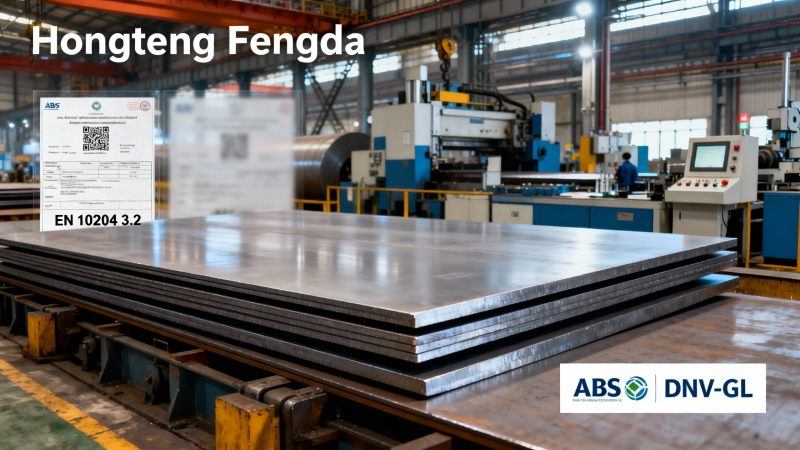
Mill Test Reports are not optional paperwork—they’re your first line of defense against material nonconformance. A legitimate carbon steel plate supplier must issue MTRs traceable to actual heat numbers, certified per ASTM A6/A6M, EN 10204 3.1, or GB/T 222–2006. Yet many so-called high carbon steel plate suppliers provide generic, template-based MTRs lacking batch-specific chemical composition, tensile strength, yield point, or impact testing data at low temperatures (e.g., -20°C or -40°C for marine-grade plates). Worse, some omit heat treatment records—critical for high carbon steel plate used in load-bearing hull sections or offshore platforms. At Hongteng Fengda, every carbon steel plate shipment includes EN 10204 3.2-certified MTRs with full traceability to furnace heats, rolling logs, and third-party lab verification (SGS, BV, or TÜV). We also support digital MTR access via QR-coded labels—enabling real-time validation by your QA team before unloading. For projects requiring strict ISO 9001:2015 audit trails, inconsistent documentation isn’t just inconvenient—it’s disqualifying.
Red Flag #2: Lack of Industry-Specific Certifications & Process Transparency
Certifications like ABS, DNV-GL, LR, or CCS aren’t decorative logos—they reflect proven capability in producing carbon steel plate for shipbuilding under rigorous classification society rules. A red flag emerges when a supplier claims “ISO certified” but cannot produce valid ABS Type Approval Certificates for Grade AH36/DH36/EH36 plates—or worse, outsources production to uncertified mills without disclosure. High carbon steel plate suppliers must demonstrate vertical integration: controlled melting (EAF + LF refining), thermomechanical controlled rolling (TMCP), and post-rolling quenching & tempering—all documented and auditable. At Hongteng Fengda, our facility holds active ABS, DNV-GL, and CCS approvals for structural carbon steel plate across Grades A–EH36, with full process mapping from ladle metallurgy to ultrasonic testing (UT) per ASTM A435/A578. We welcome virtual or on-site audits—and share live production dashboards showing rolling temperature curves, cooling rates, and hardness profiles per heat lot. Without such transparency, you’re not buying steel—you’re buying risk.
Red Flag #3: Unstable Lead Times & Reactive Communication
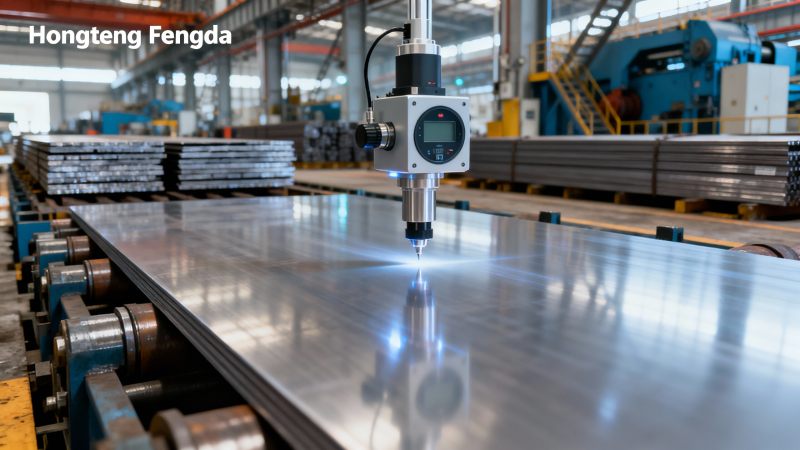
In global infrastructure projects, a 2-week delay in carbon steel plate delivery can cascade into $250K+ in idle labor, demurrage fees, or penalty clauses. Yet many high carbon steel plate suppliers quote “4–6 weeks” while silently relying on spot billet imports or subcontracted rolling lines—leaving them exposed to raw material shortages, port congestion, or regulatory hold-ups. Worse, they rarely proactively notify buyers of slippage until shipment is overdue. Hongteng Fengda maintains dual-source billet supply agreements with top-tier Chinese and ASEAN smelters, plus in-house hot rolling capacity exceeding 800,000 MT/year. Our ERP-integrated scheduling system updates lead time forecasts weekly—factoring in customs clearance windows, vessel availability, and seasonal monsoon impacts. For urgent orders, we offer Galvanized Round Steel as a corrosion-resistant alternative for secondary structural supports—available from stock in diameters 16–250mm with ASTM A123-compliant zinc coating (≥85 µm).
Why Global Buyers Choose Hongteng Fengda as Their Carbon Steel Plate Supplier
We’re not just another carbon steel plate manufacturer—we’re a long-term strategic partner built for complexity. With 18 years of export experience across 42 countries, Hongteng Fengda combines deep technical expertise with operational resilience. Our clients include Tier-1 shipbuilders in South Korea, EPC contractors in Saudi Arabia, and modular construction firms in Canada—all relying on us for: guaranteed ASTM A131/A633/EN10025 compliance; zero-defect UT scanning on 100% of plates ≥20mm thick; flexible MOQs (from 5 MT to full vessel loads); and bilingual engineering support for specification alignment. Unlike brokers or trading companies, we own our rolling mill, heat treatment lines, and NDT labs—ensuring end-to-end accountability. When sourcing carbon steel plate, reliability isn’t aspirational—it’s engineered into every heat, every coil, every certification. Let’s build your next project on steel that meets the standard—not just the spec sheet.
Frequently Asked Questions (FAQs)
- Q: Can you supply high carbon steel plate with Charpy V-notch impact testing at -60°C?
A: Yes—we routinely certify plates to ASTM A633 Grade E and EN10025-4 S460ML with impact values ≥40J at -60°C, verified per ASTM E23. - Q: Do you offer cut-to-length or beveled-edge carbon steel plate?
A: Absolutely. Our CNC plasma and oxy-fuel cutting lines handle plates up to 400mm thick, with edge preparation per AWS D1.1 or ISO 9692-1. - Q: How do you prevent hydrogen-induced cracking (HIC) in sour service environments?
A: We produce HIC-resistant plates per NACE MR0175/ISO 15156 using calcium-treated steel, vacuum degassing, and step-cooling protocols—certified with SSC and HIC test reports.
- carbon steel plate manufacturer
- high carbon steel plate
- carbon steel plate
- high carbon steel plate suppliers
- carbon steel plate supplier
- Steel Plate Supplier
- structural steel
- Structural Steel
- steel plate
- Profile
- steel plate for shipbuilding
- Galvanized
- carbon steel
- carbon steel plate for shipbuilding
Related recommendations
") Stainless Steel Tube Coil vs. Straight Tube: Total Cost of Ownership in HVAC Retrofit Projects (Installation Labor, Leak Points, Space Savings)Stainless steel tube coil cuts HVAC retrofit TCO by slashing labor, leaks & space needs—discover how coil outperforms straight tube in real-world retrofits.
Stainless Steel Tube Coil vs. Straight Tube: Total Cost of Ownership in HVAC Retrofit Projects (Installation Labor, Leak Points, Space Savings)Stainless steel tube coil cuts HVAC retrofit TCO by slashing labor, leaks & space needs—discover how coil outperforms straight tube in real-world retrofits. Steel Coils Suppliers vs. Direct Mills: Lead Time, MOQ, and Custom Slitting Flexibility Compared for Mid-Volume BuyersSteel coils suppliers offer faster lead times, lower MOQs (5–10 tons), and precision custom slitting—ideal for mid-volume structural fabricators seeking agility, quality, and cost control.
 How to Vet Stainless Steel Coil Suppliers: 7 Due-Diligence Checks for Quality, Traceability, and ISO ComplianceStainless steel coil suppliers vetted right mean zero surprises on site. Discover 7 field-tested due-diligence checks for quality, full traceability & real ISO compliance.
 Stainless Coil Pipe vs. Seamless Pipe: When to Choose Welded Coiled Tubing for High-Pressure Fluid SystemsStainless coil pipe delivers unmatched efficiency for high-pressure fluid systems—superior continuity, faster installation, and proven weld integrity vs. seamless.
Please give us a message


Please enter what you want to find