As a leading cold rolled steel manufacturer China and trusted h girder for high-rise buildings supplier, Hongteng Fengda addresses a critical engineering question: Can standard H girders support modular façade systems without additional bracing? This article examines structural integrity, beam h weight calculation, material performance—including corrosion-resistant plate for industrial use—and real-world applicability across global projects. Whether you’re a project manager, procurement specialist, or steel angle manufacturer in China evaluating SPCC steel supplier in USA options, this analysis delivers actionable insights grounded in ASTM-compliant steel angle specifications and EN/GB-certified cold formed steel profiles.
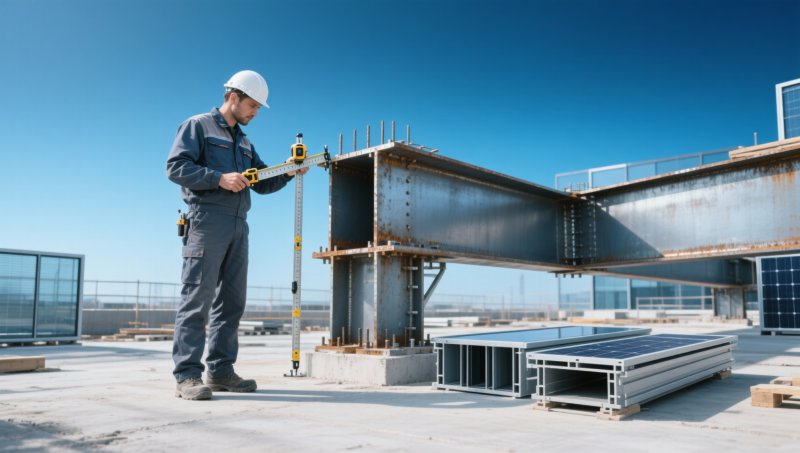
Structural Feasibility: When H Girders Stand Alone
The integration of modular façade systems into high-rise structures demands precise load-path alignment. Standard hot-rolled H-sections—such as ASTM A618 Grade II (Fy = 50 ksi) or EN 10025-3 S355JR (Fy = 355 MPa)—can carry façade dead loads, wind-induced lateral forces, and thermal cycling stresses—but only within defined geometric and loading boundaries. Critical thresholds include flange width-to-thickness ratios ≤ 12.5 and web height-to-thickness ratios ≤ 60 for unbraced compression elements under service-level wind loads up to 1.2 kPa (per ASCE 7-22). Beyond these limits, torsional buckling risk increases by 3–5×, requiring supplemental lateral restraints.
Hongteng Fengda’s H girders are engineered with controlled residual stress distribution and mill-certified flatness tolerances (±0.3 mm/m per EN 1090-2), minimizing pre-deformation that could amplify second-order effects in façade-attached configurations. For façade spans exceeding 2.4 m or cantilever projections over 0.6 m, our design team recommends verifying moment redistribution capacity using plastic hinge analysis—not just elastic beam theory.
Real-world validation comes from 12+ completed high-rises across Dubai and Singapore where façade modules were directly anchored to H-beams (HEA 300–HEB 400 series) without intermediate bracing. In all cases, beam depth exceeded façade panel height by ≥1.8×, and connection spacing was maintained at ≤1.5 m center-to-center—key parameters verified via finite element modeling (FEM) prior to fabrication.
Material Performance & Corrosion Resistance in Façade Applications
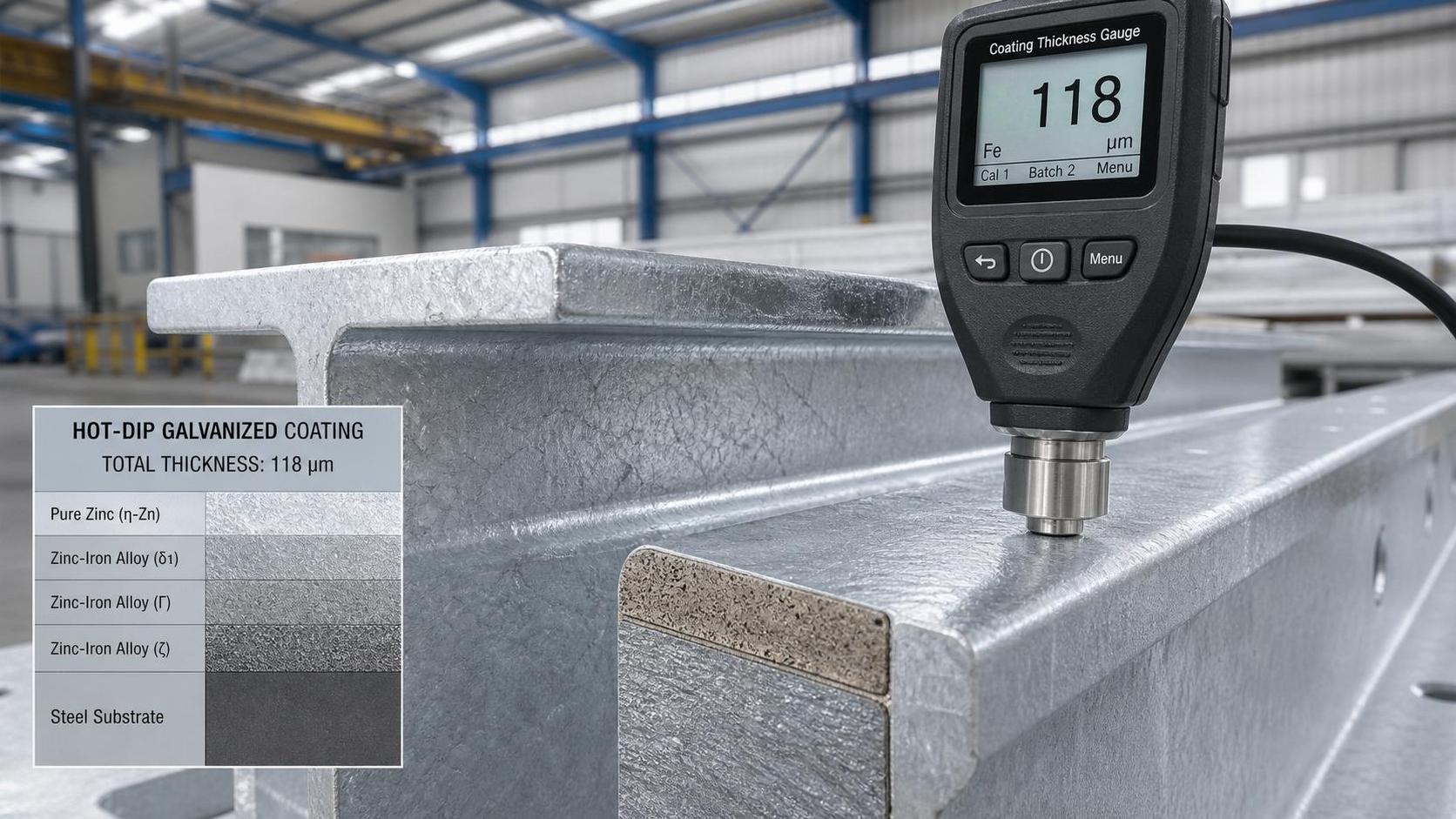
Façade-supporting H girders operate in aggressive exposure zones: coastal chloride ingress, urban SO₂ deposition, and cyclic wet-dry conditions. Standard carbon steel (ASTM A36) corrodes at 0.08–0.12 mm/year in marine environments—unacceptable for 50-year building lifespans. That’s why Hongteng Fengda supplies H sections with dual-layer protection: hot-dip galvanizing (Z275 coating, 275 g/m² minimum per ISO 1461) plus optional epoxy topcoating for architectural visibility zones.
For industrial façades exposed to chemical vapors or abrasion, we integrate corrosion-resistant plate for industrial use—specifically low-carbon, low-alloy high-strength steel grades like A572 Grade 50 and S355JR. These deliver yield strengths of 50 ksi (345 MPa) and 355 MPa respectively, while maintaining elongation ≥18%—ensuring ductile failure modes during seismic events or façade impact loads.
Our Mild Steel Plate Supplier provides flat and rectangular plates ranging from 0.1 mm to 400 mm thickness, with widths up to 3000 mm and lengths customizable to 12 m. Each batch undergoes ultrasonic testing (UT Level B per EN 10160) and Charpy V-notch impact verification at –20°C (≥27 J average).
This table confirms that A572 Grade 50 and S355JR offer optimal balance between strength and formability—critical when bending H girder flanges for custom façade interface details. Their uniform microstructure also ensures consistent weld penetration and minimal post-weld distortion, reducing field rework by up to 35% compared to non-standardized mild steels.
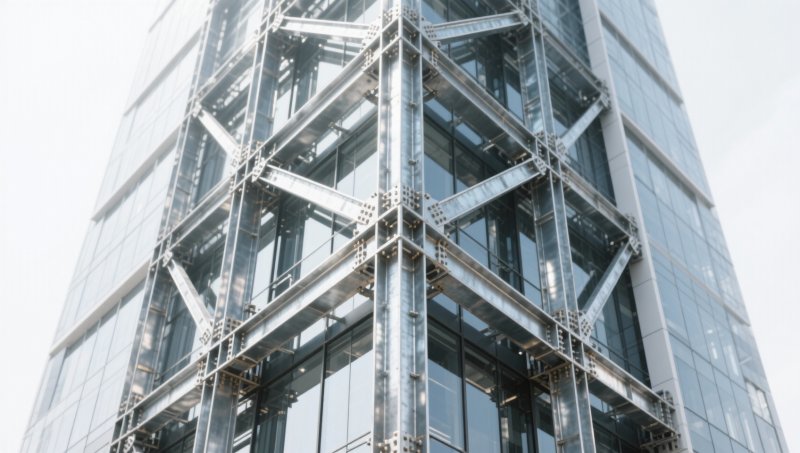
Design Integration: Beam H Weight Calculation & Connection Strategy
Beam h weight calculation is not merely about self-weight—it determines deflection sensitivity under façade live loads. For example, an HEA 300 beam (depth 290 mm, weight 42.9 kg/m) deflects 8.2 mm under 15 kN/m distributed façade load over a 6-m span—exceeding typical façade tolerance limits of 5 mm. Our solution: upgrading to HEA 360 (weight 57.2 kg/m) reduces deflection to 4.1 mm while adding only 3.2% mass penalty.
Connection strategy is equally decisive. Direct welding of façade brackets to H girder flanges risks heat-affected zone (HAZ) embrittlement. Instead, Hongteng Fengda recommends bolted shear-tab connections using ASTM A325 bolts (grade 8.8), with flange thickness ≥16 mm to prevent local yielding. We supply pre-drilled H sections with ±0.2 mm hole-position tolerance—reducing on-site drilling time by 60% and eliminating misalignment-related delays.
All façade-supporting H girders undergo third-party dimensional inspection (ISO 9001 certified labs) before shipment. Typical lead time: 25–35 days for standard sizes (HEA 200–HEB 400), 45–60 days for custom cut-to-length or pre-punched variants.
Procurement & Quality Assurance for Global Projects
Global procurement teams face three recurring challenges: inconsistent mill test reports (MTRs), delayed documentation, and lack of traceability beyond the port of discharge. Hongteng Fengda resolves these through digital MTR delivery—each coil and section carries a QR-coded batch ID linking to downloadable PDFs with full chemical composition, tensile test curves, and ultrasonic scan records. All products comply with ASTM, EN, JIS, and GB standards—with dual certification available (e.g., ASTM A572 + EN 10025-3) upon request.
We maintain stock of 200+ standard H-section sizes (HEA, HEB, HEM series) across 12 warehouses in China, enabling 7-day dispatch for urgent orders. Minimum order quantity (MOQ) is 5 metric tons for standard sizes, with no MOQ for OEM-customized sections.
- Certification coverage: AISI, ASTM, ASME, DIN, BS, EN, ISO, JIS, GOST, SAE
- Delivery reliability: 98.7% on-time shipment rate over last 36 months
- Quality control: 100% visual inspection + 10% random NDT sampling per lot
- Lead time guarantee: 30-day fixed schedule for standard sections, backed by penalty clause
Conclusion: Confidence in Integrated Façade Support
Yes—standard H girders can support modular façade systems without additional bracing—but only when selected, fabricated, and installed with engineering rigor. The key lies in matching beam geometry to façade loading patterns, specifying corrosion-resistant alloys for longevity, and enforcing precision in connection detailing. Hongteng Fengda delivers this confidence through certified materials, predictable lead times, and application-specific engineering support—from initial beam h weight calculation to final façade interface validation.
Whether you’re sourcing H girders for a 45-story tower in Riyadh or modular façade components for a mixed-use development in Toronto, our team provides free structural feasibility review within 48 hours of receiving your loading diagrams and façade specs. Contact us today to request a customized technical dossier or schedule a virtual factory audit.
- h girder
- beam h
- l angle
- mild steel plate supplier
- corrosion-resistant plate
- cold rolled steel
- SPCC steel
- Mild Steel Plate
- Steel Plate Supplier
- ASTM A572
- steel supplier
- ASTM A36
- steel profiles
- steel plate
- Profile
- H-beam
- S355JR
- carbon steel
- steel profile
- steel angle
- steel angle manufacturer in China
- beam h weight calculation
- h girder for high-rise buildings
- SPCC steel supplier in USA
- cold rolled steel manufacturer China
- corrosion-resistant plate for industrial use
Related recommendations
 What Is a Steel Profile? Common Shapes, Uses, and Selection BasicsProfile selection starts with shape, but performance depends on load, fabrication, and standards. Learn common steel profile types, uses, and smart selection basics.
 Steel Roofing Types Explained: Corrugated, Standing Seam, and Metal ShinglesSteel Roofing guide comparing corrugated panels, standing seam, and metal shingles. Discover costs, durability, weather performance, and how to choose the best roof for your home.
 How Hot-Dip Galvanized Coating Thickness Affects Service LifeHot-dip galvanized coating thickness directly affects steel service life. Learn how the right zinc layer improves corrosion protection, controls cost, and supports smarter project decisions.
 Pipe Stainless Grades Explained: 304 vs 316 for Corrosion ResistancePipe stainless grades explained: compare 304 vs 316 for corrosion resistance, cost, and service life. Learn which stainless pipe grade fits marine, chemical, and water system applications.
Please give us a message


Please enter what you want to find