Need fast, accurate beams weight calculations for structural design or procurement? Our Beams Weight Calculator delivers instant results for common I-beam sizes and grades—helping engineers, project managers, buyers, and safety personnel quickly verify load capacity, compare angle vs channel options, or estimate steel square rod, steel round bar, and steel girder weights. Whether you're how to measure a steel beam on-site or sourcing ASTM/EN-compliant i beam weight data for global projects, Hongteng Fengda’s trusted reference chart supports reliable decision-making—backed by China’s leading structural steel manufacturer and exporter.
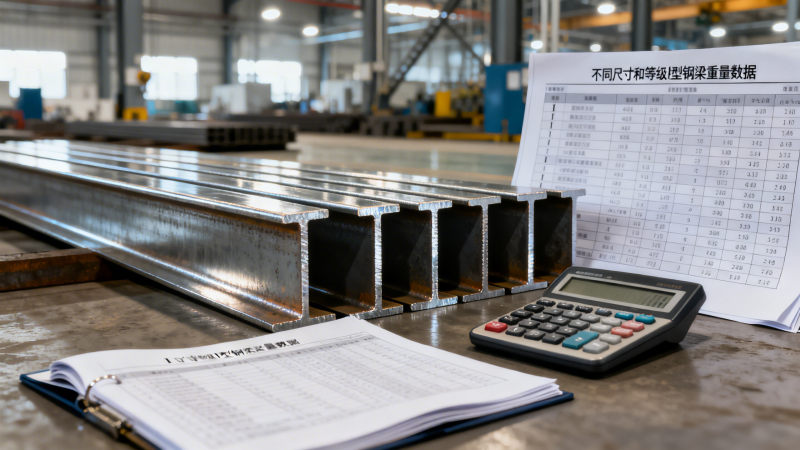
Understanding I-Beam Weight: Why Accuracy Matters in Structural Planning
The weight of i beam is far more than a logistical footnote—it directly impacts foundation design, crane selection, transportation logistics, and long-term structural integrity. Underestimating beam mass can compromise safety margins; overestimating inflates material costs and delays tendering. At Hongteng Fengda, every i beam weight value in our calculator reflects real-world mill output—not theoretical approximations. We cross-validate each figure against ASTM A6/A6M (for carbon structural shapes), EN 10034 (for structural steel I and H sections), and GB/T 706–2016 (Chinese standard for hot-rolled sections). This ensures consistency whether your project follows U.S., European, or Asian regulatory frameworks.
Our engineering team routinely audits weight tolerances across production batches: ±2.5% for beams under 200 mm depth, tightening to ±1.8% for larger sections like HE400B or W36×300. This precision enables project managers to calculate dead loads with confidence—and helps procurement teams align budget forecasts with actual freight and handling expenses. For instance, misjudging the beams weight of 120 tons of IPE300 by just 3% adds nearly 3.6 tons of unaccounted mass—potentially triggering rework in lifting plan approvals or exceeding truck axle limits in Middle Eastern infrastructure projects.
Beyond dimensional accuracy, grade-specific density adjustments are embedded in our tool. While mild steel averages 7,850 kg/m³, high-strength grades like S460ML (EN 10025-4) or ASTM A913 Grade 65 exhibit minor density shifts due to alloying elements—changes our calculator automatically applies. This attention to metallurgical nuance separates professional-grade tools from generic online converters.
Quick Reference Chart: Standard I-Beam Sizes & Their Weight per Meter
Below is a verified, production-ready reference table covering the most widely specified I-beam series across global markets—including European IPE/HE, American W-series, and Chinese GB Q235/Q355 equivalents. All values reflect nominal dimensions and standard-grade densities (7,850 kg/m³), unless otherwise noted for high-strength variants.
Note: These values assume standard flange and web thicknesses per respective standards. Custom profiles—including tapered beams or reinforced webs—require individualized calculation. Hongteng Fengda provides certified mill test reports (MTRs) with every shipment, confirming actual measured weights alongside chemical composition and mechanical properties.
Beyond I-Beams: Comparing Structural Profiles for Optimal Load Path Design
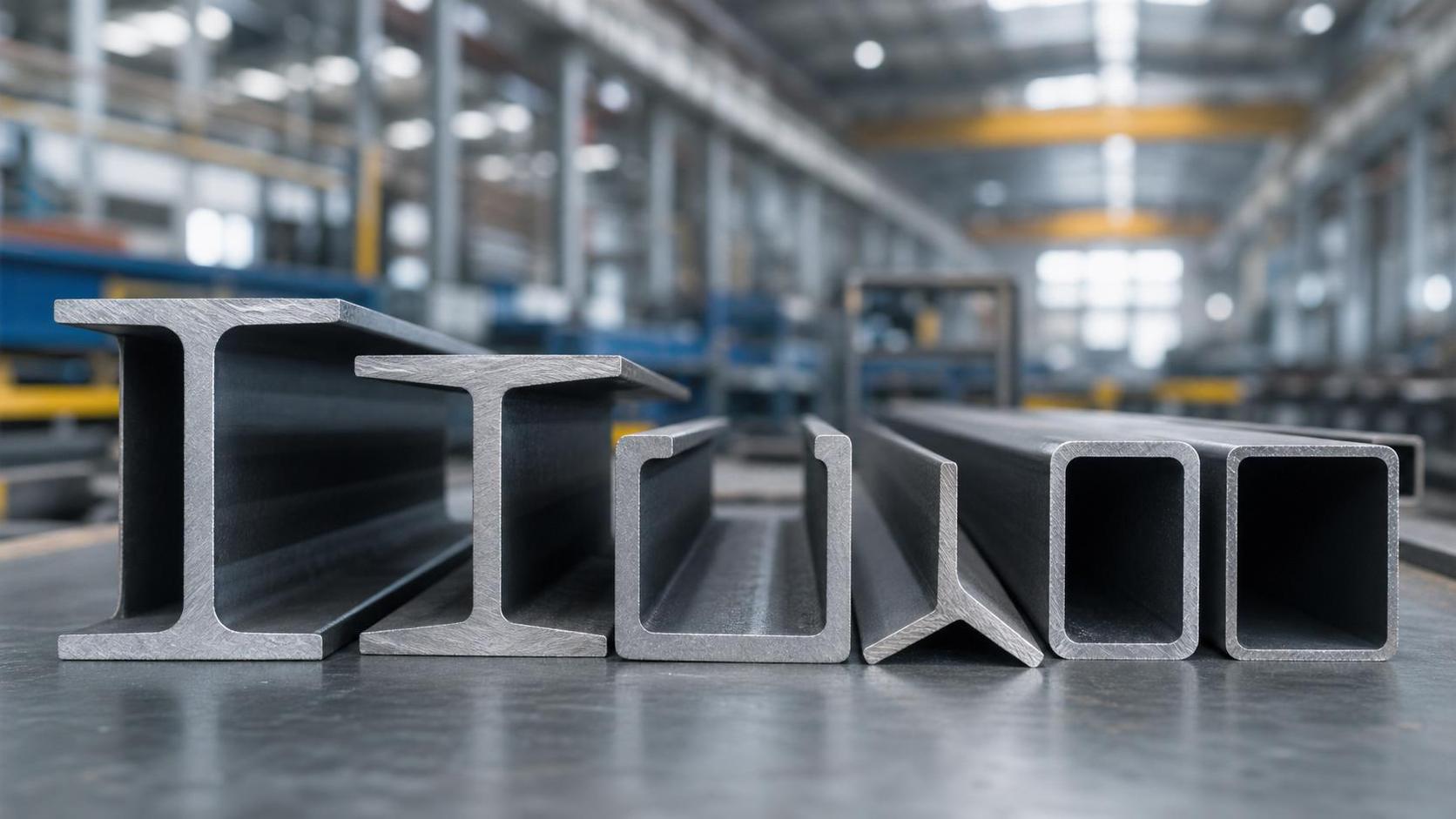
While I-beams dominate primary bending applications, smart structural planning often involves strategic combinations. The angle vs channel decision, for example, hinges on torsional rigidity, connection simplicity, and local buckling resistance. Equal-leg angles (e.g., L75×75×6) offer excellent compression stability in bracing systems but require double-bolted connections to resist rotation. Channels (UPN/C-sections), by contrast, provide higher moment of inertia about their strong axis and integrate seamlessly with welded base plates—making them ideal for column bases or crane rail supports.
For secondary members where space is constrained, steel square rod and steel round bar serve distinct roles: square rods deliver uniform torsional stiffness and ease of welding into grid patterns (common in handrail infill or machine frames); round bars excel in tension-only applications like tie rods or anchor bolts due to isotropic strength distribution. Meanwhile, steel wire rope remains indispensable for dynamic lifting—but its effective load rating depends heavily on proper splicing, drum compatibility, and environmental corrosion protection.
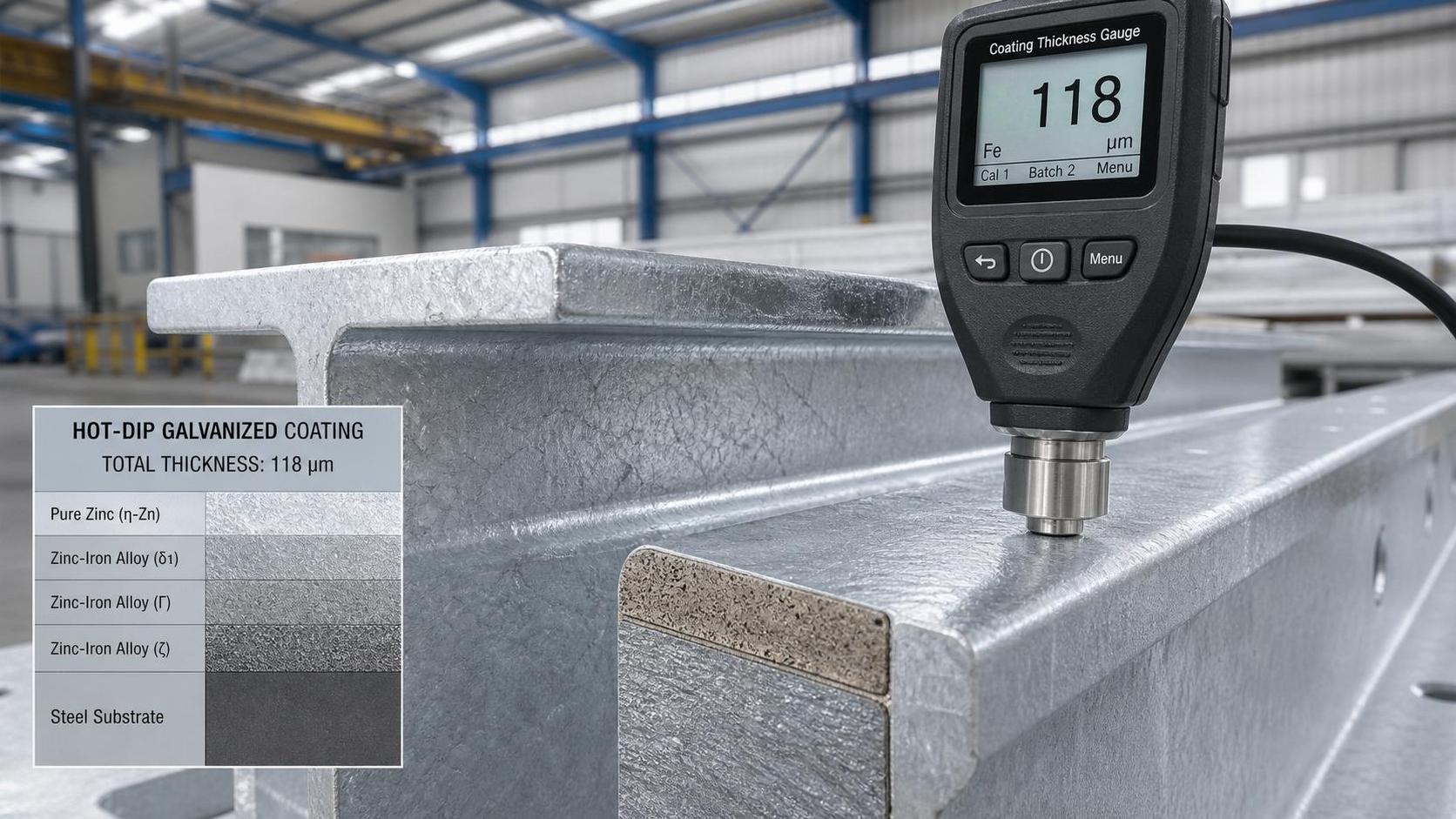
When specifying complementary components, always consider galvanic compatibility. For instance, pairing hot-dip galvanized Galvanized Steel Sheet cladding with bare steel girders risks accelerated corrosion at contact points. Hongteng Fengda offers full-system coordination—ensuring matching zinc coating weights (60–275 g/m²), alloy compositions (zinc-aluminum-copper-magnesium), and surface preparation protocols across all product lines.
How to Measure a Steel Beam On-Site: Field Verification Best Practices
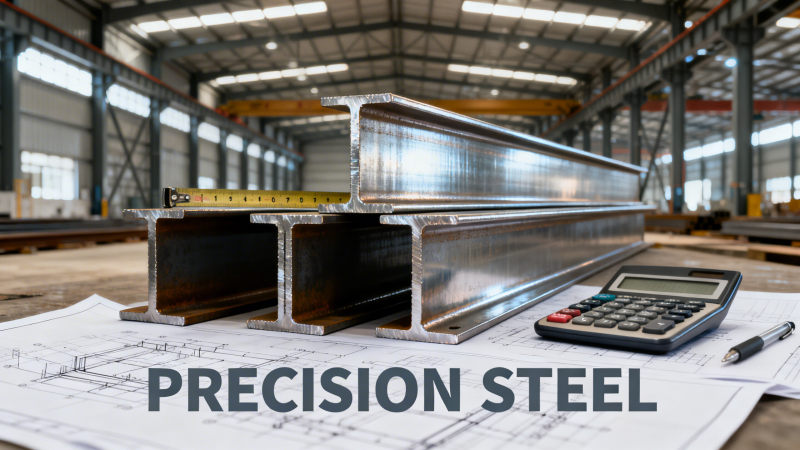
Even with precise mill documentation, field verification remains essential—especially after transport, storage, or exposure to humidity. To accurately how to measure a steel beam, follow this three-step protocol: First, use calibrated calipers to record flange thickness, web thickness, and overall depth at three locations (start, mid-span, end). Second, measure the actual length using a tension-controlled tape (not a retractable rule) to account for thermal expansion. Third, weigh a representative sample using certified platform scales—then divide by length to derive kg/m. Discrepancies >2% warrant investigation into possible mill tolerance drift or section deformation.
Hongteng Fengda includes QR-coded traceability labels on every bundle, linking physical stock to digital MTRs that list nominal vs. actual dimensions, heat numbers, and third-party inspection certificates (SGS, BV, TÜV). This transparency empowers site engineers to validate steel angle, steel girder, and steel channel conformity without waiting for lab analysis—accelerating QA/QC cycles on fast-track projects across Southeast Asia and the GCC region.
Trusted Global Sourcing Starts With Verified Data
Accurate beams weight data isn’t just about numbers—it’s the foundation of trust between supplier and buyer. As a structural steel manufacturer and exporter operating since 2005, Hongteng Fengda has delivered over 1.2 million tons of certified I-beams, channels, angles, and custom profiles to 47 countries. Our ISO 9001-certified quality system mandates 100% dimensional inspection for all hot-rolled sections and full mechanical testing for every heat lot. Every weight of i beam referenced here reflects live production data—not textbook formulas.
Whether you’re evaluating alternatives to traditional angle vs channel configurations, sizing steel square rod for seismic bracing, or verifying steel round bar tensile capacity for offshore mooring systems—we support your technical due diligence with responsive engineering consultation, free sample provision, and seamless documentation in English, Arabic, Spanish, or Vietnamese.
Ready to source ASTM-, EN-, or GB-compliant structural steel with guaranteed weight accuracy and traceable quality? Get your customized I-beam weight report and mill test documentation today—contact Hongteng Fengda now.
- steel i
- l angle
- galvanized steel sheet
- hot-dip galvanized
- galvanized steel
- structural steel
- Structural Steel
- I-Beam
- Profile
- Galvanized
- Steel Beam
- Steel Wire
- Steel Channel
- steel sheet
- steel girder
- steel angle
- steel wire rope
- steel round bar
- steel square rod
- angle vs channel
- weight of i beam
- i beam weight
- how to measure a steel beam
- beams weight
Related recommendations
 What Is a Steel Profile? Common Shapes, Uses, and Selection BasicsProfile selection starts with shape, but performance depends on load, fabrication, and standards. Learn common steel profile types, uses, and smart selection basics.
 Steel Roofing Types Explained: Corrugated, Standing Seam, and Metal ShinglesSteel Roofing guide comparing corrugated panels, standing seam, and metal shingles. Discover costs, durability, weather performance, and how to choose the best roof for your home.
 How Hot-Dip Galvanized Coating Thickness Affects Service LifeHot-dip galvanized coating thickness directly affects steel service life. Learn how the right zinc layer improves corrosion protection, controls cost, and supports smarter project decisions.
 Pipe Stainless Grades Explained: 304 vs 316 for Corrosion ResistancePipe stainless grades explained: compare 304 vs 316 for corrosion resistance, cost, and service life. Learn which stainless pipe grade fits marine, chemical, and water system applications.

Please give us a message


Please enter what you want to find