Choosing between angle and channel steel demands more than visual or dimensional comparison—it requires precise understanding of ASTM standards like A6/A6M, A36, A572, and A992. This side-by-side reference clarifies critical differences in load capacity, welding compatibility, corrosion resistance, and suitability for prefab buildings, bridge construction, and manufacturing facilities—key concerns for procurement teams, project managers, and quality/safety personnel. As a trusted Rail angle vs channel steel exporter China and supplier to Southeast Asia and the Middle East, Hongteng Fengda ensures full ASTM compliance, enabling global buyers to mitigate sourcing risks and accelerate structural projects with confidence.
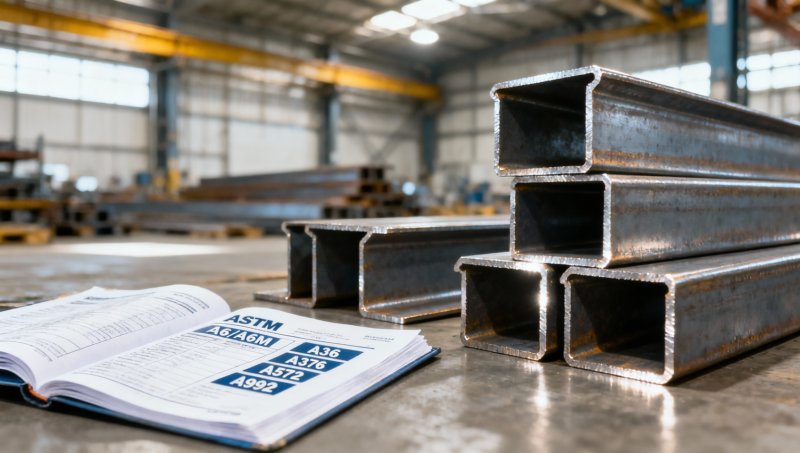
How ASTM Standards Define Structural Fitness
ASTM A6/A6M serves as the foundational specification governing dimensional tolerances, straightness, camber, and surface quality for both angle and channel steel. It sets the baseline for acceptability before material-specific properties—like yield strength (A36: 36 ksi min), tensile strength (A572 Gr.50: 65 ksi min), or high-strength framing performance (A992: 50 ksi yield, 65 ksi tensile)—come into play.
Crucially, A6/A6M does not define mechanical properties—but mandates how dimensions must be verified across mill runs. For example, leg thickness tolerance for angles is ±0.03 in. for sections up to 4 in., while channel web thickness deviation is capped at ±0.025 in. for depths under 12 in. These tight tolerances directly impact fit-up during welding and bolted assembly—especially in prefabricated building frames where field adjustments are costly.
A36 remains the most widely specified carbon steel for general-purpose use, offering balanced weldability and formability. In contrast, A572 Grade 50 delivers higher strength-to-weight ratio—ideal for long-span bridge girders or heavy manufacturing facility supports—while A992 is engineered specifically for rolled structural shapes used in commercial building frames, with tighter chemistry controls to ensure consistent bending behavior.
Key ASTM Compliance Requirements at a Glance
This table highlights why A992 is preferred over A36 for multi-story frame systems: identical yield strength but superior consistency in chemical composition and Charpy V-notch impact testing—critical for dynamic loading scenarios. All Hongteng Fengda angle vs channel steel products undergo third-party mill test reports per ASTM A6/A6M verification, ensuring dimensional conformity and traceable mechanical certification.
Angle vs Channel Steel: Load Capacity & Welding Compatibility in Real Applications
Load capacity isn’t just about yield strength—it’s about moment of inertia, section modulus, and torsional rigidity. Channels exhibit higher strong-axis moment of inertia (Ix) per unit weight than equal-leg angles, making them ideal for horizontal beam applications such as mezzanine floors or conveyor supports in manufacturing facilities. Angles, however, provide superior bi-axial stability when used back-to-back or as bracing members—especially in seismic zones where lateral torsional buckling resistance matters.
Welding compatibility hinges on carbon equivalent (CE) limits. A36 has CE ≤ 0.40%, allowing straightforward SMAW or GMAW without preheat for thicknesses under 1 in. A572 Gr.50 typically carries CE ≈ 0.42–0.45%, requiring preheat above 0.75 in. thickness. Hongteng Fengda provides certified CE values for every heat batch—supporting your welding procedure specification (WPS) validation for bridge construction or prefab building erection.
Corrosion resistance comparison shows minimal intrinsic difference between angle and channel forms—both rely on base steel chemistry and protective coatings. However, channel geometry traps moisture along the web-to-flange junction, increasing risk of crevice corrosion unless galvanized or painted per ASTM A123 or A153. Angle steel’s open profile allows easier coating coverage and drainage—making it preferable for outdoor handrail systems, including Rail applications like bridge railings and deck handrails.
Which Shape Fits Your Project Timeline?
- Prefab buildings: Channels dominate primary framing (columns/beams); angles excel in secondary connections and bracing—reducing on-site welding time by up to 30% due to simpler joint geometry.
- Bridge construction: A572 channels used for stringers; angles serve as cross-bracing and diaphragm supports—requiring strict ASTM A6 straightness control (≤ 1/16 in./ft) to avoid misalignment during segmental erection.
- Manufacturing facilities: A992 angles preferred for crane runway support brackets; A36 channels common in overhead service conduit trays—both demand ±0.5° angular tolerance per A6/A6M Annex A3.
Why Global Buyers Choose Hongteng Fengda as Their Angle vs Channel Steel Supplier
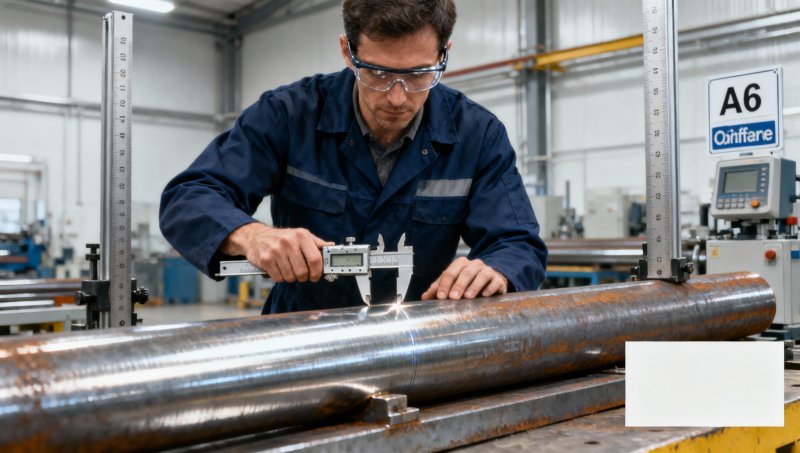
As an angle vs channel steel supplier Southeast Asia and angle vs channel steel supplier Middle East, Hongteng Fengda maintains ISO 9001:2015-certified production lines with real-time dimensional monitoring—ensuring every shipment meets ASTM A6/A6M tolerance bands across 12–30 m lengths. Our mill test reports include full chemistry, tensile data, bend test results, and ultrasonic inspection records—delivered digitally within 24 hours of dispatch.
We support procurement teams with rapid response to RFQs—including custom cut lengths, chamfered ends, and dual-certification (e.g., ASTM + EN 10025). For bridge projects, we offer certified A572 Gr.50 channels with supplemental Charpy testing at –20°F per ASTM A709 requirements. Lead times average 15–25 days from PO confirmation for standard sizes, with priority scheduling available for urgent prefab building deliveries.
Our technical team assists with ASTM standards interpretation—whether verifying A992 compliance for seismic retrofitting or confirming A36 suitability for cold-formed manufacturing fixtures. We also coordinate third-party inspections (SGS, BV, TÜV) at origin—critical for Middle East government tenders requiring full traceability from melt to final packaging.
Get Your ASTM-Compliant Quote Today
Need immediate clarification on angle vs channel steel load capacity comparison? Require mill test reports for A572 Gr.50 channels destined for a Southeast Asian port? Looking for OEM-grade A992 angles with custom punching patterns for modular factory construction?
Contact Hongteng Fengda now for: • Dimensional validation against ASTM A6/A6M tolerances • Dual-standard certification (ASTM + GB/T 706 or EN 10025) • Galvanizing or painting options meeting ASTM A123/A153 • Export documentation compliant with GCC, SABER, or ASEAN regulatory frameworks • Sample shipments within 7 working days
We don’t just supply steel—we deliver structural confidence. Let’s align your next order with precision, compliance, and predictable execution.
- channel steel supplier
- channel steel
- l angle
- angle steel
- ASTM A572
- ASTM standards
- steel supplier
- ASTM standard
- ASTM A36
- Profile
- Galvanized
- carbon steel
- angle vs channel
- angle vs channel steel supplier Middle East
- angle vs channel steel load capacity comparison
- angle vs channel steel exporter China
- angle vs channel steel supplier Southeast Asia
Related recommendations
 How long does acero prepintado retain gloss and color stability in direct desert sunlight?Acero prepintado gloss & color stability in desert sun? Discover real-world performance data, PVDF vs. polyester longevity, and spec-critical insights for GCC projects.
 Does acero pregalvanizado maintain coating integrity after cold bending to 90 degrees?Acero pregalvanizado maintains coating integrity after 90° cold bending — when engineered right. Discover how Hongteng Fengda guarantees real-world performance, adhesion & corrosion resistance.
 Do the advantages of galvanized steel include reduced fire risk compared to untreated carbon steel?Advantages of galvanized steel include measurable fire-risk reduction vs. untreated carbon steel—learn how zinc delays ignition, buys critical escape time, and enhances safety without false 'fireproof' claims.
 What is the minimum bend radius for 12mm steel wire rope without permanent deformation?12mm steel wire rope capacity depends on bend radius — discover the safe 72–96mm minimum to prevent permanent deformation, fatigue & failure. Expert rigging insights inside.
Please give us a message


Please enter what you want to find