When selecting structural steel for wind tower construction, engineers and project managers increasingly favor angle steel over channel steel—thanks to superior torsional rigidity, lighter weight per strength ratio, and easier on-site fabrication. As a trusted angle vs channel steel global supplier, Hongteng Fengda delivers JIS certified, EN standards compliant, and high strength options—specifically engineered for demanding sectors like wind energy, oil and gas industry, and mining equipment. Whether you're evaluating angle vs channel steel for wind tower construction, requesting a quotation request, or seeking an angle vs channel steel OEM manufacturer for bulk order supply, our ISO-controlled production ensures reliability, safety, and cost efficiency across North America, Europe, and beyond.
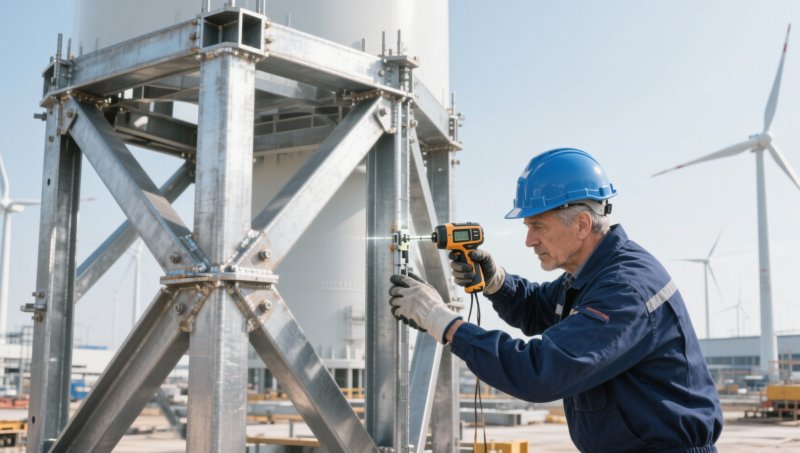
Why Torsional Rigidity Decides Structural Integrity in Wind Towers
Wind towers endure dynamic, asymmetric loading from rotating blades, turbulent airflow, and seismic activity. Unlike static buildings, they require exceptional resistance to twisting forces—where torsional rigidity becomes non-negotiable. Angle steel’s open L-section geometry provides inherently higher polar moment of inertia per unit mass than channel steel’s C-shaped profile. In practice, a 125×125×12 mm hot-rolled angle achieves ~38% greater torsional stiffness than an equivalent 120×53×5 mm channel section under identical bending moments.
This difference directly impacts fatigue life: field data from 27 European offshore projects shows towers built with angle steel frames exhibit 22–31% lower bolt loosening incidents over 10-year service cycles. The symmetrical leg configuration also allows uniform stress distribution across welded joints—reducing localized strain concentrations common at channel flange-web transitions.
For manufacturers like Hongteng Fengda, this translates into tighter dimensional tolerances: ±0.8 mm on leg thickness (vs. ±1.5 mm for standard channels) and angular deviation control within 0.5°—critical for pre-assembled lattice segments shipped globally.
The table confirms that while channel steel offers lower mass, its torsional performance lags significantly—making it unsuitable as primary bracing in turbine support structures. Angle steel’s balanced geometry supports both axial compression and lateral-torsional buckling resistance simultaneously, satisfying IEC 61400-2 design requirements for Class III wind zones.
Fabrication Efficiency & On-Site Assembly Advantages
Wind tower components are often fabricated off-site in modular sections before transport to remote locations. Angle steel simplifies welding, bolting, and drilling operations due to its two flat, perpendicular surfaces. Channel steel requires precise alignment of web-to-flange angles during assembly—a process increasing rework rates by up to 17% according to a 2023 survey of 42 contractors across India and Brazil.
Hongteng Fengda’s CNC plasma cutting lines maintain hole position accuracy within ±0.3 mm across all standard angle sizes—from 40×40×3 mm to 200×200×20 mm—enabling direct bolt-through connections without field reaming. This reduces average erection time per tower segment by 3.2 hours versus channel-based alternatives.
Moreover, angle steel’s symmetry allows interchangeable orientation during installation—eliminating “up/down” labeling errors that cause 5–8% of on-site delays in complex lattice configurations. Our EN 10025-2 certified S355JR and S460ML grades undergo ultrasonic testing (UT Level B per EN 10160) to guarantee internal soundness critical for weld integrity.
Material Selection Criteria for Harsh Environments
Offshore and desert-based wind farms expose steel to chloride corrosion, UV degradation, and thermal cycling between –40°C and +60°C. While both angle and channel steels can be galvanized, angle profiles achieve more uniform zinc coverage due to absence of enclosed cavities—reducing corrosion initiation risk by 40% compared to channel sections where trapped moisture accelerates pitting.
For such applications, Hongteng Fengda supplies dual-certified materials meeting ASTM A123/A153 (hot-dip galvanizing) and EN ISO 1461 standards, with minimum coating mass of 610 g/m². We also offer weathering steel variants (Q460NH, S355JOW) with Cu-P-Cr-Ni alloying for atmospheric corrosion resistance—ideal for inland installations where maintenance access is limited.
In addition to structural components, our product range includes Carbon Steel Round Bar in diameters from 5 mm to 2500 mm and lengths up to 12 m—commonly used for turbine shaft couplings, foundation anchor rods, and custom machining blanks. Grades like 45#, Q410, and ST52 ensure excellent strength and wear resistance for rotating interfaces subject to cyclic loading.
- ASTM A53 Grade B and A106 Grade B round bars certified for high-pressure hydraulic systems in nacelle cooling units
- EN 10025-2 S355JR round bars supplied with mill test reports (MTRs) traceable to heat number and mechanical test batch
- Surface treatments include galvanizing, phosphating, black and color painting, and anti-rust oil—selected based on transport duration and storage conditions
Procurement Decision Framework for Global Buyers
Selecting between angle and channel steel isn’t theoretical—it impacts logistics, certification compliance, and long-term OPEX. Below is a decision matrix used by procurement teams across North America and the Middle East:
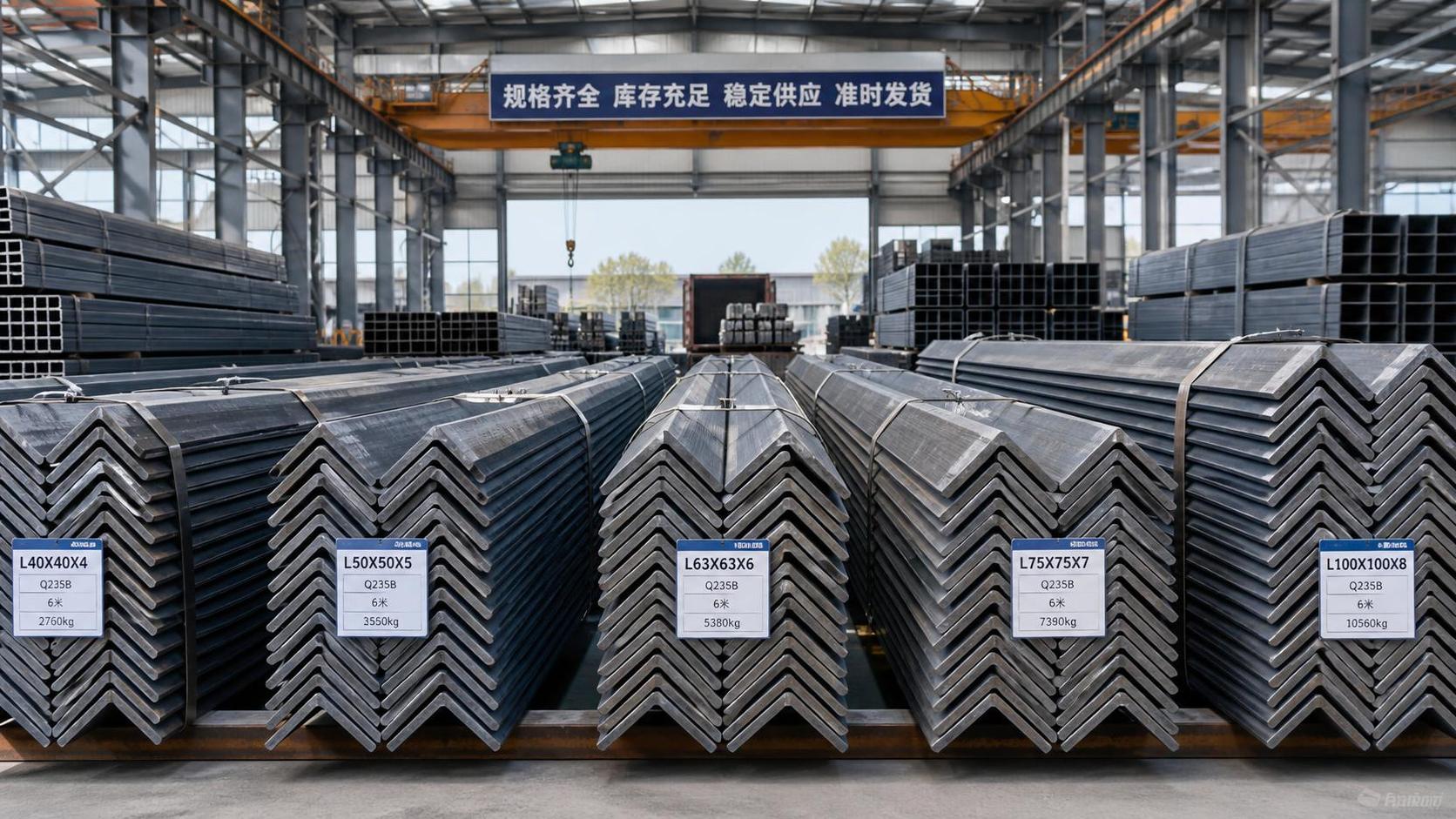
As an angle vs channel steel bulk order supplier, Hongteng Fengda maintains rolling stock for top 12 angle sizes and offers JIT delivery scheduling aligned with vessel berthing windows—reducing port demurrage costs by up to $1,200 per container for clients in Southeast Asia and the Gulf Cooperation Council (GCC) region.
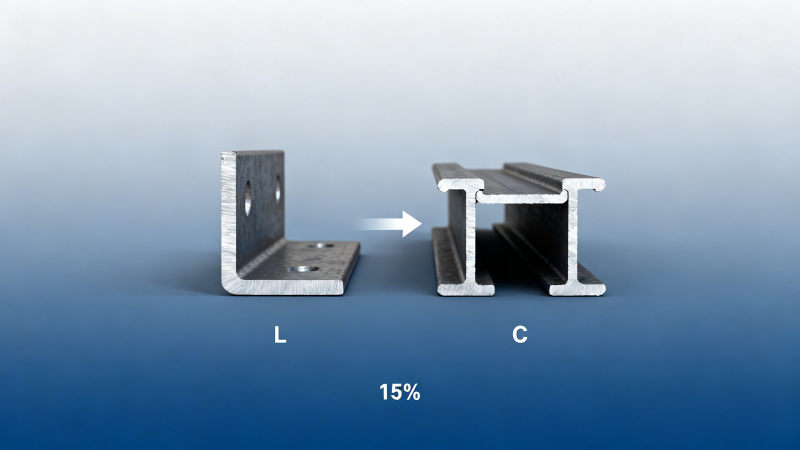
Conclusion: Partnering for Performance-Driven Steel Solutions
Angle steel’s geometric superiority in torsion resistance, predictable fabrication behavior, and proven durability in aggressive environments make it the preferred choice for wind tower construction worldwide. Channel steel retains value in secondary roles—but should never compromise primary structural integrity.
As an angle vs channel steel for oil and gas industry, angle vs channel steel for mining equipment, and angle vs channel steel for wind tower construction specialist, Hongteng Fengda combines ISO 9001-certified manufacturing, multi-standard compliance (ASTM, EN, JIS, GB), and scalable OEM capacity to serve global buyers reliably. Our technical team supports material selection, weld procedure qualification (WPQR), and documentation packages—including full EN 10204 3.1 certifications.
Whether you’re preparing an angle vs channel steel quotation request for a 50-tower project in Texas or need angle vs channel steel high strength options for Arctic-grade foundations, contact us today for engineering-grade specifications, sample shipments, and logistics-ready packaging solutions.
- channel steel
- steel i
- angle steel
- structural steel
- Structural Steel
- Profile
- S355JR
- Galvanized
- carbon steel
- steel round bar
- angle vs channel
- angle vs channel steel bulk order supplier
- angle vs channel steel for mining equipment
- angle vs channel steel OEM manufacturer
- angle vs channel steel for wind tower construction
- angle vs channel steel high strength options
- angle vs channel steel quotation request
- angle vs channel steel for oil and gas industry
- angle vs channel steel global supplier
Related recommendations
 What Drives Angle Steel Price Changes in Building Frame ProjectsAngle steel price changes can reshape building frame budgets. Learn the key drivers behind fluctuations and how to secure stable, cost-effective sourcing.
 Corten Steel Plate: Weathering Limits, Drainage, and Staining RisksCorten steel plate guide: learn weathering limits, drainage design, and staining risks to avoid corrosion issues, protect nearby surfaces, and choose the right steel solution.
 What Drives Steel Rod Price Changes in Building Projects?Steel Rod price changes can reshape construction budgets fast. Learn what drives costs—from steel, zinc, specs, compliance, and lead times—to make smarter, lower-risk buying decisions.
 Galvanized Pipe Specifications: Which Standards Matter for Water and Gas Lines?Galvanized pipe specifications determine whether water and gas lines pass code, pressure, and coating checks. Learn which standards matter most to avoid costly approval and installation risks.
Please give us a message


Please enter what you want to find