Angle steel price changes can significantly affect budgeting and profit margins in building frame projects, making cost control a top priority for financial decision-makers. Understanding the factors behind price fluctuations—such as raw material costs, market demand, specification changes, and supplier reliability—helps buyers plan smarter and reduce sourcing risks. For projects that require stable supply and consistent quality, choosing a dependable structural steel manufacturer can improve cost predictability and support smoother project execution.
In building frame projects, angle steel is rarely the biggest item on the bill of materials, but it is often one of the easiest places for costs to drift. That happens because angle steel is used in multiple support functions, connection parts, bracing systems, and auxiliary structures, so a small change in unit price can spread across many lines of a project budget. For a financial approver, the real issue is not whether angle steel is “cheap” or “expensive” on a single quotation. The issue is whether the quoted price is stable, comparable, and aligned with the project’s actual technical needs.
Angle steel price is shaped by a mix of upstream and downstream forces. The most visible factor is raw material cost, especially hot-rolled coil and related steelmaking inputs. When mill feedstock prices rise, angle steel usually follows, though not always at the same speed. Energy costs, environmental production restrictions, transport expenses, and seasonal operating rates also feed into pricing. In periods of high demand, mills may tighten discounts, and traders may hold stock instead of releasing it aggressively. In softer markets, the opposite can happen: prices may look attractive, but availability, lead time, or quality consistency may become the real concern.
For building frame projects, specification is a major cost driver. Changes in angle size, thickness, steel grade, length, or tolerance requirement can shift the total cost more than many non-technical buyers expect. A project may appear to be using the same “angle steel,” but a move from a common light specification to a heavier or tighter-tolerance one can change tonnage, processing steps, and scrap loss. That is why the cheapest quotation on paper is not always the lowest landed cost in practice.
Market demand matters as well. Construction cycles, infrastructure spending, industrial plant expansion, and export orders can all affect regional availability. When demand rises sharply in one market, lead times may lengthen even if benchmark prices do not move much. For financial teams, this creates a hidden cost: delays can trigger rework in procurement schedules, rushed shipping, or emergency spot buying at less favorable rates.
One of the most overlooked cost factors is supplier reliability. A low unit price can become expensive if delivery is inconsistent, certification is incomplete, or inspection fails at the project stage. Replacing rejected material, rescheduling labor, or holding extra safety stock all increase the final cost of ownership. For this reason, procurement decisions should be evaluated on delivered cost, not just factory price.
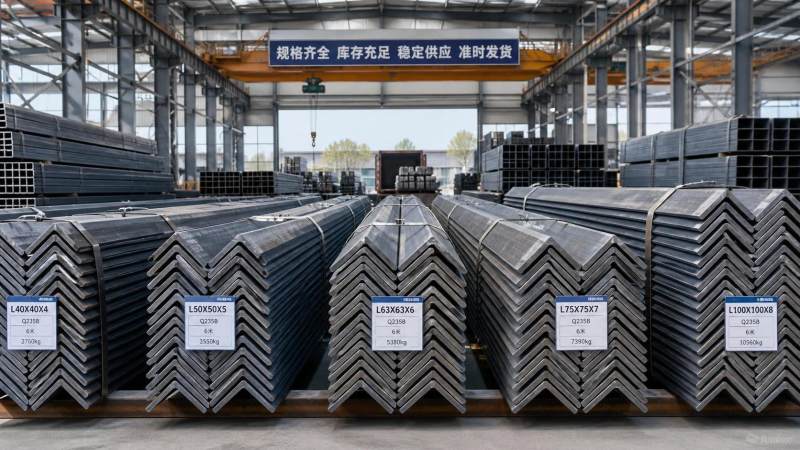
There is also a broader shift in how buyers evaluate angle steel price risk. More project owners now ask for traceability, international standards compliance, and stable batch quality before approving procurement. This does not always increase the headline price, but it can reduce downstream risk and avoid disputes during inspection or handover. In cross-border sourcing, that matters even more because logistics, customs clearance, and document accuracy can influence whether the material arrives on time and in usable condition.
In some projects, buyers compare angle steel with other structural or fabricated solutions and assume the lowest ton price automatically wins. That approach often misses the real cost structure. Fabrication time, connection design, waste ratio, corrosion protection, and installation efficiency can all change the economics. A more expensive material may still be the better financial choice if it reduces site labor, simplifies assembly, or lowers rejection risk.
Related steel products also show why price evaluation should be based on application, not just category. For example, in transportation, construction, decoration, floor areas around equipment, machinery, and shipbuilding, buyers sometimes select a patterned steel plate such as SM400A Patterned steel plate for anti-skid performance and practical surface durability. The point is not that this product replaces angle steel, but that structural purchasing decisions often involve multiple steel items whose prices move for different reasons. Financial approval becomes easier when each item is judged by function, specification, and life-cycle value rather than by unit price alone.
Certification and standard alignment are another reason price swings should be read carefully. Products manufactured to ASTM, EN, JIS, GB, or similar requirements may carry different processing and inspection costs. Buyers sometimes request a lower price and later add standard compliance requirements, which can eliminate the apparent savings. In real procurement, the request for compliance should be included at the quotation stage, not treated as an afterthought.
For financial approvers, the most useful question is often not “Is the price lower than last month?” but “What is driving the change, and what risk am I taking on if I accept it?” If the change comes from market softness and the supplier can prove inventory availability, the opportunity may be favorable. If the change comes from a temporary discount with uncertain supply, the apparent savings may not survive the full project cycle. Stable sourcing is often worth more than a small price cut when project deadlines are tight.
Buyers can reduce angle steel price risk by locking in clearer technical requirements, requesting comparable quotations from suppliers with similar standards and capacity, and checking whether the quoted price includes cutting, packing, inspection, and freight terms. Price differences across suppliers are only meaningful when the commercial terms are truly aligned. In global projects, that discipline protects both the budget and the schedule.
The market outlook suggests that angle steel price will remain sensitive to upstream raw material volatility and downstream construction demand. Sudden spikes are still possible when supply tightens, but the longer-term pattern is usually driven by inventory levels, mill operating rates, and project activity. Financial teams planning multi-month procurement should avoid relying on a single spot quote. A better approach is to monitor price movement over time, set approval thresholds, and keep alternate suppliers qualified before the order becomes urgent.
For building frame projects, cost control is not about chasing the lowest number. It is about reducing variance, avoiding hidden losses, and making sure the material purchased today will still satisfy the project when it reaches site. That is where angle steel price becomes a financial planning issue rather than a simple purchasing metric.
Please give us a message


Please enter what you want to find