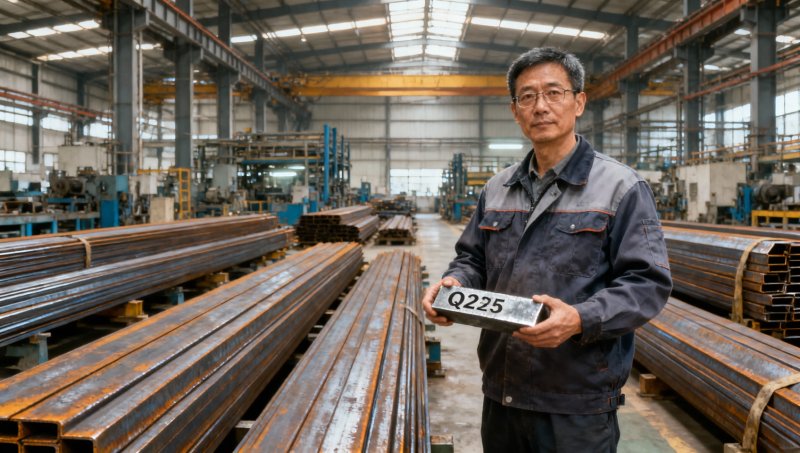
In 2026, procurement managers across global manufacturing and construction projects are increasingly specifying Q235 steel for non-critical fabrication components — drawn by its cost efficiency, wide availability, and proven performance under moderate load conditions. As a trusted structural steel manufacturer and exporter from China, Hongteng Fengda supports this shift with ASTM-, EN-, and GB-compliant Q235 steel in angles, channels, beams, and custom profiles. But when is Q235 truly appropriate — and where does it fall short? This article breaks down the technical, economic, and compliance-driven rationale behind the trend — and the critical exceptions every decision-maker must know.
What Is Q235 Steel — And Why It’s Gaining Traction in 2026
Q235 is a low-carbon structural steel grade defined under China’s GB/T 700 standard. Its designation indicates a minimum yield strength of 235 MPa and suitability for general-purpose applications. Unlike high-strength alloys such as Q355 or Q420, Q235 offers balanced ductility, weldability, and machinability — making it ideal for secondary structural members, support frames, bracing elements, and non-load-bearing enclosures.
Global procurement teams are adopting Q235 more widely due to three converging trends: (1) rising material cost volatility in premium grades (+18–22% YoY for Q355 in Europe, per 2025 Q4 market reports); (2) extended lead times for specialty steels (average 12–16 weeks vs. 4–7 weeks for Q235); and (3) tightening project budgets without compromising baseline safety — especially in modular construction, industrial shelving, and auxiliary infrastructure.
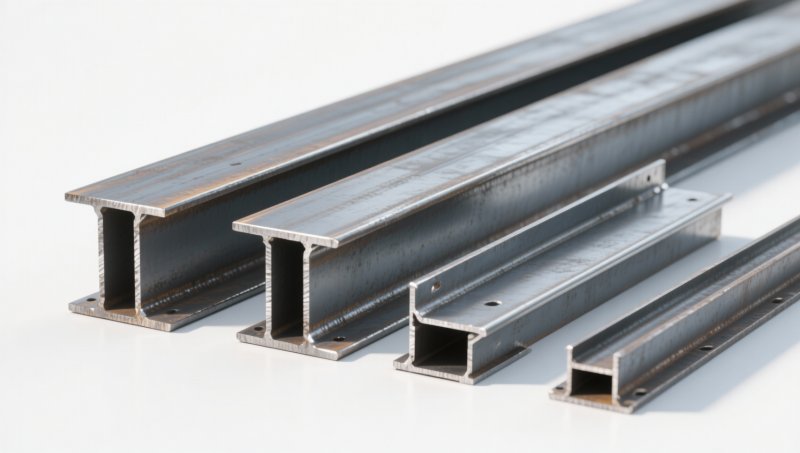
Hongteng Fengda produces Q235 in multiple forms — including angle steel (L25×25×3 mm to L200×200×20 mm), channel steel (80–400 mm height), I-beams (100–600 mm depth), and cold-formed profiles — all certified to ASTM A36, EN 10025-2 S235JR, and GB/T 700. Each batch undergoes tensile testing, bend testing, and chemical composition verification per ISO/IEC 17025-accredited internal lab protocols.
Key Mechanical Properties of GB/T 700 Q235 Steel
This table confirms Q235’s suitability for static, non-cyclic, and low-to-moderate stress environments. Its elongation value ensures reliable deformation behavior during fabrication — critical for bending, punching, and drilling operations common among OEM fabricators in North America and Southeast Asia.
Where Q235 Excels — And Where It Must Be Avoided
Q235 is not a universal substitute. Its adoption should follow strict application-based criteria. For instance, it performs exceptionally well in guardrail posts, equipment mounting brackets, ventilation duct supports, and temporary scaffolding — where design loads remain below 60% of yield strength and environmental exposure is limited to indoor or sheltered outdoor conditions.
Conversely, Q235 must be excluded from: (1) dynamic load-bearing structures like crane runway girders (fatigue life drops sharply beyond 2 million cycles at 120 MPa stress range); (2) seismic-resilient connections requiring guaranteed plastic hinge formation (Q235 lacks consistent strain-hardening ratio per EN 1993-1-1 Annex C); and (3) corrosion-prone environments without protective coating — as its carbon content (0.14–0.22%) increases susceptibility to pitting in chloride-rich coastal or de-icing salt zones.
For rail-related applications — such as bridge railings, deck handrails, or light-duty industrial track systems — Q235 offers an optimal balance of stiffness, affordability, and ease of galvanization. Rail products supplied by Hongteng Fengda include Q235-grade variants in U71Mn and PD2-compatible profiles, with thicknesses ranging from 3 mm to 24 mm and dimensional tolerances held within ±1% — meeting ISO 9001-2008 and ISO 14001:2004 requirements.
Application Suitability Matrix for Q235 Steel
This matrix enables procurement managers, engineers, and QA personnel to make rapid, evidence-based decisions — aligning material selection with functional requirements, lifecycle expectations, and compliance obligations.
Procurement Best Practices for Q235-Specifying Buyers
Sourcing Q235 effectively requires more than checking a grade label. Buyers must verify traceability (heat number per bundle), mill test reports (MTRs) covering chemical composition and mechanical properties), and dimensional compliance — especially for custom cold-formed sections where wall thickness variation can exceed ±12% if unchecked.
Hongteng Fengda provides full documentation packages for each shipment: MTRs issued per EN 10204 3.1, third-party inspection reports (SGS/BV available on request), and packaging compliant with ISO 8502-3 for rust prevention during ocean freight. Lead time averages 25–35 days from PO confirmation for standard sizes — with express production slots available for urgent orders (minimum 40 MT per SKU).
For buyers evaluating alternatives, consider these four procurement checkpoints:
- Confirm that supplier’s Q235 meets *both* GB/T 700 *and* EN 10025-2 S235JR equivalence — not just nominal grade matching;
- Require Charpy V-notch impact testing at 0°C for applications below freezing ambient (Q235B variant required);
- Validate galvanizing adhesion via bend test (ISO 1461, Section 6.4) — critical for railings and exposed structural parts;
- Verify cold-forming capability: Q235 must pass 180° bend test around mandrel diameter = 0.5 × thickness without cracking.
Why Hongteng Fengda Is the Trusted Partner for Global Q235 Procurement
As a vertically integrated structural steel manufacturer based in Hebei Province, Hongteng Fengda operates six rolling mills and two precision cold-forming lines — enabling tight control over raw material sourcing (iron ore from Australia and Brazil), reheating uniformity (±5°C tolerance), and final dimensional accuracy (±0.3 mm on flange width for channels).
We serve over 280 clients across 42 countries — including Tier-1 EPC contractors in Saudi Arabia, prefab builders in Canada, and rail infrastructure suppliers in Vietnam. Our Q235 inventory includes 12–30 m lengths, black/oiled, galvanized, or painted finishes, and certifications aligned with local regulatory gateways — from CB certification for EU CE marking to ASTM Mill Certificates for U.S. DOT acceptance.
Whether you need 5 tons of Q235 angle steel for a solar farm substructure or custom-designed rail profiles for an urban transit depot, our engineering team delivers CAD-ready drawings, DFM feedback within 48 hours, and seamless logistics coordination — from bonded warehousing in Rotterdam to FOB Qingdao loading supervision.
Ready to optimize your non-critical component sourcing without compromising reliability? Contact Hongteng Fengda today for a tailored Q235 specification review, free dimensional feasibility assessment, and competitive quotation — backed by 15+ years of structural steel export excellence.
Related recommendations
 What Drives Angle Steel Price Changes in Building Frame ProjectsAngle steel price changes can reshape building frame budgets. Learn the key drivers behind fluctuations and how to secure stable, cost-effective sourcing.
 Corten Steel Plate: Weathering Limits, Drainage, and Staining RisksCorten steel plate guide: learn weathering limits, drainage design, and staining risks to avoid corrosion issues, protect nearby surfaces, and choose the right steel solution.
 What Drives Steel Rod Price Changes in Building Projects?Steel Rod price changes can reshape construction budgets fast. Learn what drives costs—from steel, zinc, specs, compliance, and lead times—to make smarter, lower-risk buying decisions.
 Galvanized Pipe Specifications: Which Standards Matter for Water and Gas Lines?Galvanized pipe specifications determine whether water and gas lines pass code, pressure, and coating checks. Learn which standards matter most to avoid costly approval and installation risks.
Please give us a message


Please enter what you want to find