Why does Galvanized steel pricing vary so much between fabrication quotes?
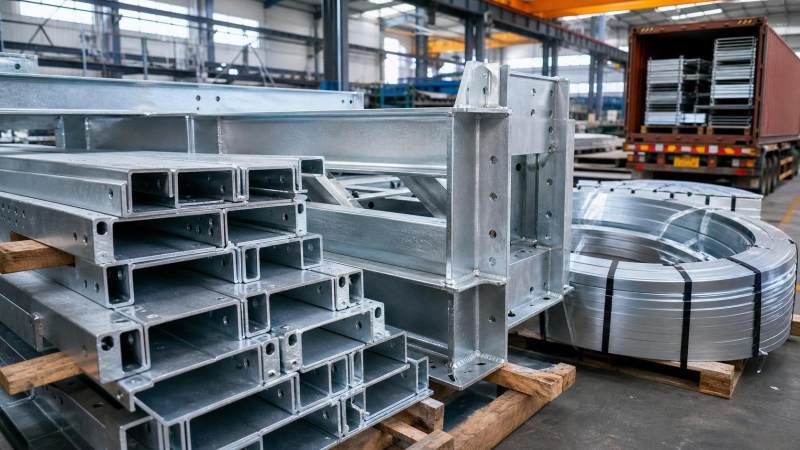
The short answer is that Galvanized cost is never just a steel price.
In fabrication projects, the final number combines base steel, zinc coating, processing steps, tolerances, logistics, and delivery timing.
That is why two offers can look similar at first glance, yet land far apart once technical details are checked.
A thicker zinc layer improves corrosion resistance, but it also raises material and processing costs.
A higher steel grade can support load requirements better, but it may need different sourcing and fabrication control.
More importantly, fabrication projects rarely buy plain stock only.
They often include cutting, punching, welding, drilling, bending, marking, and packing for export.
Each added step changes labor hours, scrap rate, inspection needs, and lead time.
For projects sourced internationally, freight, exchange rates, and compliance standards also matter.
That is especially true when suppliers work to ASTM, EN, JIS, or GB requirements.
A reliable structural steel exporter from China can often balance these variables better through stable production and quality control.
The practical goal is not to chase the lowest quote.
It is to understand what the quote actually includes, and what future cost exposure it may create.
Which cost drivers usually matter most in a Galvanized fabrication project?
Several cost drivers appear again and again, but they do not carry equal weight in every job.
In outdoor construction, the zinc coating specification may dominate the decision.
In heavy structural work, the steel grade and dimensional accuracy may have greater budget impact.
A useful way to review a Galvanized quote is to separate visible costs from hidden ones.
This kind of breakdown makes quote comparison far more realistic.
Without it, a lower Galvanized price may simply reflect missing services or lighter coating.
Does coating standard or steel grade have the bigger effect on budget?
It depends on where the part will be used and how demanding the structure is.
For exposed environments, Galvanized coating often becomes the more sensitive cost item.
For load-bearing sections, grade selection can shape both material cost and fabrication method.
Take channel steel as an example.
A project using Q195 or Q235 for general support members will price differently from one requiring Q345B or stainless grades.
The same logic applies when comparing standard sections with customized profiles.
In the middle of budget review, it helps to check whether a standard product can cover the design need.
For example, Channel Steel Supplier options may fit projects needing U channel steel for wall beams, brackets, purlins, or lightweight roof structures.
Typical ranges such as 1.5mm to 25mm thickness and 6m to 12m length can reduce custom processing pressure.
When specifications already align with AISI, ASTM, DIN, JIS, BS, or GB/T, approval becomes easier too.
So the better question is not which factor is always bigger.
It is whether the selected coating and grade are truly required, or simply inherited from an older design.
Where do hidden costs usually appear after the order is placed?
Hidden costs often come from details that looked minor during quotation review.
Tolerance is one of the biggest examples.
A request for very tight thickness or height control can increase inspection time and rejection risk.
Packaging is another one.
Export bundles, seaworthy wrapping, labeling, and mixed-container handling all add cost, even when they are not obvious in the first quote.
Then there is rework.
If drawings are revised after production starts, Galvanized parts may need re-fabrication or re-coating.
That can affect both budget and schedule.
- Check whether coating thickness is quoted by standard or by assumption.
- Confirm if cutting, hole making, welding, and marking are included line by line.
- Review whether mill certificates, SGS or BV inspection, and export documents are extra.
- Ask if price validity covers zinc market volatility and exchange movement.
- Verify lead time from drawing approval, not only from deposit date.
In actual sourcing, suppliers with modern facilities and stable export routines usually control these variables better.
That is one reason experienced Chinese structural steel exporters remain competitive beyond unit price alone.
How should two Galvanized quotations really be compared?
A fair comparison starts by aligning the technical baseline.
If one quote uses a lighter section, lower coating class, or looser tolerance, it is not a true comparison.
The most practical approach is to compare four layers at once.
This is also where supplier background matters.
A company with broad structural steel capacity, international standards compliance, and repeat export experience can reduce downstream surprises.
That reduction in risk has financial value, even if the opening quote is not the cheapest.
What is the smarter next step before approving a Galvanized order?
Start by translating the project into a cost review checklist.
That means confirming application environment, target service life, required standards, fabrication scope, and delivery timing.
Then test whether every quote uses the same assumptions.
If a Galvanized option looks unusually low, ask what has been simplified.
Sometimes the answer is acceptable.
Sometimes it shifts cost into maintenance, delays, or replacement exposure later.
Projects involving channel steel, beams, angles, or custom structural parts benefit from one more check.
See whether the supplier can support both standard specifications and OEM adjustments without losing lead-time control.
That flexibility often matters more than a small headline discount.
In the end, Galvanized steel cost is best judged as total project cost, not just ton price.
A solid decision usually comes from matching coating, grade, fabrication depth, and supply reliability to the real job.
Before moving forward, line up the technical scope, compare inclusions carefully, and confirm the risk points that could change budget later.
Please give us a message


Please enter what you want to find