Steel wire strand performance starts with the real lifting or support condition
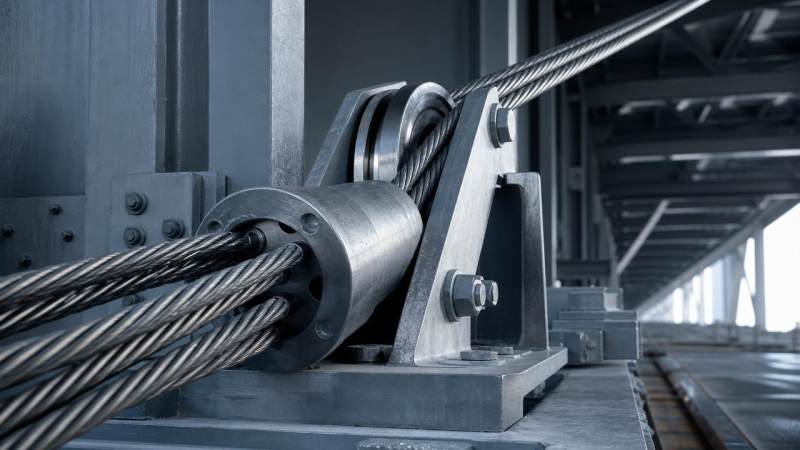
In lifting and support work, steel wire strand is rarely chosen by strength alone.
The same nominal load can behave very differently in a tower lift, suspended platform, bridge stay, or temporary bracing line.
What matters in practice is how the load moves, how often it cycles, and what the surrounding environment does to the strand over time.
That is why steel wire strand selection sits at the intersection of material performance, installation quality, structural compatibility, and safety control.
For global steel projects, this judgment also needs to align with standard compliance, fabrication consistency, and supply reliability.
Hongteng Fengda supports this broader requirement through structural steel manufacturing built around ASTM, EN, JIS, and GB expectations.
That background matters because lifting and support systems often depend on how wire strands interact with frames, anchors, brackets, and secondary steel members.
Why similar projects still ask different things from steel wire strand
A static support line in a dry indoor plant does not challenge steel wire strand the same way as a hoisting line exposed to rain, grit, and repeated shock.
Even when breaking load targets look similar, fatigue resistance and corrosion behavior may become the real decision point.
More importantly, strand selection cannot be separated from the steel structure carrying the force path.
A support frame with inadequate stiffness can create uneven loading, bending at anchor points, or local wear at contact positions.
In fabrication and framework applications, designers often combine tension elements with bracing steel.
Where corner restraint or secondary reinforcement is needed, components such as Carbon Steel Angle may be used to improve support geometry and load transfer.
The point is not to treat every lifting assembly as a wire product issue.
Very often, failure risk begins at the interface between the steel wire strand and the supporting steelwork.
In active lifting systems, fatigue and dynamic load usually decide service life
In cranes, winches, and repeated hoisting operations, steel wire strand sees more than pure tensile demand.
It experiences acceleration, deceleration, vibration, drum contact, and changing stress ranges.
This is where many oversimplified selections fail.
A strand with high tensile strength but weak fatigue performance may look acceptable on paper and still age too quickly in service.
The better judgment approach is to review several factors together:
- peak load versus normal working load
- load cycle frequency during daily operation
- bend radius around sheaves or drums
- surface wear from contact points
- lubrication and inspection access
Where the lifting path includes sudden starts or uneven payload distribution, additional safety margin is usually justified.
The practical goal is not just avoiding immediate rupture.
It is maintaining predictable performance between inspections.
For permanent support or stay applications, corrosion and anchor behavior become more important
Steel wire strand used in bridge elements, suspended supports, guying systems, or long-term structural restraint works under a different logic.
Movement may be limited, but exposure time is far longer.
Moisture, salt, industrial fumes, and temperature variation slowly reshape the risk profile.
In these cases, corrosion protection is not an accessory feature.
It directly affects load reliability, inspection intervals, and replacement planning.
Anchor zones deserve equal attention.
A well-specified steel wire strand can still underperform if wedge seating, end fittings, or support plates create stress concentration.
This is also where the surrounding fabricated steel matters.
Equal or unequal angle sections, plates, and bracing members must match the tension path without twisting or eccentricity.
For support assemblies in construction, shipbuilding, or bridging work, section thickness, width range, and forming method should be checked together with the strand design.
A quick comparison helps separate these use cases
Temporary bracing and site support need faster decisions, but not rougher ones
On construction sites, steel wire strand is often selected under time pressure.
That creates a common mistake.
Teams compare rated capacity but ignore installation quality, anchor spacing, or frame stiffness.
Temporary does not mean low consequence.
A short-term support line can still fail because the actual line angle changed the effective force, or because a connection detail allowed unintended movement.
In practical site conditions, a stable support arrangement often depends on ordinary structural members being chosen correctly.
For example, angle sections used for framework, bracing, or corner reinforcement should fit the load path and fabrication method.
Options produced by hot rolled, cold drawn, bending, or welding processes are not interchangeable in every assembly.
When support steel is fabricated to project dimensions, lengths from 1m to 12m and equal or unequal profiles can simplify alignment and reduce improvised field changes.
What gets misjudged most often in steel wire strand selection
The most frequent error is treating steel wire strand as an isolated item with a single load value.
In reality, service safety depends on a chain of conditions.
- Ignoring dynamic effects because the static load looks modest.
- Assuming similar projects share the same corrosion exposure.
- Checking strand strength but not end connection geometry.
- Reducing initial material cost while increasing replacement frequency.
- Using support steel that lacks stiffness or dimensional consistency.
Another overlooked point is standard alignment.
International projects often combine materials from different supply chains.
If the steel wire strand, anchor hardware, and structural sections are not reviewed against compatible ASTM, EN, JIS, or GB expectations, hidden mismatch can remain until installation.
A practical way to match steel wire strand to the supporting steel system
A good selection process starts by mapping the force path before comparing catalog values.
That means reviewing where tension begins, where it changes direction, and where it ends inside the steel structure.
Then check whether the surrounding members provide stable support, enough contact area, and practical access for installation and maintenance.
This is especially useful in projects combining wire systems with fabricated structural components.
For example, Carbon Steel Angle used in steel structure, manufacturing, shipbuilding, or automobile chassis assemblies can help create consistent support points when the size and thickness are chosen to suit the real force path.
Common thicknesses from 0.8mm to 25mm and wide section ranges make these members adaptable, but only if the structural role is clear.
The strand should never compensate for weak support detailing.
Useful checks before final specification
- Define working load, peak load, and expected shock events separately.
- Confirm whether the steel wire strand works in motion, restraint, or both.
- Review moisture, salt, heat, and abrasive exposure over the full service period.
- Check end fittings, support steel dimensions, and alignment tolerances together.
- Use materials and fabricated components traceable to recognized standards.
The safer decision is usually the one that connects load, environment, and structure
Steel wire strand works well in lifting and support systems when its selection reflects the actual application, not just a nominal rating.
Dynamic lifting needs fatigue awareness.
Permanent support needs corrosion control and reliable anchoring.
Temporary bracing needs disciplined installation and stable structural backing.
When those conditions are reviewed together, steel wire strand becomes easier to specify, maintain, and trust.
A sensible next step is to sort projects by operating load pattern, exposure level, support configuration, and applicable standards.
That makes it easier to compare options, identify hidden risk points, and define a steel system that performs consistently from fabrication through field use.
Please give us a message


Please enter what you want to find