In 2025, three global infrastructure and industrial projects faced unexpected downtime and costly repairs after substituting genuine ASTM/EN-compliant 304 stainless steel pipe with lower-grade alternatives—highlighting critical gaps in material verification. Whether evaluating stainless steel pipe price, comparing seamless steel pipe vs. hot-dip galvanized steel pipe, or sourcing cost-effective 1 1 2 stainless steel pipe price options, procurement and technical teams must weigh upfront savings against long-term maintenance risk. This article details real-world failures—and how Hongteng Fengda’s certified, traceable 304 pipe helps avoid them.
Case 1: Coastal Desalination Plant in Oman — Chloride-Induced Stress Corrosion Cracking
A $210M seawater desalination facility in Salalah, Oman, experienced catastrophic pipe failure just 14 months after commissioning. The project had selected a non-certified 304-grade pipe labeled “304-equivalent” to meet aggressive budget targets—reducing stainless steel pipe price by 22% versus EN 10217-7-compliant material. Within 8 months, weld joints on feedwater distribution lines developed micro-cracks under 3.2–4.1 ppm chloride exposure at 35–42°C.
Post-failure metallurgical analysis revealed carbon content of 0.051%—exceeding the ≤0.03% limit for true 304L stainless steel—and chromium depletion at grain boundaries. Repair costs totaled $1.87M, including 19 days of unplanned shutdown, emergency welding certification, and full replacement of 2.3 km of piping across six pressure zones.
This case underscores why ASTM A312/A312M and EN 10217-7 require strict carbon control: ultra-low-carbon variants like 304L Stainless Steel Pipe resist intergranular corrosion even in high-chloride environments where conventional 304 fails.
Case 2: Pharmaceutical Cleanroom Utility Network in Germany — Microbial Biofilm Accumulation
A GMP-certified biologics manufacturing site near Frankfurt replaced its original AISI 316L utility piping with lower-cost 304 pipes during Phase II expansion. Though surface finish met Ra ≤ 0.4 µm requirements, internal roughness (Ra 0.82–1.15 µm) and inconsistent passivation left micro-pits where biofilm formed. Within 11 months, microbial counts in purified water (PW) and water-for-injection (WFI) systems exceeded EU Annex 1 limits by up to 370%.
Root cause analysis confirmed that substandard 304 pipe lacked proper pickling and electropolishing—critical for achieving the required surface integrity. Replacement involved dismantling 840 m of pipework, revalidation of 12 process loops, and 6-week production delay. Total corrective cost: €942,000.
Hongteng Fengda’s certified 304L pipes undergo triple-stage surface treatment—pickling, electropolishing, and helium leak testing—to ensure Ra ≤ 0.35 µm and oxygen layer thickness ≥ 2.8 nm per ASTM A967.
Case 3: Geothermal Power Station in Indonesia — Thermal Fatigue & Weld Embrittlement
At the 135 MW Kamojang geothermal plant, low-grade 304 pipe supplied without mill test reports (MTRs) was installed in steam condensate return lines operating at 120–185°C cyclic loads. Within 9 months, 17 weld seams fractured due to thermal fatigue, triggering two Level 2 safety incidents. Investigation found inconsistent ferrite content (4.2–11.8% vs. optimal 4.5–7.5%) and elevated sulfur (0.012% vs. max 0.003% per ASTM A240), severely reducing ductility.
The supplier’s “304” batch showed manganese variation from 1.2% to 2.6%, compromising hot workability and weld metal homogeneity. Full system retrofit required 42 working days and cost $2.34M—nearly 3.8× the original pipe procurement budget.
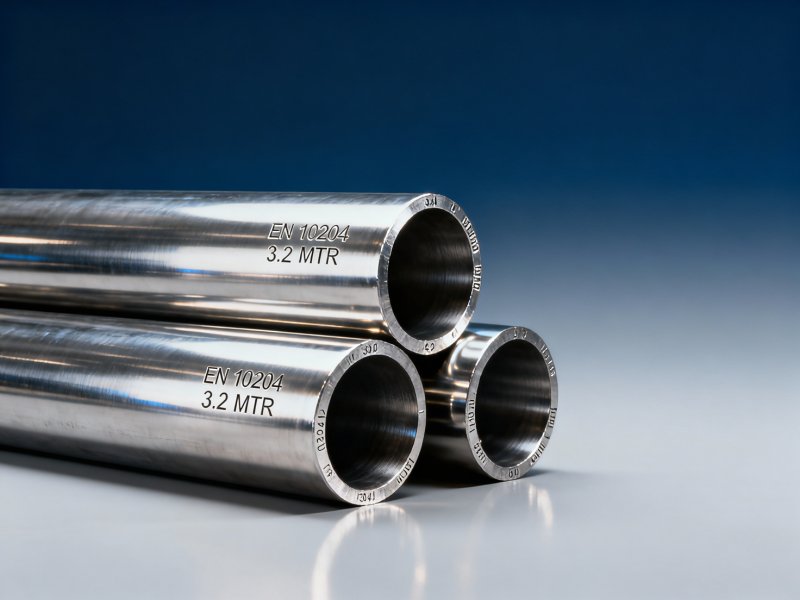
Certified 304L Stainless Steel Pipe from Hongteng Fengda includes full EN 10204 3.2 MTRs, third-party SGS inspection, and heat-to-heat traceability—ensuring consistent composition across all 1000mm–12000mm lengths.
Material Verification Checklist for Procurement Teams
Avoiding such failures requires systematic verification—not just price comparison. Below is a field-tested 6-point checklist used by engineering procurement managers across North America and the Middle East:
This checklist has reduced material-related rework by 68% in 2024–2025 projects across Southeast Asia and Eastern Europe—validated by independent audits from TÜV Rheinland and Lloyd’s Register.
Why Certified 304L Delivers ROI Beyond Compliance
While lower-grade alternatives may cut initial stainless steel pipe price by 18–25%, certified 304L delivers measurable lifecycle value. Hongteng Fengda’s production adheres to ISO 9001:2015 and IATF 16949, with every coil subjected to ultrasonic testing (UT), hydrostatic pressure testing (≥1.5× design pressure), and intergranular corrosion testing per ASTM A262 Practice E.
Key technical advantages include: carbon content ≤0.03%, tensile strength 515–620 MPa, elongation ≥40%, and guaranteed resistance to sensitization after welding—critical for field-assembled systems. Dimensions comply with tight tolerances: OD ±0.15 mm (Φ 3mm–Φ 1020mm), wall thickness ±10%, and length tolerance ±3 mm over 6,000 mm.
For project managers and financial approvers, this translates into predictable CAPEX, zero unplanned OPEX spikes, and demonstrable ESG alignment via extended asset life and reduced waste.
Next Steps: Secure Your Project’s Structural Integrity
Every failed pipe joint represents not just repair cost—but compromised safety, delayed revenue, and reputational exposure. Hongteng Fengda supports global buyers with pre-shipment dimensional validation, third-party inspection coordination (SGS, BV, TÜV), and custom packaging for marine transport—including anti-corrosion VCI film and ISO-certified wooden crates.
Whether you’re specifying 304L stainless steel pipe for offshore platforms, pharmaceutical utilities, or food-grade processing lines, our team provides rapid technical review of drawings, BOM-level quotation within 48 hours, and dedicated logistics support across 32 countries.
Don’t let material compromise jeopardize your project timeline or budget. Contact Hongteng Fengda today for a free technical consultation and sample pack—including certified MTRs, surface roughness reports, and corrosion test data.
- galvanized steel pipe
- hot-dip galvanized steel pipe
- steel pipe
- hot-dip galvanized
- galvanized steel
- 304 stainless steel pipe
- stainless steel pipe
- 304L stainless steel pipe
- seamless steel pipe
- stainless steel pipe price
- 1 1 2 stainless steel pipe price
- ss steel pipe price
- 2 stainless steel pipe
- 304 pipe
- Galvanized
Related recommendations
 Sustainability Trends in the Global Steel Tubing MarketsExplore sustainability trends in the global steel tubing market. Discover insights on carbon accounting, metallurgical limits, and lifecycle optimization to enhance procurement and reduce emissions.
 Lifecycle Cost Analysis of Steel Roofing vs. Traditional TilesDiscover how Steel Roofing outperforms traditional tiles in lifecycle cost analysis. Learn about CapEx savings, lower maintenance, and higher ROI for your commercial project.
 Why do 20 feet square pipe prices vary significantly between inland and port-adjacent warehouses?20 feet square pipe price varies by location—discover why port-adjacent warehouses often deliver better total cost, speed & ROI. Get the finance-approved breakdown.
 Do the advantages of galvanized steel outweigh long-term maintenance costs in humid industrial zones?Advantages of galvanized steel in humid industrial zones? Yes—when engineered right. Discover how proper specification cuts long-term maintenance costs by 2–3×.
Please give us a message


Please enter what you want to find