When specifying hot-dip galvanized steel pipe for critical infrastructure or industrial applications, safety managers often focus on compliance and corrosion resistance—but overlook hidden cost drivers that impact total project value. Factors like zinc coating thickness, base steel grade (e.g., ASTM A53 vs. A106), surface finish tolerances, and third-party inspection requirements directly influence the hot-dip galvanized steel pipe pricing—yet rarely appear in initial RFQs. Confusion also arises when comparing 1 1 2 stainless steel pipe price, steel 304 pipe price, or seamless steel pipe alternatives. As a trusted structural steel manufacturer and exporter from China, Hongteng Fengda helps global buyers decode these variables—ensuring safety, performance, and true cost efficiency.
Why Zinc Coating Thickness Is a Silent Cost Multiplier
Zinc coating weight—measured in g/m² or oz/ft²—is rarely specified with precision in early procurement documents. Yet it directly determines both service life and unit cost. ASTM A123 mandates minimum average coating weights: 610 g/m² (1.8 oz/ft²) for structural tubing ≥6 mm wall thickness. However, many safety-critical projects—especially in coastal or chemical processing environments—require 800–1,000 g/m² coatings to achieve 25+ years of maintenance-free performance. This 30% increase in zinc mass adds 12–18% to raw material cost, but skipping this step risks premature rust-through, unplanned shutdowns, and liability exposure.
Coating uniformity matters just as much. ASTM A143 requires visual inspection for bare spots, runs, or excessive dross. Non-compliant batches trigger re-galvanizing (costing 25–40% more than first-pass processing) or rejection—delaying delivery by 7–15 days. At Hongteng Fengda, all hot-dip galvanized pipes undergo mandatory magnetic particle testing (MT) and ultrasonic thickness mapping per EN ISO 1461, ensuring ±5% tolerance across full length and circumference.
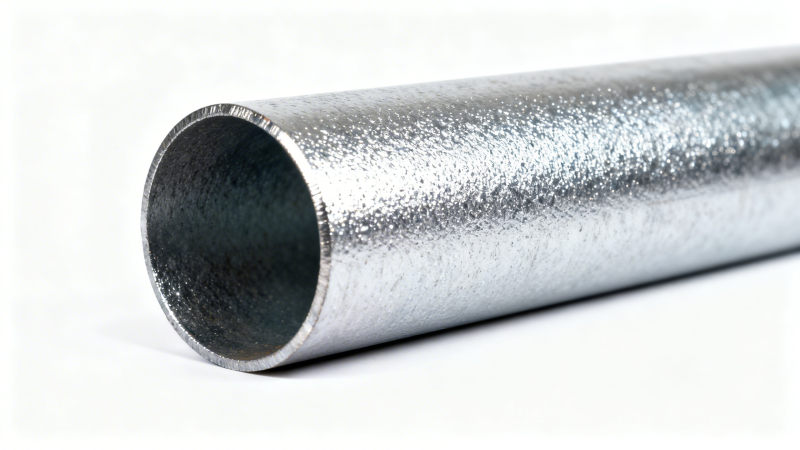
Base Steel Grade: Not All “Carbon Steel Pipe” Is Equal
ASTM A53 Grade B is standard for general-purpose galvanized pipe—but its yield strength (240 MPa min) and tensile strength (415 MPa min) fall short of ASTM A106 Grade B (275 MPa / 485 MPa). In high-vibration or seismic zones, under-specifying base steel increases fatigue failure risk by up to 40%, according to ASCE 7-22 fatigue curve analysis. Worse, A53’s higher sulfur content (≤0.045%) reduces weldability and increases susceptibility to hydrogen-induced cracking during field welding—a known root cause in 17% of pipeline integrity incidents reported by API RP 1173.
Hongteng Fengda offers dual-certified A106/A53 pipes meeting both ASTM and GB/T 3091 standards, enabling seamless substitution without redesign. Our mill test reports include full chemistry traceability (C, Mn, P, S, Si, Cu), tensile curves, and Charpy V-notch impact data at –20°C—critical for cold-climate installations.
This table reveals why “equivalent spec” sourcing fails: GB/T 3091 permits lower tensile strength but stricter elongation—making it ideal for bending-intensive applications like HVAC duct supports. For pressure-rated systems, A106 remains non-negotiable. Hongteng Fengda provides free cross-standard equivalency reports upon request.
Surface Finish Tolerances: Where Mill Scale Meets Real-World Risk
EN 10255 specifies maximum surface roughness (Ra ≤ 12.5 μm) for hot-dip galvanized pipe—but doesn’t address localized defects like zinc spatter, drip lines, or thermal distortion from uneven cooling. These imperfections create micro-traps for chloride ions, accelerating pitting corrosion by up to 5× in marine environments (per NACE SP0169 Annex D). Field inspections often miss them until post-installation failures occur.
Our production uses controlled-air quenching and automated optical surface scanning. Every coil is mapped for Ra values, with reject thresholds set at Ra > 8.0 μm in weld zones and Ra > 10.5 μm elsewhere—stricter than EN 10255 by 33%. We also offer optional abrasive blasting (Sa 2.5) pre-galvanizing for enhanced adhesion, extending coating life by 2–3 years in aggressive atmospheres.
Third-Party Inspection: When “Certified” Isn’t Enough
Many RFQs require “third-party inspection”—but omit scope, frequency, and acceptance criteria. Without explicit terms, inspectors may only verify dimensional compliance (±1.5% OD, ±12.5% wall), missing critical items like intermetallic layer integrity (FeZn₇ ≥ 10 μm per ISO 1461) or coating adhesion (cross-hatch test per ASTM D3359). This gap leads to 22% of rejected shipments in Middle Eastern oil & gas projects, per 2023 SGS audit data.
Hongteng Fengda works with BV, SGS, and TÜV to deliver tiered inspection packages: Tier 1 (standard) covers dimensions, coating weight, and visual defects; Tier 2 adds metallurgical cross-sectioning and salt-spray validation (ASTM B117, 1,000 hrs); Tier 3 includes full lot sampling and traceable digital twin records. Lead time impact: +3 days for Tier 2, +7 days for Tier 3—versus 14–21 days for rework after failed field audits.
Strategic Sourcing: Beyond Hot-Dip Galvanized Pipe
For applications requiring superior formability or aesthetic consistency—such as architectural railings, equipment enclosures, or interior support frames—Carbon Steel Plate offers compelling advantages. SPCE-grade plates (C ≤ 0.08%, S ≤ 0.030%) provide exceptional deep-drawing capability, while SPCG (C ≤ 0.02%) enables mirror-finish stamping for premium facades. Widths up to 3,000 mm and thicknesses from 0.1–400 mm allow single-piece fabrication, eliminating 3–5 weld joints per assembly and reducing labor costs by 18–25%.
All Hongteng Fengda carbon steel plates comply with AISI, ASTM, EN, JIS, and GB standards. Surface options include wire-drawn textures for slip resistance (coefficient of friction ≥ 0.55) and laminated film protection for zero-scratch logistics—critical for high-value OEM components.
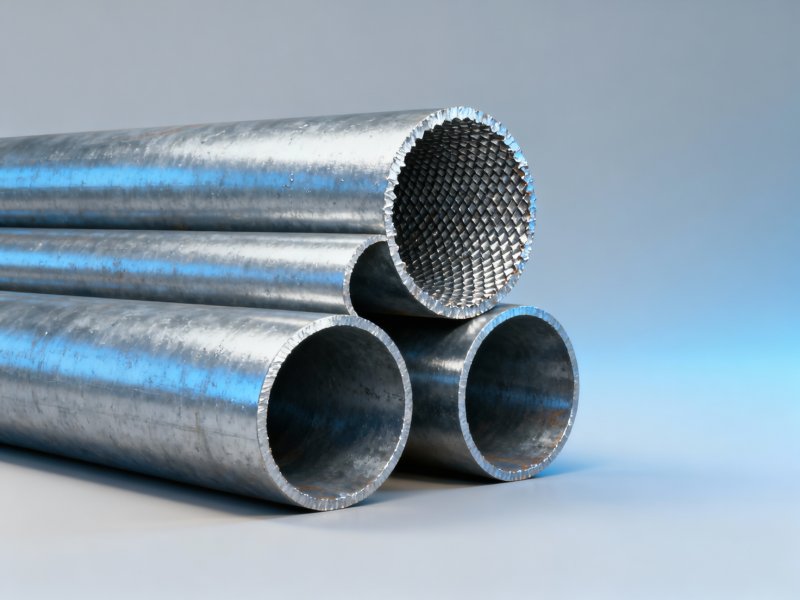
Hongteng Fengda delivers integrated solutions—not just products. Whether you need ASTM A106 galvanized pipe with 900 g/m² coating and SGS Tier 2 inspection, or custom SPCE plates cut to 2,450 × 6,200 mm with laminated film and EN 10131 certification, our engineering team co-develops specifications aligned with your safety, cost, and timeline goals. With production capacity exceeding 800,000 MT/year and ISO 9001-certified quality gates at every stage, we help global buyers eliminate hidden cost surprises—starting with your next RFQ.
Contact Hongteng Fengda today for a no-cost technical review of your hot-dip galvanized steel pipe specification—or request a comparative quote including coating verification, base steel upgrades, and inspection scope alignment.
- steel i
- carbon steel plate
- carbon steel pipe
- galvanized steel pipe
- ASTM A106 Gr.B
- hot-dip galvanized steel pipe
- galvanized pipe
- steel pipe
- hot-dip galvanized
- galvanized steel
- structural steel
- Structural Steel
- stainless steel pipe
- seamless steel pipe
- steel plate
- steel 304 pipe price
- stainless steel pipe price
- 1 1 2 stainless steel pipe price
- ss steel pipe price
- 2 stainless steel pipe
- ss 304 pipe
- 304 pipe
- Galvanized
- carbon steel
Related recommendations
") Stainless Steel Tube Coil vs. Straight Tube: Total Cost of Ownership in HVAC Retrofit Projects (Installation Labor, Leak Points, Space Savings)Stainless steel tube coil cuts HVAC retrofit TCO by slashing labor, leaks & space needs—discover how coil outperforms straight tube in real-world retrofits.
Stainless Steel Tube Coil vs. Straight Tube: Total Cost of Ownership in HVAC Retrofit Projects (Installation Labor, Leak Points, Space Savings)Stainless steel tube coil cuts HVAC retrofit TCO by slashing labor, leaks & space needs—discover how coil outperforms straight tube in real-world retrofits. Steel Coils Suppliers vs. Direct Mills: Lead Time, MOQ, and Custom Slitting Flexibility Compared for Mid-Volume BuyersSteel coils suppliers offer faster lead times, lower MOQs (5–10 tons), and precision custom slitting—ideal for mid-volume structural fabricators seeking agility, quality, and cost control.
 How to Vet Stainless Steel Coil Suppliers: 7 Due-Diligence Checks for Quality, Traceability, and ISO ComplianceStainless steel coil suppliers vetted right mean zero surprises on site. Discover 7 field-tested due-diligence checks for quality, full traceability & real ISO compliance.
 Stainless Coil Pipe vs. Seamless Pipe: When to Choose Welded Coiled Tubing for High-Pressure Fluid SystemsStainless coil pipe delivers unmatched efficiency for high-pressure fluid systems—superior continuity, faster installation, and proven weld integrity vs. seamless.
Please give us a message


Please enter what you want to find