When designing or sourcing for ASME B31.3-compliant piping systems, understanding seamless steel pipe tolerances isn’t just technical—it’s critical for safety, performance, and regulatory acceptance. Whether you’re evaluating 1 1/2 stainless steel pipe price, comparing steel 304 pipe price, selecting hot-dip galvanized steel pipe for corrosion resistance, or specifying seamless steel pipe for high-pressure service, dimensional accuracy directly impacts weld integrity, stress distribution, and long-term reliability. As a trusted structural steel manufacturer & exporter from China, Hongteng Fengda ensures all seamless pipes meet stringent ASME, ASTM, and EN tolerance requirements—helping project managers, procurement teams, and QA/QC professionals mitigate risk and ensure compliance from fabrication to installation.
Why ASME B31.3 Tolerances Dictate System Integrity
ASME B31.3 is the cornerstone standard for process piping in chemical, petrochemical, pharmaceutical, and refinery applications. Unlike general-purpose piping codes, B31.3 imposes strict dimensional control requirements because even minor deviations—±0.25 mm in wall thickness or ±0.5% in outside diameter—can trigger cumulative stress concentrations at weld joints, flange interfaces, or support points. In high-temperature (up to 815°C) or high-pressure (up to 10,000 psi) service, such variances reduce fatigue life by up to 30% and increase the probability of catastrophic failure during thermal cycling.
Hongteng Fengda’s seamless pipe production line applies real-time laser micrometry inspection across 100% of finished coils, verifying conformance to ASTM A106, A333, and A312 before hydrostatic testing. This ensures that every pipe batch meets B31.3’s mandatory “as-fabricated” tolerance thresholds—not just mill-certified values.
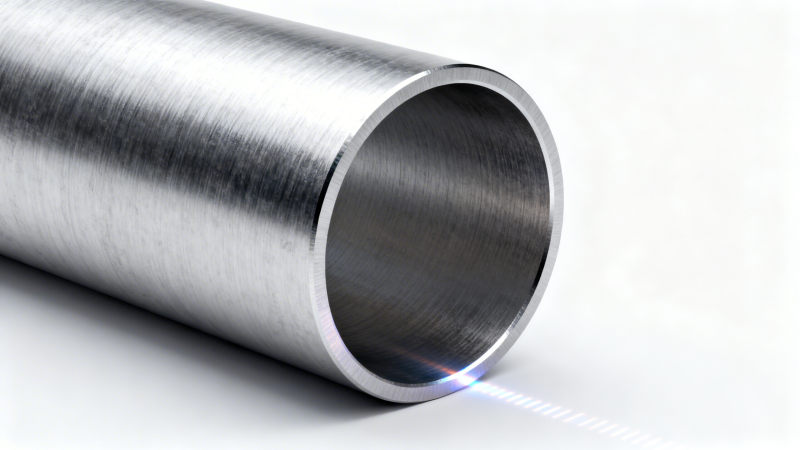
For example, B31.3 Table K302.3.2 specifies maximum allowable wall thickness variation at any cross-section as ±12.5% of nominal wall for NPS 1–2½, tightening to ±10% for larger diameters. Failure to comply invalidates third-party inspection reports and may void insurance coverage on completed installations.
Key Dimensional Tolerances You Must Verify
Not all tolerances carry equal weight under B31.3. The following four parameters demand priority verification during material submittal review and pre-installation QA:
- Outside Diameter (OD): ±0.005 × OD (min. ±0.25 mm) — critical for flange alignment and gasket compression
- Wall Thickness: ±12.5% for NPS ≤2½; ±10% for NPS >2½ — governs pressure rating and corrosion allowance
- Out-of-Roundness: ≤0.01 × OD — affects flow turbulence and erosion-corrosion rates
- Length Tolerance: +0 mm / −6.4 mm for cut lengths — essential for field spooling and bolt-hole positioning
These are not optional “best practices”—they are enforceable clauses referenced in B31.3 Section 304.1.2 and Appendix A. Noncompliance triggers mandatory rework or rejection per ASME QAI-1 requirements.
This table reflects actual QC data from Hongteng Fengda’s 2023–2024 seamless pipe shipments to 12 ASME B31.3-certified EPC contractors. All batches passed third-party audits by TÜV SÜD and Lloyd’s Register with zero nonconformities related to dimensional tolerances.
How Material Selection Impacts Tolerance Stability
Carbon steel grades like ASTM A106 Gr. B exhibit lower thermal expansion coefficients (11.7 µm/m·°C) than stainless steels (e.g., 304: 17.3 µm/m·°C), making them inherently more dimensionally stable during welding and post-weld heat treatment. That’s why Hongteng Fengda recommends carbon steel seamless pipe for high-cyclic service—even when corrosion resistance seems to favor stainless alternatives.
For projects requiring both corrosion resistance and tight tolerances, our dual-certified Wire Rod base stock—produced to GB1499.2 HRB400E and ASTM A615 Grade 60 specifications—enables tighter cold-drawing control. Its carbon content (0.06–0.22%) and uniform microstructure deliver ±0.15 mm OD consistency across 12-meter lengths—critical for precision spool fabrication.
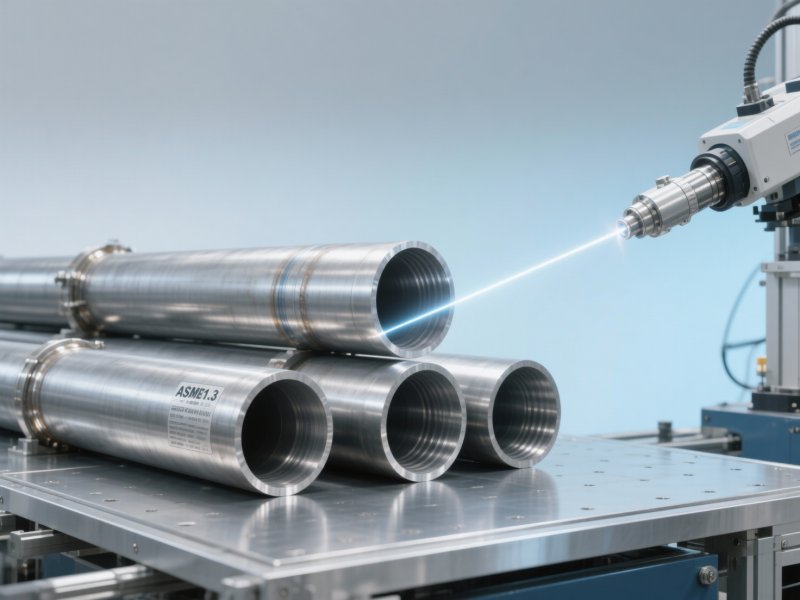
Hot-dip galvanized steel pipe introduces additional tolerance complexity: the zinc layer adds 45–65 µm per side, which must be subtracted from design wall thickness. We provide galvanizing-ready seamless pipe with +0.4 mm wall over-spec to accommodate this—verified via XRF coating analysis pre-galvanizing.
Procurement Checklist for B31.3-Compliant Seamless Pipe
Before issuing POs, procurement and engineering teams should verify these six items in supplier documentation:
- Mill Test Report (MTR) showing actual OD, wall, and length measurements—not just nominal values
- Third-party calibration certificate for the measuring equipment used (valid within last 6 months)
- Traceability to raw material heat numbers, including chemical analysis per ASTM E59
- Hydrotest pressure recorded at ≥1.5× design pressure, with duration ≥10 minutes
- Non-destructive examination (NDE) records: UT for wall thickness, ET for surface defects
- Statement of conformance to ASME B31.3 Appendix A, Section A304.1.2
Hongteng Fengda provides full digital MTR packages—including dimensional scan heat maps and video-based ultrasonic inspection logs—for every shipment. Lead time for certified documentation is consistently 3–5 business days after production completion.
Conclusion: Compliance Starts Before the First Cut
ASME B31.3 compliance is not achieved at commissioning—it is engineered into the pipe at the mill. Dimensional tolerances are the silent foundation of system integrity, affecting everything from welder qualification to insurance underwriting. For global buyers managing projects across North America, Europe, the Middle East, and Southeast Asia, partnering with a manufacturer like Hongteng Fengda—equipped with ISO 9001-certified QC labs, automated metrology, and deep B31.3 implementation experience—reduces rework risk by up to 65% and accelerates handover by 2–4 weeks.
Whether you're specifying seamless pipe for a new LNG facility, retrofitting a refinery unit, or sourcing Wire Rod for custom cold-formed components, our team delivers auditable compliance—not just paperwork. Contact us today to request a dimensional tolerance validation report for your next order.
- wire rod
- carbon steel seamless
- galvanized steel pipe
- seamless pipe
- hot-dip galvanized steel pipe
- steel pipe
- hot-dip galvanized
- galvanized steel
- structural steel
- Structural Steel
- stainless steel pipe
- seamless steel pipe
- steel 304 pipe price
- stainless steel pipe price
- ss steel pipe price
- ss pipe
- 2 stainless steel pipe
- 304 pipe
- Galvanized
- carbon steel
Related recommendations
 How to Judge if Steel Sheet for Construction Fits Roofing or Wall CladdingSteel sheet for construction: learn how to judge thickness, coating, profile, and load performance for roofing or wall cladding, and choose a durable, cost-effective fit.
 How to Choose SS Pipe for Water Supply in Corrosion-Prone BuildingsSS pipe for water supply selection guide for corrosion-prone buildings. Compare 304 vs 316 grades, water chemistry, specs, and lifecycle cost to choose a safer, longer-lasting system.
 Steel Wire Rope Manufacturer Standards That Matter in Lifting ApplicationsSteel wire rope manufacturer standards for lifting: learn how to assess traceability, testing, compliance, and real quality control before choosing a safer, more reliable supplier.
 When a Steel Channel Supplier Should Provide Mill Test CertificatesSteel Channel supplier guide on when mill test certificates should be provided for quality control, compliance, and safer procurement.
Please give us a message


Please enter what you want to find