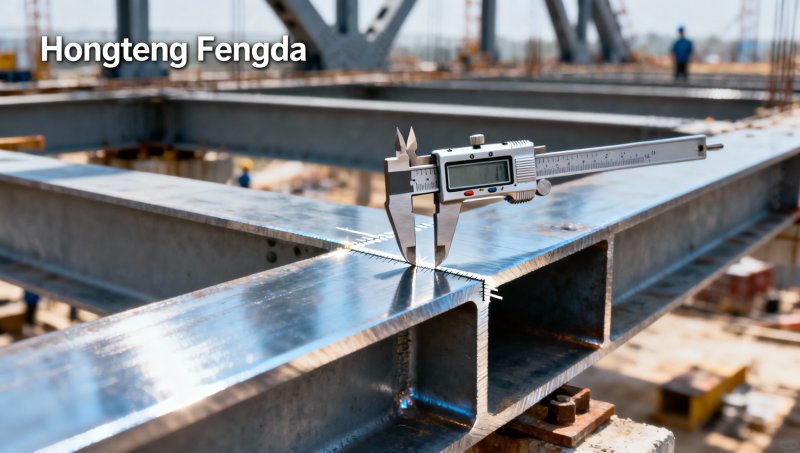
Accurately measuring a steel beam for bridge projects isn’t just about dimensions—it’s a non-negotiable safety and compliance imperative. Whether you’re using an I beam weight calculator for construction engineers, referencing beams weight charts for steel manufacturers, or verifying I beam weight specifications for warehouse construction, tolerance deviations can compromise structural integrity. As a trusted structural steel manufacturer & exporter from China, Hongteng Fengda ensures every beam—be it for industrial use, bridge projects, or European/US infrastructure—meets ASTM, EN, and GB standards. This guide covers critical measurement protocols, allowable tolerances, and mandatory safety checks you can’t skip.
Why Precise Measurement Is Non-Negotiable in Bridge Engineering
Bridge structures bear dynamic, cyclic, and often extreme loads—traffic vibrations, wind shear, thermal expansion, and seismic stress. A 2 mm deviation in flange thickness or a 0.5° misalignment in web verticality may seem trivial—but over a 30-meter span, such errors compound into unacceptable deflection or fatigue cracking. For project managers and safety officers, measurement isn’t a pre-installation formality; it’s the first line of defense against catastrophic failure.
Consider this: In 2022, a mid-span fracture on a newly commissioned highway bridge in Eastern Europe was traced to inconsistent web thickness across I-beam batches—verified only after third-party destructive testing. The root cause? Inadequate pre-delivery dimensional verification at the mill level. That incident underscores why how to measure a steel beam for bridge projects must be embedded in procurement contracts—not left to site crews with handheld calipers alone.
Core Measurement Parameters & Tolerance Benchmarks
Every structural steel beam must be verified across six critical dimensions before acceptance. These are not arbitrary values—they reflect harmonized limits under ASTM A6/A6M (USA), EN 10034 (Europe), and GB/T 706 (China). Deviations beyond these thresholds invalidate certification and void warranty coverage.
Note: All tolerances apply per 3-meter length. For beams exceeding 12 meters, cumulative straightness deviation must not exceed L/1000 (e.g., ≤12 mm for a 12-m beam). Hongteng Fengda applies laser-guided CNC profiling and real-time ultrasonic thickness mapping during production—ensuring 99.2% in-tolerance yield across all export orders.
From Theory to Practice: How to Measure a Steel Beam for Industrial Warehouse & Bridge Use
Field verification requires more than a tape measure. Here’s the step-by-step protocol used by our quality assurance teams—and recommended for your project supervisors:
- Pre-Inspection Calibration: Verify digital micrometers and ultrasonic thickness gauges against NIST-traceable reference blocks before each shift.
- Flange & Web Sampling: Take ≥5 measurements per flange (ends + quarter points + center); 3 readings across web height (top/mid/bottom).
- Straightness Check: Stretch a taut nylon cord along full beam length; use feeler gauges to quantify maximum gap (≤L/1000).
- Twist Verification: Place beam on leveled granite surface; measure diagonal corner elevations with dial indicator (max differential: 0.5 mm/m).
This same methodology applies whether you're evaluating how to measure a steel beam for industrial use or validating I beam weight for construction projects. Consistency across geographies matters—especially when sourcing from Asia for US or EU infrastructure tenders.
Beams Weight Calculation & Its Role in Load Path Integrity
Weight isn’t just logistical—it’s structural. An inaccurate beams weight calculation for structural steel skews dead-load assumptions, affecting foundation design, connection detailing, and even crane selection. Our I beam weight calculator for construction engineers integrates real-time density correction for alloy variations (e.g., ASTM A992 vs. EN S355JR) and accounts for mill-scale loss post-galvanizing.
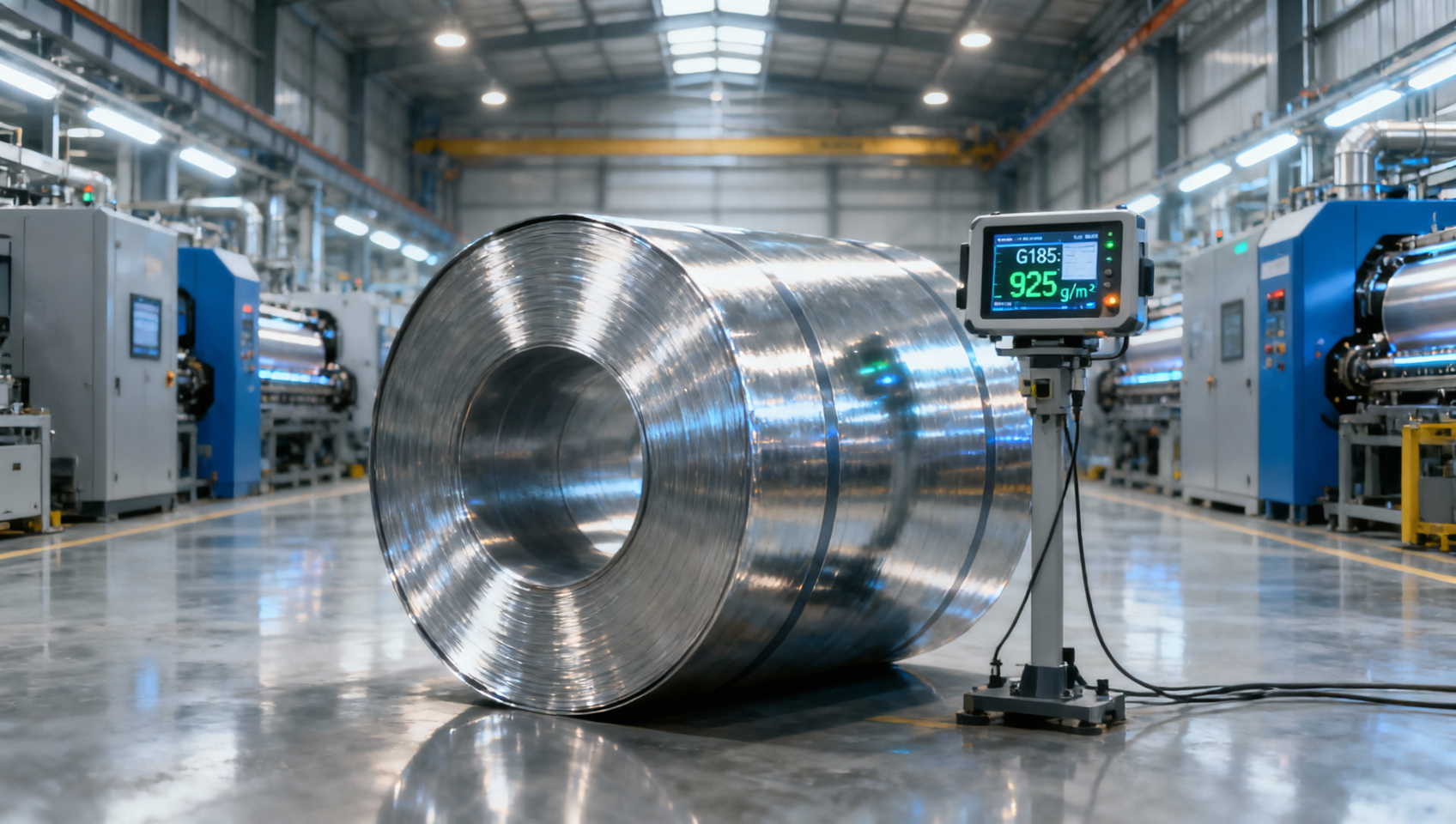
For example: A W12×50 (305×127×50 kg/m) beam weighs 49.7 kg/m as rolled—but after hot-dip galvanizing (zinc layer: 275 g/m²), its effective unit weight rises to ~50.3 kg/m. Over 200 linear meters, that adds 120 kg—enough to trigger re-evaluation of anchor bolt embedment depth. That’s why we include certified weight verification in every mill test report—traceable to ISO/IEC 17025-accredited labs.
Standards Compliance & Why It Starts at the Mill
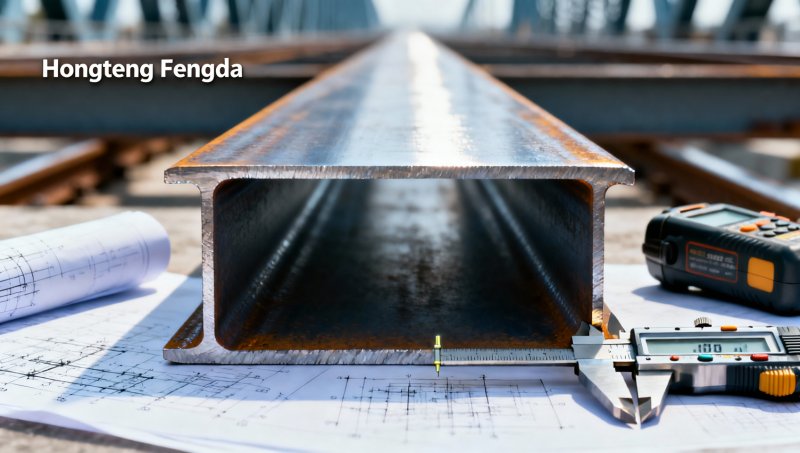
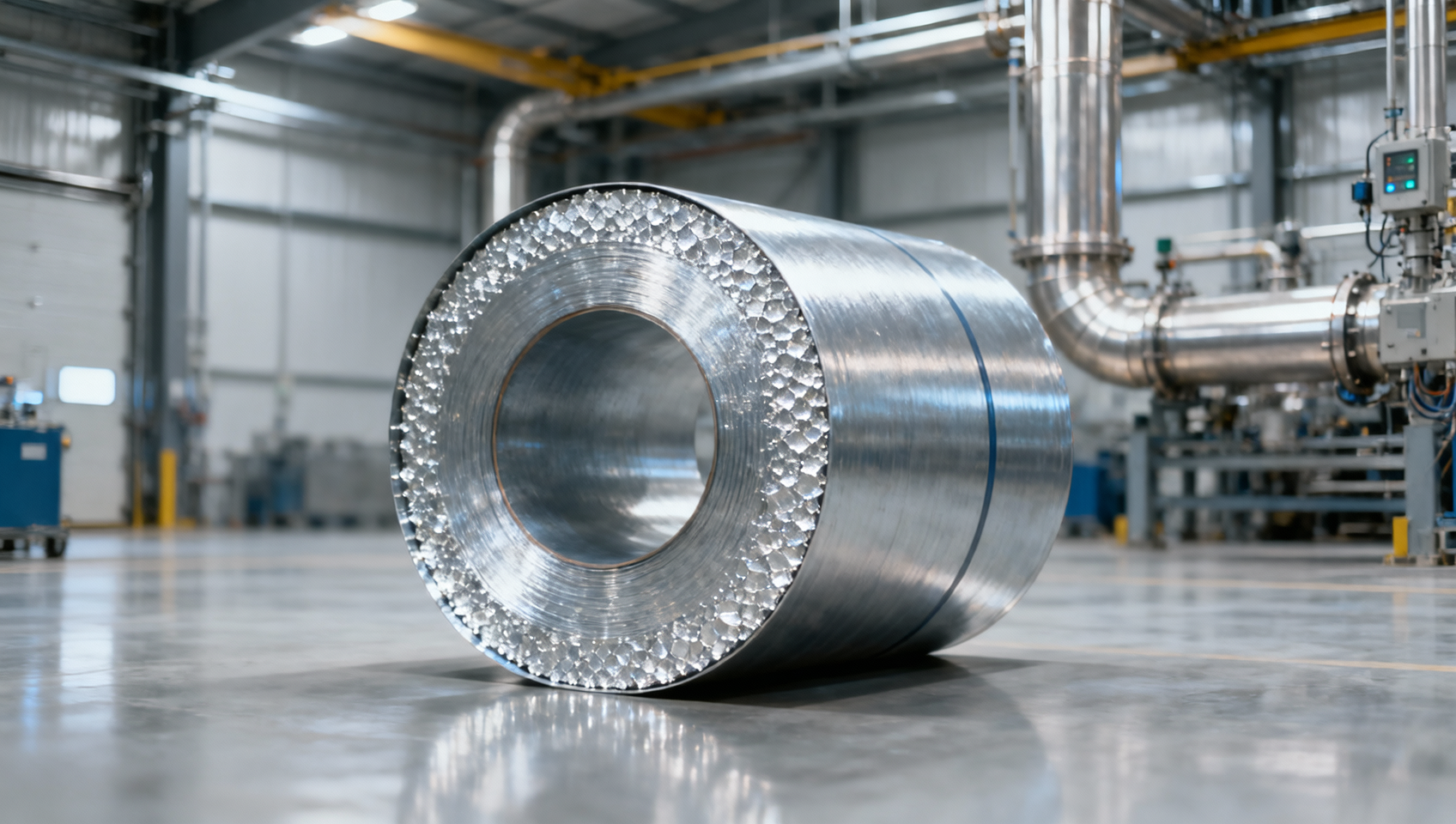
Compliance isn’t stamped on paper—it’s engineered into every heat batch. At Hongteng Fengda, each coil of Gi Sheet Coil undergoes tensile testing, bend testing, and zinc adhesion validation per ASTM A653 and EN 10346. Same rigor applies to structural beams: microstructure analysis, Charpy V-notch impact testing at –20°C (for cold-climate bridges), and full-spectrum spectrographic verification of chemical composition.
We don’t just meet standards—we map them. Every order ships with dual-language MTRs (Mill Test Reports) showing exact conformance to ASTM A6/A6M, EN 10025-2, or GB/T 1591—so your QA team spends less time cross-referencing and more time building.
Why Global Project Teams Choose Hongteng Fengda
You need certainty—not samples, not promises. As a structural steel manufacturer & exporter from China, we deliver:
- Zero-compromise traceability: Batch-level QR-coded reports accessible via mobile scan—showing melt chemistry, rolling date, heat treatment curve, and dimensional inspection logs.
- Pre-shipment dimensional audits: Optional third-party verification (SGS/BV/TÜV) with signed tolerance certificates—critical for EU CE-marked bridge components.
- Logistics-integrated packaging: Beams cradled in seaworthy timber frames with moisture barriers—no rust, no damage, no delays.
- Engineering support: Free access to our beams weight chart for steel manufacturers, I beam weight specifications for warehouse construction, and localized load tables aligned with Eurocode 3, AISC 360, or GB 50017.
Whether you're specifying weight of I beam in USA for a California overpass or verifying weight of I beam supplier in Europe for a Rotterdam port expansion—Hongteng Fengda delivers consistency, compliance, and confidence. Contact us today for customized beam solutions backed by 18+ years of global infrastructure experience.
- gi sheet coil
- structural steel
- Structural Steel
- I-Beam
- S355JR
- Steel Beam
- weight of i beam
- i beam weight
- how to measure a steel beam
- beams weight
- I beam weight for construction projects
- How to measure a steel beam for industrial use
- Weight of I beam in USA
- Beams weight calculation for structural steel
- I beam weight specifications for warehouse construction
- How to measure a steel beam for bridge projects
- Weight of I beam supplier in Europe
- Beams weight chart for steel manufacturers
- I beam weight calculator for construction engineers
- How to measure a steel beam for industrial warehouse
Related recommendations
 Why do 20 feet square pipe prices vary significantly between inland and port-adjacent warehouses?20 feet square pipe price varies by location—discover why port-adjacent warehouses often deliver better total cost, speed & ROI. Get the finance-approved breakdown.
 Do the advantages of galvanized steel outweigh long-term maintenance costs in humid industrial zones?Advantages of galvanized steel in humid industrial zones? Yes—when engineered right. Discover how proper specification cuts long-term maintenance costs by 2–3×.
 How much longer does galvanized steel sheet for roofing last compared to painted steel in humid tropicsgalvanized steel sheet for roofing lasts 2–3× longer than painted steel in humid tropics—25–40 vs. 10–15 years. Proven durability, zero scheduled maintenance, and lower lifecycle cost.
 Why galvanized steel sheet price per ton fluctuates beyond raw material costsGalvanized steel sheet price per ton fluctuates due to coating specs, order volume, logistics & certifications—not just zinc. Discover actionable cost levers.
Please give us a message


Please enter what you want to find