Accurately calculating I beam weight is critical for structural engineers, procurement specialists, and project managers working with steel construction. This guide provides professional calculation methods and essential factors for determining steel beam weights, covering specifications, dimensions, and material properties. As a trusted steel beam supplier and angle steel manufacturer, Hongteng Fengda shares industry expertise to help you make informed decisions when buying structural steel components or comparing I beam vs H beam options for your projects.
Understanding I Beam Weight Calculation Fundamentals
Structural steel professionals require precise weight calculations for material procurement, load capacity analysis, and project budgeting. The weight of an I beam depends on three primary factors: cross-sectional dimensions, length, and material density. Standard steel density is typically 7850 kg/m³ (0.2836 lb/in³), though this may vary slightly depending on alloy composition. For hot rolled steel beams complying with ASTM A36 or EN 10025 standards, the density remains consistent for calculation purposes.
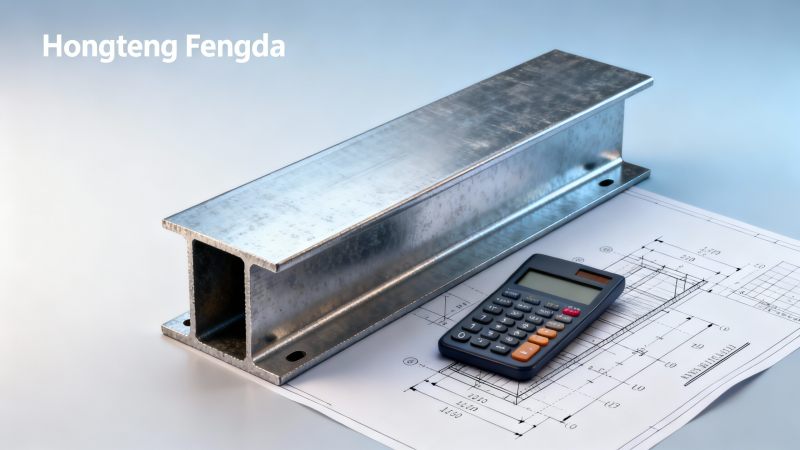
Step-by-Step Calculation Methods
Engineers can calculate I beam weight using either manual formulas or digital tools. The fundamental formula is: Weight = Volume × Density. For standard I beams, this breaks down to: Weight (kg) = (Flange Width × Flange Thickness × 2 + Web Height × Web Thickness) × Length × 7850. When purchasing steel beams from suppliers like Steel Plate Galvanized manufacturers, always verify actual dimensions as mill tolerances may affect final weights.
Technical Specifications Impacting Weight
Modern structural steel components like those produced by Hongteng Fengda adhere to strict international standards that govern dimensional tolerances and material properties. Key specifications affecting weight calculations include:
- ASTM A6/A6M - Standard Specification for General Requirements for Rolled Structural Steel Bars, Plates, Shapes, and Sheet Piling
- EN 10034 - Structural steel I and H sections - Tolerances on shape and dimensions
- JIS G 3192 - Dimensions, mass and permissible variations of hot rolled steel sections
- GB/T 706 - Hot rolled section steel
Comparison: I Beam vs H Beam Weight Considerations
When evaluating I beam vs H beam options for construction projects, weight distribution differs significantly due to structural geometry. H beams typically have thicker flanges and webs, resulting in higher weight per linear meter compared to I beams of similar nominal size. However, the increased mass often translates to greater load-bearing capacity. Hongteng Fengda's engineering team can provide detailed comparisons for specific project requirements, helping clients optimize their structural designs while controlling material costs.
Practical Applications in Construction Projects
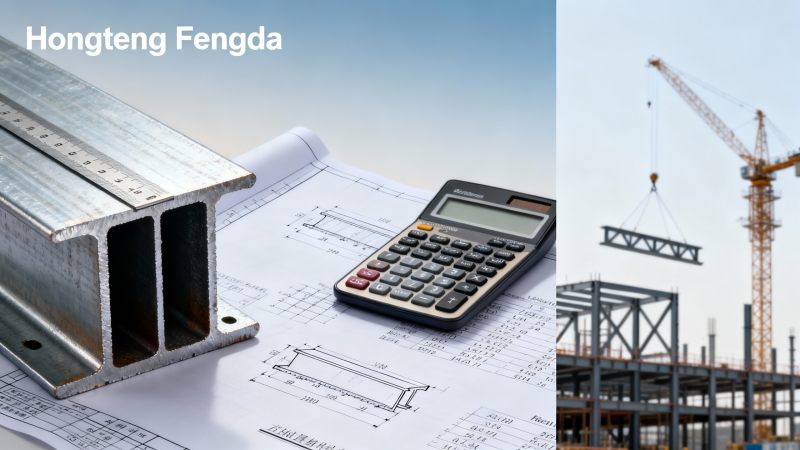
Accurate weight calculations prove essential across various project phases. For procurement specialists comparing steel beam factory prices, precise weight estimates prevent budget overruns. Project managers rely on these calculations for logistics planning and crane capacity assessments. Quality control teams use weight verification as part of material inspection protocols, particularly when sourcing from international suppliers like those in Malaysia or the Philippines where angle steel price per ton may vary by shipment.
Why Choose Hongteng Fengda for Your Structural Steel Needs
As a professional structural steel manufacturer and exporter, Hongteng Fengda combines technical expertise with reliable production capabilities. Our advantages include:
- Modern manufacturing facilities producing consistent quality beams
- Strict compliance with ASTM, EN, JIS, and GB standards
- Custom fabrication services for specialized project requirements
- Competitive pricing for both standard and custom profiles
- Global logistics support with dependable lead times
For engineers and procurement teams needing precise weight calculations for structural components, our technical support team provides detailed specifications and material certifications. Contact us today for customized solutions that meet your exact project specifications and budget requirements.
Related recommendations
 How to Select a Steel Profile Based on Load, Span, and Fabrication NeedsProfile selection starts with load, span, and fabrication needs. Learn how to compare steel sections for strength, cost, workability, and sourcing efficiency.
 What Is a Steel Profile? Common Shapes, Uses, and Selection BasicsProfile selection starts with shape, but performance depends on load, fabrication, and standards. Learn common steel profile types, uses, and smart selection basics.
 Galvanized Pipe vs Black Pipe: Which One Fits Water, Gas, or Outdoor Lines?Galvanized pipe or black pipe? Compare the best choice for water, gas, and outdoor lines, with key insights on corrosion, codes, cost, and long-term performance.
 How to Choose Steel Roofing for Warehouses, Farms, and Residential BuildingsSteel Roofing selection depends on building type. Learn how warehouses, farms, and homes differ in corrosion, insulation, drainage, and cost for smarter roofing decisions.
Please give us a message


Please enter what you want to find