In today’s cost-sensitive construction and industrial landscape, optimizing material use is key to achieving efficiency and reliability. This case study explores how Hongteng Fengda, a leading structural steel manufacturer and exporter from China, helped reduce project costs through advanced engineering of angle carbon steel and H shaped steel beam structures. By leveraging precision manufacturing and international standard compliance, our solutions—including steel shelf angle, supplier i beam, and h shape steel—support stronger, lighter, and more economical frameworks for global projects. Modern builders, procurement specialists, and project managers are facing intense pressure to achieve high load performance with reduced material consumption and shorter lead times, and this study demonstrates practical pathways to cost optimization and sustainable performance.
Understanding the Challenge: Material Efficiency and Structural Integrity
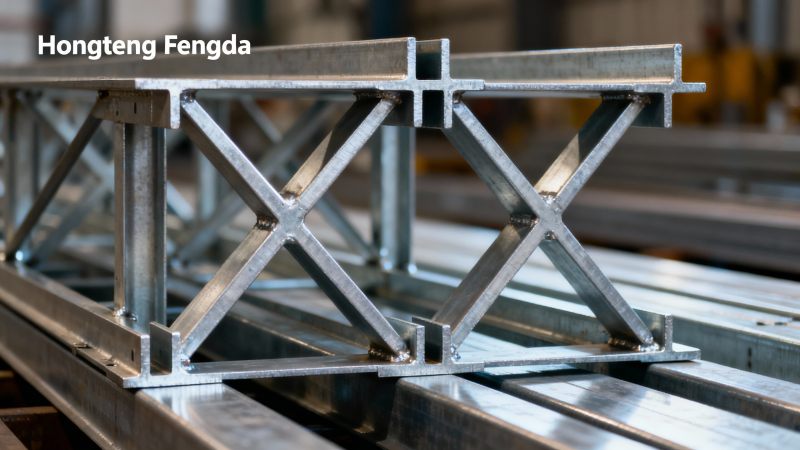
The initial challenge in modern construction design often lies in balancing weight reduction against required load-bearing capacity. Many industrial projects still rely heavily on conventional beams and unoptimized profiles, leading to excess steel usage and higher costs per ton of finished structure. Hongteng Fengda’s engineering team analyzed multiple projects across manufacturing and heavy-industry sectors, discovering that optimizing angle carbon steel designs could reduce waste by more than 12% without compromising performance metrics. For steel shelf angle systems or right angle sheet metal frameworks, the accuracy of rolling and shaping strongly determines efficiency in assembly and longevity. Utilizing finite element modeling, the company identified optimal cross-section ratios between H shaped steel beam dimensions and supported column structures. The result was a standardized system enabling up to 9% savings in raw material costs across wide-span projects. Additionally, through rigorous metallurgical testing and adherence to EN and ASTM standards, structural reliability remained uncompromised, guaranteeing safety and consistency for global buyers.
Optimization Strategy: Engineering with Angle Carbon Steel and H Shape Steel
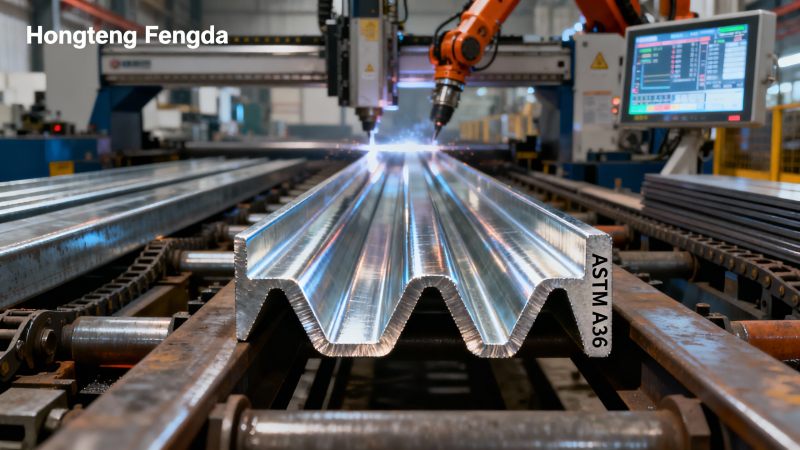
The engineering team approached project optimization through layered structural design supported by advanced simulation. In the first phase, comparable load cases for industrial i beam prototypes and h metal beam models were examined to identify the geometry delivering maximum strength-to-weight ratio. Once the most responsive layout was established, Hongteng Fengda refined the production parameters for h 20 beam systems, introducing high-precision roll forming lines to ensure uniform web thickness and flange balance. A major innovation was the implementation of an integrated cutting and welding process that minimized distortion along the beam length. This not only ensured dimensionally stable steel h sections but also improved alignment and reduced field labor costs during erection. The project further benefited from the integration of corrosion-resistant materials in relevant interfaces, complementing long-term operating efficiency. One associated upgrade involved leveraging Hongteng Fengda’s auxiliary piping product line—the 316L stainless steel pipe, known for enhanced corrosion protection in petroleum and chemical industry environments. By combining optimized structures with components demonstrating high-temperature stability and superior resistance to chlorine or salt exposure, clients experienced longer life cycles and reduced maintenance downtime, maximizing ROI and reinforcing total asset value.
Manufacturing Excellence and Quality Control in Structural Steel Production
Beyond design optimization, manufacturing precision defines actual cost savings. Hongteng Fengda’s facilities employ a digitally integrated production workflow linking design, forming, and inspection. Every steel shelf angle and h shaped steel beam undergoes process validation through automated thickness monitoring and high-frequency welding systems. Dimensional accuracy is maintained through laser alignment, and comprehensive ultrasonic testing ensures internal integrity of every supplier i beam batch. The plant’s production management integrates ISO-certified operating systems and real-time data recording, offering traceable transparency across order lifecycles. As a result, international construction contractors benefit from predictable delivery schedules, consistent mechanical performance, and compliant documentation with ASTM, JIS, and GB benchmarks. Another highlight concerns surface finishing; treatments such as shot blasting and anti-corrosion primers further extend resistance to aggressive industrial environments, including coastal and desert regions. For extended process capability, the firm’s technicians also apply similar technology to materials like the 316L stainless steel pipe, demonstrating continuous innovation beyond basic beam production—showcasing how integrated product ecosystems deliver added value under a unified engineering philosophy.
Results: Quantifiable Reductions in Cost and Material Waste
One of the most compelling outcomes of the case study was the tangible reduction in total project expenditure. Through the optimization of angle carbon steel and h shape steel components, clients reported a material cost reduction ranging from 8% to 15%, depending on project scope. For wide-span industrial sheds utilizing h shaped steel beams and modular steel h sections, the optimization allowed for lighter assemblies and simpler connection details, reducing welding hours and transmission of residual stresses. Moreover, the high dimensional uniformity of supplier i beam profiles shortened onsite fitting time, cutting installation labor costs by approximately 10%. Such efficiencies multiplied across pipelines, rack structures, and load frames yield total budget improvements measurable throughout the project life cycle. From a sustainability perspective, waste segregation reports also indicated a notable drop in scrap generation per ton of fabricated steel, contributing to improved environmental performance and alignment with global green building directives. Thus the initiative not only saved money but also strengthened reputational capital in sustainability audits—a critical factor for corporate buyers and multinational developers.
How Project Adaptability Scales Across Different Regions
The successful practices implemented through this optimization study are already replicable across multiple regions and industries. Hongteng Fengda’s flexibility in customizing h metal beam and industrial i beam formats to different international code requirements enables direct collaboration with contractors in North America, Europe, and the Middle East. The adaptability extends to logistics and packaging as well: beams and accompanying angle steel profiles are stored and shipped under strict anti-rust protocols. By offering OEM and tailored configurations out of China-based factories, clients minimize sourcing risks and benefit from competitive economies of scale while upholding compliance with ASTM A36, EN10025, and JIS G3101 standards. Whether deployed in plant expansion projects, high-rise frameworks, or mechanical platforms, Hongteng Fengda’s solutions empower engineers to standardize specifications globally while achieving cost reductions regionally, bridging engineering efficiency and procurement convenience in a single value chain.
Future Outlook: Integrating Smart Manufacturing into Structural Steel Applications
As construction projects increasingly pivot toward digitalized planning, Hongteng Fengda continues investing in smart manufacturing technologies to take angle carbon steel and h shape steel innovations to new levels. The next phase focuses on real-time process simulation and IoT-based production control, ensuring error-free repetition of steel shelf angle production for repetitive modular builds. The integration of robotics into welding and decoiling also elevates precision, permitting narrower tolerances and enhanced mechanical properties. Looking forward, the company’s R&D center plans to extend testing on hybrid material configurations, mixing high-strength low-alloy steel with corrosion-resistant components like stainless overlays to further improve lifecycle performance. The synergy of structural optimization and smart quality management demonstrates the future of industrial steel engineering: rugged functionality delivered with digital accuracy. Moreover, as demand for sustainable sourcing intensifies, Hongteng Fengda’s disciplined adherence to recycling and energy conservation solidifies its status among leading global suppliers who prioritize both economic and ecological performance metrics.
Conclusion: Cost Optimization Through Partnership and Precision Engineering
This case study highlights that true cost reduction is achieved not merely through price competition but by rethinking design and production together. By combining the strength of angle carbon steel, the adaptability of h shape steel, and precise manufacturing standards, Hongteng Fengda offers global buyers a model for sustainable efficiency. From supplier i beam components to complex h shaped steel beam assemblies, every product reflects a pursuit of excellence grounded in technology and practical experience. With its focus on continuous improvement, adherence to international codes, and customer-first engineering services, Hongteng Fengda remains a trusted partner for engineering professionals seeking reliability, efficiency, and measurable performance improvement. To learn how optimized structural steel solutions can advance your next project or to request a technical consultation, please contact our team today and explore customized solutions for your specific application needs.
- steel i
- steel h sections
- h shaped steel beam
- industrial i beam
- h metal beam
- h shape steel
- h 20 beam
- supplier i beam
- right angle sheet metal
- angle steel
- steel shelf angle
- angle carbon steel
- ASTM standards
- Industrial Steel
- ASTM standard
- steel pipe
- ASTM A36
- structural steel
- steel beams
- steel profiles
- Structural Steel
- Steel Beams
- 316L stainless steel pipe
- stainless steel pipe
- ss pipe
- Profile
- Steel Beam
- carbon steel
- steel profile
Related recommendations
 What is an H-Beam and How Does it Differ from an I-Beam?Discover what an H-beam is and how it differs from an I-beam. Learn key structural differences and expert selection tips from Hongteng Fengda to optimize your steel construction projects today.
 How to Select the Correct Steel Sheet Grade for Auto PartsSelect the ideal steel sheet for auto parts by balancing performance and cost. Discover expert sourcing strategies to avoid manufacturing traps and optimize procurement. Read our guide now!
 Hot Rolled vs. Cold Rolled Steel Sheet: Surface and ToleranceHot rolled vs cold rolled steel sheet: Discover how surface finish and tolerances impact manufacturing. Optimize material selection, reduce costs, and ensure quality. Read our expert guide today!
 Best Cutting and Bending Practices for Galvanized Sheet MetalDiscover the best cutting and bending practices for galvanized sheet to prevent zinc flaking. Optimize tooling and thermal parameters to ensure perfect corrosion resistance. Read the full guide!
Please give us a message


Please enter what you want to find