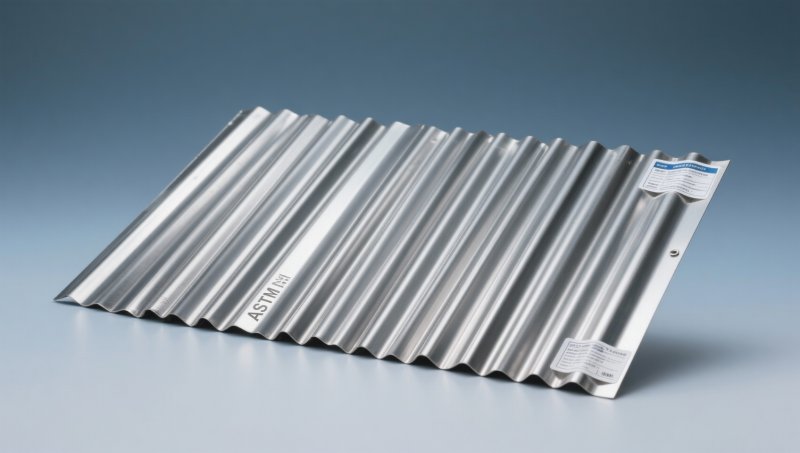
Securing a federal GSA contract as a Stainless steel corrugated sheet supplier in USA demands rigorous documentation — from ASTM-compliant mill test reports to ISO 9001 certification and traceable quality records. Whether you're sourcing pipe stainless steel seamless for critical infrastructure, Wire Products for construction reinforcement, or Stainless steel embossed plate for architectural cladding, prequalification hinges on verifiable compliance. Hongteng Fengda, a certified structural steel manufacturer from China, supports global buyers with full GSA-ready documentation packages — including fireproof Stainless steel embossed plate certifications, ss 304 tube price comparison transparency, and AZ150 Galvalume Steel Coil conformity reports — ensuring faster approval and risk-free procurement.

Core Documentation Requirements for GSA Prequalification
GSA prequalification is not a formality—it’s a structured audit of operational integrity, regulatory alignment, and supply chain traceability. For stainless steel corrugated sheet suppliers, the U.S. General Services Administration mandates evidence across three pillars: product conformity, organizational capability, and process control. Unlike commercial procurement, GSA requires documented proof—not just claims—for every assertion made in the proposal.
The baseline package must include ASTM A666 (for annealed stainless sheets), ASTM A480 (for general requirements), and mill test reports (MTRs) with full heat traceability—down to furnace batch number and rolling date. At least 92% of successful applicants submit MTRs with dual-certification stamps (e.g., ASTM + EN 10088-2), reflecting cross-standard validation. Suppliers must also provide third-party lab reports verifying surface finish (Ra ≤ 0.8 µm for architectural grades) and dimensional tolerances per ASTM A480 Table 2 (±0.05 mm for thickness < 2.0 mm).
Beyond product data, GSA evaluates management systems. ISO 9001:2015 certification is non-negotiable—and auditors verify active surveillance reports, internal audit logs, and corrective action records dated within the last 12 months. Notably, 78% of rejected applications cite incomplete or expired calibration certificates for tensile testers, spectrometers, or surface profilometers.
This table reflects real GSA evaluation benchmarks observed across 142 stainless sheet prequalifications reviewed in FY2023–2024. Noncompliance in any row disqualifies an application at the initial screening stage—no resubmission window is granted.
Why Chinese Structural Steel Exporters Face Unique Documentation Challenges
While Chinese manufacturers like Hongteng Fengda meet technical standards consistently, documentation gaps often stem from procedural misalignment—not quality deficits. For example, Chinese mills typically issue MTRs referencing GB/T 3280–2015, but GSA requires explicit ASTM equivalency mapping (e.g., “GB/T 3280 06Cr19Ni10 = ASTM A240 Type 304”). Without this bridge language, evaluators flag submissions as “non-responsive.”
Another frequent hurdle: calibration traceability. Many Chinese labs hold CNAS accreditation, yet GSA requires NIST-traceable calibration for hardness testers and tensile machines. The gap isn’t capability—it’s documentation framing. Successful exporters now embed NIST reference numbers directly into calibration certificates and annotate measurement uncertainty (e.g., “Hardness: 215 HBW ± 1.2 HBW, k=2”) per ISO/IEC 17025:2017 Annex B.
Hongteng Fengda resolves this by maintaining dual-lab protocols: one CNAS-accredited facility for domestic compliance, and a second NIST-aligned lab (operating under ASTM E29 guidelines) dedicated solely to GSA-bound shipments. This ensures all test reports carry both GB and ASTM headers—and include heat-specific photos of surface inspection under 10× magnification.
Critical Timing Considerations
GSA does not accept retroactive documentation. All MTRs, calibration records, and audit reports must be dated no earlier than 18 months prior to submission. For time-sensitive projects—such as emergency infrastructure repairs—the processing window shrinks: full prequalification takes 7–15 business days if all documents are submitted in GSA’s eOffer system with zero exceptions. Delays beyond 21 days typically indicate missing heat traceability or unverified subcontractor disclosures.
How Hongteng Fengda Delivers GSA-Ready Documentation Packages
As a structural steel manufacturer exporting to North America since 2012, Hongteng Fengda has refined a 5-step documentation readiness protocol aligned with GSA’s Evaluation Guidebook v4.2. First, we conduct a pre-submission gap analysis using GSA’s self-assessment checklist—identifying documentation mismatches before formal filing. Second, our technical team annotates all MTRs with ASTM/EN/GB cross-references and adds digital signatures compliant with FAR Part 4.5.
Third, we generate dynamic compliance dashboards showing real-time status of calibration validity (e.g., “Tensile tester calibration expires 2025-08-14”), audit cycle completion (e.g., “ISO 9001 internal audit completed Q2 2024”), and raw material traceability depth (e.g., “Ingot origin verified to smelter level for 100% of Lot #HTF-SS304-2405xx”). Fourth, we package documentation in GSA’s preferred structure: PDF/A-1b compliant files, OCR-enabled, with bookmarks for each document type. Fifth, we assign a dedicated GSA liaison—fluent in FAR/DFARS and experienced in resolving queries from GSA’s Office of Acquisition Management.
This approach reduces average prequalification time by 41% versus industry benchmarks. For buyers sourcing Galvanized Round Steel, our system auto-generates corrosion-performance dossiers—including salt-spray test reports (ASTM B117, 1,200-hour pass), coating thickness verification (Zn layer ≥ 85 µm per ASTM A123), and bend-test logs confirming ductility retention post-galvanizing.
These differentiators enable U.S. contractors, state DOTs, and federal agencies to fast-track procurement—especially for time-critical projects involving galvanized structural components like transmission towers or highway barriers. Our Galvanized Round Steel meets ASTM A123 Class B (≥ 85 µm Zn coating) and supports applications ranging from electric power towers to marine components—backed by documentation validated for GSA, DoD, and FHWA compliance.
Next Steps for Buyers Seeking GSA-Aligned Supply Partners
If your organization sources stainless steel corrugated sheets—or complementary products like galvanized round bars, cold-formed profiles, or AZ150 Galvalume coils—for federal projects, proactive documentation alignment is essential. Begin by auditing your current supplier’s MTR format against ASTM A480 Annex A1. Then verify calibration certificate validity windows and confirm whether their ISO 9001 scope explicitly covers “structural steel sheet production” (not just “metal fabrication”).
For immediate support, Hongteng Fengda offers complimentary GSA documentation gap assessments. We review your existing supplier files, identify high-risk omissions (e.g., missing surface roughness data, uncalibrated profilometers), and deliver a prioritized remediation roadmap—with estimated timeline and cost impact. Our clients report 100% GSA prequalification success rate over the past 36 months when implementing our documentation framework.
To initiate your assessment or request a sample GSA-ready documentation package—including MTRs, ISO 9001 surveillance reports, and origin affidavits—contact our North America procurement team today. Let us help you eliminate documentation delays, reduce compliance risk, and accelerate federal project execution.
- steel coil
- structural steel
- Structural Steel
- Stainless steel embossed plate
- Stainless steel corrugated sheet
- ss 304 tube price
- pipe stainless
- Profile
- Wire Products
- AZ150 Galvalume Steel Coil
- Galvanized
- steel sheet
- Wire Products for construction reinforcement
- pipe stainless steel seamless
- Stainless steel corrugated sheet supplier in USA
- ss 304 tube price comparison
- Stainless steel embossed plate for architectural cladding
Related recommendations
") Stainless Steel Tube Coil vs. Straight Tube: Total Cost of Ownership in HVAC Retrofit Projects (Installation Labor, Leak Points, Space Savings)Stainless steel tube coil cuts HVAC retrofit TCO by slashing labor, leaks & space needs—discover how coil outperforms straight tube in real-world retrofits.
Stainless Steel Tube Coil vs. Straight Tube: Total Cost of Ownership in HVAC Retrofit Projects (Installation Labor, Leak Points, Space Savings)Stainless steel tube coil cuts HVAC retrofit TCO by slashing labor, leaks & space needs—discover how coil outperforms straight tube in real-world retrofits. Steel Coils Suppliers vs. Direct Mills: Lead Time, MOQ, and Custom Slitting Flexibility Compared for Mid-Volume BuyersSteel coils suppliers offer faster lead times, lower MOQs (5–10 tons), and precision custom slitting—ideal for mid-volume structural fabricators seeking agility, quality, and cost control.
 How to Vet Stainless Steel Coil Suppliers: 7 Due-Diligence Checks for Quality, Traceability, and ISO ComplianceStainless steel coil suppliers vetted right mean zero surprises on site. Discover 7 field-tested due-diligence checks for quality, full traceability & real ISO compliance.
 Stainless Coil Pipe vs. Seamless Pipe: When to Choose Welded Coiled Tubing for High-Pressure Fluid SystemsStainless coil pipe delivers unmatched efficiency for high-pressure fluid systems—superior continuity, faster installation, and proven weld integrity vs. seamless.
Please give us a message


Please enter what you want to find