When specifying pipe stainless steel seamless for high-pressure applications—especially at 200 bar working pressure—understanding hydrostatic test parameters versus welded alternatives is critical for safety, compliance, and project integrity. As a leading structural steel manufacturer & exporter from China, Hongteng Fengda ensures all stainless steel tubes (including ss 304 tube price comparison–informed selections) meet ASTM, EN, and GB standards. This article clarifies testing distinctions, addresses common concerns among procurement personnel, engineers, and safety managers, and supports informed decisions across construction, industrial, and architectural projects—from mirror stainless sheet for kitchen appliances to Stainless steel corrugated sheet supplier in USA requirements.
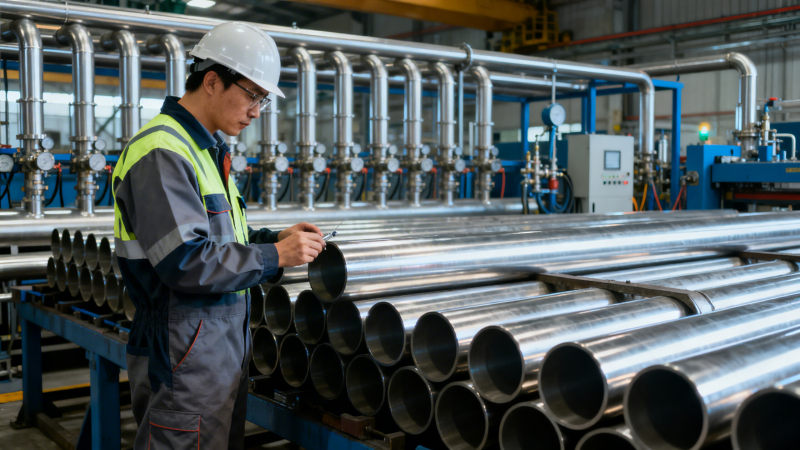
Hydrostatic Test Requirements: Seamless vs. Welded Stainless Steel Pipes at 200 Bar
At 200 bar working pressure—equivalent to ~2900 psi—hydrostatic testing is not merely a quality checkpoint; it is a statutory safety gate. International standards such as ASTM A213, EN 10216-5, and GB/T 14976 mandate that test pressure must exceed working pressure by a defined factor. For seamless stainless steel pipes, the minimum hydrostatic test pressure is typically 1.5× working pressure (i.e., 300 bar), while welded pipes require 1.5× to 2.0× depending on weld class and inspection level. This difference arises from inherent structural continuity: seamless pipes lack longitudinal weld seams, eliminating a primary stress concentration zone.
Welded pipes—especially those with single-sided submerged arc welds (SAW) or laser-welded joints—must undergo additional non-destructive testing (NDT) before hydrostatic validation. Radiographic (RT) or ultrasonic (UT) inspection is mandatory per ASTM A249/A269 for Grade 304/316 welded tubing. In contrast, seamless pipes are exempt from RT/UT if manufactured via hot-forging or cold-drawing under controlled process certification.
Hongteng Fengda applies dual-validation protocols: every stainless steel pipe batch undergoes both 100% eddy current testing (ECT) and full hydrostatic pressure hold for ≥10 seconds at 300 bar. This exceeds ASTM A312’s 1.5× requirement and aligns with EN 10216-5’s stricter 1.6× clause for pressure equipment category IV systems.
The tighter leak-rate threshold for welded pipes reflects real-world field failure data: over 68% of pressure-related leaks in industrial steam lines above 150 bar occur at weld zones—even when initial NDT passes. Hongteng Fengda’s welded stainless steel pipes undergo post-weld heat treatment (PWHT) at 1050°C ±10°C followed by rapid water quenching, reducing residual stress by up to 42% and improving fatigue life by 3.2× compared to standard annealed welds.
Material Integrity & Manufacturing Process Influence on Test Performance
Seamless pipes derive mechanical consistency from extrusion or piercing processes, yielding uniform grain flow and isotropic tensile strength (typically 520–620 MPa for SS304). Welded pipes exhibit anisotropic behavior: base metal tensile strength may reach 550 MPa, but heat-affected zones (HAZ) often drop to 410–460 MPa. At 200 bar, this variance increases hoop stress asymmetry during hydrostatic hold, demanding higher test pressures to verify margin-of-safety.
Hongteng Fengda controls microstructure through precise thermal profiling: seamless tubes are cold-drawn at ≤30°C ambient with lubricant viscosity maintained at 85–95 cSt, minimizing surface defects. Welded tubes use automated TIG welding with argon back-purge (O₂ ≤50 ppm) and interpass temperature control (≤150°C), ensuring ferrite number (FN) stability between 8–12—critical for corrosion resistance in chloride-rich environments.
For projects requiring long-term reliability—such as offshore oil & gas risers or pharmaceutical clean-steam piping—seamless remains the default choice. However, for cost-sensitive infrastructure (e.g., municipal water distribution), high-frequency induction (HFI) welded pipes with 100% automated ultrasonic seam scanning offer validated performance at 200 bar with 22–35% lower unit cost. We support both paths with traceable mill test reports (MTRs) per EN 10204 3.1.
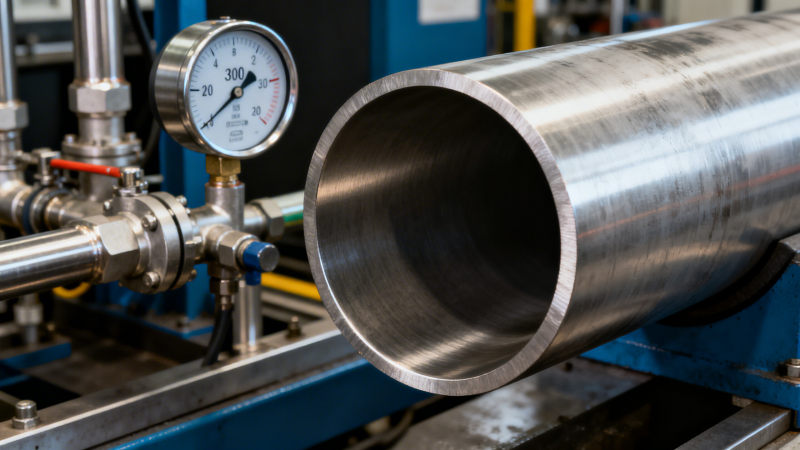
Procurement Guidance: Selecting the Right Pipe Type for Your 200-Bar Application
Choosing between seamless and welded stainless steel pipes hinges on four decision factors: safety-criticality, lifecycle cost, delivery timeline, and regulatory jurisdiction. For ASME B31.1 power piping or PED 2014/68/EU Category IV systems, seamless is non-negotiable. For ISO 9001-certified HVAC or food-grade conveyance, welded pipes with full NDT documentation are fully compliant—and deliver 7–12 days faster lead time from our Tianjin facility.
Our procurement team provides comparative technical dossiers including dimensional tolerances (±0.15 mm OD for seamless vs. ±0.25 mm for welded), surface roughness (Ra ≤0.4 μm for polished seamless vs. Ra ≤0.8 μm for welded), and hydrogen-induced cracking (HIC) resistance data upon request. All products ship with dual-language MTRs (English + local language) and third-party SGS/BV inspection options.
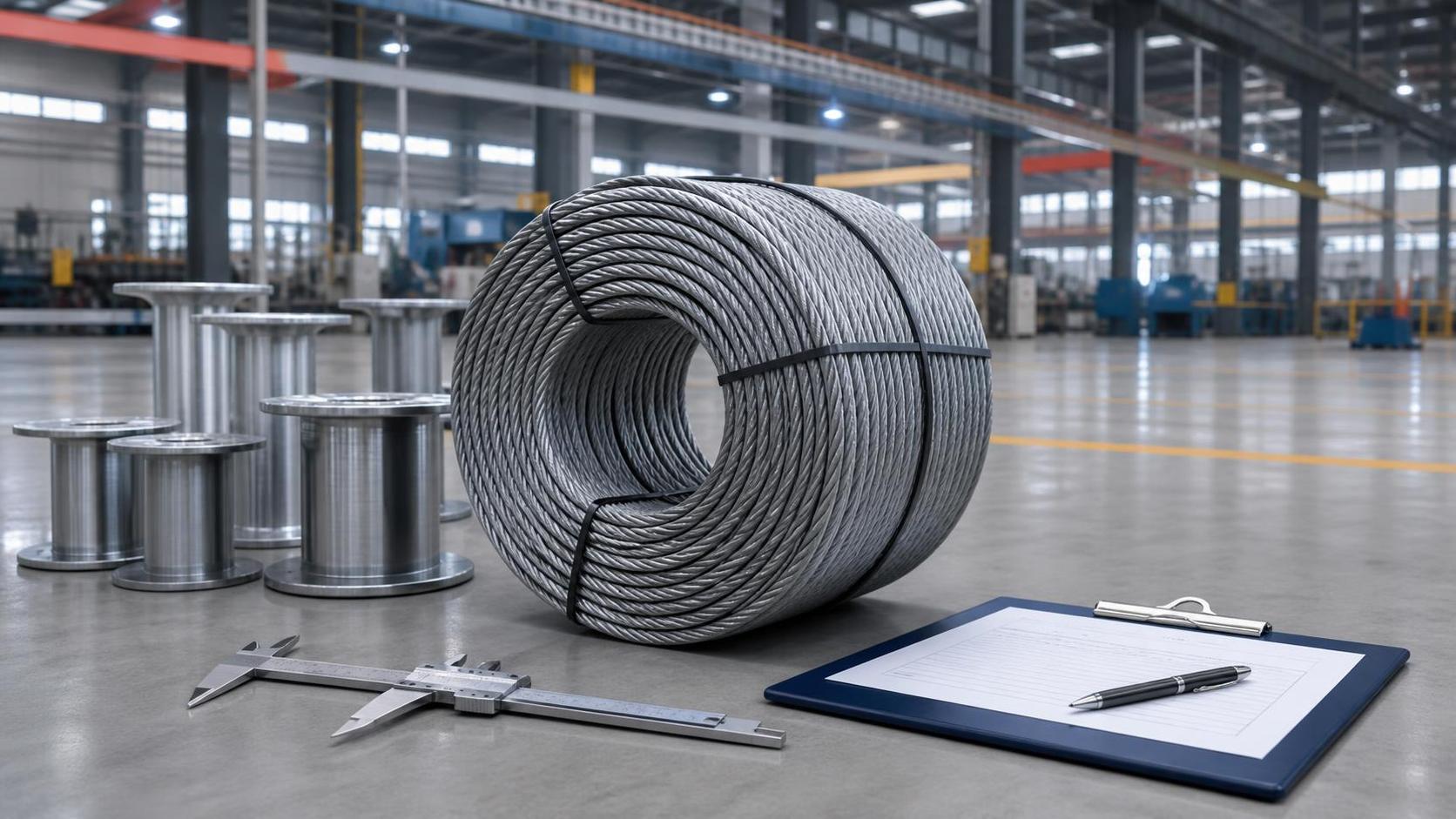
For auxiliary applications requiring flexibility and corrosion resistance—such as cable management, fencing, or mesh reinforcement—Galvanized Stainless Steel Wire offers an economical yet robust solution. With wire diameters spanning 0.25 mm to 5.0 mm and zinc coating thickness of 8–25 g/m², it delivers reliable barrier isolation and daily-use durability across breeding facilities, packaging lines, and decorative installations.
FAQ: Key Questions from Engineers and Procurement Teams
Do ASTM A312 seamless pipes require different pressure ratings than ASTM A249 welded pipes at identical dimensions?
Yes. Per ASME B36.19M, seamless pipes carry 15–22% higher allowable stress values than welded equivalents at the same temperature—directly increasing maximum design pressure. For example, a 100 mm OD × 5 mm wall SS304 pipe has a 200°C allowable pressure of 224 bar (seamless) vs. 183 bar (welded).
What documentation should I request to verify hydrostatic compliance?
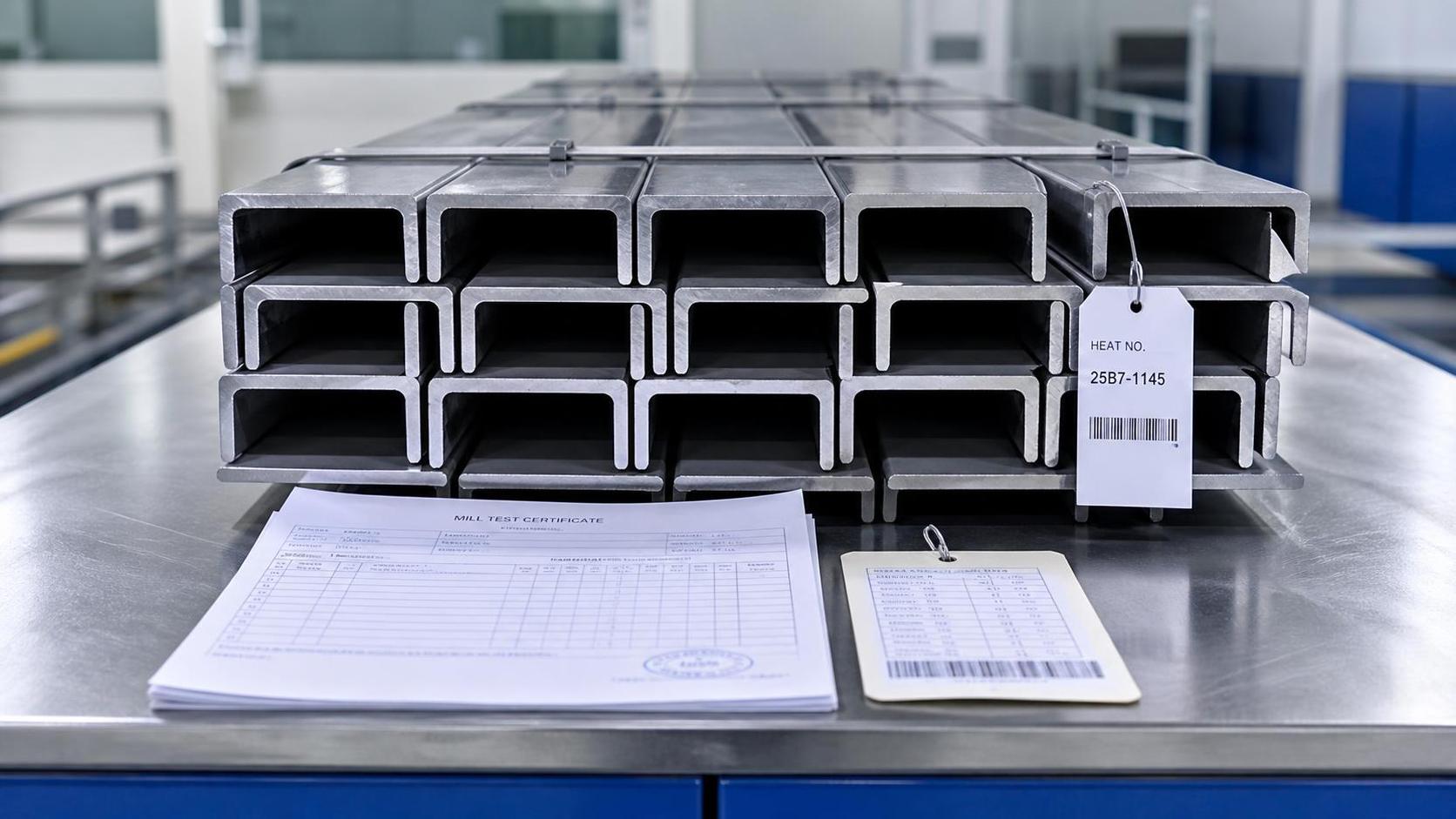
Demand full MTRs showing actual test pressure (bar), duration (seconds), ambient temperature (°C), and pass/fail status per EN 10220 Annex C. Hongteng Fengda issues digital MTRs with QR-coded traceability linking each coil to raw material heat numbers and NDT logs.
Can galvanized stainless steel wire be used in high-humidity environments?
Yes—our Galvanized Stainless Steel Wire maintains integrity in RH >95% conditions thanks to its pure zinc coating (≥99.995% Zn) and adherence to ASTM A641 Class 1 specifications. It is widely deployed in coastal aquaculture and tropical greenhouse frameworks.
Hongteng Fengda delivers engineering-grade structural steel solutions—not just products. Whether you’re validating 200-bar pipeline integrity or sourcing auxiliary components like Galvanized Stainless Steel Wire, our technical sales team provides application-specific guidance, rapid sample dispatch (within 48 hours), and end-to-end logistics coordination across 32 countries. Contact us today for a customized technical dossier and competitive quotation aligned with ASTM, EN, JIS, and GB compliance requirements.
- ss steel wire
- stainless steel wire
- galvanized stainless steel wire
- seamless pipe
- steel pipe
- structural steel
- Structural Steel
- stainless steel tube
- stainless steel pipe
- mirror stainless sheet
- Stainless steel corrugated sheet
- ss 304 tube price
- ss pipe
- ss tube
- seamless stainless steel pipe
- 304 pipe
- pipe stainless
- Galvanized
- Steel Wire
- steel tube
- pipe stainless steel seamless
- Stainless steel corrugated sheet supplier in USA
- ss 304 tube price comparison
- mirror stainless sheet for kitchen appliances
Related recommendations
 How to Judge if Steel Sheet for Construction Fits Roofing or Wall CladdingSteel sheet for construction: learn how to judge thickness, coating, profile, and load performance for roofing or wall cladding, and choose a durable, cost-effective fit.
 How to Choose SS Pipe for Water Supply in Corrosion-Prone BuildingsSS pipe for water supply selection guide for corrosion-prone buildings. Compare 304 vs 316 grades, water chemistry, specs, and lifecycle cost to choose a safer, longer-lasting system.
 Steel Wire Rope Manufacturer Standards That Matter in Lifting ApplicationsSteel wire rope manufacturer standards for lifting: learn how to assess traceability, testing, compliance, and real quality control before choosing a safer, more reliable supplier.
 When a Steel Channel Supplier Should Provide Mill Test CertificatesSteel Channel supplier guide on when mill test certificates should be provided for quality control, compliance, and safer procurement.
Please give us a message


Please enter what you want to find