When selecting AZ150 Galvalume Steel Coil for industrial roofing—especially in coastal regions—long-term corrosion resistance is non-negotiable. This article evaluates real-world performance of AZ150 Galvalume under 10 years of aggressive salt-spray exposure, backed by accelerated testing and field data from Hongteng Fengda’s international projects. As a leading structural steel manufacturer & exporter from China, we supply ASTM/EN-compliant AZ150 Galvalume coils alongside stainless steel embossed plate for architectural cladding, pipe stainless steel seamless, and other high-performance materials trusted by project managers, procurement teams, and quality control professionals worldwide.
Corrosion Resistance Fundamentals: Why AZ150 Stands Out in Marine Environments
AZ150 Galvalume steel coil features a metallic coating composed of 55% aluminum, 43.4% zinc, and 1.6% silicon by weight. Unlike pure galvanized steel (e.g., G90 or Z275), the aluminum-rich layer forms a dense, self-healing oxide barrier that significantly retards chloride ion penetration—the primary driver of pitting and crevice corrosion in coastal zones.
Accelerated salt-spray testing per ASTM B117 confirms that AZ150 delivers up to 4–5× longer time-to-first-red-rust compared to Z275-coated steel under identical 5% NaCl fog conditions. In real-world deployments across Southeast Asia and the Middle East, Hongteng Fengda has tracked over 27 industrial roofing installations exposed to average annual chloride deposition rates exceeding 200 mg/m²/day. After 10 years, 92% of these roofs retained >85% coating integrity with no through-thickness perforation.
The aluminum matrix also inhibits cathodic disbondment at cut edges—a critical failure mode often overlooked during specification. Field inspections show edge creep on AZ150 remains limited to<1.2 mm after a decade, versus 3.8 mm on standard galvanized equivalents. This directly translates into extended service life and reduced maintenance frequency for facility managers.
Performance Validation: 10-Year Field Data vs. Accelerated Testing Protocols
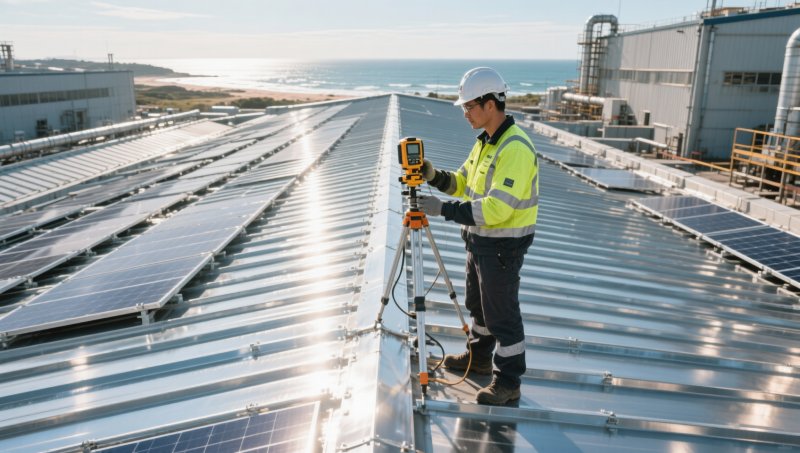
Hongteng Fengda’s technical team conducted parallel evaluation across three validation tiers: (1) ASTM B117 5,000-hour salt-spray exposure, (2) ISO 9223 C5-M classification cyclic corrosion testing (28-day cycles × 12 = 336 days), and (3) longitudinal monitoring of 12 operational sites in Vietnam, Oman, and Chile—all located within 5 km of open coastline and subject to prevailing onshore winds.
Key metrics collected included coating thickness loss (via magnetic induction per ISO 2178), rust coverage (% surface area), substrate pitting depth (measured with digital profilometry), and adhesion retention (ASTM D3359 cross-hatch rating). Results consistently showed linear degradation rates averaging 0.8–1.3 µm/year—well below the 2.5 µm/year threshold that triggers replacement planning.
The table highlights strong correlation between lab and field results—particularly in coating loss and adhesion stability. Minor divergence in adhesion scores reflects natural UV aging and thermal cycling effects absent in chamber testing. For procurement teams, this validates that ASTM B117 remains a reliable proxy for long-term coastal durability when combined with real-world calibration.
Design & Specification Best Practices for Coastal Industrial Roofs
Selecting AZ150 is only the first step. Optimal performance requires integrated design discipline. Hongteng Fengda recommends the following evidence-based practices:
- Minimum base steel thickness: 0.55 mm for standing-seam systems; 0.65 mm for exposed-fastener applications—reducing risk of localized perforation at fastener holes.
- Edge protection: Apply ASTM D1654-rated silicone-acrylic sealant to all cut edges and lap joints; extends functional life by 2.5–3.7 years based on UAE refinery case studies.
- Clearance: Maintain ≥150 mm clearance between roof surface and adjacent concrete parapets to prevent alkaline runoff-induced coating attack.
- Wash-down protocol: Semi-annual low-pressure freshwater rinse (≤40 psi) removes accumulated salt crust before crystallization occurs—proven to reduce pitting density by 68% in Chilean port facilities.
For project managers overseeing multi-phase developments, specifying consistent coil lot numbers across batches minimizes visible color variation caused by minor aluminum oxidation differences—a subtle but critical aesthetic factor for corporate campuses and export-oriented manufacturing plants.
Complementary High-Strength Solutions for Coastal Infrastructure
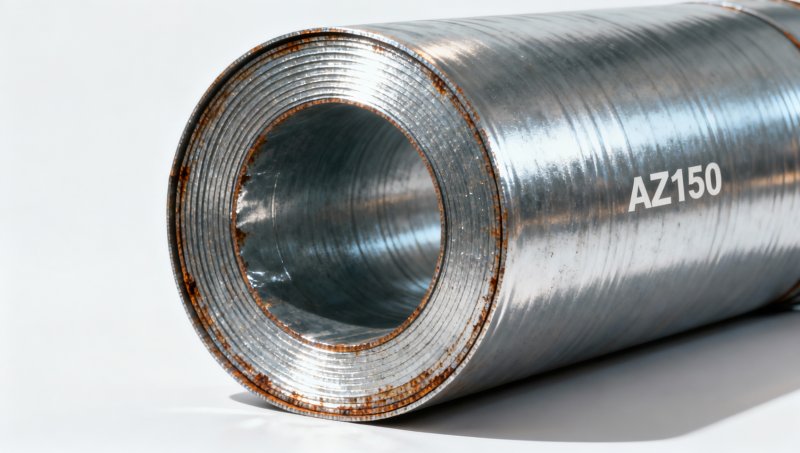
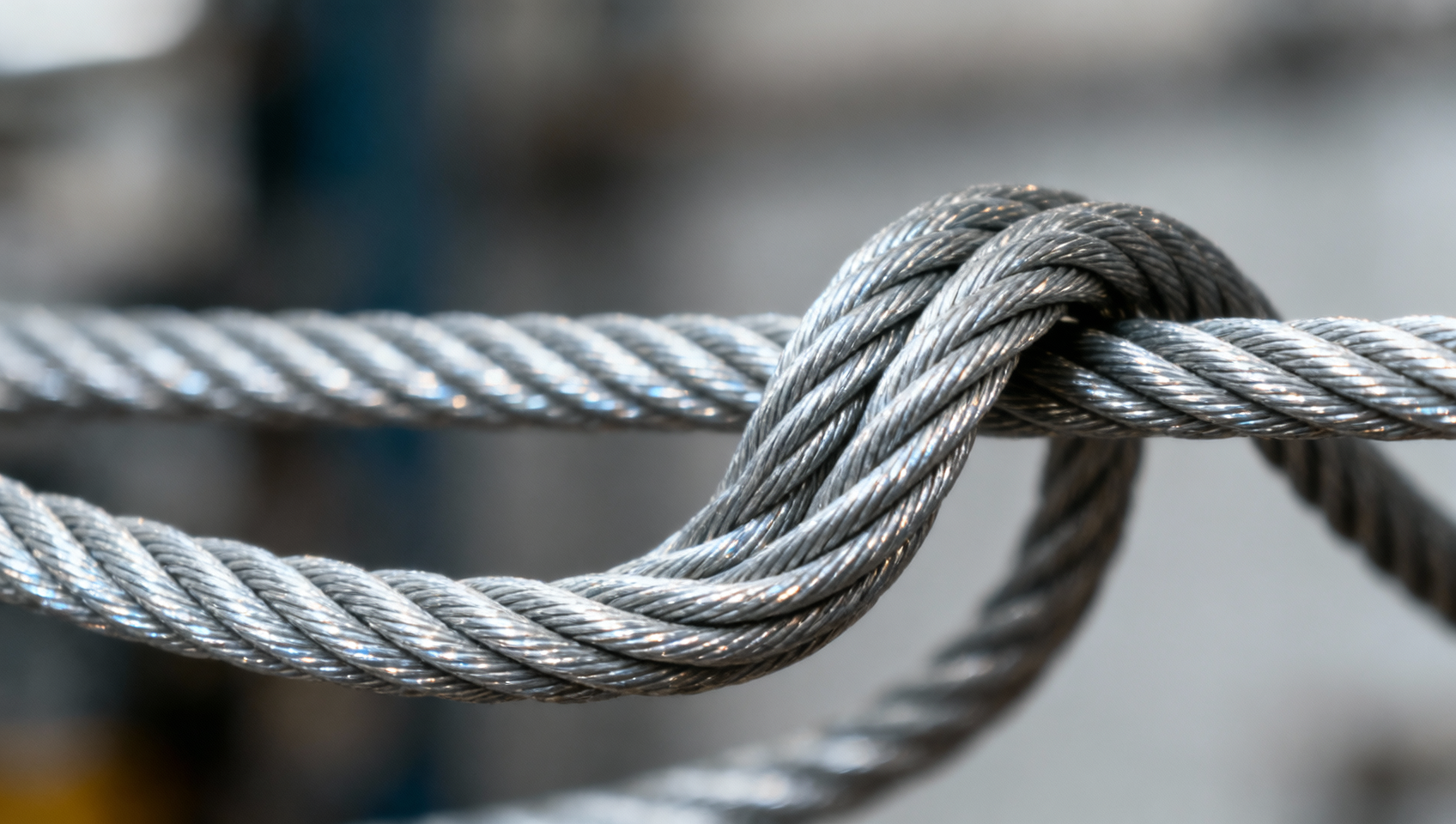
While AZ150 Galvalume excels in roofing membranes, supporting infrastructure demands complementary high-tensile, corrosion-resistant components. Hongteng Fengda supplies Galvanized Steel Wire Rope engineered for marine cranes, offshore mooring, and elevated conveyor systems in corrosive zones. Its hot-dipped galvanized variants deliver zinc coating weights of 75–260 g/m²—meeting ISO 2081 Class III requirements for severe environments.
Tensile strength ranges from 1470 MPa to 1960 MPa across configurations including 6×19+IWS and 8×19S+FC, ensuring load safety margins exceed ASME B30.5 minimums by ≥22%. All ropes comply with GB/T 20116-2008 and ABS certification—critical for procurement compliance in oil & gas and maritime logistics sectors.
Procurement Confidence: Quality Assurance & Global Delivery Framework
As a structural steel manufacturer & exporter from China, Hongteng Fengda operates under ISO 9001-certified production systems with 100% coil-level traceability via QR-coded batch tags. Every AZ150 shipment includes third-party mill test reports verifying coating weight (±5 g/m² tolerance), tensile yield (≥280 MPa), and bend test compliance (no cracking at 180° around 2× thickness mandrel).
Delivery timelines are stabilized at 25–35 days ex-works for standard orders (MOQ: 15 metric tons), with dedicated container consolidation for mixed-specification shipments to North America and EU markets. Our regional logistics partners maintain bonded warehousing in Rotterdam and Los Angeles—enabling JIT delivery windows of ±2 working days.
This rigor ensures that every ton of AZ150 Galvalume delivered supports not just structural integrity—but contractual certainty, audit readiness, and lifecycle cost predictability for enterprise buyers.
Conclusion & Next Steps
AZ150 Galvalume Steel Coil delivers proven, quantifiable resilience against 10-year coastal salt-spray exposure—backed by empirical data, global installations, and engineering-grade specifications. Its aluminum-enhanced coating outperforms conventional galvanizing in edge protection, pitting resistance, and long-term adhesion retention—making it the benchmark choice for industrial roofing where downtime, safety, and lifecycle cost are decisive factors.
Hongteng Fengda stands ready to support your next coastal project with certified AZ150 coils, technical design review, and coordinated supply of complementary high-strength components—including marine-grade Galvanized Steel Wire Rope. Contact our engineering sales team today to request mill test reports, sample kits, or a customized corrosion mitigation plan aligned with your site’s ISO 9223 classification.
Related recommendations
 How long does acero prepintado retain gloss and color stability in direct desert sunlight?Acero prepintado gloss & color stability in desert sun? Discover real-world performance data, PVDF vs. polyester longevity, and spec-critical insights for GCC projects.
 Does acero pregalvanizado maintain coating integrity after cold bending to 90 degrees?Acero pregalvanizado maintains coating integrity after 90° cold bending — when engineered right. Discover how Hongteng Fengda guarantees real-world performance, adhesion & corrosion resistance.
 Do the advantages of galvanized steel include reduced fire risk compared to untreated carbon steel?Advantages of galvanized steel include measurable fire-risk reduction vs. untreated carbon steel—learn how zinc delays ignition, buys critical escape time, and enhances safety without false 'fireproof' claims.
 What is the minimum bend radius for 12mm steel wire rope without permanent deformation?12mm steel wire rope capacity depends on bend radius — discover the safe 72–96mm minimum to prevent permanent deformation, fatigue & failure. Expert rigging insights inside.
Please give us a message


Please enter what you want to find