Selecting the right I beam weight for warehouse construction is critical—not just for structural integrity, but for cost control and project efficiency. This guide delivers a practical, span- and live-load-driven sizing strategy, backed by real-world I beam weight specifications for industrial use. Whether you're referencing an I beam weight load capacity chart, comparing options via an I beam weight comparison chart, or using an I beam weight calculator for steel structures, our data aligns with ASTM, EN, and GB standards. As a trusted structural steel manufacturer and exporter from China, Hongteng Fengda supports global buyers—from procurement teams to project managers—with reliable I beam weight per foot for steel fabrication and optimized solutions for warehouses, bridges, and high-rise buildings.
Why I Beam Weight Matters More Than Just Strength in Warehouse Design
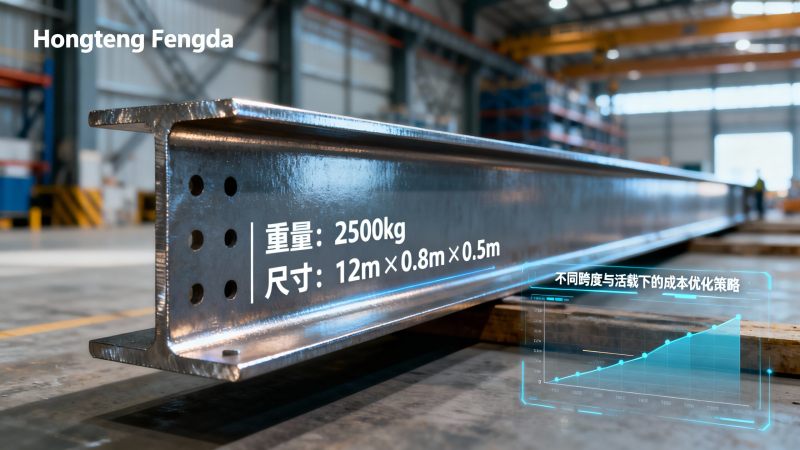
In warehouse construction, where clear-span interiors, high-bay racking, and heavy material handling dominate design priorities, selecting the correct weight of I beam for warehouse construction goes beyond meeting minimum safety factors. Under-sizing leads to deflection issues, vibration sensitivity, and premature fatigue—especially under dynamic loads from forklift traffic or automated storage systems. Over-sizing, meanwhile, inflates material costs, increases foundation demands, and extends erection timelines due to heavier handling requirements.
The key lies in balancing three interdependent variables: span length (unsupported distance), live load intensity (typically 125–250 psf for distribution centers), and serviceability criteria (e.g., L/360 deflection limit per AISC 360). For example, a 40-ft clear span supporting 200 psf live load may require a W24×76 (76 lb/ft) in ASTM A992 steel—whereas the same span at 150 psf could be satisfied by a W21×62 (62 lb/ft), yielding ~18% material savings without compromising performance. These decisions are not theoretical: they directly impact freight logistics, crane rental duration, welding labor hours, and even fireproofing application thickness.
Hongteng Fengda’s engineering support team routinely cross-references client-provided load schedules against regional code allowances (IBC, Eurocode 3, GB 50017) and validates selections using finite element modeling—ensuring every recommended I beam weight per foot for steel fabrication reflects both compliance and constructability.
How Span & Live Load Drive Real-World I Beam Selection
A systematic approach begins with defining the governing load combination. Per ASCE 7-22, warehouse dead + live + roof snow (if applicable) governs strength design, while live load alone often controls serviceability. Below is a representative selection matrix for common warehouse bay configurations:
Note: All sections assume simple end supports, unbraced lateral-torsional buckling lengths ≤ 5 ft, and standard mill tolerances. Actual selections must account for connection details, composite slab interaction, and seismic amplification where applicable. Our I beam weight calculator for steel structures integrates these variables dynamically—providing instant feedback on alternatives like W21×62 vs. W24×62 for identical moment demand but differing torsional stiffness.
Beyond Warehouse: Cross-Application Insights from I Beam Weight Specifications
While warehouse applications prioritize uniform live loads and repetitive framing, other sectors impose distinct constraints. For instance, the weight of I beam for bridge construction emphasizes fatigue resistance and corrosion durability—often requiring weathering steel (ASTM A588) or enhanced galvanizing. In contrast, the weight of I beam for high-rise buildings prioritizes axial compressive capacity and fire-resistance ratings, frequently leading to built-up box sections or concrete-filled tubes rather than hot-rolled I shapes.
This contextual awareness informs Hongteng Fengda’s product development roadmap. Our mill-certified inventory includes dual-grade beams (e.g., ASTM A992/A572 Gr.50) that satisfy both structural and architectural finish requirements. We also supply pre-drilled, pre-punched, and thermally modified variants—reducing field labor and accelerating handover. For projects demanding multi-standard compliance, we provide mill test reports traceable to raw billet heats, with third-party verification available upon request.
For auxiliary structural needs—such as guardrail posts, column base plates, or bracing elements—our Hot rolled Carbon Steel Round Bar offers consistent tensile strength (up to 620 MPa for Q460 grade) and excellent weldability across diameters from 20 mm to 600 mm. Its versatility supports everything from temporary shoring to permanent façade anchors.
Standardization, Certification, and Global Sourcing Confidence
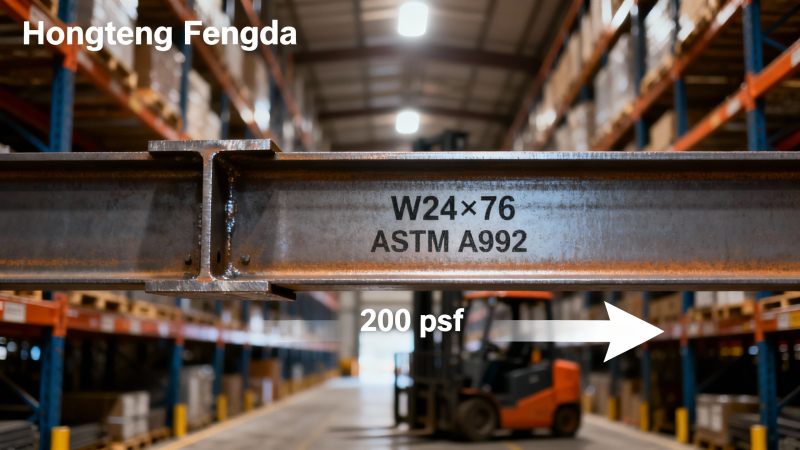
Reliability in structural steel hinges on verifiable conformity—not just nominal dimensions. Hongteng Fengda maintains ISO 9001-certified quality management systems, with in-house metallurgical labs performing Charpy V-notch testing, microstructure analysis, and ultrasonic thickness verification. Every shipment includes full documentation: heat numbers, chemical composition reports, mechanical property summaries, and dimensional inspection records—all aligned with ASTM, EN, JIS, and GB standards.
This rigor translates directly into risk mitigation for international buyers. When referencing an I beam weight chart for construction, discrepancies in flange thickness tolerance (+/- 0.25 mm vs. +/- 0.5 mm) can affect bolt hole alignment and connection stiffness. Our controlled rolling process ensures repeatable section properties—even across batches spanning multiple months—supporting just-in-time delivery models without rework delays.
Procurement teams benefit from consolidated logistics: standard export seaworthy packaging, FOB/CIF flexibility, and lead times consistently within 7–15 working days after deposit confirmation. With production capacity exceeding 800,000 MT annually, we scale seamlessly from single-container trial orders to multi-year framework agreements.
Conclusion: Strategic Sizing Starts with Partnership
Optimizing the weight of I beam for warehouse construction isn’t about chasing the lightest possible section—it’s about matching precise load paths, realistic site conditions, and long-term operational resilience. From initial concept sketches to final QA sign-off, Hongteng Fengda functions as an extension of your engineering and procurement teams—delivering not just products, but validated structural intelligence.
Whether you’re evaluating an I beam weight comparison chart, validating assumptions against an I beam weight load capacity chart, or preparing tender documentation with certified I beam weight specifications for industrial use, our technical sales engineers are ready to co-develop solutions grounded in data—not guesswork.
Contact Hongteng Fengda today to request customized beam selection reports, access our interactive I beam weight calculator for steel structures, or schedule a virtual mill tour. Let’s build smarter—span by span, load by load, ton by ton.
- structural steel
- Structural Steel
- carbon steel
- steel round bar
- weight of i beam
- i beam weight
- i beam weight chart for construction
- i beam weight calculator for steel structures
- i beam weight specifications for industrial use
- weight of i beam for warehouse construction
- i beam weight comparison chart
- weight of i beam for bridge construction
- i beam weight per foot for steel fabrication
- weight of i beam for high-rise buildings
- i beam weight load capacity chart
Related recommendations
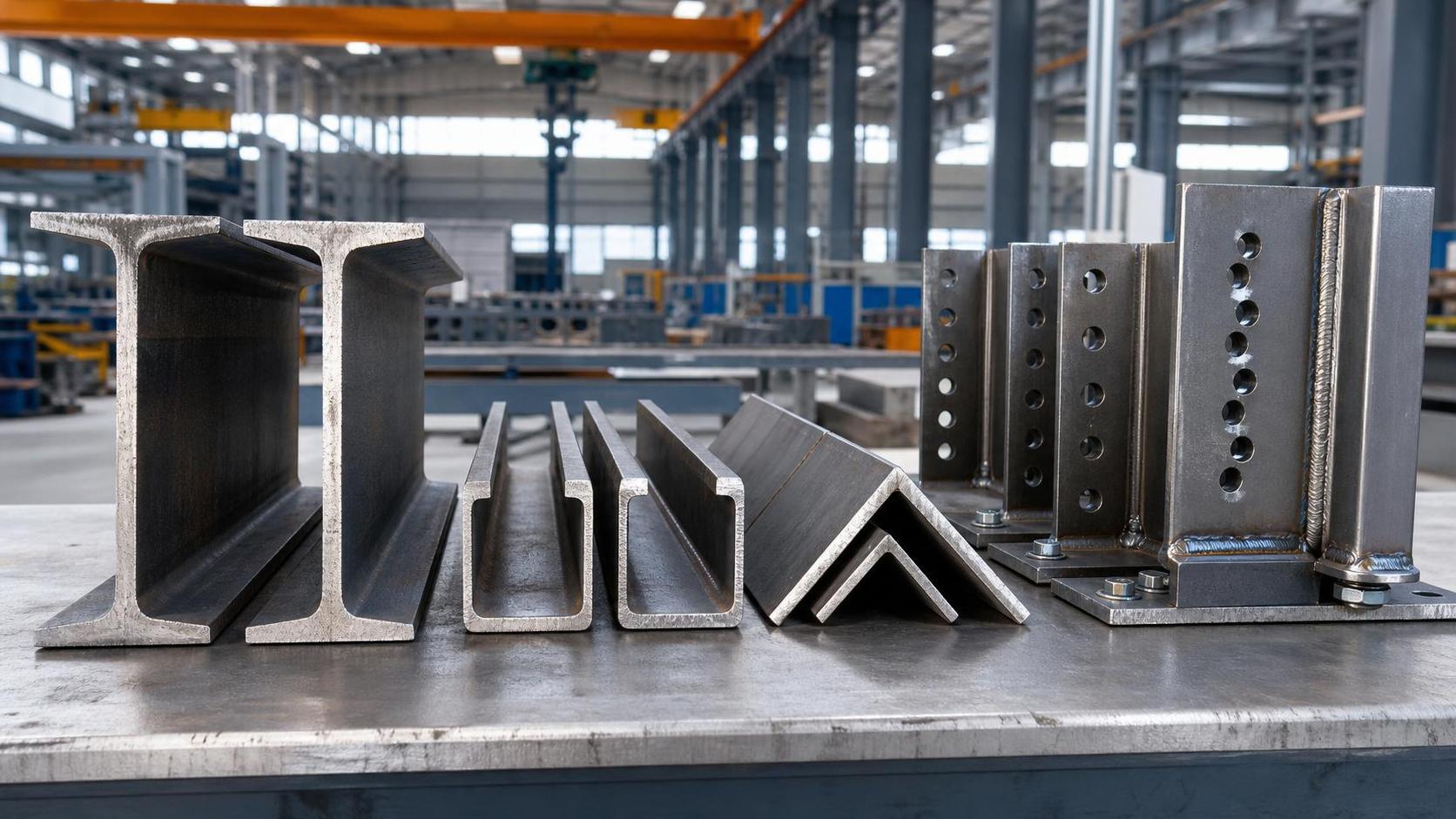
 How to Select a Steel Profile Based on Load, Span, and Fabrication NeedsProfile selection starts with load, span, and fabrication needs. Learn how to compare steel sections for strength, cost, workability, and sourcing efficiency.
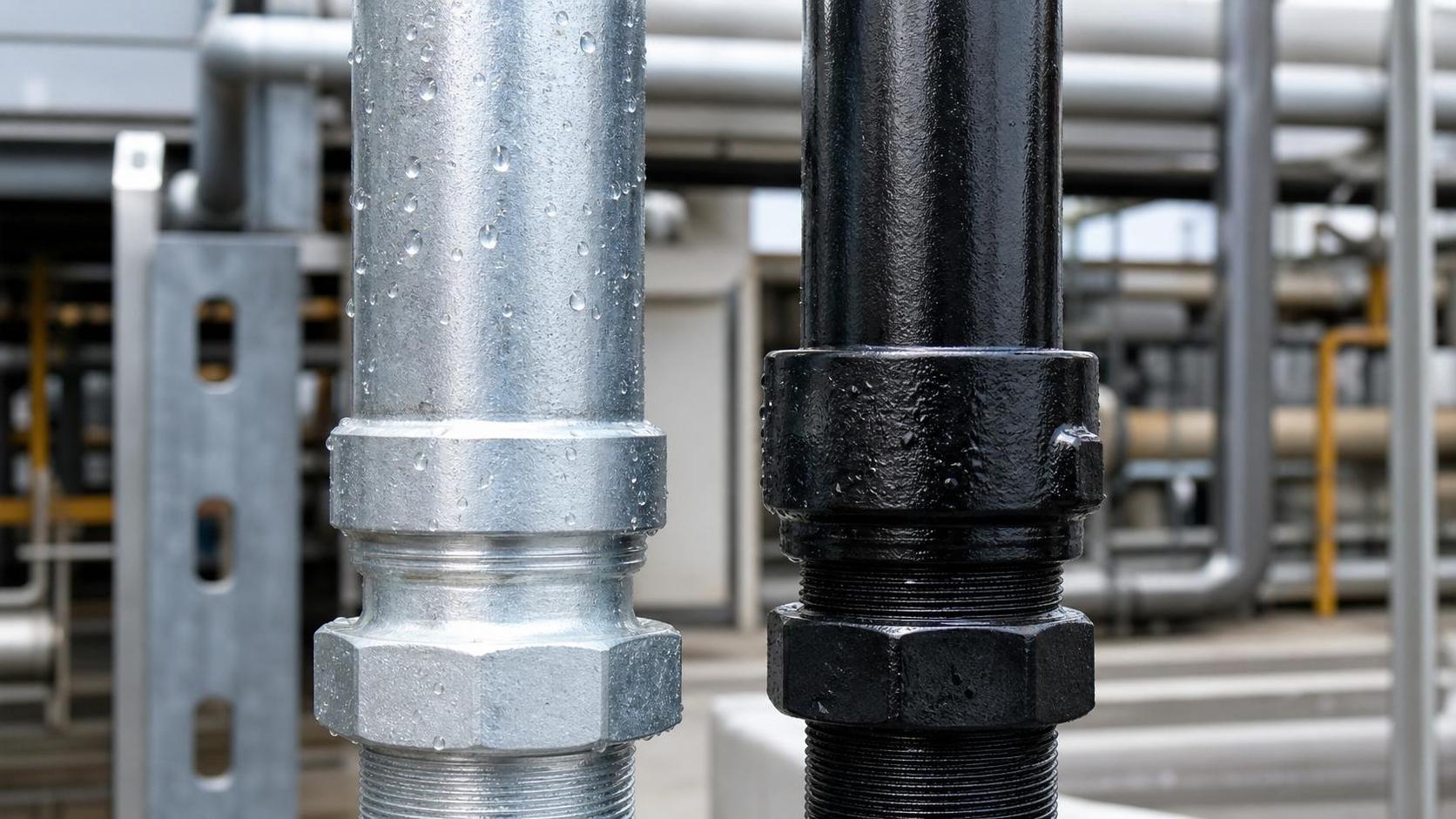
 Galvanized Pipe vs Black Pipe: Which One Fits Water, Gas, or Outdoor Lines?Galvanized pipe or black pipe? Compare the best choice for water, gas, and outdoor lines, with key insights on corrosion, codes, cost, and long-term performance.
 How to Choose Steel Roofing for Warehouses, Farms, and Residential BuildingsSteel Roofing selection depends on building type. Learn how warehouses, farms, and homes differ in corrosion, insulation, drainage, and cost for smarter roofing decisions.
 Hot-Dip Galvanized vs Pre-Galvanized Steel: Which Should You Specify?Hot-dip galvanized vs pre-galvanized steel: compare corrosion resistance, fabrication impact, cost, and standards to specify the right steel solution for durable, compliant projects.
Please give us a message


Please enter what you want to find