Whether you're calculating i beam weight per foot for steel fabrication, evaluating weight of i beam for high-rise buildings or bridge construction, or comparing load capacity across profiles—precision matters. This 2024 guide delivers an accurate i beam weight calculator for steel structures plus real-world tolerance guidelines aligned with ASTM, EN, and GB standards. Designed for project managers, procurement teams, and quality/safety personnel, it covers i beam weight specifications for industrial use, warehouse construction, and more—backed by Hongteng Fengda’s 15+ years as a trusted structural steel manufacturer and exporter from China.
Why Accurate I-Beam Weight Data Is Non-Negotiable in Structural Engineering
In steel fabrication, the i beam weight per foot for steel fabrication isn’t just a number—it’s a foundational parameter influencing structural integrity, transportation logistics, crane selection, foundation design, and long-term serviceability. Underestimating weight leads to undersized lifting equipment or overloaded connections; overestimating inflates material costs and delays tender submissions. For high-rise buildings, where cumulative dead load directly impacts seismic and wind response, even a ±2% deviation in assumed weight of i beam for high-rise buildings can shift column base reactions by several tons—triggering costly redesigns. Similarly, in bridge construction, variable span lengths and dynamic loading require precise mass modeling to validate fatigue life and deflection limits under AASHTO LRFD criteria.
Hongteng Fengda applies strict in-house verification protocols: every hot-rolled I-beam batch undergoes certified third-party weight sampling (per ASTM A6/A6M Annex A3), cross-checked against theoretical mass derived from mill-certified dimensions and density (7.85 g/cm³). Our QA team records actual vs. nominal weight deviations across 10+ sample units per heat lot—and maintains historical tolerance databases spanning over 12,000 production runs since 2009. This empirical baseline informs our i beam weight chart for construction, ensuring values reflect real-world variability—not just textbook formulas.
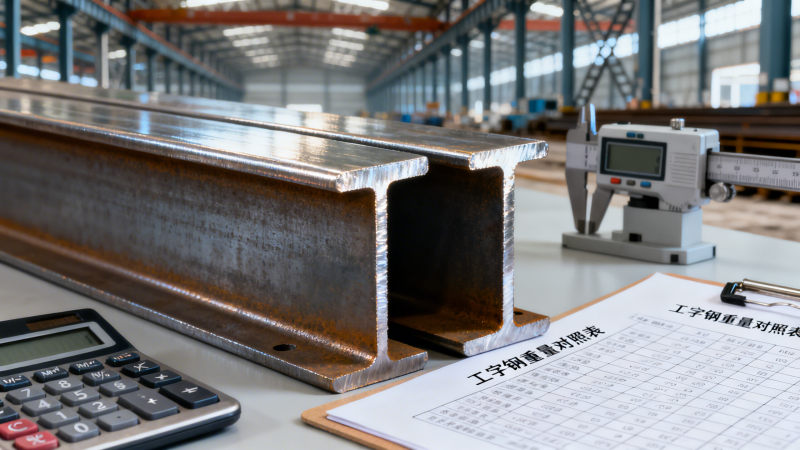
How to Calculate I-Beam Weight Per Foot: From Theory to Field-Ready Practice
The standard formula for theoretical weight per foot is: Weight (lb/ft) = [(2 × flange width × flange thickness) + (web height × web thickness)] × steel density where density = 0.2836 lb/in³. However, field application demands more than arithmetic. Mill tolerances—especially on flange thickness (±0.015 in per ASTM A6) and web thickness (±0.010 in)—introduce up to ±3.2% variation in calculated weight. That’s why our i beam weight calculator for steel structures embeds live tolerance bands: users select grade (e.g., A36, Q345), standard (ASTM, EN 10034, GB/T 706), and dimensional class (e.g., “heavy” or “light” series), then instantly see min/max weight ranges—not just nominal values.
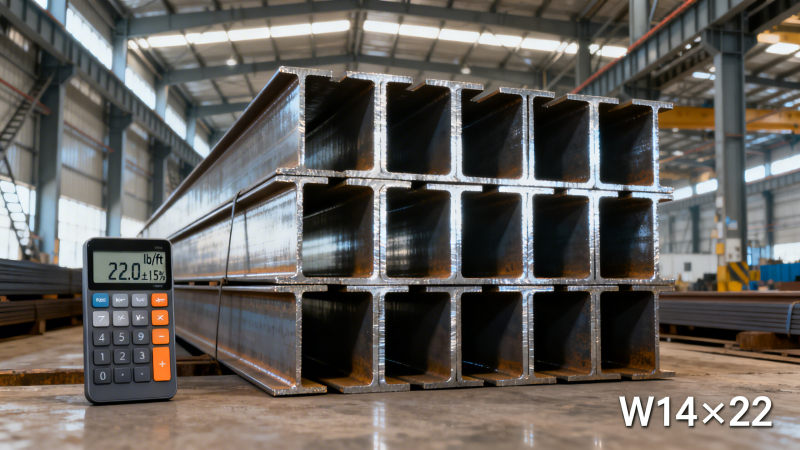
For example, a W14×22 (EN 10034: HEA 140) has a nominal weight of 22.0 lb/ft—but actual delivered weight typically falls between 21.3–22.7 lb/ft depending on rolling conditions. Our calculator flags this spread and recommends safety margins for connection design. It also auto-generates downloadable i beam weight comparison chart PDFs with side-by-side data for up to six sections—ideal for procurement comparisons or value engineering workshops.
Real-World Tolerance Guidelines Across Global Standards (2024 Update)
Tolerances aren’t static—they evolve with manufacturing capability and regional regulatory emphasis. As of Q2 2024, here’s how key standards govern weight-related dimensional control:
Hongteng Fengda consistently achieves tighter internal controls—±1.5% average weight deviation across all export shipments—by calibrating rolling mills every 72 hours and using laser-based online thickness gauging. This consistency supports critical applications like warehouse construction, where uniform load distribution across mezzanine floor beams prevents localized settlement, and i beam weight specifications for industrial use, where vibration-sensitive machinery requires predictable mass inertia.
Application-Specific Weight Considerations: High-Rise, Bridge & Industrial Use Cases
Each project type imposes unique weight-related constraints. In high-rise buildings, stacked columns carry cumulative dead loads—so a 0.5% weight reduction across 50 floors saves ~18 tons of steel per core column. That’s why we offer optimized high-strength grades like Q345 and S355JR, delivering identical load capacity at lower mass. For bridge construction, fatigue performance dominates: heavier sections may increase self-weight but reduce stress cycles under traffic—our i beam weight load capacity chart includes fatigue-rated weight-to-capacity ratios per AASHTO Table 6.6.1.2.1-1.
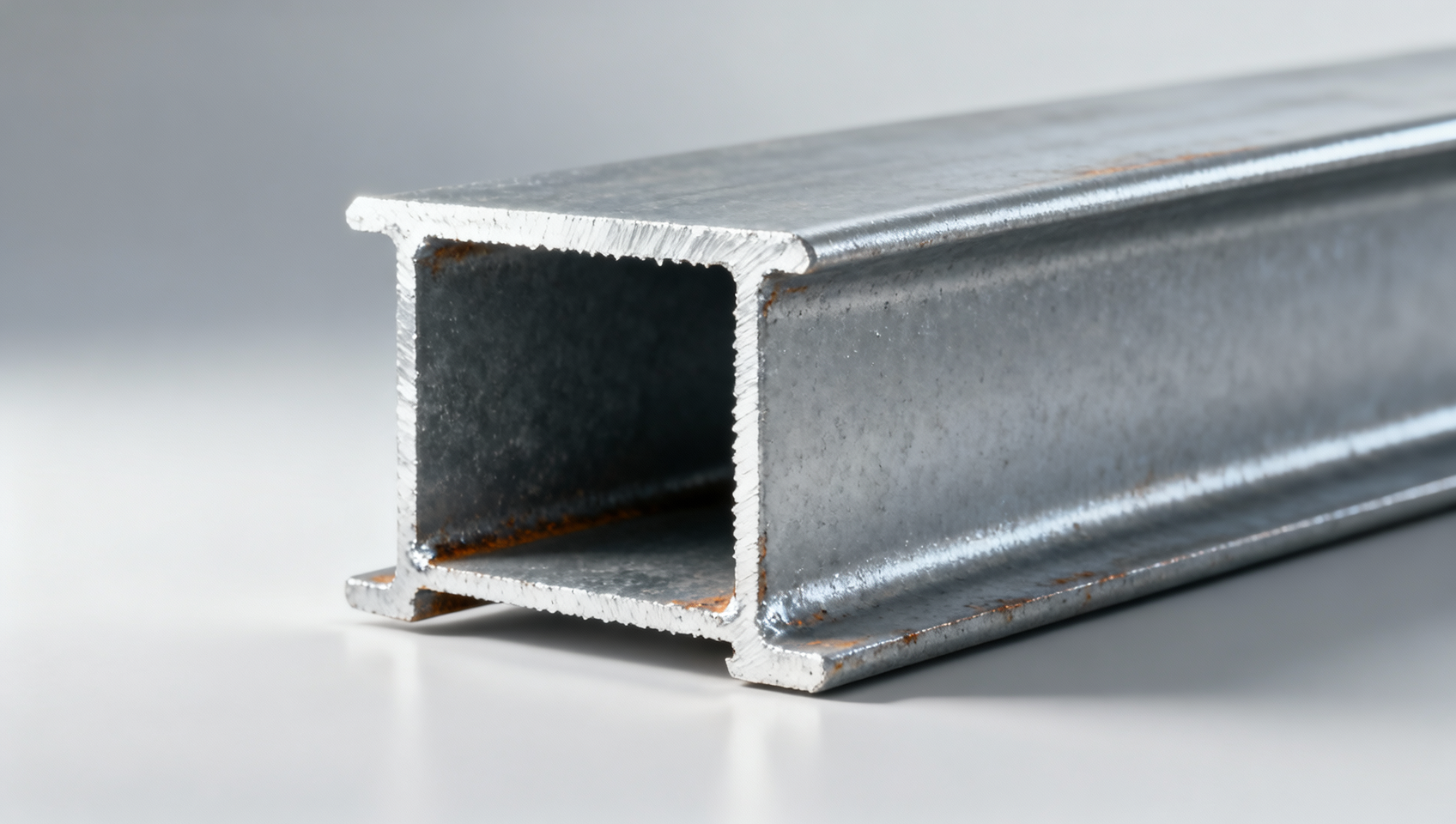
Industrial facilities demand hybrid solutions: lightweight yet stiff members for overhead cranes, corrosion-resistant profiles for chemical plants. Here, complementary products like C-beam deliver cost-efficient alternatives for purlins and wall framing—offering comparable stiffness-to-weight ratios at 30–40% lower mass than equivalent I-sections. With galvanized coating and ±1% dimensional tolerance, they meet stringent weight of i beam for warehouse construction requirements while accelerating erection timelines.
Trusted Data, Trusted Partnership: Why Global Buyers Choose Hongteng Fengda
Accuracy without traceability is insufficient. Every Hongteng Fengda shipment includes a full mill test report (MTR) with measured weight per linear foot, verified against ASTM E8/E8M tensile testing and EN ISO 14284 spectrographic analysis. Our ERP system links each coil ID to its thermal history, rolling pass logs, and final inspection data—enabling full digital traceability from furnace to fabrication site. For buyers managing multi-country projects, we pre-certify batches to dual standards (e.g., ASTM A992 + GB/T 19879), eliminating retesting delays.
With ISO 9001:2015, CE, SGS, and BV certifications—and over 240,000 metric tons of structural steel shipped annually to North America, Europe, and Southeast Asia—we bridge the gap between theoretical calculation and real-world reliability. Whether you’re sourcing for a 60-story tower in Dubai or a modular factory in Ohio, our i beam weight calculator for steel structures and tolerance-backed i beam weight chart for construction ensure your designs start grounded in verified reality—not assumptions.
Need project-specific weight validation, custom tolerance documentation, or comparative analysis across I-beam and alternative profiles? Get your free, engineer-reviewed weight assessment within 24 hours. Contact Hongteng Fengda today to align your next structural steel order with precision, compliance, and confidence.
- structural steel
- Structural Steel
- I-Beam
- Profile
- S355JR
- Galvanized
- weight of i beam
- i beam weight
- i beam weight chart for construction
- i beam weight calculator for steel structures
- i beam weight specifications for industrial use
- weight of i beam for warehouse construction
- i beam weight comparison chart
- i beam weight per foot for steel fabrication
- weight of i beam for high-rise buildings
- i beam weight load capacity chart
Related recommendations
 How long does acero prepintado retain gloss and color stability in direct desert sunlight?Acero prepintado gloss & color stability in desert sun? Discover real-world performance data, PVDF vs. polyester longevity, and spec-critical insights for GCC projects.
 Does acero pregalvanizado maintain coating integrity after cold bending to 90 degrees?Acero pregalvanizado maintains coating integrity after 90° cold bending — when engineered right. Discover how Hongteng Fengda guarantees real-world performance, adhesion & corrosion resistance.
 Do the advantages of galvanized steel include reduced fire risk compared to untreated carbon steel?Advantages of galvanized steel include measurable fire-risk reduction vs. untreated carbon steel—learn how zinc delays ignition, buys critical escape time, and enhances safety without false 'fireproof' claims.
 What is the minimum bend radius for 12mm steel wire rope without permanent deformation?12mm steel wire rope capacity depends on bend radius — discover the safe 72–96mm minimum to prevent permanent deformation, fatigue & failure. Expert rigging insights inside.

Please give us a message


Please enter what you want to find