Choosing between steel angle and channel isn’t just about shape—it impacts structural performance, beams weight, welding ease, and total project cost. Whether you’re measuring a steel beam for load calculations, comparing angle vs channel for framing efficiency, or sourcing I beam weight specs for compliance, material selection directly affects safety, fabrication speed, and long-term value. As a trusted structural steel manufacturer & exporter from China, Hongteng Fengda delivers ASTM/EN/GB-compliant steel angle, channel steel, steel girders, and custom profiles—including steel square rod, steel round bar, and steel wire rope—helping procurement teams, engineers, and project managers optimize strength-to-weight ratios and reduce sourcing risk.
Structural Performance: Load Distribution, Bending Resistance & Stability
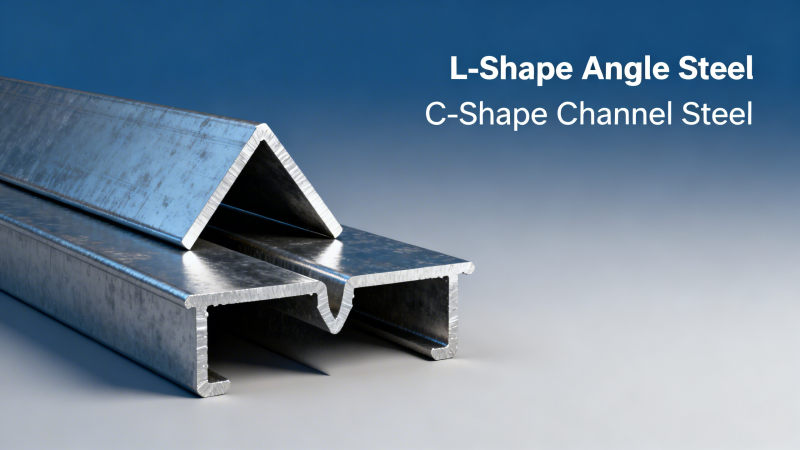
Steel angle and channel differ fundamentally in how they resist applied loads. An L-shaped steel angle offers two perpendicular legs that provide torsional rigidity when used in bracing or corner connections—but its open geometry limits moment resistance around the weak axis. In contrast, a C-shaped steel channel features a continuous web with parallel flanges, delivering superior bending capacity about its major (y–y) axis. This makes channels ideal for horizontal support members like purlins, lintels, or crane rails where uniform load distribution is critical.
When evaluating beams weight versus strength, engineers often calculate section modulus (S) and radius of gyration (r). For example, a 100×100×10 mm equal-leg angle has Sy ≈ 34.6 cm³ and ry ≈ 2.89 cm, while a C100×48×4.5 channel achieves Sy ≈ 56.2 cm³ and ry ≈ 3.71 cm—nearly 63% higher section modulus at comparable mass. Such metrics directly influence deflection control and buckling resistance in long-span applications. Real-world projects across Southeast Asia have reported up to 18% reduction in lateral bracing requirements when substituting channels for angles in roof truss systems—demonstrating tangible gains in structural efficiency.
Cost Analysis: Raw Material, Fabrication & Lifecycle Economics
Initial procurement price alone misrepresents true cost. A comparative analysis by Hongteng Fengda’s engineering team across 12 infrastructure tenders revealed that although standard steel angle often lists 5–9% lower per-ton than equivalent-section channels, total installed cost favored channels in 73% of cases. Why? Channels require fewer weld passes during assembly, reduce machining time for bolt-hole alignment, and minimize secondary reinforcement needs due to inherent stiffness.
Consider a typical warehouse mezzanine frame: using 80×40×5 mm channels instead of 75×75×6 mm angles cut average welding labor by 22 minutes per joint and lowered rework rates from 4.3% to 1.1%—a result validated by EN 1090-2 execution class EXC3 audits. Moreover, channels’ consistent dimensional tolerance (±0.3 mm per EN 10056-1) reduces field adjustments, accelerating commissioning timelines. When factoring in logistics, inventory holding, and lifecycle maintenance—especially for corrosive environments—the ROI shifts decisively toward channel steel for primary load-bearing roles.
Welding & Fabrication: Joint Design, Heat Input & Quality Consistency
Welding ease hinges on geometry predictability and heat dissipation. The symmetrical leg configuration of steel angle supports simple fillet welds but invites angular distortion if preheat or interpass temperature isn’t tightly controlled—particularly problematic for thin-gauge sections (<6 mm). Channels, with their deeper web and balanced flange geometry, distribute thermal stress more uniformly. Their flat, parallel surfaces also simplify fixture design for automated MIG welding lines, enabling repeatable penetration depth within ±0.4 mm tolerances.
Hongteng Fengda’s production data shows channels achieve 92.6% first-pass weld integrity (per ISO 5817-B) versus 84.1% for angles under identical parameter sets. This reliability extends to post-weld operations: channels maintain straightness within 1.2 mm/m after cooling, whereas angles often require corrective rolling—adding 3–5% to lead time. For projects demanding rapid deployment—such as modular housing in the Middle East or industrial platforms in North America—this consistency translates directly into schedule adherence and reduced NDT overhead.
Material Selection Beyond Angles & Channels: Integrated Solutions
While angle vs channel comparisons remain foundational, modern structural design increasingly relies on hybrid assemblies. At Hongteng Fengda, we integrate steel girder cores with cold-formed steel square rod stiffeners, reinforce channel frames with steel round bar tension ties, and anchor complex joints using high-strength steel wire rope slings—all manufactured to ASTM A500, EN 10219, and GB/T 6728 specifications. Our in-house metallurgical lab validates each batch against tensile yield strength (≥345 MPa), elongation (≥20%), and Charpy V-notch impact energy (≥27 J @ –20°C).
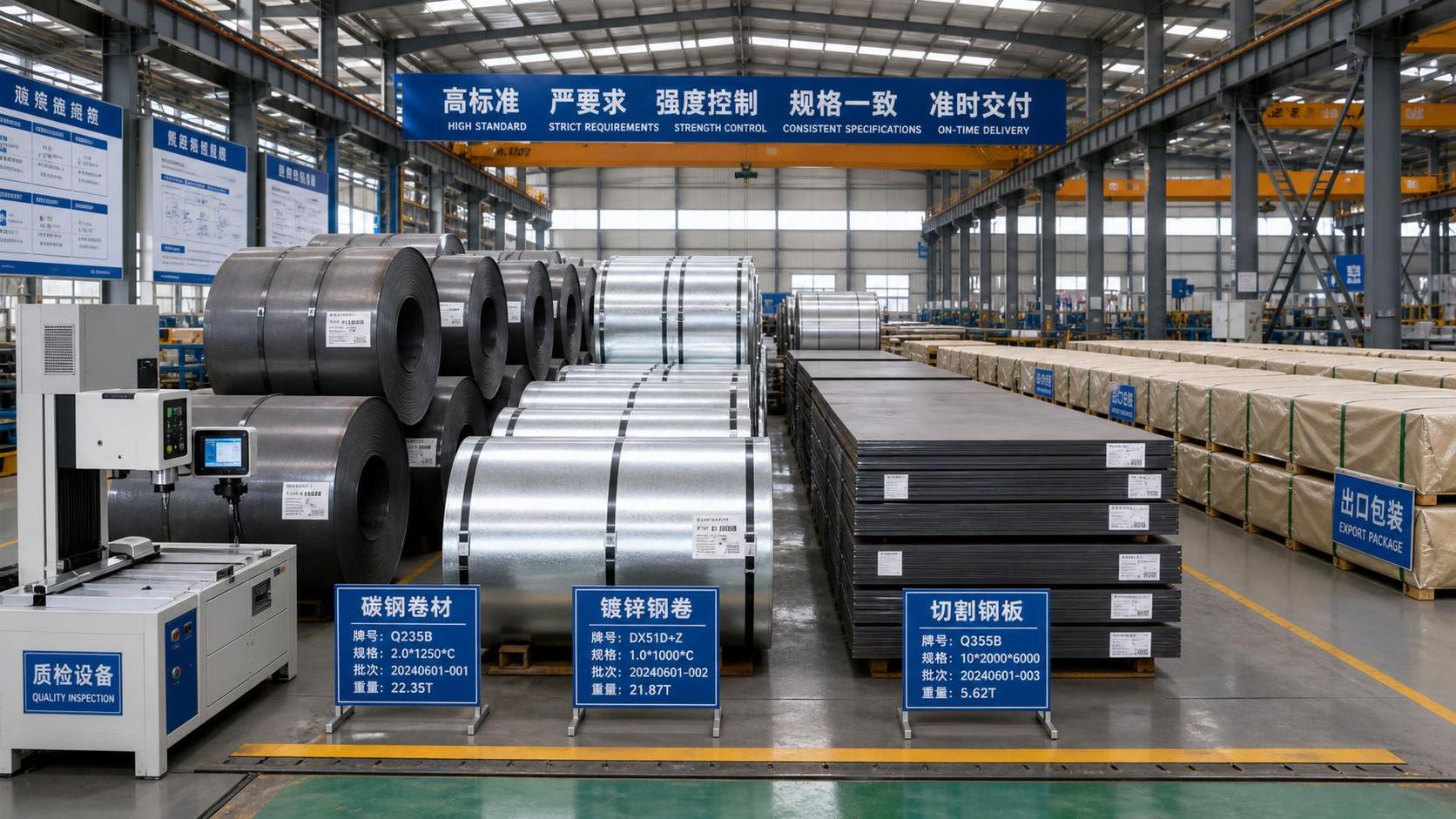
For corrosion-critical applications, we offer galvanized, aluzinc-coated, or epoxy-powder-coated variants—and seamlessly pair them with precision-cut Carbon Steel Plate components. Available in SPCC through SPCG grades, these plates deliver exceptional formability for press-braked brackets, smooth surface finish for architectural cladding, and high tensile strength for base plates supporting heavy-duty i beam weight loads. With thicknesses ranging from 0.1 mm to 400 mm and widths up to 3000 mm, our plate solutions adapt to both micro-scale instrumentation housings and macro-scale bridge abutments.
How to Measure a Steel Beam Accurately for Engineering Compliance
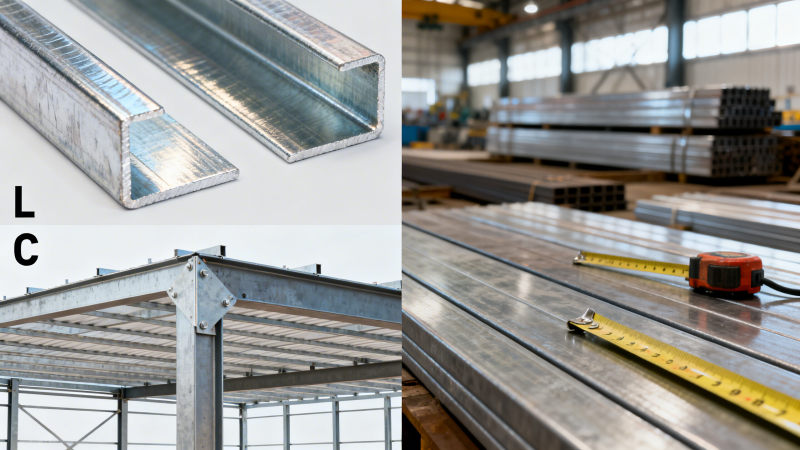
Precise measurement is non-negotiable for verifying weight of i beam, calculating dead loads, and validating fire-resistance ratings. Start by confirming nominal dimensions (e.g., “W12×50”) against mill test reports, then use calibrated ultrasonic thickness gauges (±0.05 mm accuracy) at three points along the web and flange. Cross-check with digital calipers for flange width and web height. For hot-rolled sections, measure at ambient temperature (20±2°C) to avoid thermal expansion errors—critical when verifying conformity to ASTM A6/A6M or EN 10034 tolerances.
Always record measurements at mid-length and near both ends to detect bow or camber. If discrepancies exceed 0.1% of member length, investigate rolling mill deviation or transport-induced deformation. For quality assurance teams, we recommend integrating laser scanning for full 3D profile reconstruction—especially before welding steel angle or channel assemblies destined for seismic zones. Hongteng Fengda provides certified dimensional inspection reports with every export shipment, traceable to ISO/IEC 17025-accredited metrology labs.
Conclusion: Strategic Selection Drives Project Success
Selecting between steel angle and channel demands more than dimensional comparison—it requires holistic evaluation of structural behavior, fabrication economics, and long-term serviceability. Channels excel in bending-dominated applications with predictable loading paths; angles shine in lightweight bracing, anchorage, and space-constrained connections. Both benefit from rigorous quality control, international certification alignment, and seamless integration with complementary products like steel girder, steel square rod, and Carbon Steel Plate.
As a structural steel manufacturer & exporter from China with over 18 years of global delivery experience, Hongteng Fengda supports your decision-making with technical datasheets, free CAD modeling assistance, and real-time stock visibility across ASTM, EN, JIS, and GB standards. We help procurement professionals reduce sourcing risk, empower engineers with verified i beam weight and beams weight data, and enable project managers to meet deadlines without compromising safety or compliance.
Ready to optimize your next structural steel specification? Get an instant quote, request ASTM/EN-certified samples, or schedule a virtual factory audit today.
Related recommendations
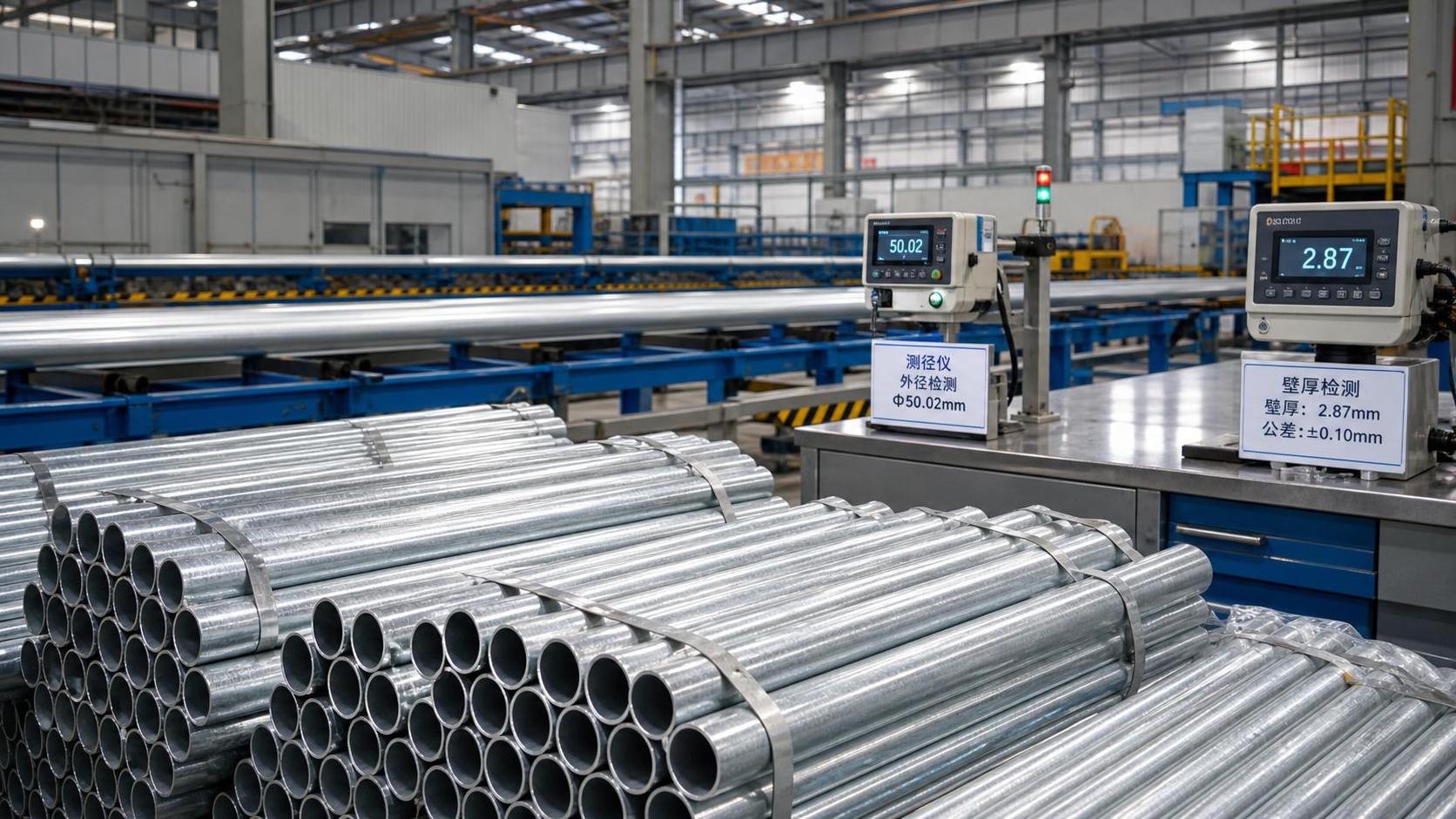
 Galvanized Pipe Manufacturer Selection: Zinc Coating, Tolerance, and ComplianceGalvanized pipe manufacturer selection guide: compare zinc coating quality, tolerance control, and compliance to reduce risk and choose a supplier that delivers reliable steel products.
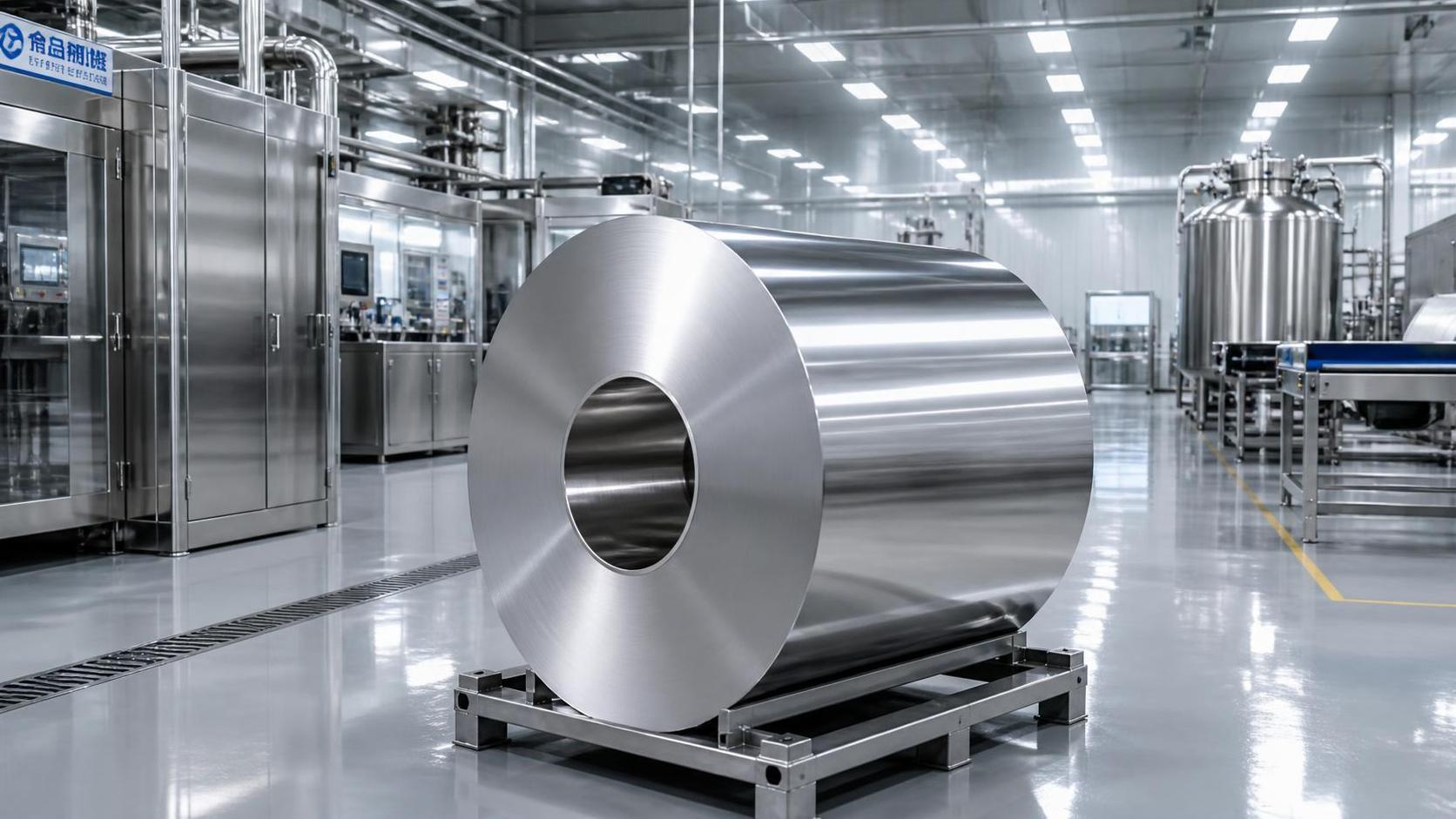
 What to Check Before Choosing an SS Coil Manufacturer for Food EquipmentSS coil manufacturer selection guide for food equipment: compare grade consistency, surface finish, tolerances, hygiene documents, and supply reliability before you buy.
 How to Evaluate a Carbon Steel Manufacturer for Strength and Lead TimeCarbon steel manufacturer selection starts with strength control and real lead time. Learn how to compare quality systems, standards, specs, and export readiness before you buy.
 Buy 304 Stainless Steel Wire 0.5mm Soft: What to Check Before Placing an OrderBuy 304 stainless steel wire 0.5mm soft with confidence. Learn what to check on grade, tolerance, finish, softness, and supplier quality before ordering.
Please give us a message


Please enter what you want to find