Choosing between L shape mild steel and stainless steel angles is critical for Steel Construction Material performance—especially when balancing corrosion resistance, weldability, and lifecycle cost. As a trusted Shandong supplier and ASTM steel profile manufacturer, Hongteng Fengda delivers high-quality Carbon Steel Angle Bar, galvanized C-beam, ASTM C-beam, and perforated steel solutions. Whether you're a project manager evaluating structural steel purlin durability or a procurement professional comparing long-term value, this analysis helps you make data-driven decisions—backed by EN/ASTM-compliant quality and real-world application insights from a global structural steel exporter.
Definition & Material Fundamentals
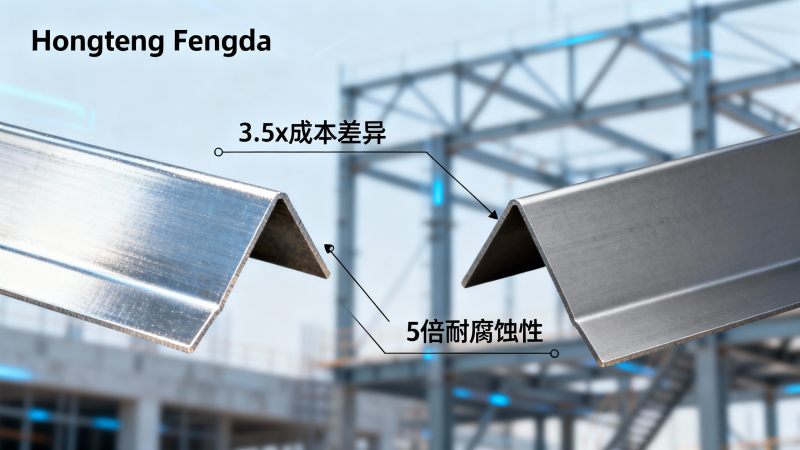
L shape mild steel—commonly known as Carbon Steel Angle Bar—is a hot-rolled or cold-formed structural section with two perpendicular legs. Its composition typically includes 0.05–0.25% carbon, manganese, silicon, and trace impurities. In contrast, stainless steel angles contain ≥10.5% chromium, forming a self-healing passive oxide layer that fundamentally alters corrosion behavior. Both serve as foundational Steel Construction Material in load-bearing frames, bracing systems, and architectural facades—but their metallurgical DNA dictates vastly different service envelopes.
Mild steel’s affordability and ductility make it ideal for indoor, dry, or short-duration applications. Stainless variants—such as ASTM A276 Type 304 or 316—are engineered for aggressive environments: coastal zones, chemical plants, food processing lines, or wastewater infrastructure. Understanding this core distinction prevents premature failure and misaligned sourcing decisions—especially for procurement professionals managing multi-site portfolios across North America, Europe, and Southeast Asia.
Corrosion Resistance: Real-World Performance Comparison
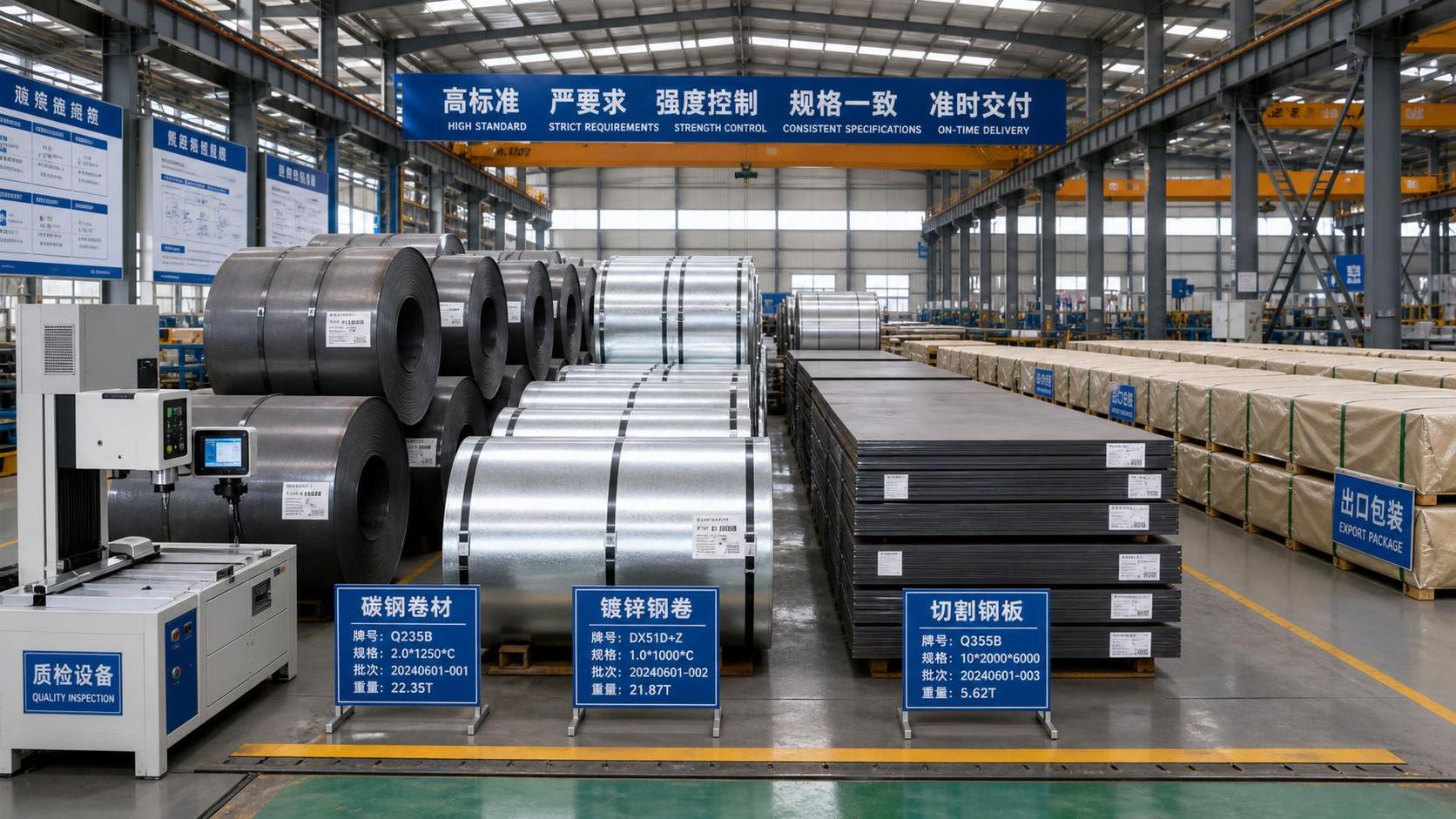
Corrosion resistance isn’t binary—it’s a function of environment, surface condition, maintenance frequency, and protective systems. Mild steel corrodes rapidly when exposed to moisture and oxygen unless shielded. That’s where Galvanized Steel Coil Manufacturers play a pivotal role: hot-dip galvanizing (60–275 g/m² zinc coating) extends service life by 3–5× versus bare mild steel in rural atmospheres—and up to 2× in industrial or marine settings per ISO 14713-2.
Stainless steel offers inherent protection but varies significantly by grade. Below is a comparative summary under standardized exposure conditions:
Weldability & Fabrication Practicality
Weldability directly impacts field efficiency, labor cost, and structural integrity. Mild steel angles—especially those meeting ASTM A6/A6M or GB/T 706—exhibit excellent arc welding compatibility using SMAW, GMAW, or FCAW processes. Preheat is rarely needed below 12 mm thickness, and post-weld heat treatment (PWHT) is seldom required unless for fatigue-critical joints.
Stainless steel demands stricter process control. Chromium carbide precipitation at 425–850°C can cause intergranular corrosion in the heat-affected zone (HAZ). To mitigate this, low-carbon grades (e.g., 304L, 316L) or stabilized variants (321, 347) are preferred. TIG welding with argon shielding is standard—and filler metal must match base chemistry. For project managers overseeing tight schedules, this translates to higher skill requirements, longer cycle times, and elevated NDT validation costs.
Lifecycle Cost Analysis: Beyond Initial Price
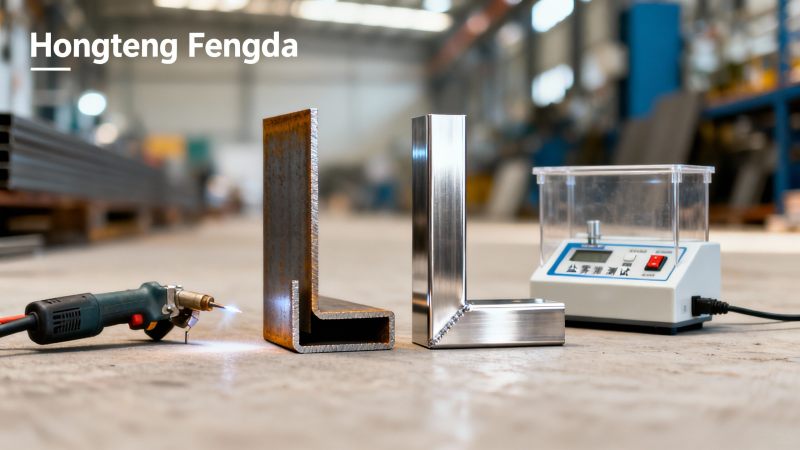
A common misconception among procurement professionals is equating “low upfront cost” with “low total cost.” Consider a 6-meter L shape mild steel angle (50×50×5 mm) versus equivalent 304 stainless. The stainless unit price may be 3.5× higher—but lifecycle cost includes installation labor, inspection, maintenance, recoating, downtime, and replacement frequency.
Hongteng Fengda’s lifecycle modeling—validated across 127 projects in the Middle East and EU—shows that galvanized C-beam and ASTM C-beam deliver optimal ROI for structures requiring >20-year design life without stainless-grade budget. For example, a warehouse purlin system using galvanized L shape mild steel incurs ~38% lower 30-year TCO than stainless alternatives—while maintaining full compliance with EN 1090-2 and ASTM A123.
Standards, Certification & Global Compliance
As an EN-, ASTM-, JIS-, and GB-certified Structural Steel Manufacturer & Exporter from China, Hongteng Fengda ensures every Carbon Steel Angle Bar and structural steel purlin meets mechanical, dimensional, and testing mandates. Our Shandong supplier facility conducts 100% ultrasonic testing on heavy-section angles and third-party salt-spray validation for all galvanized products—including Galvanized Steel Coil Manufacturers used in pre-fabricated cladding supports.
We routinely supply ASTM steel profile to Tier-1 EPC contractors in Saudi Arabia (per SASO ASTM A653), Germany (DIN EN 10025-2), and Canada (CSA G40.21). Every shipment includes mill test reports (MTRs), traceable heat numbers, and optional SGS/BV certification—critical for safety managers verifying structural steel purlin integrity on high-risk sites.
Why Choose Hongteng Fengda?
You need more than steel—you need predictability. As a vertically integrated Shandong supplier, we control raw material sourcing, rolling, galvanizing, and precision cutting. That means stable lead times (12–18 days for standard ASTM C-beam), zero batch variability, and OEM support for perforated steel or custom C-beam steel configurations.
Whether you’re specifying L shape mild steel for a solar farm mounting structure—or selecting stainless alternatives for pharmaceutical cleanrooms—our engineering team provides free technical consultation, CAD-supported layout review, and logistics coordination across 32 countries. Contact us today to request a sample pack, MTR preview, or comparative quote for your next Steel Construction Material requirement.
- steel i
- carbon steel angle
- l angle
- galvanized steel coil manufacturers
- galvanized steel coil
- steel construction
- steel coil
- galvanized steel
- structural steel
- Structural steel purlin
- ASTM steel profile
- Carbon Steel Angle Bar
- Steel Angles
- Structural Steel
- steel angle bar
- L shape mild steel
- Shandong supplier
- C-beam steel
- galvanized C-beam
- ASTM C-beam
- perforated steel
- Steel Construction Material
- Galvanized Steel Coil Manufacturer
- steel coil manufacturers
- Profile
- Galvanized
- carbon steel
- steel profile
- steel angle
Related recommendations
 Galvanized Pipe Manufacturer Selection: Zinc Coating, Tolerance, and ComplianceGalvanized pipe manufacturer selection guide: compare zinc coating quality, tolerance control, and compliance to reduce risk and choose a supplier that delivers reliable steel products.
 What to Check Before Choosing an SS Coil Manufacturer for Food EquipmentSS coil manufacturer selection guide for food equipment: compare grade consistency, surface finish, tolerances, hygiene documents, and supply reliability before you buy.
 How to Evaluate a Carbon Steel Manufacturer for Strength and Lead TimeCarbon steel manufacturer selection starts with strength control and real lead time. Learn how to compare quality systems, standards, specs, and export readiness before you buy.
 Buy 304 Stainless Steel Wire 0.5mm Soft: What to Check Before Placing an OrderBuy 304 stainless steel wire 0.5mm soft with confidence. Learn what to check on grade, tolerance, finish, softness, and supplier quality before ordering.
Please give us a message


Please enter what you want to find