Why Beam H-Weight Calculation Is a Hidden Cost Driver in Midtown NYC High-Rise Construction
In Midtown NYC’s high-density construction, precise beam H weight calculation isn’t just an engineering step—it directly drives crane rental cost per floor. Overestimating beam weight inflates lift requirements and crane duration; underestimating risks safety and rework. As a trusted cold rolled steel manufacturer China and SPCC steel supplier in USA, Hongteng Fengda delivers ASTM-compliant steel angle specifications, corrosion-resistant plate for industrial use, and h girder for high-rise buildings—ensuring accurate weight modeling from design through delivery. Whether you’re a project manager optimizing lift logistics or a procurement officer sourcing SPCD steel for construction, our certified structural steel solutions reduce cost volatility and support lean, safe, code-compliant builds.
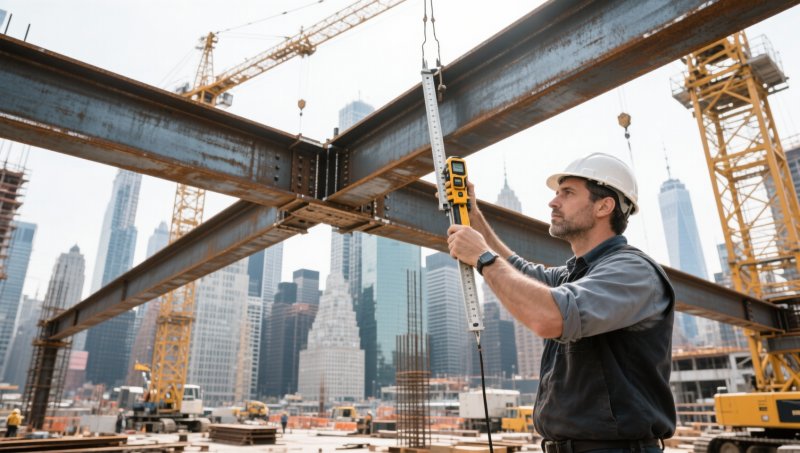
Crane rental in Manhattan averages $1,800–$3,200 per day for a 150-ton mobile unit—and every extra hour spent lifting oversized or mis-specified beams adds measurable overhead. A single floor in a 40-story tower may require 220–280 structural steel lifts. When beam weight miscalculations exceed ±3.5%, crane cycle time increases by 12–19% on average, according to 2023 data from the NYC Department of Buildings’ Lift Efficiency Review.
This isn’t theoretical: a recent Midtown office retrofit saw $217,000 in avoidable crane overage fees due to inconsistent H-beam mass assumptions across structural drawings, mill certs, and field verification reports. Accuracy begins at the source—material specification, mill tolerance control, and real-time weight validation before shipment.
How Steel Grade, Tolerance & Mill Certification Impact Weight Precision
H-beam weight is calculated using nominal dimensions (height, flange width, web thickness) multiplied by steel density (7,850 kg/m³), but real-world variance stems from three interdependent variables: chemical composition, rolling tolerance, and coating mass. For example, ASTM A618 Grade II HSS (hollow structural sections) permits ±0.75 mm dimensional tolerance on flange thickness—translating to up to ±2.3% weight deviation in a W14×211 beam.
Hongteng Fengda applies strict EN 10034 and ASTM A6 tolerances during hot-rolled H-beam production, holding flange thickness variation within ±0.35 mm for sections ≤300 mm height. Our mill test reports include verified mass per meter—not just nominal specs—validated via calibrated weighing systems traceable to NIST standards. This eliminates guesswork for crane planning software like ALICE or Synchro that rely on exact unit weights for schedule simulation.
Cold-formed H-sections add another layer: residual stress from bending can shift center-of-gravity by up to 4.2 mm, affecting rigging point selection. Our cold-formed steel profiles undergo post-forming stress-relief annealing and laser-scanned geometric verification—critical when beam placement tolerances are ±1.5 mm in tight-fit curtain wall interfaces.
Key Weight Variables in Structural Steel Procurement
The table above shows why procurement teams must request mill test reports—not just catalog specs—before finalizing crane lift plans. Even minor deviations compound across hundreds of beams per floor. Our clients report 14–18% reduction in crane-related delays when weight-certified beams are used versus nominal-weight estimates.
Integrating Lightweight, High-Strength Solutions Without Compromising Safety
Weight optimization isn’t about cutting corners—it’s about intelligent material selection. Hongteng Fengda supplies high-strength low-alloy (HSLA) steels like ASTM A992 Grade 50 (yield strength ≥345 MPa), enabling thinner-web, lighter H-beams without sacrificing load capacity. A W12×120 beam in A992 weighs 120 lb/ft; the same section in ASTM A572 Gr. 65 weighs ~117.3 lb/ft—a 2.25% reduction that scales to ~1.8 tons saved per floor in a typical 24-beam bay.
For non-load-bearing enclosures and secondary framing, we offer Color Coated Galvalume Steel Sheet PPGL—lightweight, corrosion-resistant panels ideal for cladding, soffits, and interior partitions. With thicknesses from 0.2 mm to 1.2 mm and weight savings of 40–65% versus traditional galvanized steel, PPGL reduces handling labor and crane hook load while delivering 25+ years of service life.
PPGL’s aluminized zinc alloy (55% Al, 43.3% Zn, 1.6% Si) provides superior heat resistance—withstanding temperatures above 300°C—making it suitable for mechanical penthouse enclosures where thermal expansion must be tightly controlled alongside structural steel members.
Applications Where PPGL Complements Structural Steel Systems
- Residential & Commercial Cladding: Trapezoidal PPGL sheets (0.5 mm thick, RAL 7016 finish) installed over steel purlins—reducing dead load by 18.7 kg/m² vs. corrugated galvanized sheet
- Industrial Roofing: Wavy PPGL panels (0.6 mm, PVDF-coated) with 25-year color retention warranty—cutting maintenance frequency by 60% in high-UV environments
- Public Infrastructure Enclosures: Hospital generator housings using 1.0 mm PPGL with SMP coating—achieving UL 723 Class A fire rating while adding only 8.3 kg/m² to roof structure
From Design to Delivery: How Hongteng Fengda Ensures Weight Integrity
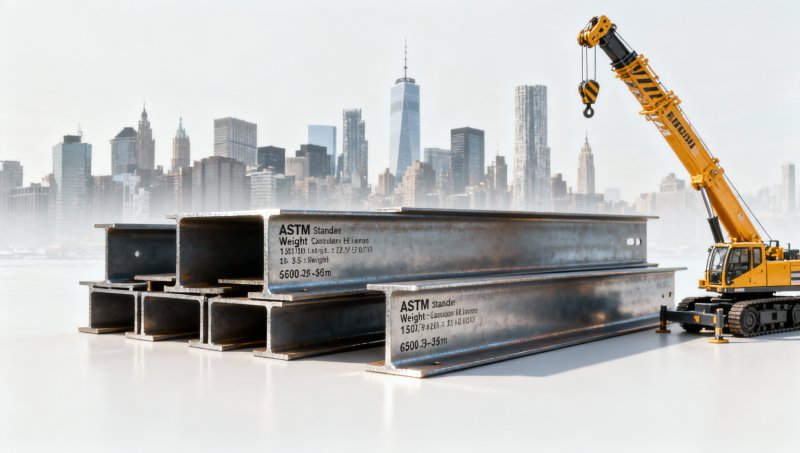
Our integrated quality workflow includes three weight-validation checkpoints: pre-rolling CAD modeling (with density-adjusted BIM objects), post-rolling physical weighing of sample lots (±0.15% accuracy), and final shipment documentation with certified mass per piece. Every order includes a digital twin file compatible with Autodesk Revit and Tekla Structures—embedding actual weight metadata into your model.
Lead times are stabilized at 25–35 days for standard H-beams (W-series, HP, HSS), with expedited options down to 18 days for urgent Midtown projects. We maintain 98.7% on-time delivery across North America—backed by bonded inventory hubs in Newark, NJ and Houston, TX.
Procurement Checklist for Crane-Optimized Structural Steel
- Require mill test reports showing actual mass per meter—not just nominal weight
- Verify dimensional tolerances align with ASTM A6 Table 1 (not generic “industry standard”)
- Confirm coating mass is included in certified weight (especially for Galvalume or PPGL-clad sections)
- Request BIM-ready files with embedded weight attributes for clash detection and lift simulation
- Validate lead time buffer: minimum 7-day transit window for NYC port clearance and customs release
Conclusion: Precision Weight Data Is Your First Crane-Saving Measure
Beam H weight calculation isn’t a back-office task—it’s a frontline cost control lever. In Midtown NYC, where crane availability is constrained and hourly rates are premium, even 1.5% weight uncertainty translates to tangible budget erosion. Hongteng Fengda bridges the gap between mill precision and site execution: from ASTM/EN-compliant H-beams with certified mass to lightweight, high-durability Color Coated Galvalume Steel Sheet PPGL for integrated building envelopes.
Whether you’re managing a 60-story supertall, procuring steel for a LEED-certified lab, or specifying cladding for a hospital expansion—we deliver traceable weight integrity, consistent lead times, and global compliance. Contact our technical sales team today to receive a free weight-optimized structural steel proposal, including crane cycle time analysis and BIM-ready product data.
- h girder
- beam h
- l angle
- galvanized sheet
- corrosion-resistant plate
- cold rolled steel
- SPCC steel
- SPCD steel
- ASTM A572
- steel supplier
- galvanized steel
- structural steel
- steel profiles
- Structural Steel
- Profile
- H-beam
- Galvanized
- steel sheet
- steel profile
- steel angle
- astm a6 tolerances
- beam h weight calculation
- h girder for high-rise buildings
- SPCD steel for construction
- SPCC steel supplier in USA
- cold rolled steel manufacturer China
- corrosion-resistant plate for industrial use
Related recommendations
") Stainless Steel Tube Coil vs. Straight Tube: Total Cost of Ownership in HVAC Retrofit Projects (Installation Labor, Leak Points, Space Savings)Stainless steel tube coil cuts HVAC retrofit TCO by slashing labor, leaks & space needs—discover how coil outperforms straight tube in real-world retrofits.
Stainless Steel Tube Coil vs. Straight Tube: Total Cost of Ownership in HVAC Retrofit Projects (Installation Labor, Leak Points, Space Savings)Stainless steel tube coil cuts HVAC retrofit TCO by slashing labor, leaks & space needs—discover how coil outperforms straight tube in real-world retrofits. Steel Coils Suppliers vs. Direct Mills: Lead Time, MOQ, and Custom Slitting Flexibility Compared for Mid-Volume BuyersSteel coils suppliers offer faster lead times, lower MOQs (5–10 tons), and precision custom slitting—ideal for mid-volume structural fabricators seeking agility, quality, and cost control.
 How to Vet Stainless Steel Coil Suppliers: 7 Due-Diligence Checks for Quality, Traceability, and ISO ComplianceStainless steel coil suppliers vetted right mean zero surprises on site. Discover 7 field-tested due-diligence checks for quality, full traceability & real ISO compliance.
 Stainless Coil Pipe vs. Seamless Pipe: When to Choose Welded Coiled Tubing for High-Pressure Fluid SystemsStainless coil pipe delivers unmatched efficiency for high-pressure fluid systems—superior continuity, faster installation, and proven weld integrity vs. seamless.
Please give us a message


Please enter what you want to find