Selecting the right stainless steel coil is crucial for performance, durability, and cost efficiency in demanding industries. Whether you’re comparing a 304 coil for industrial applications or evaluating the ss 316 coil price per ton, understanding material properties can guide smarter project decisions. As an SGS certified steel supplier in Europe and a leading coil stainless steel exporter in China, Hongteng Fengda provides high temperature steel for boiler applications, welded stainless tubing for oil and gas, and other customized solutions for global manufacturing and construction projects.
Definition and Basic Overview
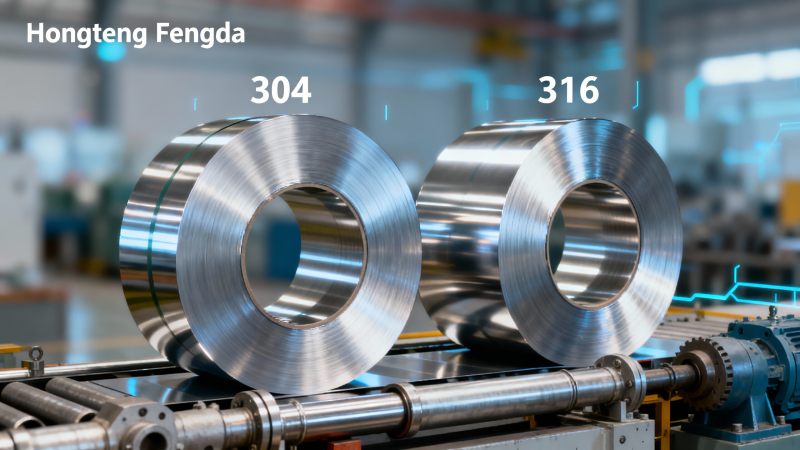
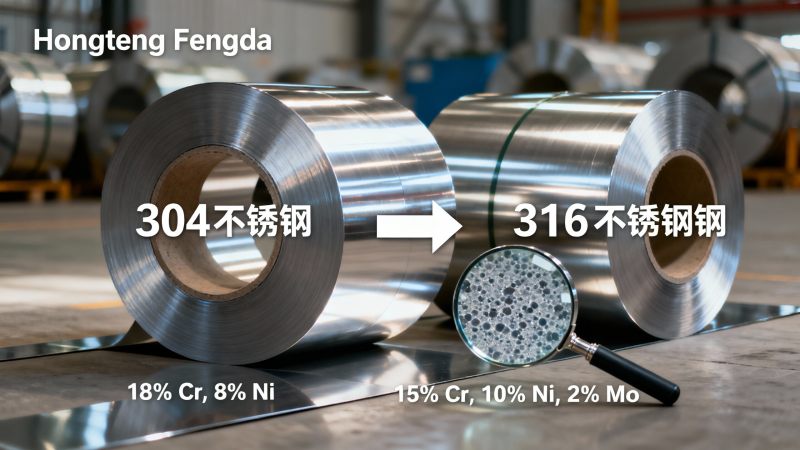
In the structural and industrial steel market, both 304 coil and 316 coil are widely recognized as stainless steel materials that deliver exceptional versatility and corrosion resistance. Each has unique alloy compositions—typically, 304 contains 18% chromium and 8% nickel, while 316 includes approximately 16% chromium, 10% nickel, and 2% molybdenum. This difference in alloying results in varied resistance levels, thermal capacities, and cost implications that affect the selection process for industrial users, procurement officers, and quality control specialists. 304 coil for industrial applications is the most popular choice in manufacturing settings due to its balanced cost-to-performance ratio and formability. It exhibits good corrosion resistance in mild environments, making it ideal for architecture, machinery housings, and packaging lines. The 316 coil, on the other hand, offers improved resistance against chloride corrosion, which is essential in oil and gas, marine, and chemical industries. Understanding these distinctions helps engineers and project managers reduce failure rates while optimizing long-term asset efficiency. Around the world, users select stainless steel rolls based on project-specific performance expectations, from flat stainless steel supplier networks in the USA to stainless steel roll manufacturer facilities in Germany. Both types of coils are available from suppliers like Hongteng Fengda, a professional structural steel manufacturer & exporter from China providing OEM and standard steel solutions complying with ASTM, EN, JIS, and GB specifications.
Market Overview and Industrial Trends
The global demand for stainless steel coils continues to expand, particularly within sectors requiring high temperature steel for boiler applications, petrochemical pipelines, and construction infrastructure. Economic recovery and sustainability efforts in North America, Europe, and Asia-Pacific have driven users to look for SGS certified steel supplier partners offering stable quality and traceable sourcing. The coil stainless steel exporter in China market segment demonstrates competitive strength through advanced manufacturing capabilities, local material cost advantages, and increasingly automated production lines. Recent surveys show that the ss 316 coil price per ton fluctuates based on alloy additions and global nickel pricing. Meanwhile, the 304 coil for industrial applications benefits from consistent availability and simplified maintenance procedures, leading to greater appeal among cost-conscious buyers. Decision-makers in procurement departments focus heavily on lifecycle cost analysis rather than up-front expense, emphasizing corrosion life-span, cleanability, and weldability as main value indicators. Hongteng Fengda’s overseas customers particularly appreciate its strict adherence to standards like ISO 9001, as well as its transparent documentation for material traceability. As a coil stainless steel exporter in China, the company leverages its flexible logistics network to guarantee on-time delivery to markets such as Europe and the Middle East, offering both bulk and customized options including cold formed steel profiles, beams, and channel steels.
Application Scenarios and Practical Examples
When considering stainless steel coil adoption, understanding the operational environment is critical. The 304 coil for industrial applications performs well in indoor settings or low-corrosion atmospheres such as food processing, architectural finishing, and mechanical parts where exposure to chlorides is minimal. Conversely, 316 coil is designed for harsh settings with high humidity, acidic exposure, or marine conditions, including offshore platforms and desalination plants. For oil and gas refineries, welded stainless tubing for oil and gas often incorporates 316 material because of its molybdenum content, which improves pitting and crevice corrosion resistance. Engineers also prefer 316 for pressure vessels, heat exchangers, and condensers. Manufacturers in the packaging industry, however, tend to use 304 coils and related steel strapping for packaging industry requirements, balancing mechanical strength and cost efficiency. Beyond coils, complementary products such as Galvanized Stainless Steel Wire serve various construction and industrial utilities—from wire mesh and decoration to breeding and barrier isolation—featuring low carbon steel materials (Q195, Q235) and tensile strengths between 350–550 Mpa. With zinc coating thicknesses of 8–25 g/m², such wire provides brightness, ductility, and superior corrosion resistance, making it useful when integrated with both 304 and 316 structural frameworks.
Technical Performance and Standards
From a materials-engineering perspective, the differences between 304 and 316 coils lie in microstructure and alloying stability at elevated temperatures. The presence of molybdenum in 316 enhances it as high temperature steel for boiler applications and environments prone to chloride-induced corrosion. The maximum operating temperature for both types often exceeds 870°C in intermittent service, with oxidation resistance up to 925°C when designed under proper load conditions. Mechanical properties such as yield strength, elongation, and weldability make both steel types reliable choices for fabrication. Procurement managers should always verify compliance with ASTM A240, EN 10088, JIS G4304, and equivalent GB/T standards before sourcing. For safety management teams, verifying heat numbers and mill test certificates ensures proper identification and guarantees compliance with SGS certification processes prevalent in European markets. Additionally, Hongteng Fengda’s modern production facilities incorporate advanced cold rolling and annealing lines that ensure smoother finishes and tighter dimensional tolerances. These capabilities improve downstream processes like welding and forming, which directly support downstream manufacturers in producing welded stainless tubing for oil and gas projects or inox plate for construction projects worldwide.
Comparison and Cost Considerations
A comparative study between 304 and 316 stainless coils typically involves assessing cost-per-performance ratios, corrosion resistance, mechanical strength, and availability. The ss 316 coil price per ton is generally higher—often by 20 – 30%—due to the added molybdenum and nickel content. However, its longer service life and reduced maintenance requirement often justify the investment in marine, oil refining, or chemical processing sectors. Buyers focusing on general use or indoor manufacturing, such as food-grade equipment or sanitary fittings, may find 304 more economical without compromising on hygiene and weldability. In contrast, environments exposed to saline water, brine, or acid require 316 for its superior resistance to pitting corrosion. A short table below highlights a typical technical comparison:
Procurement Guide and Common Mistakes
When narrowing down the choice between 304 and 316 coils, buyers should always begin with an accurate evaluation of exposure conditions, budget targets, and the intended lifespan of the asset. A procurement guide for such decisions includes:
- Define environmental aggressiveness—chloride exposure, temperature fluctuation, and chemical contact.
- Consult technical datasheets of potential stainless steel roll manufacturer partners in Germany or Asia to benchmark parameters.
- Request mill test reports and SGS certifications to ensure lab-tested composition accuracy.
- Review available logistic and quality support from a coil stainless steel exporter in China with proven delivery performance.
- Conduct a total cost of ownership analysis instead of unit pricing alone.
Case Studies and Real-world Applications
One notable case comes from a European automotive parts manufacturer who required stainless steel strips for exhaust systems operating under cyclic temperature conditions. Hongteng Fengda supplied 304 coils meeting EN 10088 standards, achieving both mechanical consistency and smooth surface finishing. Over three years, failure rates decreased by 25%, and production efficiency improved due to fewer weld defects. Another project in Southeast Asia involved offshore facilities requiring welded stainless tubing for oil and gas platforms. In this scenario, 316 coils with molybdenum content were used to resist seawater corrosion. The long-term cost savings from reduced maintenance justified the higher initial ss 316 coil price per ton. In construction projects, Hongteng Fengda’s multiproduct lineup—including cold formed profiles, beams, and auxiliary materials such as Galvanized Stainless Steel Wire—demonstrates practical flexibility. The strong ductility and corrosion resistance of these products make them suitable for architectural reinforcement, decoration, packaging, and breeding applications alike. Collectively, these real-world examples underscore the manufacturer’s ability to tailor steel solutions to diverse industry requirements.
Trends and Future Outlook
The stainless steel coil industry is evolving alongside advances in energy efficiency, automation, and environmental regulations. Low-carbon innovations and recycling strategies are becoming central to production processes. Both 304 and 316 coils are seeing adaptation for additive manufacturing and digital inventory tracking, allowing distributors and agents to monitor quality from the mill to the job site. Demand for flat stainless steel supplier networks in the USA and Europe will persist as smart infrastructure expands. Additionally, export markets in Asia and the Middle East are looking for eco-friendly processes and corrosion-resistant grades suited for renewable energy plants or hydrogen systems. Hongteng Fengda continues to invest in research for improved oxide retention at high temperatures and to deliver new cold-formed shapes that reduce material waste. As sustainability and automation converge, projects that once relied on traditional procurement will now emphasize aggregated data, smart welding robots, and integrated certification systems under SGS or equivalent frameworks. Embracing these developments positions buyers and engineers to maintain competitive advantages and meet global compliance standards seamlessly.
Why Choose Hongteng Fengda
Hongteng Fengda stands out as a professional structural steel manufacturer and exporter from China with deep expertise spanning angle steel, channel steel, welded beams, and stainless steel coils. The company provides customized OEM services and maintains modern facilities equipped with advanced inspection technologies, ensuring every shipment meets ASTM, EN, JIS, and GB requirements. As a trusted long-term partner for global projects across Europe, North America, the Middle East, and Southeast Asia, Hongteng Fengda guarantees dependable lead times, responsive customer support, and consistent material quality. Clients benefit from the company’s ability to manage both high volume and specialized orders effectively, helping them minimize sourcing risks and control overall project costs. Whether sourcing 304 coils for industrial applications, 316 coils for marine use, or other customized steel profiles, buyers can rely on Hongteng Fengda’s experience and reputation for quality, reliability, and service excellence. Contact us today to discuss design solutions, compare ss 316 coil price per ton structures, or schedule a consultation tailored to your application requirements.
- channel steel
- angle steel
- ss steel wire
- stainless steel wire
- galvanized stainless steel wire
- Industrial Steel
- steel supplier
- steel coil
- structural steel
- steel profiles
- Structural Steel
- wire mesh
- high temperature steel
- SGS certified steel
- stainless steel supplier
- welded stainless tubing
- stainless steel coil
- stainless coil
- ss coil
- coil stainless
- 304 coil
- ss 316 coil
- stainless steel roll
- stainless steel strip
- steel strapping
- flat stainless steel
- inox plate
- Profile
- Galvanized
- Steel Wire
- carbon steel
- steel profile
- inox plate for construction projects
- steel strapping for packaging industry
- ss 316 coil price per ton
- 304 coil for industrial applications
- coil stainless steel exporter in China
- welded stainless tubing for oil and gas
- SGS certified steel supplier in Europe
- high temperature steel for boiler applications
Related recommendations
 How to Select a Steel Profile Based on Load, Span, and Fabrication NeedsProfile selection starts with load, span, and fabrication needs. Learn how to compare steel sections for strength, cost, workability, and sourcing efficiency.
 Galvanized Pipe vs Black Pipe: Which One Fits Water, Gas, or Outdoor Lines?Galvanized pipe or black pipe? Compare the best choice for water, gas, and outdoor lines, with key insights on corrosion, codes, cost, and long-term performance.
 How to Choose Steel Roofing for Warehouses, Farms, and Residential BuildingsSteel Roofing selection depends on building type. Learn how warehouses, farms, and homes differ in corrosion, insulation, drainage, and cost for smarter roofing decisions.
 Hot-Dip Galvanized vs Pre-Galvanized Steel: Which Should You Specify?Hot-dip galvanized vs pre-galvanized steel: compare corrosion resistance, fabrication impact, cost, and standards to specify the right steel solution for durable, compliant projects.
Please give us a message


Please enter what you want to find