Welded stainless tubing for oil and gas plays a crucial role in ensuring efficiency, safety, and long-term reliability under extreme conditions. As an SGS certified steel supplier in Europe and a trusted coil stainless steel exporter in China, Hongteng Fengda provides high temperature steel for boiler applications and 304 coil for industrial applications. Backed by advanced manufacturing capabilities and strict quality standards, we deliver dependable solutions that meet diverse needs across the energy, construction, and processing industries.
Definition and Technical Features of Welded Stainless Tubing in Oil and Gas
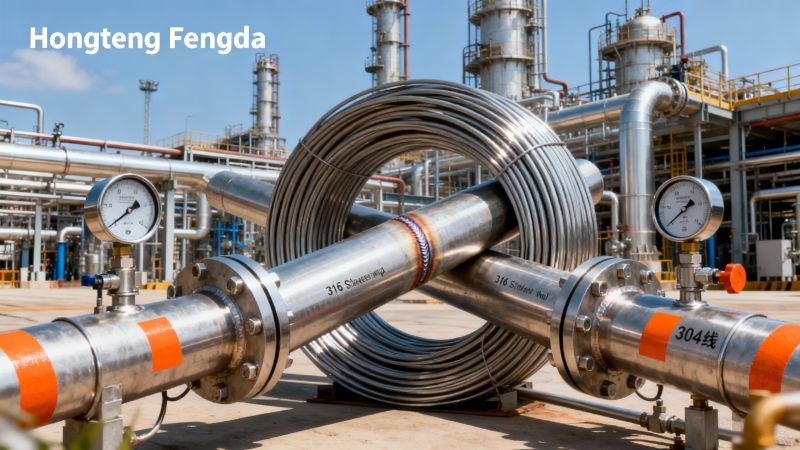
Welded stainless tubing for oil and gas refers to steel tubes manufactured by rolling and welding stainless steel strips or plates into cylindrical shapes designed to withstand demanding environments such as high pressure, corrosion, and temperature fluctuations. These tubes are crucial for pipelines, heat exchangers, and structural frames within drilling stations, refineries, and transportation systems. The most used grades include 304, 304L, 316, and 316L, particularly valued for their chromium and nickel content, which deliver corrosion resistance and mechanical stability. Hongteng Fengda’s welded tubing undergoes strict process control, including ultrasonic and hydrostatic testing, ensuring consistent wall thickness and weld integrity. Performance parameters such as yield strength, tensile strength, elongation, and hardness determine the tube’s operational lifespan. For instance, austenitic grades exhibit tensile strengths above 520 MPa and yield strengths around 275 MPa, providing safety margins in pressure service. When integrated with 316 Stainless Steel Plate, these tubes display improved resistance to chloride-induced pitting, an essential property for offshore platforms facing seawater exposure. This combination supports thermal efficiency, reduced maintenance, and longer service cycles—key requirements for oil and gas projects focused on cost optimization and reliability.
Market Overview and Industry Demand
The global market for welded stainless tubing in the oil and gas sector has witnessed steady growth due to increasing offshore exploration and the shift towards cleaner energy technologies. Rising investments in LNG infrastructure, pipeline expansion, and enhanced recovery projects have elevated the requirement for high-grade stainless steel materials with better corrosion and temperature resistance. Particularly in Europe, SGS certified steel suppliers are in high demand, ensuring traceability and compliance with EN and ASTM standards. Hongteng Fengda, as a coil stainless steel exporter in China, serves major OEMs and EPC contractors across North America, Europe, and Southeast Asia, reinforcing supply chain stability amid fluctuating raw material prices. Global oil majors seek suppliers who can provide not only materials but also engineering guidance for optimal tube selection and fabrication. Market analysis indicates that stainless steel rolls, steel strapping for packaging industry logistics, and high-temperature-grade coils are part of bundled procurement programs. The 316 and 304 series stainless products, as well as customized structural profiles, offer multi-industry cross-compatibility. Moreover, the current trend towards sustainable materials ensures that welded tubing is increasingly favored for its recyclability, low life-cycle cost, and energy efficiency. The consistent supply from Hongteng Fengda’s advanced production lines enhances buyer confidence and minimizes project delays.
Application Scenarios and Performance Analysis
Within oil and gas operations, welded stainless tubing serves diverse functional roles: flow transport in subsea pipelines, corrosion-resistant casing for sensitive measurements, and frames within processing plants. Offshore platforms demand tubing capable of withstanding chlorides, temperatures exceeding 600°C, and mechanical vibration. Downstream sectors use welded tubes in hydrogen reformers, heat exchangers, and condensing systems. For boiler-related systems employing high temperature steel for boiler applications, Hongteng Fengda’s materials provide stable creep resistance and oxidation control. In refineries, 304 coil for industrial applications ensures fabrication flexibility while maintaining cleanliness in environments exposed to hydrocarbon fumes. Small-diameter tubing often connects pressure sensors and safety valves, where the quality of welds determines operational reliability. In addition, the chemical composition of SS 316 coils with molybdenum enhances acid resistance, extending usability in sulfuric and hydrochloric medium conditions. Oil exploration projects also rely on tubular assemblies from trusted steel suppliers to maintain pressure containment and operational safety under cyclic thermal stress. Hongteng Fengda contributes by offering steady technical support, appropriate welding filler selection, and recommendations on post-weld heat treatment.
Technical Welding Methods and Process Control
The manufacturing of welded stainless tubing integrates advanced welding methods such as TIG (Tungsten Inert Gas) welding, laser seam welding, and high-frequency resistance welding. TIG welding, preferred for precision control, minimizes contamination and ensures smooth, defect-free seams. Laser welding improves productivity for thin-wall tubes and allows tight dimensional tolerance. Hongteng Fengda applies an in-line annealing process that refines grain structure and eases stress concentration at the weld zone, extending fatigue resistance essential for oil pipe systems. Strict NDT (Non-Destructive Testing) procedures, such as eddy current, ultrasonic, and X-ray inspection, are implemented to identify potential defects. Coupled with dimensional calibration and pressure endurance tests, these inspections guarantee compliance with international codes like ASME B31.3 and API 5LC. Through SGS and ISO certifications, Hongteng Fengda maintains traceability from coil to finished tube, thereby providing assurance for procurement and project supervision teams. Also, by utilizing materials akin to 316 grade stainless steel—having molybdenum content between 2–3%—the welded product gains superior resistance to chloride penetration and thermal fatigue. Each batch carries mill test reports to facilitate quality assurance across audits and inspections.
Procurement Guide and Cost Considerations
Procurement specialists and project managers face multiple parameters in sourcing welded stainless tubing: mechanical grade, corrosion environment, dimensional control, and documentation conformity. Choosing the right tubing influences installation safety, preventive maintenance, and overall lifetime cost. Buyers are encouraged to specify tubing with both ISO and BV certification to streamline international compliance. Hongteng Fengda offers customized procurement programs, letting customers combine welded tubing with other products such as channel steel, beams, or coil stainless steel materials for optimized shipping efficiency. Cost factors include base metal price, welding and forming process, surface finish (BA, 2B, or NO.4), and post-processing treatments like pickling and passivation. For instance, stainless steel roll manufacturer in Germany pricing trends influence European OEM purchasing patterns; meanwhile, competitive sourcing from China provides flexibility in managing budget and deadlines. Hongteng Fengda’s transparent quotation systems ensure predictable ss 316 coil price per ton based on global stainless index movements. By balancing material cost, testing expense, and service life, clients achieve minimized total cost of ownership without compromising performance or safety standards.
Standards and Certification Compliance
Welded stainless tubing must adhere to major international standards, namely ASTM A249, A269, EN 10217, and JIS G4305. These standards denote chemical composition limits, heat treatment conditions, and mechanical properties. For oil and gas pipelines, compliance with NACE MR0175 (sulfide stress cracking resistance) is also crucial. Hongteng Fengda’s production systems align with ISO, SGS, and BV certification, ensuring customers consistent verification of data sheets and stress analysis documents. The company also integrates laboratory testing for corrosion rate determination, guaranteeing the tubing’s suitability even for unconventional extraction sites or sour-gas wells. Additionally, advanced documentation such as PMT (Positive Material Testing) reports and MTR (Material Test Reports) are shared with every shipment. Structural integrity, traceability, and coating integrity are confirmed via independent audit reviews. These quality conformance stages protect end users—including refinery supervisors and project QC inspectors—from procurement risks such as counterfeit materials or improper mechanical properties. Compliance strengthens long-term cooperation with global distributors and EPC contractors who value stable, professional, and transparent suppliers.
Case Study: Durable Tubing Solutions in Offshore Platforms
A case example from a Middle Eastern refinery project underlines the performance of Hongteng Fengda’s welded tubing solutions. For saltwater cooling systems exposed to chloride media, conventional carbon steel tubes failed due to accelerated pitting. The replacement adopted tubing fabricated from 316 stainless grade material, using automatic TIG welding and solution annealing. After three years of operation, inspection data confirmed negligible corrosion and stable pressure retention, reducing maintenance downtime by up to 40%. Hongteng Fengda’s pre-qualification documentation accelerated project approvals under European SGS oversight, exemplifying efficient international collaboration. Similarly, in Southeast Asia, an LNG storage expansion utilized coil stainless steel from Hongteng Fengda for fabrication of welded channels feeding chillers and process exchangers. This resulted in enhanced energy transmission and extended operational reliability. The integration of flat stainless steel supplier in USA networks further facilitated global logistics and on-time delivery. The project’s success demonstrates how combining engineering support with material excellence contributes to measurable value creation.
Trend and Insights: Future of Welded Stainless Tubing
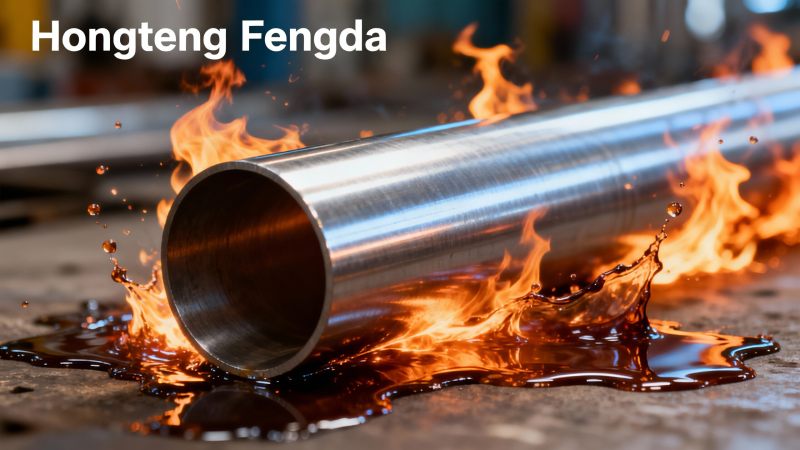
Technological innovation continues to reshape the welded tubing market. Emerging processes such as hybrid laser arc welding, automated orbital welding systems, and predictive maintenance analytics enhance both quality and performance consistency. At the same time, stricter environmental regulations promote stainless steel as a sustainable material, thanks to its recyclability and lower carbon footprint compared to traditional carbon steels. Future oil and gas systems are expected to integrate digital monitoring sensors directly within the tubes, requiring even closer tolerances and superior weld seam quality. Material science trends also lean towards duplex and super duplex stainless steels, which offer doubled strength and extended resistance against stress corrosion cracking. However, for many applications requiring balanced formability, corrosion resistance, and cost control, austenitic welded tubing such as SS 316 remains the most practical choice. Hongteng Fengda invests in R&D initiatives, monitoring alloy development, and surface finishing technology to stay ahead of evolving industry demands. The continual modification of 316 Stainless Steel Plate and related coil products reflects a drive toward innovation and long-term reliability for energy infrastructure worldwide.
Why Choose Hongteng Fengda
For decades, Hongteng Fengda has upheld its reputation as a professional structural steel manufacturer and exporter from China, supplying customers globally with intelligent, certified, and quality-assured metal solutions. Whether you are an information researcher, procurement specialist, or project engineer, partnering with Hongteng Fengda ensures access to reliable high-temperature steel, precise fabrication, and transparent logistics. Our portfolio covers angle steel, channel steel, beams, stainless coils, and custom structural assemblies certified under ASTM, EN, JIS, and GB standards. With modern manufacturing facilities and ISO, SGS, BV certifications, we deliver uncompromising excellence at every stage—from material sourcing to final inspection. As energy and infrastructure industries evolve, our commitment remains unchanged: to help clients reduce sourcing risk, enhance performance, and achieve sustainable growth. For consultation, technical data sheets, or tailored supply programs, please reach out through our sales service to discuss how our welded stainless tubing solutions can optimize your next oil and gas project. Together, we support a stronger, safer, and more efficient global steel network.
- channel steel
- angle steel
- carbon steel tube
- ASTM standards
- steel supplier
- ASTM standard
- steel suppliers
- structural steel
- Structural Steel
- stainless steel plate
- high-temperature steel
- high temperature steel
- 316 stainless steel plate
- SGS certified steel
- stainless steel supplier
- welded stainless tubing
- stainless coil
- ss coil
- coil stainless
- 304 coil
- ss 316 coil
- stainless steel roll
- stainless steel strip
- steel strapping
- flat stainless steel
- ss steel plate
- steel plate
- Profile
- carbon steel
- steel tube
- flat stainless steel supplier in USA
- steel strapping for packaging industry
- stainless steel roll manufacturer in Germany
- ss 316 coil price per ton
- 304 coil for industrial applications
- coil stainless steel exporter in China
- welded stainless tubing for oil and gas
- SGS certified steel supplier in Europe
- high temperature steel for boiler applications
Related recommendations
 What Is a Steel Profile? Common Shapes, Uses, and Selection BasicsProfile selection starts with shape, but performance depends on load, fabrication, and standards. Learn common steel profile types, uses, and smart selection basics.
 Steel Roofing Types Explained: Corrugated, Standing Seam, and Metal ShinglesSteel Roofing guide comparing corrugated panels, standing seam, and metal shingles. Discover costs, durability, weather performance, and how to choose the best roof for your home.
 How Hot-Dip Galvanized Coating Thickness Affects Service LifeHot-dip galvanized coating thickness directly affects steel service life. Learn how the right zinc layer improves corrosion protection, controls cost, and supports smarter project decisions.
 Pipe Stainless Grades Explained: 304 vs 316 for Corrosion ResistancePipe stainless grades explained: compare 304 vs 316 for corrosion resistance, cost, and service life. Learn which stainless pipe grade fits marine, chemical, and water system applications.
Please give us a message


Please enter what you want to find