Choosing between carbon sheet steel and galvanized steel isn’t just about corrosion resistance—it’s a strategic cost-performance decision. For global project teams, procurement managers, and engineering decision-makers, paying an 18% premium for galvanizing often delivers diminishing returns—especially in controlled indoor environments or short-life-cycle applications. As a certified structural steel manufacturer and exporter from China, Hongteng Fengda helps clients objectively evaluate when carbon sheet steel meets performance, safety, and compliance requirements without over-engineering. Let’s break down the real-world trade-offs—backed by ASTM, EN, and GB standards—to optimize budget, lead time, and structural integrity.
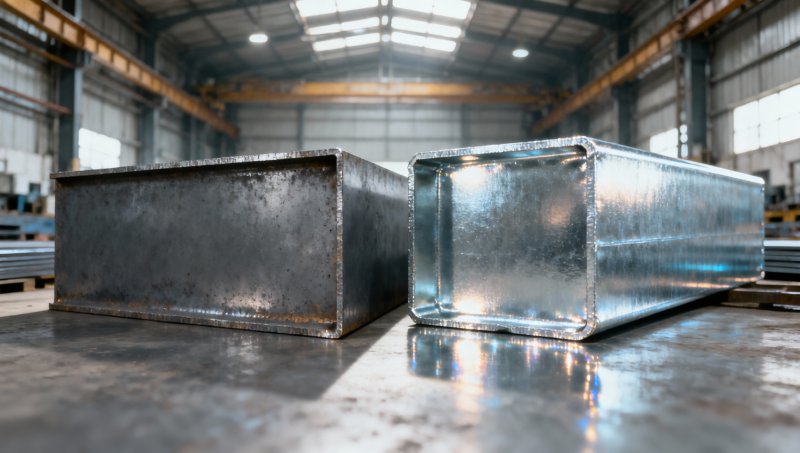
When Does Galvanizing Add Real Value?
Galvanizing delivers measurable protection—but only where environmental exposure justifies the investment. Hot-dip galvanized coatings (60–275 g/m²) and pre-galvanized options (80–275 g/m²) extend service life in aggressive settings: coastal infrastructure, outdoor HVAC enclosures, agricultural equipment, and wastewater treatment components. In these cases, zinc sacrificially corrodes first, preserving base steel for 20+ years under ISO 14713-2 estimates.
Yet for interior framing, warehouse shelving, or machinery housings with<5-year design life, carbon sheet steel—properly painted or oiled—meets ASTM A1008/A1008M tensile strength (≥270 MPa) and elongation (≥20%) requirements at lower total cost. Over-specifying galvanizing here inflates material cost by 18%, extends lead time by 7–12 days due to coating line scheduling, and adds no functional benefit.
Hongteng Fengda evaluates each application against three criteria: exposure class (ISO 9223 C1–C5), expected service duration (<3 10="" yr="">10 yr), and post-installation maintenance access. This triage ensures specification aligns with actual risk—not perceived risk.
Key Exposure Thresholds Where Galvanizing Pays Off
- Relative humidity >70% + airborne chlorides (e.g., marine zones within 1 km)
- Continuous condensation cycles (>2x/day) in unheated industrial spaces
- Direct contact with acidic soils (pH<5.5) or untreated wastewater
- Applications requiring zero maintenance during 5+ year operational windows
Carbon vs. Galvanized: Technical & Economic Comparison
The choice hinges on quantifiable differences—not assumptions. Below is a side-by-side comparison of core attributes for structural sheet applications (0.5–2.0 mm thickness), aligned with ASTM A653/A653M and EN 10346 standards:
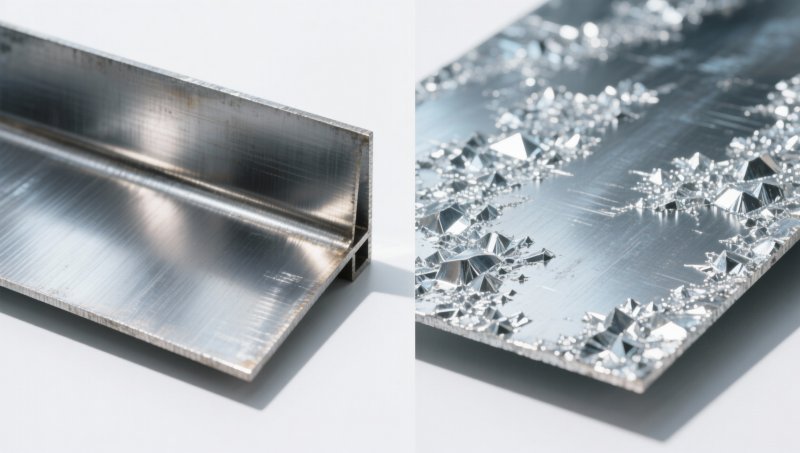
Note: Both product types share identical dimensional tolerances per ASTM A924/A924M and identical cold-forming behavior—meaning fabrication workflows remain unchanged. The sole differentiator is environmental resilience—and whether that resilience is operationally required.
Procurement Guidelines for Global Buyers
For procurement professionals balancing compliance, cost, and delivery, five checkpoints prevent over-specification:
- Verify exposure classification: Use ISO 9223 maps or local corrosion data—not anecdotal “it’s humid here” assessments.
- Confirm design life requirement: If project warranty is ≤3 years, galvanizing rarely improves ROI versus primed carbon steel.
- Check coating adhesion needs: DX51D+Z and SGCC grades offer superior paintability; S550GD+Z prioritizes strength over coating bond.
- Validate standard alignment: North America typically requires ASTM A653; EU projects demand EN 10346; Middle East often mandates both ASTM + EN dual certification.
- Assess post-processing impact: Laser cutting or bending galvanized sheets risks exposing uncoated edges—requiring touch-up or secondary sealing.
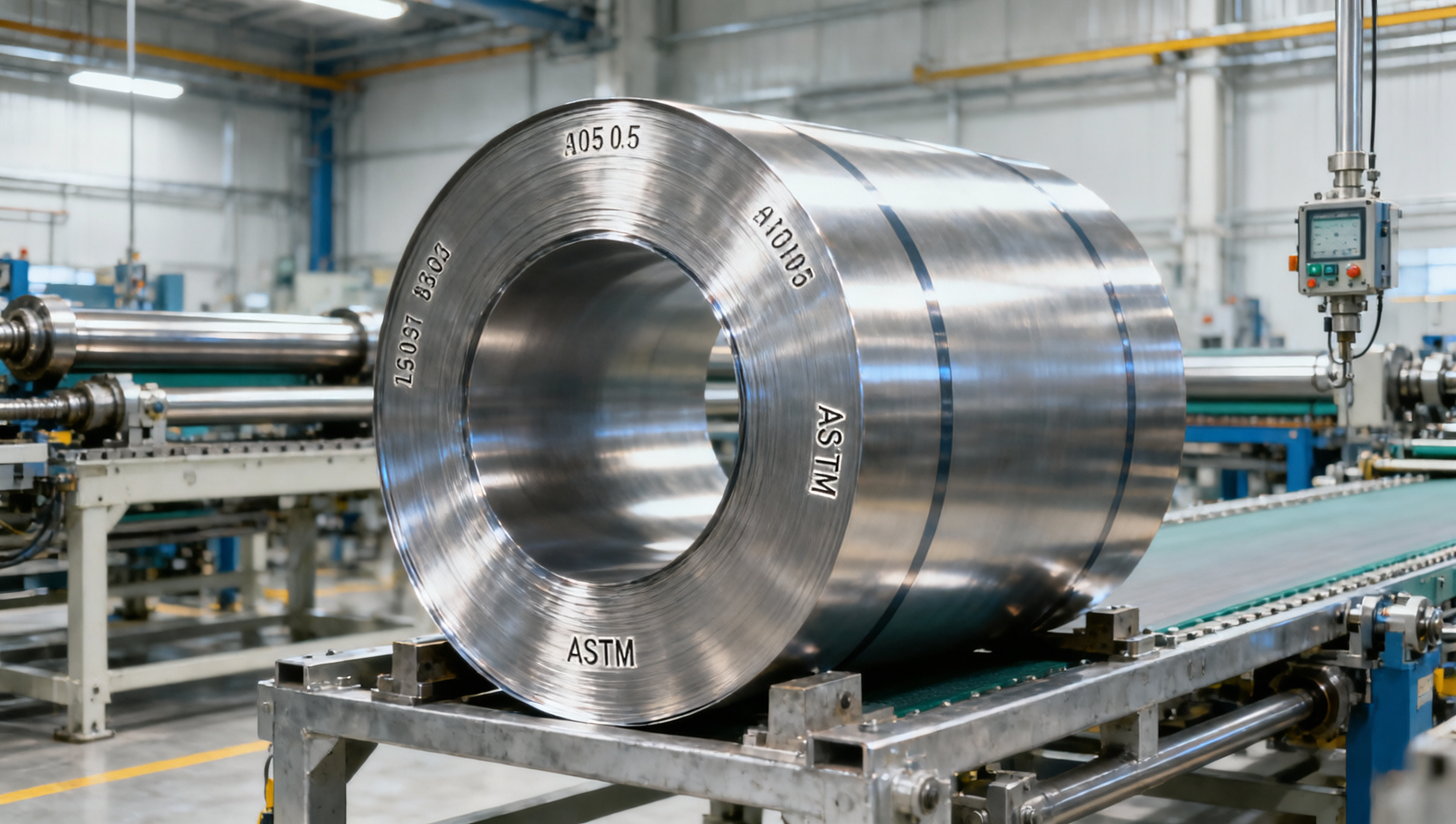
Hongteng Fengda supports buyers with pre-shipment test reports (salt spray per ASTM B117, bend tests per EN 10346), and offers mixed-load orders: carbon coils for interior frames + Steel Coil Galvanized for exposed cladding—reducing logistics complexity while optimizing spend.
Why Partner with Hongteng Fengda for Structural Steel Sourcing?
As a structural steel manufacturer and exporter from China, we eliminate sourcing friction through three proven advantages:
- Standards-aligned flexibility: All coils—including Steel Coil Galvanized—are certified to ASTM, EN, JIS, and GB, with mill test reports provided per EN 10204 3.1.
- Lead time certainty: Fixed production slots ensure consistent 10–14 day turnaround for carbon steel and 18–25 days for galvanized—no calendar-based delays.
- Zero-risk customization: Widths (600–1500 mm), lengths (508/610 mm or custom), and zinc mass (60–275 g/m²) are adjustable without MOQ penalties.
We help procurement teams reduce sourcing risk—not just quote prices. Whether you need ASTM A653 Z275 for solar mounting rails in Texas, EN 10346 S350GD+Z for German warehouse mezzanines, or GB/T 2518 carbon coils for Southeast Asian appliance chassis—contact us for: precise parameter confirmation, sample support, FOB/CIF cost breakdowns, and dual-standard documentation packages.
Related recommendations
") Stainless Steel Tube Coil vs. Straight Tube: Total Cost of Ownership in HVAC Retrofit Projects (Installation Labor, Leak Points, Space Savings)Stainless steel tube coil cuts HVAC retrofit TCO by slashing labor, leaks & space needs—discover how coil outperforms straight tube in real-world retrofits.
Stainless Steel Tube Coil vs. Straight Tube: Total Cost of Ownership in HVAC Retrofit Projects (Installation Labor, Leak Points, Space Savings)Stainless steel tube coil cuts HVAC retrofit TCO by slashing labor, leaks & space needs—discover how coil outperforms straight tube in real-world retrofits. Steel Coils Suppliers vs. Direct Mills: Lead Time, MOQ, and Custom Slitting Flexibility Compared for Mid-Volume BuyersSteel coils suppliers offer faster lead times, lower MOQs (5–10 tons), and precision custom slitting—ideal for mid-volume structural fabricators seeking agility, quality, and cost control.
 How to Vet Stainless Steel Coil Suppliers: 7 Due-Diligence Checks for Quality, Traceability, and ISO ComplianceStainless steel coil suppliers vetted right mean zero surprises on site. Discover 7 field-tested due-diligence checks for quality, full traceability & real ISO compliance.
 Stainless Coil Pipe vs. Seamless Pipe: When to Choose Welded Coiled Tubing for High-Pressure Fluid SystemsStainless coil pipe delivers unmatched efficiency for high-pressure fluid systems—superior continuity, faster installation, and proven weld integrity vs. seamless.
Please give us a message


Please enter what you want to find