Understanding beams weight is critical for structural integrity, logistics planning, and cost control—yet it varies significantly by grade, coating, and section type. Whether you're calculating i beam weight for load-bearing design, learning how to measure a steel beam on-site, or comparing the weight of I beam across ASTM A36, EN S275, or GB Q235 grades, small variances impact safety margins and project budgets. As a certified structural steel manufacturer and exporter from China, Hongteng Fengda helps global buyers navigate these variables with precision—ensuring compliance, consistency, and confidence in every order.
Why Beams Weight Isn’t Just a Number — It’s a Design & Logistics Variable
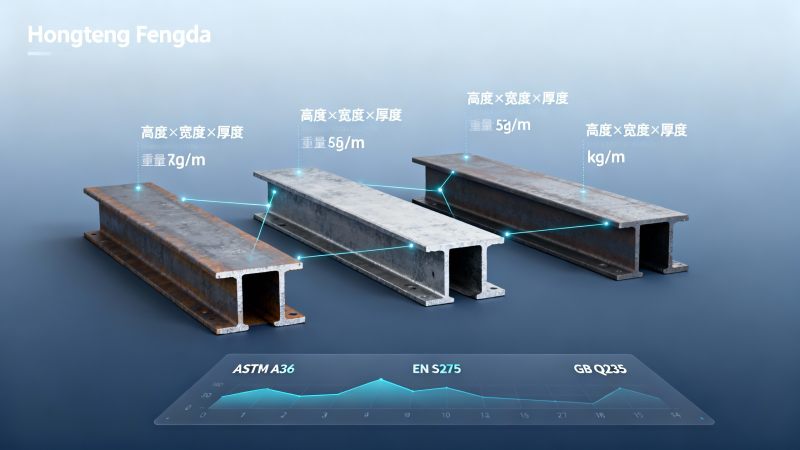
The term “beams weight” refers not to a fixed value but to a calculated metric influenced by material density, cross-sectional geometry, surface treatment, and metallurgical composition. For instance, an I-beam made from ASTM A36 carbon steel weighs approximately 7.85 g/cm³—but when hot-dip galvanized, its effective weight increases by 3–5% due to zinc layer deposition (typically 610 g/m² per side). This seemingly minor delta becomes decisive in multi-ton structural assemblies, crane lift planning, and shipping cost estimation—especially for large-scale infrastructure projects across North America or the Middle East.
Moreover, dimensional tolerances defined under standards like ASTM A6 or EN 10034 directly affect mass calculations. A nominal 300×150×6.5×9.5 mm IPE300 beam may carry ±0.5 mm flange thickness variance—translating to up to ±1.2 kg/m deviation across 12-meter lengths. That’s over 14 kg per piece. Multiply by hundreds of units, and procurement teams face real budget slippage unless weight variance is modeled at specification stage—not after delivery.
How Grade Impacts Beams Weight: Density vs. Strength Trade-offs
While most structural steels share near-identical theoretical densities (~7.85 g/cm³), alloying elements and heat treatments subtly shift actual mass per unit volume. High-strength low-alloy (HSLA) grades like Q345B or ASTM A572 Gr.50 contain vanadium, niobium, or copper—increasing density by ~0.2–0.4% versus Q235 or A36. Though marginal per meter, this difference compounds in high-volume orders. More critically, higher-grade steels often allow thinner sections for equivalent load capacity—reducing overall weight while maintaining performance.
Below is a comparative snapshot of common structural beam grades and their practical implications on weight-related decisions:
Coating Matters: Galvanizing, Painting & Their Weight Additions
Surface protection isn’t just about corrosion resistance—it changes mass. Hot-dip galvanizing adds the most weight: a typical 3–5 mm thick I-beam gains 45–65 g/m² per side, translating to +3.5–5.2% total mass depending on geometry. In contrast, pre-galvanized channel steel or Channel In Steel with hot-blown galvanizing applies thinner, more uniform layers (25–40 g/m²), reducing added weight by nearly half. Paint systems add less than 0.3%, but solvent-based primers may swell substrates slightly during curing—requiring re-verification of dimensional fit.
For project managers coordinating offshore deliveries, this matters. A 200-ton shipment of galvanized I-beams could weigh up to 10 tons more than its uncoated counterpart—triggering overweight surcharges, revised container stacking plans, or port handling fees. At Hongteng Fengda, we provide certified weight certificates per batch, including coating-adjusted mass, so your logistics team receives actionable data—not estimates.
How to Measure a Steel Beam Accurately On-Site or Pre-Shipment
“How to measure a steel beam” goes beyond tape-and-caliper checks. True verification requires three coordinated steps: (1) Confirm nominal dimensions against mill test reports (MTRs); (2) Cross-check actual weight per meter using calibrated floor scales and length measurement; (3) Validate coating thickness via magnetic induction gauges (for galvanizing) or DFT meters (for paint). Discrepancies >±1.5% warrant root-cause review—often pointing to rolling tolerance drift or inconsistent zinc bath immersion time.
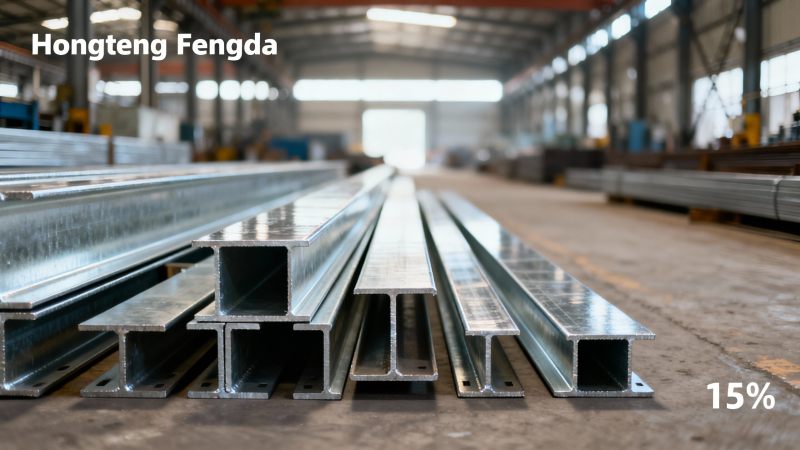
We embed this discipline into our quality workflow. Every Hongteng Fengda beam undergoes dual-stage weighing: first post-rolling (before coating), then post-finishing. Our ERP system auto-generates weight variance reports aligned with EN 10025 or ASTM A6 tolerances—shared digitally with clients before dispatch. This transparency eliminates disputes, accelerates customs clearance, and supports auditable safety documentation for end-users and site inspectors alike.
Procurement Guide: What Buyers Should Specify Upfront
To avoid delays, cost overruns, or field-fit issues, procurement professionals must specify four weight-critical parameters in RFQs: (1) Base grade and standard (e.g., “GB/T 11263-2017 Q235B IPE300”); (2) Coating type and minimum coating mass (e.g., “HDG per ISO 1461, ≥610 g/m²”); (3) Tolerance class (e.g., “EN 10034 Class B”); (4) Required documentation (e.g., “Mill Test Report + Coating Thickness Certificate + Batch Weight Certificate”). Omitting any one invites ambiguity—and risk.
At Hongteng Fengda, we proactively align specifications with your engineering drawings and local code requirements—from UL-listed fire-rated beams for U.S. commercial builds to CE-marked components for EU public infrastructure. With production capacity exceeding 500,000 MT/year and ISO 9001-certified traceability, we ensure every i beam weight matches your structural model—not just on paper, but in reality.
Why Choose Hongteng Fengda for Precision Beam Sourcing?
Because weight variance isn’t an afterthought—it’s engineered into every step. From raw material selection in Baosteel-sourced billets to CNC-controlled rolling lines and AI-monitored galvanizing baths, we minimize deviations before they begin. Our technical team collaborates directly with engineers and procurement leads to convert design intent into verified physical output—whether you need 10 tons of lightweight roof purlins or 2,000 tons of seismic-grade I-beams for a Middle Eastern refinery expansion.
We don’t just ship steel. We deliver certainty. Contact Hongteng Fengda today for customized weight validation support, sample certification packages, or a dedicated sourcing consultation tailored to your next project’s structural, logistical, and compliance needs.
Related recommendations
 How to Select a Steel Profile Based on Load, Span, and Fabrication NeedsProfile selection starts with load, span, and fabrication needs. Learn how to compare steel sections for strength, cost, workability, and sourcing efficiency.
 Galvanized Pipe vs Black Pipe: Which One Fits Water, Gas, or Outdoor Lines?Galvanized pipe or black pipe? Compare the best choice for water, gas, and outdoor lines, with key insights on corrosion, codes, cost, and long-term performance.
 How to Choose Steel Roofing for Warehouses, Farms, and Residential BuildingsSteel Roofing selection depends on building type. Learn how warehouses, farms, and homes differ in corrosion, insulation, drainage, and cost for smarter roofing decisions.
 Hot-Dip Galvanized vs Pre-Galvanized Steel: Which Should You Specify?Hot-dip galvanized vs pre-galvanized steel: compare corrosion resistance, fabrication impact, cost, and standards to specify the right steel solution for durable, compliant projects.
Please give us a message


Please enter what you want to find