Choosing between 201 vs 304 stainless steel cost for food industry applications demands more than just price comparison—it’s about balancing corrosion resistance, regulatory compliance, and long-term value. For industrial buyers weighing standard vs custom steel lead time for industrial buyers, or evaluating mill MOQ vs trader MOQ steel for industrial applications, material selection directly impacts production continuity and total cost of ownership. As a trusted Steel I Beam supplier in Malaysia for infrastructure projects—and global provider of angle steel, stainless steel square bar for architectural use, and stainless steel bar for marine applications—Hongteng Fengda supports food-grade fabrication with ASTM/EN-compliant 304 and cost-optimized 201 options, backed by stable factory pricing across the Middle East, Philippines, and beyond.
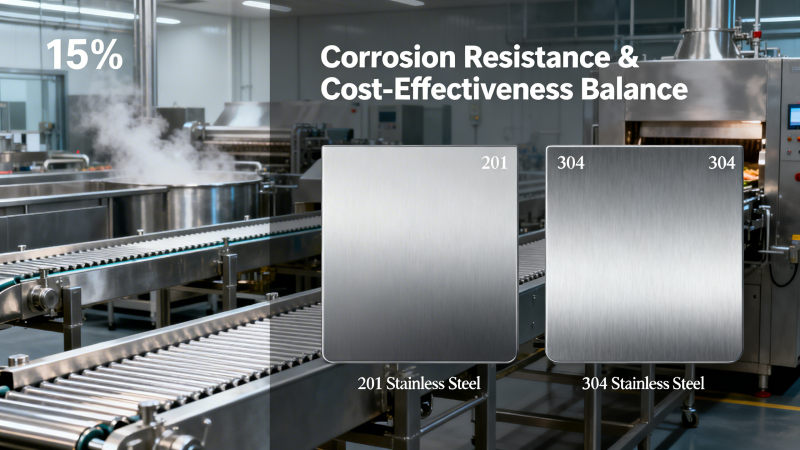
Corrosion Resistance & Chemical Composition: The Core Difference
Stainless steels 201 and 304 are both austenitic alloys—but their elemental makeup drives divergent performance in aggressive food processing environments. Grade 304 contains 18–20% chromium and 8–10.5% nickel, delivering robust passivation and chloride resistance. In contrast, 201 substitutes part of the nickel (4.5–6.5%) with manganese (5.5–7.5%) and nitrogen, reducing raw material cost but lowering pitting resistance—especially under acidic cleaning agents like citric or nitric acid.
This distinction is critical for equipment exposed to repeated sanitation cycles, high-humidity storage, or brine-based food products. While 201 meets basic food-contact requirements per FDA 21 CFR §184.1230 in low-risk applications (e.g., dry ingredient hoppers), 304 remains the de facto standard for steam-jacketed kettles, conveyor frames, and dairy pasteurization lines where surface integrity must withstand >200 clean-in-place (CIP) cycles annually.
Cost Comparison: Short-Term Savings vs Lifecycle Risk
At current market rates (Q2 2024), 201 stainless steel coil averages USD $2,100–$2,400 per metric ton, while 304 ranges from USD $3,300–$3,900/ton—representing a 45–60% premium. However, procurement professionals must assess total cost of ownership: premature failure of 201 components in high-chloride zones may trigger unplanned downtime, rework labor, and non-conformance penalties under HACCP or BRCGS audits.
For example, a food packaging line in Southeast Asia reported 32% higher maintenance frequency on 201 discharge chutes versus 304 counterparts over 18 months—offsetting initial savings within 11 months. This reinforces why leading OEMs in the Philippines and Middle East increasingly specify 304 for wet-process contact surfaces—even when quoting Angle Steel price per ton Philippines for industrial use or steel beam factory price in Middle East for support structures.
Compliance & Certification: Beyond Material Sheets
Food-grade stainless steel isn’t defined solely by grade—it requires traceable mill test reports (MTRs) certifying compliance with ASTM A240/A240M (for sheet/coil) and EN 10088-2. Hongteng Fengda provides full documentation packages for both 201 and 304, including heat numbers, chemical analysis, and mechanical property verification per ISO/IEC 17025-accredited labs. This transparency supports project managers validating compliance during pre-commissioning audits—and helps procurement teams avoid delays tied to missing certifications.
Notably, certain regional regulations add layers: Saudi Arabia’s SASO requires SABER certification for imported food equipment materials, while EU Regulation (EC) No 1935/2004 mandates declaration of migration limits. Our export-ready documentation streamlines this process—whether sourcing I beam vs H beam for residential construction or stainless components for halal-certified meat processing plants.
Procurement Strategy: MOQ, Lead Time & Supply Chain Resilience
Industrial buyers face real trade-offs between mill MOQ vs trader MOQ steel for industrial applications. Mill-direct orders often require 10+ tons per grade/thickness—ideal for large-scale infrastructure projects—but carry longer lead times (8–12 weeks). Traders offer flexibility (as low as 1–2 tons), yet introduce variability in consistency and traceability.
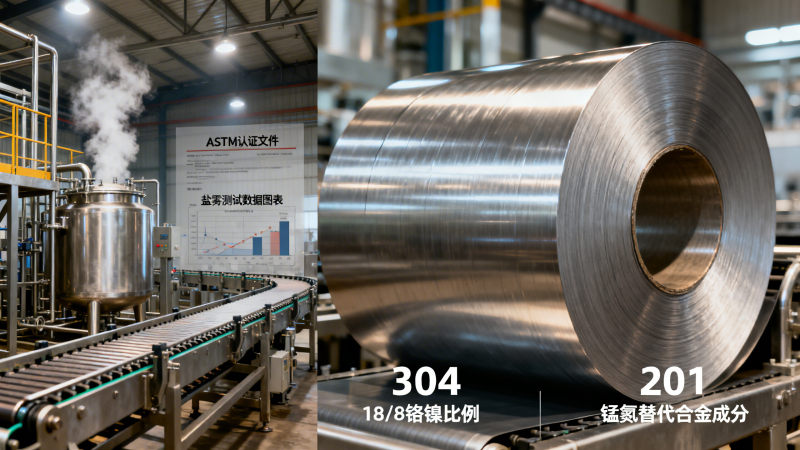
Hongteng Fengda bridges this gap: we maintain rolling stock of common 304 and 201 widths (1,219mm, 1,500mm) and thicknesses (1.5–6.0mm), enabling standard vs custom steel lead time for industrial buyers as short as 3–5 weeks—even for mixed-grade orders. Our Flat Rolled Steel Coil inventory includes ASTM A36, Q235, and S235JR variants, supporting structural integration of food plant frameworks alongside stainless components.
Why Choose Hongteng Fengda?
As a certified structural steel manufacturer exporting to North America, Europe, and ASEAN since 2008, we combine deep metallurgical expertise with agile logistics. Whether you’re calculating how to calculate i beam weight for industrial projects, specifying stainless steel bar for marine applications, or sourcing Angle Steel price per ton Philippines for industrial use, our team delivers:
- ASTM/EN/JIS-compliant stainless and carbon steel—verified at source;
- Factory-direct pricing with no hidden markups, backed by volume-tiered discounts;
- Dedicated project engineering support for OEM integrations and custom cut-to-length services;
- Real-time shipment tracking and bilingual documentation (English + Arabic/Mandarin/Malay).
Contact Hongteng Fengda today for a customized stainless steel sourcing plan—including comparative lifecycle costing for 201 vs 304 in your specific application. Let’s build safer, smarter, and more sustainable food infrastructure—together.
- steel i
- steel i beam supplier
- h beam
- angle steel
- flat rolled steel coil
- rolled steel coil
- steel coil
- ASTM A36
- structural steel
- Structural Steel
- 201 stainless steel coil
- stainless steel coil
- standard vs custom steel lead time
- mill MOQ vs trader MOQ steel
- Steel I Beam supplier in Malaysia
- Angle Steel price per ton Philippines
- how to calculate i beam weight
- I beam vs H beam
- steel beam factory price
- Steel Beam
- 201 vs 304 stainless steel cost
- stainless steel square bar
- stainless steel bar
- carbon steel
- steel bar
- i beam weight
- stainless steel bar for marine applications
- stainless steel square bar for architectural use
- 201 vs 304 stainless steel cost for food industry
- steel beam factory price in Middle East
- I beam vs H beam for residential construction
- how to calculate i beam weight for industrial projects
- Angle Steel price per ton Philippines for industrial use
- Steel I Beam supplier in Malaysia for infrastructure projects
- mill MOQ vs trader MOQ steel for industrial applications
- standard vs custom steel lead time for industrial buyers
Related recommendations
 Hot Rolled Steel Coil vs Cold Rolled: Which FitsHot Rolled Steel Coil vs cold rolled steel: compare cost, surface finish, tolerance, and applications to choose the right steel faster for structural or precision projects.
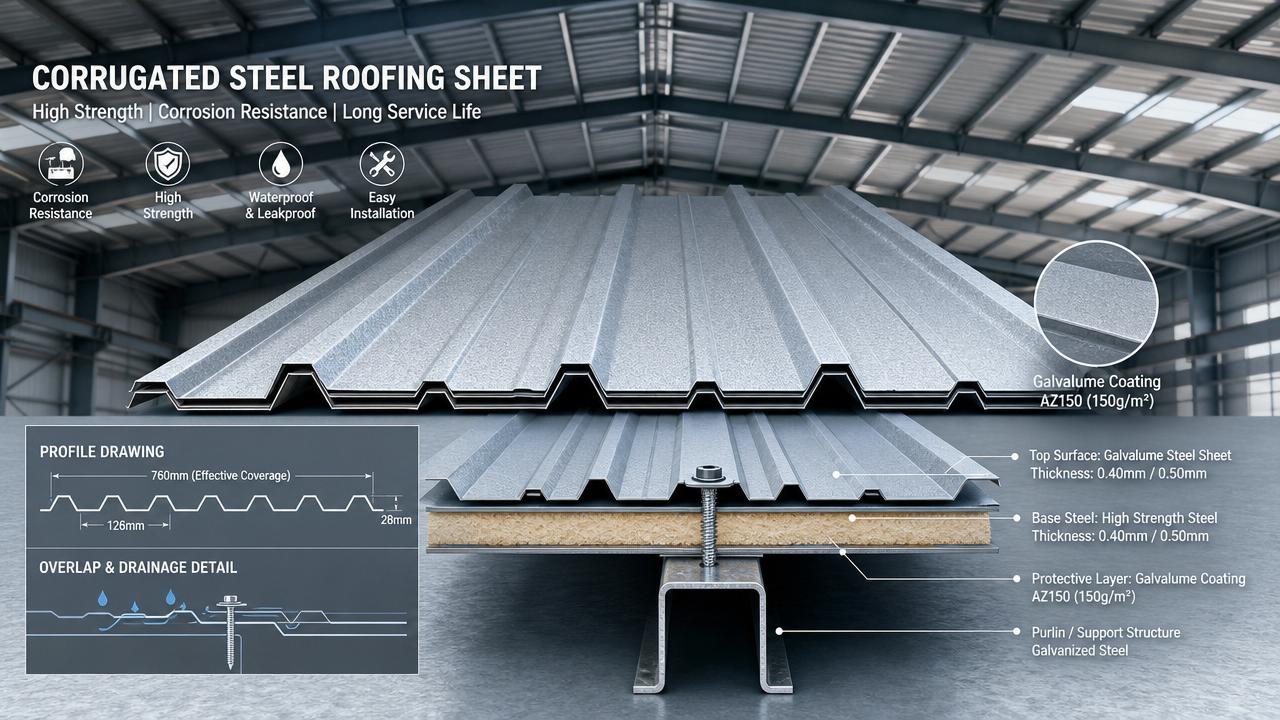
 Corrugated Steel Sheet for Roofing: What to CheckCorrugated steel sheet buying guide: learn what to check on steel grade, coating, thickness, profile, and roof support to choose a durable, weather-resistant roofing solution.
 Electrical Conduit Pipe Price: What Affects CostElectrical conduit pipe price depends on steel grade, coating, thickness, standards, and delivery terms. Learn what truly affects cost and how to compare quotes with confidence.
 How to Compare Structural Steel ProductsStructural steel products comparison starts with grade, standards, tolerances, and supplier reliability. Learn how to choose safer, compliant steel that reduces risk and total project cost.
Please give us a message


Please enter what you want to find