Electrical Conduit Pipe Price: what are you really paying for?
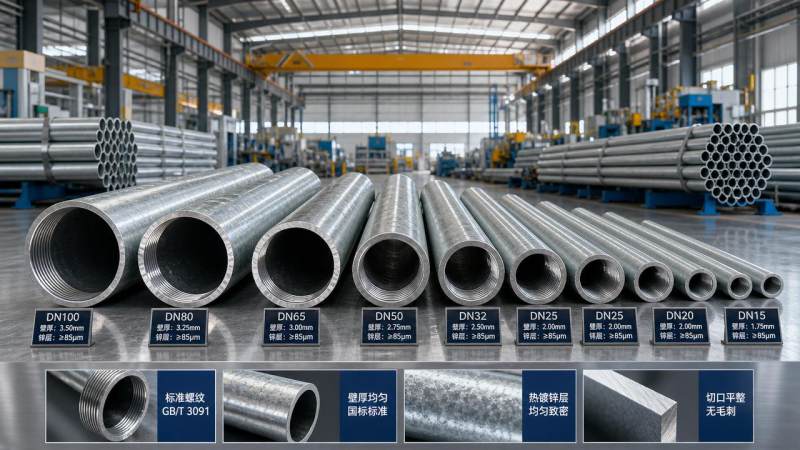
Electrical conduit pipe price is rarely just a number on a quotation sheet.
In steel-based conduit sourcing, cost reflects material grade, coating, compliance level, fabrication accuracy, and delivery reliability.
That is why two offers that look similar can create very different project outcomes.
A lower unit price may still lead to higher total cost if corrosion resistance, standard matching, or lead time performance is weak.
In actual purchasing decisions, the better question is not only “What is the electrical conduit pipe price?”
It is also “What drives that price, and which parts affect long-term value?”
For global steel supply, manufacturers with stable production, standard compliance, and consistent quality control usually reduce hidden sourcing risks.
This matters especially in construction and industrial projects where conduit performance must stay aligned with installation safety and budget control.
Why can electrical conduit pipe price vary so much between suppliers?
The biggest reason is that conduit is not a single, identical steel product.
Base steel chemistry, wall thickness, galvanizing process, tolerances, and testing requirements all change the cost structure.
For example, hot-dip galvanized conduit usually costs more than pre-galvanized options.
The added zinc layer and processing time improve corrosion resistance, but they also increase manufacturing expense.
Standard requirements matter too.
Products aligned with ASTM, EN, JIS, or GB may require stricter inspection, dimensional control, and traceability.
That extra control often supports project reliability, especially for export orders.
Another common factor is supplier capability.
A factory with modern lines and stable lead times may quote slightly higher, yet reduce delay risk and replacement cost later.
A quick price-check table
Before comparing quotes, this simple table helps separate visible price from practical cost.
Does material choice change electrical conduit pipe price in a major way?
Yes, material choice is one of the strongest price drivers.
Carbon steel conduit usually offers a practical balance between strength, availability, and cost.
When the environment is dry and indoor, lower-cost options may be sufficient if standards are met.
In humid, outdoor, or industrial settings, coating quality becomes more important than the headline price.
That is where a cheap quote can become expensive after installation.
In broader steel procurement, similar logic applies across many products.
A round bar, beam, or profile with better strength consistency and surface treatment often supports lower lifecycle risk.
For example, projects that also use structural components sometimes review related materials such as A36 Carbon Steel Round Bar.
That product is used across construction, manufacturing, and engineering applications, with broad diameter and length options.
Its surface treatments can include oiling, phosphating, passivation, galvanized finishes, or anti-rust protection.
The lesson is simple: material specification and finishing always influence the final steel product cost.
How do standards, coating, and thickness affect the final quote?
These three items often explain most differences in electrical conduit pipe price.
Standards decide the acceptance level.
If a project requires exact dimensional tolerance, thread accuracy, or mechanical performance, production becomes more controlled.
Controlled production costs more, but it protects installation compatibility.
Coating affects both durability and processing expense.
Pre-galvanized conduit may work for less aggressive conditions.
Hot-dip galvanized conduit is more common where longer corrosion resistance is needed.
Thickness is more straightforward.
More steel means higher weight and higher cost per meter or per ton.
Still, reducing thickness just to save money can be risky.
If the conduit deforms during bending, threading, or installation, rework can wipe out any savings.
- Check whether the quoted thickness is nominal or minimum actual thickness.
- Confirm coating method, not just the word “galvanized.”
- Match the standard to the destination market and approval requirements.
Is the cheapest electrical conduit pipe price usually the best option?
Usually not, especially for export and project-based orders.
A low quotation can hide weak zinc coating, loose tolerances, mixed batches, or incomplete documents.
Those issues may not appear until inspection or site installation begins.
A better comparison method is to evaluate total delivered value.
This includes manufacturing consistency, packaging quality, shipping coordination, and claim response if problems occur.
Reliable Chinese steel exporters often compete well when they combine standard-compliant production with dependable lead times.
That is one reason global buyers often prefer suppliers with broad structural steel experience.
Companies such as Hongteng Fengda support international projects with ASTM, EN, JIS, and GB-based production control.
Their broader experience in angle steel, channels, beams, cold formed profiles, and custom steel parts also helps with specification matching.
In practice, that kind of supply stability can matter as much as the electrical conduit pipe price itself.
Common mistakes when comparing prices
- Comparing only unit price without checking weight basis or meter basis.
- Ignoring export packing, thread protection, or end treatment.
- Assuming all certifications are equivalent.
- Not asking about production lead time during peak steel demand periods.
- Overlooking the cost of replacement, delay, or customs document errors.
What should be confirmed before requesting or approving a quote?
A useful quote starts with a clear specification list.
Without that, electrical conduit pipe price comparisons can become misleading very quickly.
The more complete the input, the more reliable the cost estimate will be.
It also helps to ask whether the quote is based on current steel market conditions or locked for a period.
Steel raw material fluctuations can influence conduit pricing faster than many buyers expect.
How can you control electrical conduit pipe price without compromising quality?
The most effective approach is specification discipline.
Define what is mandatory, what is preferred, and what is optional before requesting offers.
That avoids paying for unnecessary upgrades while protecting critical performance.
It is also smart to combine price review with supplier review.
A factory with stable capacity, clear quality records, and export experience usually supports better cost control over time.
Another practical step is to consolidate related steel sourcing where possible.
When conduit, profiles, and structural components are sourced through a capable steel supply partner, logistics and documentation often become simpler.
This does not always lower the unit price.
However, it can reduce total procurement friction, timeline uncertainty, and coordination cost.
In the end, electrical conduit pipe price should be judged against compliance, durability, and execution reliability.
If you are reviewing upcoming conduit orders, start by listing required standards, corrosion conditions, thickness range, order volume, and delivery terms.
Then compare quotations on the same basis, not just the lowest number.
That is usually the clearest way to make a confident and cost-aware steel sourcing decision.
Please give us a message


Please enter what you want to find