Choosing among structural steel products is rarely a simple price comparison. The right decision affects structural safety, code compliance, fabrication efficiency, delivery reliability, and the total landed cost of a project.
When the order involves angle steel, channels, beams, cold formed profiles, or custom components, small differences in grade, tolerance, and supplier control can create large downstream risks.
That is why comparing structural steel products requires a broader view. Buyers need to assess not only the material itself, but also standards, traceability, processing capability, and long-term supply stability.
What should be compared first
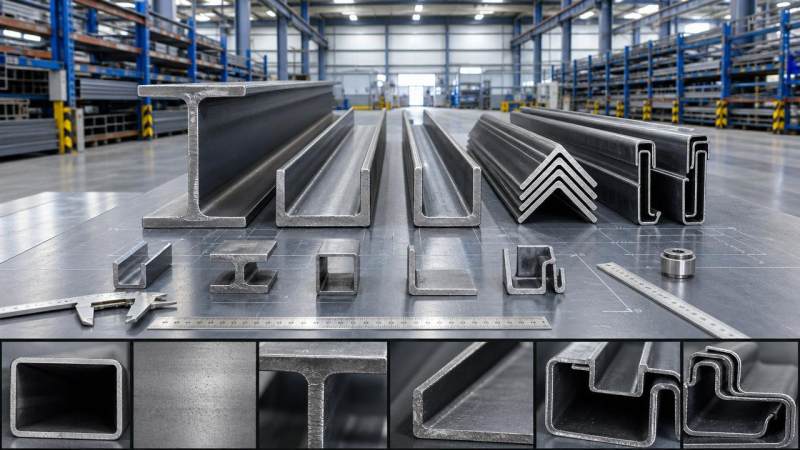
At the start, it helps to separate appearance from performance. Two products may look similar in section shape, yet behave very differently under load, welding heat, or corrosion exposure.
For most structural steel products, the first comparison should cover five areas: grade, dimensional accuracy, compliance standard, surface condition, and supply consistency.
- Grade determines strength, ductility, and suitability for welding or forming.
- Dimensional accuracy influences fit-up, assembly speed, and waste.
- Compliance standard confirms whether the product matches project specifications.
- Surface condition affects painting, galvanizing, and service life.
- Supply consistency reduces the risk of batch variation.
This framework keeps comparison practical. It also helps avoid buying a lower quoted item that later raises fabrication or inspection costs.
Standards matter more than many quotations show
One of the most common sourcing mistakes is comparing structural steel products without aligning standards. ASTM, EN, JIS, and GB are not interchangeable by default, even when dimensions appear close.
A beam supplied under one standard may have different mechanical properties, chemical limits, or tolerances than a similar section under another. That difference can affect approval and site acceptance.
In practice, the purchase comparison should include:
- Required standard and equivalent grade mapping
- Mill test certificates and heat traceability
- Tolerance range for size, length, straightness, and weight
- Any project-specific test or third-party inspection requirement
For global projects, standard matching is often where reliable exporters stand apart. Hongteng Fengda, for example, supplies structural steel products to multiple regions while working to ASTM, EN, JIS, and GB requirements.
That capability matters when a project includes mixed market requirements or OEM fabrication details that cannot be handled through catalog items alone.
Dimensions, tolerances, and processing reality
Price sheets often focus on tonnage, but fabrication teams usually feel the impact of tolerances first. Out-of-tolerance steel leads to cutting loss, alignment issues, rework, and delayed assembly.
When comparing structural steel products, look beyond nominal size. Check web thickness, flange thickness, section squareness, twist, bow, camber, and actual delivered length.
This becomes even more important for cold formed sections and customized profiles. Tight geometry control may matter more than a small difference in base material price.
A dependable supplier should explain these points before shipment, not after complaints appear.
Comparing by application, not by category alone
Structural steel products should be matched to use conditions. A section suited for a warehouse may not be the right choice for marine exposure, heavy vibration, or demanding fabrication sequences.
This is where many sourcing decisions improve. Instead of comparing only section type, compare the product against the actual service environment and manufacturing route.
In the middle of a broader steel package, even auxiliary materials deserve the same discipline. A useful example is Wire Rod, often selected for building material, auto manufacturing, shipbuilding, petrochemical plants, and precision industrial uses.
When evaluating that item, it is not enough to note that it is carbon steel in round shape. The relevant comparison includes model range, such as GB1499.2 HRB400, HRB500, ASTM A615 Grade 60, BS4449 460B, 500B, 500C, and AS/NZS 4671 500N.
Its performance profile also matters. Carbon content around 0.06% to 0.22%, broad compliance with ASTM, GB, EN, DIN, and JIS, plus strong formability and weldability, make it suitable for processing-driven applications.
The same logic applies across structural steel products: compare the material against fabrication demands, not only against a generic category name.
Quality consistency is often the real cost driver
A low first quote can become expensive if each shipment behaves differently. In structural procurement, batch stability often matters as much as headline mechanical values.
Quality consistency shows up in several ways:
- Repeatable chemistry and mechanical performance
- Stable section dimensions from lot to lot
- Predictable coating or galvanizing behavior
- Reliable packaging and export protection
- Documentation that matches actual shipment content
For imported structural steel products, consistency also influences customs clearance, local inspection, and project scheduling. A compliant first shipment means little if the second one creates variation claims.
Manufacturing control therefore deserves direct evaluation. Modern production equipment, clear quality procedures, and responsive technical communication reduce sourcing uncertainty far more than a nominal discount does.
How supplier capability changes the comparison
Steel is never only a material purchase. It is also a supply chain decision. The best product specification still fails if lead times slip or customization cannot be executed accurately.
A more complete comparison of structural steel products should therefore include supplier-side questions:
- Can the supplier support standard and OEM requirements?
- Is there evidence of export experience in your destination market?
- How are inspection, packing, and shipment milestones controlled?
- Can replacement, claim handling, or technical clarification be managed quickly?
Hongteng Fengda’s business model reflects this broader need. Beyond angle steel, channel steel, steel beams, and cold formed profiles, it supports custom structural components with stable production and international standard compliance.
That combination is useful when projects require both common sections and tailored fabrication support under one supply relationship.
A practical comparison method for sourcing decisions
A simple internal scorecard often makes evaluation clearer. Instead of choosing by unit price alone, compare structural steel products across technical fit, compliance risk, delivery confidence, and total processing impact.
A useful review sequence is:
- Confirm design standard, grade, and application conditions.
- Match dimensions, tolerances, and finish requirements.
- Review certificates, inspection scope, and traceability.
- Check supplier manufacturing and export capability.
- Compare total cost, including rework and schedule risk.
This approach helps create a repeatable decision standard. It also improves communication between purchasing, engineering, fabrication, and project execution teams.
In many cases, the better option is not the cheapest structural steel product, but the one that arrives correctly specified, consistently manufactured, and ready for efficient use.
Where to focus next
Comparing structural steel products becomes easier when the evaluation criteria are written before quotation review begins. That prevents decisions from drifting toward price-only comparisons.
A good next step is to build a short comparison checklist for grade, standard, tolerance, certification, processing needs, and delivery terms. Then test each supplier response against the same framework.
For projects involving mixed sections, custom profiles, or export-sensitive documentation, it is worth reviewing whether the supplier can support both product quality and execution reliability at the same time.
That is usually where smarter sourcing decisions are made, and where structural steel products create long-term project value rather than short-term purchasing risk.
Please give us a message


Please enter what you want to find