For architects, engineers, and procurement professionals specifying stainless steel square bar for architectural use, selecting the right finish, dimensional tolerance, and compliance standard is critical—especially when balancing standard vs custom steel lead time for industrial buyers or comparing mill MOQ vs trader MOQ steel for industrial applications. As a certified structural steel manufacturer & exporter from China, Hongteng Fengda delivers precision-engineered stainless steel square bars compliant with ASTM, EN, and GB standards—ideal for façades, railings, and marine-grade installations. Discover how our rigorous quality control, global logistics network, and transparent factory pricing support infrastructure projects from Malaysia to the Middle East.
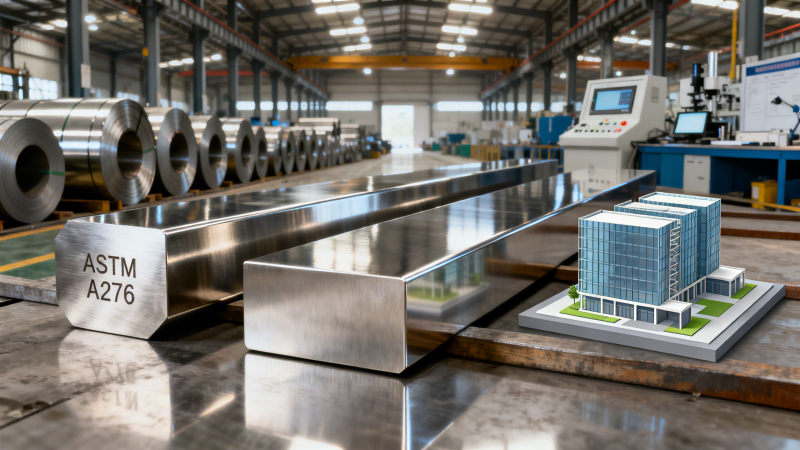
Definition & Key Characteristics of Stainless Steel Square Bar
Stainless steel square bar is a hot-rolled or cold-finished solid section with equal side lengths—typically ranging from 6 mm to 100 mm per side—and engineered for high corrosion resistance, structural integrity, and aesthetic consistency. Unlike carbon steel counterparts, it relies on chromium (≥10.5%) and often nickel (e.g., 304: 8–10.5%, 316: 10–14%) to form a self-repairing passive oxide layer. This makes it indispensable in environments where hygiene, longevity, or visual fidelity matter—such as curtain wall systems, balustrade frames, or coastal infrastructure.
Architectural applications demand tight geometric control—not just strength. That’s why square bar for architecture must meet tighter tolerances than general-purpose structural steel. For example, while hot-rolled carbon Wire Rod may accept ±0.5 mm flatness deviation, architectural-grade stainless square bar typically adheres to ±0.2 mm across length and corner squareness. Surface integrity also matters: scratches, discoloration, or mill scale residue can compromise both aesthetics and corrosion performance—especially under UV exposure or saline conditions.
Critical Finish Options & Their Functional Impact
The finish is not cosmetic—it directly affects reflectivity, cleanability, abrasion resistance, and even thermal expansion behavior. Below are the most widely specified finishes for architectural stainless steel square bar:
Dimensional Tolerances: Why Precision Matters in Architecture
Unlike load-bearing beams where slight variation is absorbed by connections, architectural stainless steel square bar is often exposed—visible at joints, corners, and transitions. Even 0.3 mm mismatch between adjacent members creates visible step-offs or gapping in glass-supported systems. That’s why we apply EN 10058 (hot-rolled) and EN 10088-3 (cold-finished) tolerances—but go beyond them for critical projects.
For instance, our standard tolerance for 30×30 mm 304 square bar is ±0.15 mm on side length and ±0.2 mm on diagonal difference—tighter than EN’s ±0.25 mm. We also verify straightness (<0.25 mm/m) and twist (≤0.5°/m) using laser-guided CMM inspection. These controls help project managers avoid costly field rework—especially when coordinating with aluminum glazing systems or CNC-machined fittings.
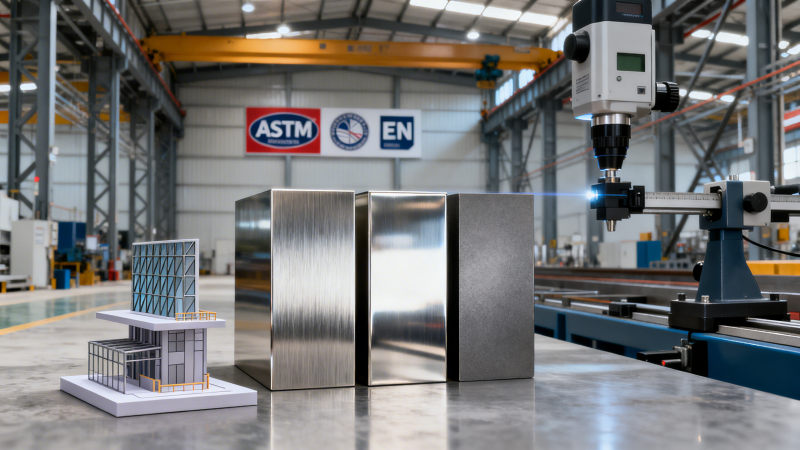
Compliance Standards & Global Certification Alignment
Architectural stainless steel must satisfy dual requirements: mechanical performance *and* material traceability. Our square bars are certified to ASTM A276 (general stainless bar), ASTM A484 (general requirements for stainless steel bars), and EN 10088-3 (corrosion-resistant steels). For marine applications, we supply 316-grade bar with full MTRs confirming Mo content ≥2.0% and PREN ≥25—ensuring resistance to chloride-induced pitting.
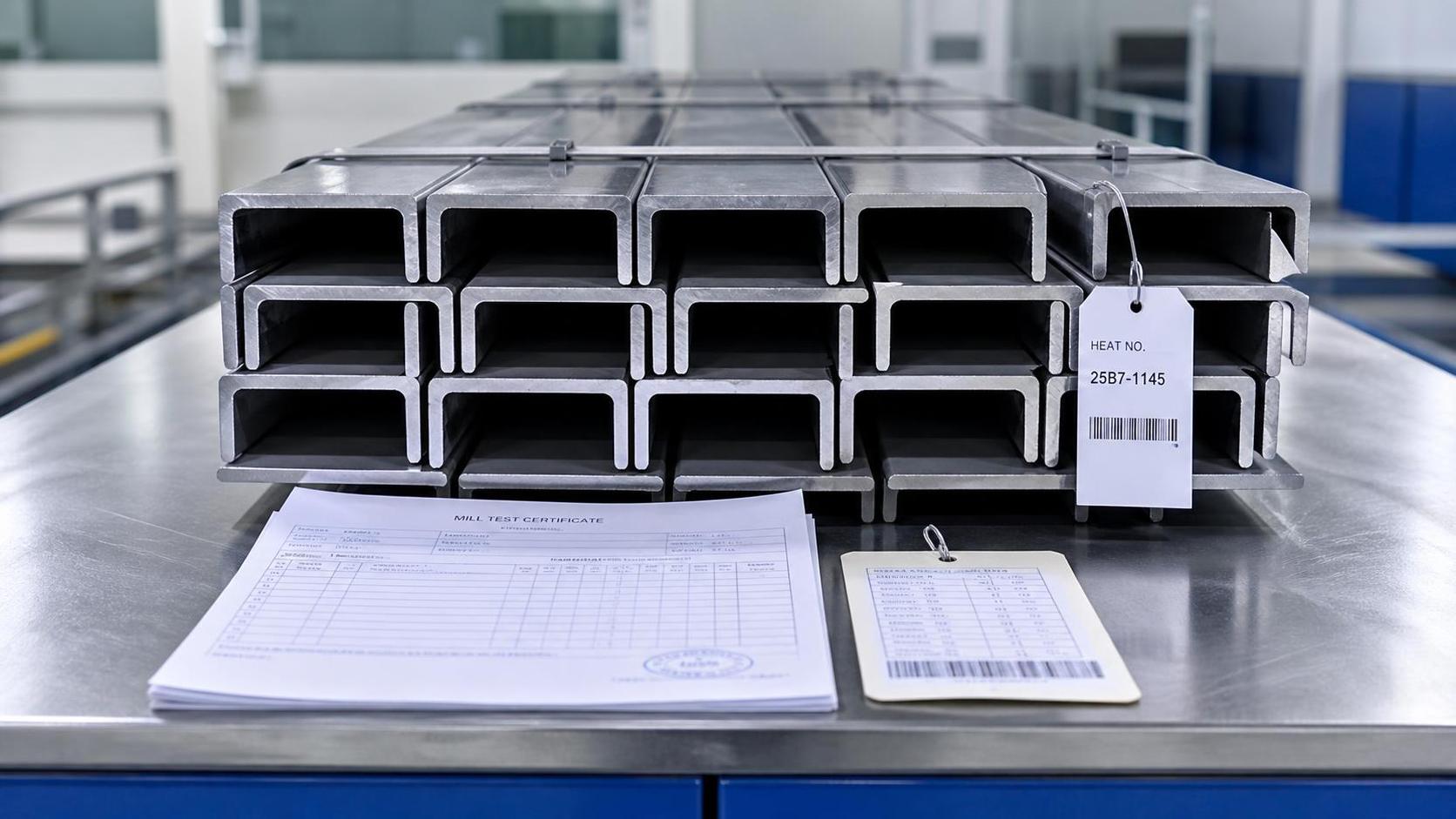
We also support project-specific certifications: Mill Test Reports (MTRs) per EN 10204 3.1 or 3.2, third-party inspections (SGS, BV), and ISO 9001-compliant documentation packages. Whether you’re a Steel I Beam supplier in Malaysia for infrastructure projects or sourcing Angle Steel price per ton Philippines for industrial use, our compliance framework reduces approval delays and audit friction.
Procurement Guide: Lead Time, MOQ & Sourcing Strategy
Industrial buyers face real trade-offs: mill MOQs ensure optimal rolling efficiency but require large upfront commitment; trader MOQs offer flexibility but introduce markup, variable traceability, and longer standard vs custom steel lead time for industrial buyers. At Hongteng Fengda, we bridge this gap. Our minimum order quantity starts at 1 MT for standard grades (304/316), with lead times of 25–35 days for stock sizes—and only 45–60 days for custom cut-to-length or special finishes.
Compare that to typical trader timelines: 60–90+ days due to multi-tier sourcing. And unlike generic suppliers, we offer OEM labeling, batch-specific packaging, and digital MTR access via secure portal—critical for project managers / engineering project leads managing multi-site deployments across Southeast Asia or the Middle East.
Why Choose Hongteng Fengda?
As a structural steel manufacturer & exporter from China, Hongteng Fengda combines deep metallurgical expertise with agile global execution. We don’t just ship steel—we co-engineer solutions. From advising on 201 vs 304 stainless steel cost for food industry trade-offs to validating how to calculate i beam weight for industrial projects, our technical team supports every stage—from spec review to installation oversight.
With production capacity across 5 advanced rolling and finishing lines, ISO-certified QC labs, and direct partnerships with ports in Shanghai, Ningbo, and Qingdao, we deliver consistent quality, stable steel beam factory price in Middle East, and predictable timelines—even during peak season. Contact us today for a tailored quote, sample kit, or factory audit invitation.
- carbon wire
- wire rod
- structural steel
- Structural Steel
- standard vs custom steel lead time
- mill MOQ vs trader MOQ steel
- stainless steel square bar
- carbon steel
- stainless steel square bar for architectural use
- mill MOQ vs trader MOQ steel for industrial applications
- standard vs custom steel lead time for industrial buyers
Related recommendations
 How to Judge if Steel Sheet for Construction Fits Roofing or Wall CladdingSteel sheet for construction: learn how to judge thickness, coating, profile, and load performance for roofing or wall cladding, and choose a durable, cost-effective fit.
 How to Choose SS Pipe for Water Supply in Corrosion-Prone BuildingsSS pipe for water supply selection guide for corrosion-prone buildings. Compare 304 vs 316 grades, water chemistry, specs, and lifecycle cost to choose a safer, longer-lasting system.
 Steel Wire Rope Manufacturer Standards That Matter in Lifting ApplicationsSteel wire rope manufacturer standards for lifting: learn how to assess traceability, testing, compliance, and real quality control before choosing a safer, more reliable supplier.
 When a Steel Channel Supplier Should Provide Mill Test CertificatesSteel Channel supplier guide on when mill test certificates should be provided for quality control, compliance, and safer procurement.

Please give us a message


Please enter what you want to find