Before buyers finalize their orders, understanding steel wire rope specifications is essential for ensuring safety, performance, and cost-efficiency. Whether you are sourcing high strength steel wire rope for construction, corrosion resistant steel wire rope for mining, or reviewing a steel wire rope price list from a trusted steel wire rope manufacturer in China, choosing the right standards and materials can greatly impact project outcomes. Hongteng Fengda, a professional structural steel OEM manufacturer and supplier in Europe and beyond, helps buyers evaluate steel wire rope for lifting and other industrial uses with precision and reliability. Choosing the appropriate wire rope not only improves the mechanical performance of lifting systems but also extends equipment life and minimizes maintenance costs. As global construction and mining sectors adopt more advanced materials, buyers must pay attention to technical parameters such as tensile strength, strand structure, coating type, and corrosion protection when assessing suppliers. Understanding these characteristics ensures that sourcing decisions align with project safety regulations and international standards, helping companies control costs and avoid quality risks in demanding environments.
Definition and Core Structure of Steel Wire Rope
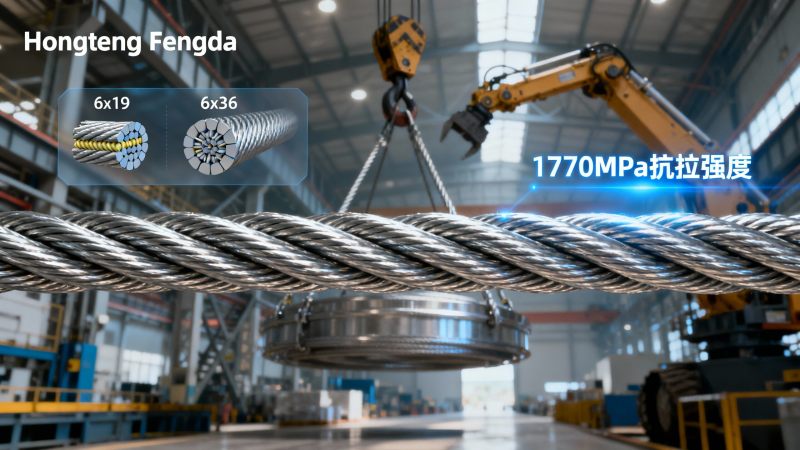
Steel wire rope is a precise mechanical assembly of multiple strands of steel wires twisted together to form a strong and flexible structure capable of handling dynamic loads. Each strand includes several small wires wrapped around a central core, which can be made of fiber or steel, depending on required flexibility and load-bearing capacity. These ropes are widely used in cranes, elevators, hoisting equipment, bridges, and mining machinery. A key strength of high strength steel wire rope lies in its ability to maintain tensile strength under repetitive bending and vibration. When engineers select steel wire rope for lifting, they must balance between diameter, construction type (such as 6x19 or 6x36), and lubrication methods to achieve optimal load and endurance characteristics. Many European buyers prefer ordering from a steel wire rope supplier in Europe who collaborates with an ISO-certified steel wire rope manufacturer in China to ensure traceability and quality control. At Hongteng Fengda, core materials are produced in compliance with ASTM, EN, and JIS standards, guaranteeing consistent mechanical properties and dimensional accuracy. The same principle applies to our steel and structural products like Carbon Steel Plate Manufacturer, which highlights our ability to maintain stable strength levels and surface finish standards across batches.
Market Overview and Industry Trends
The global market for steel wire rope has seen continuous growth driven by infrastructure development, offshore energy projects, and automated lifting equipment. In Europe, demand for customized steel wire rope for construction and mining applications has increased as industries upgrade toward corrosion resistant steel wire rope with superior fatigue resistance. The Asia-Pacific region remains the largest production hub, with China as a dominant exporter providing OEM manufacturing solutions to global clients. Hongteng Fengda leverages both domestic and international supply chain advantages, positioning itself as a steel wire rope OEM manufacturer that can supply high-performance products tailored to regional regulations and performance requirements. Price-sensitive buyers frequently review the steel wire rope price list to compare not only cost per meter but also protective coatings like galvanization, plastic covering, or stainless layers. Environmental factors such as humidity, salinity, and exposure to chemicals influence the selection of rope type, especially for marine or mining projects. Moreover, the market has observed a transition from manual inspection to full digital monitoring for rope wear, supported by sensors measuring elongation and fatigue levels in real time. These advancements contribute to better safety management and lifecycle cost savings.
Technical Performance and Material Parameters
When selecting steel wire rope for lifting or mining, buyers must analyze the mechanical performance parameters, which are typically defined by yield strength, tensile strength, elongation rate, and fatigue life. A high strength steel wire rope should meet tensile requirements above 1770 MPa or even 2160 MPa depending on the application. The performance is determined by factors such as wire strength grade, twist direction, and lubrication. Corrosion resistance is ensured through hot-dip galvanizing, stainless steel alloying, or polymer coating to prolong service life. Certain industrial rope types exhibit enhanced temperature resistance and surface hardness for extreme environments. Similarly, the product design philosophies adopted by Hongteng Fengda are reflected in other structural components like high-grade steel beams and cold formed profiles. For instance, the controlled steel chemistry and balanced mechanical properties in our Carbon Steel Plate Manufacturer line demonstrate comparable attention to metallurgical precision—yield strength 235 MPa, tensile strength 375–500 MPa, and elongation ≥26%—ensuring outstanding plasticity and weldability. Such alignment across different product lines helps guarantee compatibility in composite structural assemblies. Beyond mechanical data, surface quality inspection and non-destructive tests such as magnetic flux leakage or ultrasonic scanning are essential steps before delivery, guaranteeing consistency across each coil and reel.
Comparison Analysis: Key Specification Differences
Steel wire rope specifications differ depending on construction design, diameter, and intended function. Common series include 6x19, 6x36, or 8x19 types, where the first figure represents strand count and the second denotes wires per strand. The choice between fiber core (FC) and independent wire rope core (IWRC) significantly affects tensile capacity and flexibility. IWRC structures provide higher resistance to crushing and deformation in heavy-duty cranes, while fiber-core ropes offer increased bendability for light lifting and haulage. Another crucial distinction lies in galvanization thickness and zinc coating uniformity, directly impacting corrosion resistance and overall lifespan. Buyers comparing multiple steel wire rope supplier in Europe listings should also examine weight tolerance per 100 meters and the rope’s breaking load values. Hongteng Fengda recommends using reference tables based on EN 12385 or ISO 2408 standards to ensure global compliance. Customized OEM configurations allow variations in strand compaction and lubricants—options that strike a balance between operational smoothness and longevity. When comparing various offers or reviewing steel wire rope price list data, procurement teams often discover that total cost of ownership (including installation, maintenance, and downtime) outweighs the initial purchase price, making performance-based sourcing a cost-effective long-term strategy.
Procurement Guide and Selection Checklist
To simplify the procurement and technical evaluation process, buyers can follow a step-by-step selection checklist. First, identify operational load requirements by calculating maximum working load and nominal breaking load. Next, verify compliance with international certifications such as ISO, EN, DIN, or JIS to ensure the steel wire rope manufacturer in China maintains traceable standards. Evaluate rope diameter consistency and inspection reports, particularly for container cranes, mining hoists, and marine applications that require high endurance. Consider environmental exposure, as humid or chemical-intensive environments demand corrosion resistant steel wire rope. Always verify lubrication quality and the method of rope winding to prevent internal friction damage during operation. Finally, review supplier performance history, warranty policies, and the capability for OEM customization. Hongteng Fengda supports clients in all these steps, providing not only technical documentation but also mechanical test data and inspection certificates that meet ASTM and BS standards. With its extensive export experience across North America and Southeast Asia, Hongteng Fengda ensures that each shipment adheres to strict delivery schedules, minimizing downtime risks for large-scale construction and industrial projects.
Standards, Certification, and Quality Assurance
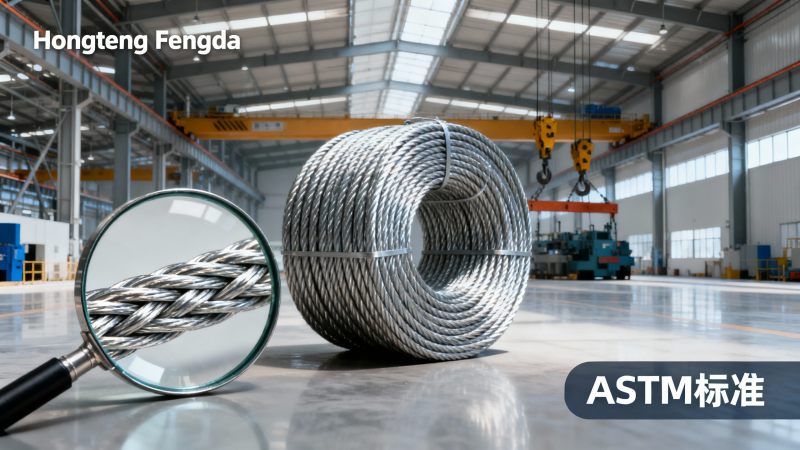
Steel wire rope products are subject to rigorous quality and safety standards to ensure consistency and reliability. Key international references include ISO 2408 (General Requirements), EN 12385 (Safety and Testing), and ASTM A1023/A1024 (Mechanical Properties). Compliance with these standards validates dimensional tolerances, mechanical performance, and material integrity. In Europe, conformity assessment also requires CE marking for construction-related components. Hongteng Fengda enforces multiple quality control checkpoints, including raw material sampling, wire drawing inspection, stranding accuracy, and tension testing. Each reel is accompanied by a test certificate that records tensile load, elongation, and lubrication type. These audited procedures align with the same quality principles applied in structural steel production. The company’s integrated inspection framework uses digital traceability to link each production batch, ensuring consistent parameter monitoring. A data-driven logistics system helps maintain supply chain transparency, giving customers full visibility from manufacturing to shipment. Clients benefit from reliable documentation that simplifies customs clearance and project compliance approvals in Europe, the Middle East, and other regions.
FAQ & Common Misconceptions
One recurring misconception among buyers is that all steel wire ropes with identical diameters have uniform performance. In reality, small changes in construction type or coating thickness drastically influence fatigue life and strength-to-weight ratio. Another common misunderstanding is that galvanization alone guarantees corrosion resistance; in fact, environmental conditions and operational loading determine long-term durability. Buyers also tend to overemphasize initial cost without considering maintenance intervals or downtime-related expenses. Proper re-lubrication schedule and storage practice can enhance longevity, significantly lowering total lifecycle cost. Technicians often ask whether switching from traditional steel to stainless or alloyed steel increases performance sufficiently to justify the price. The answer depends on the environment—stainless variants are excellent for marine corrosion protection but may not be economical for standard crane operations. Hongteng Fengda’s technical team frequently supports customers with test data comparisons and engineering consultation to ensure optimal selection parameters are met. This expert guidance, combined with in-depth industry know-how, prevents procurement teams from falling into common traps of over- or under-specification.
Trend & Future Insights
The steel wire rope industry is evolving alongside automation and sustainability trends. Increasing demand for lightweight, high-strength, and smart-monitoring wire rope drives research into micro-alloying techniques and hybrid materials that integrate polymer cores. Future improvements will include digital twinning, enabling predictive maintenance through real-time data analytics and machine learning algorithms. Environmentally conscious buyers in Europe are beginning to prioritize ropes made with recycled steel or low-carbon manufacturing processes. In addition, market preferences are shifting toward full-service suppliers who can provide integrated steel structural components rather than standalone ropes. Hongteng Fengda embraces these developments by combining modern production facilities with data-driven quality assurance systems. The company’s long-standing reputation as a reliable steel wire rope OEM manufacturer from China positions it well to deliver innovative products that balance performance, price, and sustainability. These trends, coupled with a growing awareness of safety compliance, will continue to shape procurement and engineering practices for years to come.
Why Choose Hongteng Fengda
Hongteng Fengda stands out as a leading structural steel and steel wire rope supplier integrating research, manufacturing, and global distribution. Our expertise covers angle steel, channel steel, beams, cold formed steel profiles, and customized steel wire rope designed for specific lifting and mining applications. We provide consistent quality through advanced testing, adherence to ASTM, EN, JIS, and GB standards, and stable production capacity that supports large-scale procurement. Clients across North America, Europe, the Middle East, and Southeast Asia rely on Hongteng Fengda not only for product excellence but also for logistical efficiency and responsive service. Whether you require high strength steel wire rope for construction, corrosion resistant steel wire rope for mining, or standard wire rope for lifting, our engineering team ensures precise compliance with your specifications. Choosing Hongteng Fengda means securing a long-term supply partner capable of reducing sourcing risks, controlling costs, and enhancing structural safety throughout every project phase. Contact us today to discuss tailored solutions that bring reliability and value to your projects.
- channel steel
- steel i
- angle steel
- carbon steel plate manufacturer
- carbon steel plate
- a steel wire
- structural steel
- steel beams
- steel profiles
- Structural Steel
- Steel Beams
- Corrosion Resistant Steel
- steel plate
- Profile
- Steel Beam
- Steel Wire
- High Strength Steel Wire
- carbon steel
- steel profile
- steel wire rope
- steel wire rope for construction
- high strength steel wire rope
- steel wire rope manufacturer in China
- steel wire rope price list
- corrosion resistant steel wire rope
- steel wire rope for mining
- steel wire rope supplier in Europe
- steel wire rope specifications
- steel wire rope for lifting
- steel wire rope OEM manufacturer
Related recommendations
 Is acero galvanizado para exterior vulnerable to white rust formation during monsoon storage?Acero galvanizado para exterior *is* vulnerable to white rust in monsoons — but it’s preventable. Discover proven storage & handling strategies that protect your structural steel.
 Does ASTM A 36 plate meet impact toughness requirements for low-temperature bridge girders?Does ASTM A 36 plate meet low-temp bridge requirements? Short answer: no—unless specially tested. Discover why toughness matters more than strength in cold climates.
 Does ASTM A653 certification cover both zinc-coated and zinc-iron alloy coated steels?ASTM A653 covers both zinc-coated and zinc-iron alloy coated steels—but they’re not interchangeable. Learn key differences in testing, performance & certification.
 Does acero prepintado require surface pretreatment before welding or cutting?Does acero prepintado require pretreatment before welding or cutting? Discover when grinding is essential—and when it’s not—for safety, weld integrity & corrosion resistance.
Please give us a message


Please enter what you want to find