Does ASTM A 36 plate meet impact toughness requirements for low-temperature bridge girders?
When a bridge engineer in Minnesota specifies ASTM A 36 plate for a new girder system—knowing it’s economical, widely stocked, and familiar to fabricators—they’re likely not thinking about -20°F wind chills or the subtle physics of cleavage fracture. But that moment of specification is where risk quietly enters the project: *Does ASTM A 36 plate meet impact toughness requirements for low-temperature bridge girders?* The short answer is no—not by default. And the longer answer matters deeply when lives, timelines, and liability are tied to steel performance under stress and cold.
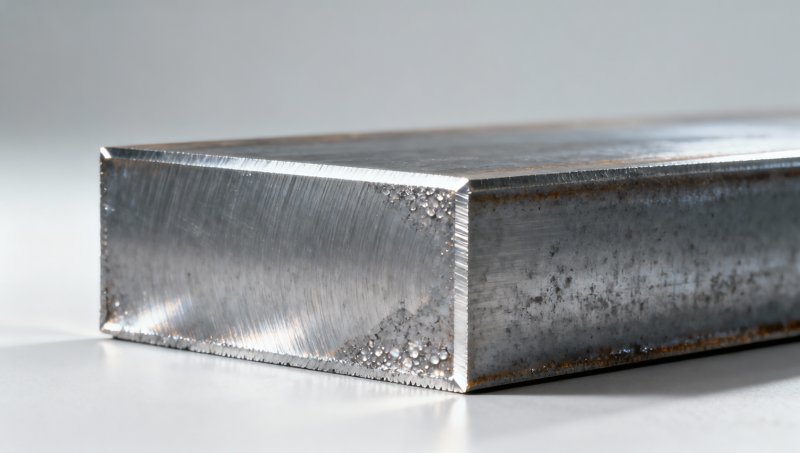
ASTM A 36 is a workhorse. Its yield strength of 36 ksi and tensile range of 58–80 ksi make it ideal for non-critical structural framing, base plates, and secondary members. It welds readily, bends predictably, and mills consistently—qualities that explain its dominance across global infrastructure supply chains. Yet its standard specification contains *no mandatory Charpy V-notch (CVN) impact testing*. There’s no minimum energy absorption requirement at any temperature. That silence isn’t oversight—it’s design intent. ASTM A 36 was written for ambient-temperature applications, not for girders carrying live loads while ice forms on their flanges in northern Canada or high-altitude mountain passes.
This becomes especially consequential when reviewing bridge design codes. AASHTO LRFD Bridge Design Specifications (Section 6.6.1.2) requires fracture-critical tension components—and many primary girders qualify—to demonstrate adequate toughness at the *design minimum service temperature*. For regions like Alaska, Quebec, or Scandinavia, that often means verifying CVN values at -20°F (-29°C) or lower. ASTM A 36 offers no such guarantee unless specially ordered with supplemental impact testing—and even then, its base chemistry (low Mn, no microalloying) limits its inherent notch toughness in the as-rolled condition.
So what happens if a project team assumes “A 36 = always acceptable” and proceeds without qualification? In worst-case scenarios, brittle fracture initiates from minor fabrication flaws—micro-cracks near weld toes, mill-induced laminations, or even surface nicks from handling—and propagates catastrophically under low-cycle fatigue or sudden loading. Unlike ductile failure, which gives warning through deformation, brittle fracture is silent, rapid, and irreversible. It’s why fracture-critical bridges demand materials that *absorb* energy—not just resist load.
That’s where material selection shifts from convenience to conscious engineering. Project managers need alternatives that balance familiarity, availability, and proven low-temperature reliability. ASTM A 572 Grade 50 is one common upgrade: higher strength (50 ksi yield), tighter control over carbon equivalent (CE), and—critically—optional CVN testing at specified temperatures. ASTM A 709 Grades 50W and HPS 70W go further, with mandatory impact testing down to -40°F and optimized chemistry for weldable toughness. EN 10025-4 S355ML or JIS G3106 SM490Y offer parallel pathways for international projects.
But here’s what rarely appears in spec sheets: *availability doesn’t equal suitability*, and *compliance isn’t automatic*. Even with an “impact-tested” grade, batch-to-batch variability matters. Heat treatment history, rolling reduction ratios, and even cooling rates during hot strip mill finishing affect ferrite grain size and inclusion distribution—both key drivers of toughness. That’s why reputable suppliers don’t just ship certificates; they trace heat numbers, validate test reports against original mill records, and—if requested—provide full MTCs with CVN results plotted across multiple temperatures.
At Hongteng Fengda, we’ve supported bridge fabricators across Norway, Saudi Arabia, and Ontario who needed exactly this level of assurance. Our production lines are calibrated to hold tight tolerances on carbon, manganese, and niobium/vanadium additions—not because specs demand it, but because real-world performance does. When a client asks whether a given plate can carry traffic at -30°C in February, we don’t reply with a catalog number. We cross-check the intended service temperature against our internal CVN database, verify heat-specific test data, and flag any deviation before cutting begins.
And while structural plates dominate girder discussions, it’s worth noting how supporting materials fit into the broader system. For example, Steel Cold Rolled Coil in Q355 grade—often used in stiffeners, diaphragms, or connection plates—offers enhanced toughness through controlled alloying and cold-rolling refinement. Its fine-grained microstructure improves resistance to crack initiation, especially in thinner sections where residual stresses concentrate. Though not a direct substitute for heavy-section girders, its role in system-level integrity is frequently underestimated.
 What also gets overlooked is the *human dimension* of specification decisions. A project manager juggling RFQs, schedule pressure, and budget reviews may default to ASTM A 36—not out of ignorance, but because it’s the path of least friction. Yet the cost of rework, delay, or post-fabrication impact testing far exceeds the modest premium of a qualified alternative. One European client delayed shipment for three weeks after discovering their A 36 order lacked CVN certs—only to learn the mill couldn’t retroactively test without destructive sampling. Another avoided that pitfall entirely by engaging us early: we supplied A 709 Gr. 50W with full -40°F CVN reports, certified to ISO 9001 and verified by SGS. No surprises. No stop-work orders.
There’s also a quiet evolution happening in standards themselves. ASTM is actively revising Annex A4 of A 36 to clarify limitations for low-temperature use—a sign that even foundational specs must adapt to climate realities. Meanwhile, EN 10025-2 now explicitly groups steels by “impact property categories,” making comparisons more transparent. These aren’t bureaucratic updates; they reflect decades of field experience—some of it hard-won.
So how should teams proceed? First, map the *actual* minimum service temperature—not just the regional average, but the 1-in-50-year extreme. Second, classify the component per AASHTO’s fracture-critical hierarchy. Third, consult both the design code *and* the procurement specification: Does it require CVN testing? At what temperature? With what acceptance criteria? Fourth, request full MTCs—not summaries—with raw test data, not just pass/fail stamps. Finally, partner with suppliers who treat material certification as part of engineering—not paperwork.
ASTM A 36 plate remains invaluable. But valuing it shouldn’t mean misapplying it. In bridge engineering, strength without toughness is like a strong lock with a brittle key: impressive until the first frost. The right steel doesn’t just hold weight—it absorbs uncertainty. And that starts long before the crane lifts the first girder.
Hongteng Fengda doesn’t sell steel. We help project teams ask better questions—about temperature, toughness, traceability, and trade-offs—so the answer to “Does ASTM A 36 plate meet impact toughness requirements?” is never assumed. It’s verified. Documented. Delivered.
What also gets overlooked is the *human dimension* of specification decisions. A project manager juggling RFQs, schedule pressure, and budget reviews may default to ASTM A 36—not out of ignorance, but because it’s the path of least friction. Yet the cost of rework, delay, or post-fabrication impact testing far exceeds the modest premium of a qualified alternative. One European client delayed shipment for three weeks after discovering their A 36 order lacked CVN certs—only to learn the mill couldn’t retroactively test without destructive sampling. Another avoided that pitfall entirely by engaging us early: we supplied A 709 Gr. 50W with full -40°F CVN reports, certified to ISO 9001 and verified by SGS. No surprises. No stop-work orders.
There’s also a quiet evolution happening in standards themselves. ASTM is actively revising Annex A4 of A 36 to clarify limitations for low-temperature use—a sign that even foundational specs must adapt to climate realities. Meanwhile, EN 10025-2 now explicitly groups steels by “impact property categories,” making comparisons more transparent. These aren’t bureaucratic updates; they reflect decades of field experience—some of it hard-won.
So how should teams proceed? First, map the *actual* minimum service temperature—not just the regional average, but the 1-in-50-year extreme. Second, classify the component per AASHTO’s fracture-critical hierarchy. Third, consult both the design code *and* the procurement specification: Does it require CVN testing? At what temperature? With what acceptance criteria? Fourth, request full MTCs—not summaries—with raw test data, not just pass/fail stamps. Finally, partner with suppliers who treat material certification as part of engineering—not paperwork.
ASTM A 36 plate remains invaluable. But valuing it shouldn’t mean misapplying it. In bridge engineering, strength without toughness is like a strong lock with a brittle key: impressive until the first frost. The right steel doesn’t just hold weight—it absorbs uncertainty. And that starts long before the crane lifts the first girder.
Hongteng Fengda doesn’t sell steel. We help project teams ask better questions—about temperature, toughness, traceability, and trade-offs—so the answer to “Does ASTM A 36 plate meet impact toughness requirements?” is never assumed. It’s verified. Documented. Delivered.
Please give us a message


Please enter what you want to find