Selecting the right steel rebar grade is crucial for maximizing the performance and return on investment of large-scale infrastructure projects. As a trusted structural steel manufacturer and exporter from China, Hongteng Fengda provides a complete range of steel solutions—including steel rebar, steel pile, and carbon steel products—engineered to meet global standards like ASTM and EN. Understanding the differences among steel rebar grades helps engineers, procurement teams, and project managers make smarter choices that balance cost, safety, and durability.
Understanding the Role of Steel Rebar in Modern Infrastructure
Steel reinforcement bars, or steel rebar, play a pivotal role in concrete structures by providing tensile strength, enhancing durability, and ensuring structural stability under varying loads and stress conditions. In modern infrastructure—including bridges, tunnels, high-rise buildings, and highway systems—steel rebar determines both the longevity and the maintenance frequency of a project. Selecting a high-quality steel rebar grade is not simply a technical decision; it directly influences lifecycle cost, safety compliance, and the overall performance of a construction asset.
There are various international standards that govern rebar production, such as ASTM A615 and A706 in the United States, BS4449 in the United Kingdom, and GB 50010 in China. Each standard defines parameters like yield strength, ductility, and chemical composition. For example, low-carbon steel rebar offers better weldability and ductility, while higher-carbon versions enhance tensile performance but may be more brittle. Hence, when evaluating steel rebar for infrastructure, engineers need to balance strength with flexibility to ensure that the structure can absorb dynamic stresses without cracking.
Hongteng Fengda’s expertise in manufacturing structural steel, including carbon steel and alloy variants, ensures that every bar meets the mechanical performance required for demanding load conditions. Its consistent adherence to ASTM, EN, and GB standards gives suppliers and end users confidence that the quality metrics—from tensile strength to elongation—align with global construction expectations.
Comparing Common Steel Rebar Grades and Their Mechanical Properties
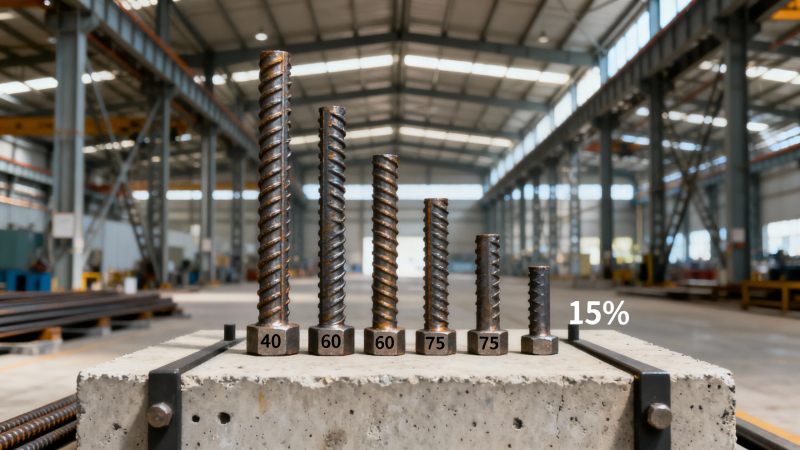
When evaluating different rebar grades, it is important to consider both performance and cost-effectiveness. The most commonly used grades include 40, 60, 75, and high-strength alloy configurations. Grade 40 steel rebar, with a yield strength of approximately 280 MPa, is suited for light-duty works and small residential buildings, while Grade 60, offering around 420 MPa yield strength, is the standard choice for most infrastructure projects. Higher grades such as Grade 75 and 80 are often chosen for high-rise, heavy load, and seismic applications due to their improved tensile and fatigue resistance capabilities.
The selection also depends on the type of steel used. Carbon steel remains the most widely adopted due to its stable performance and cost efficiency, whereas alloyed steel rebar may be used where enhanced corrosion resistance or extreme strength is required. For marine or saline environments, epoxy-coated or galvanized steel rebar can minimize oxidation and prolong service life. Interestingly, structural engineers often combine various rebar types within one project to achieve an optimal cost-performance balance.
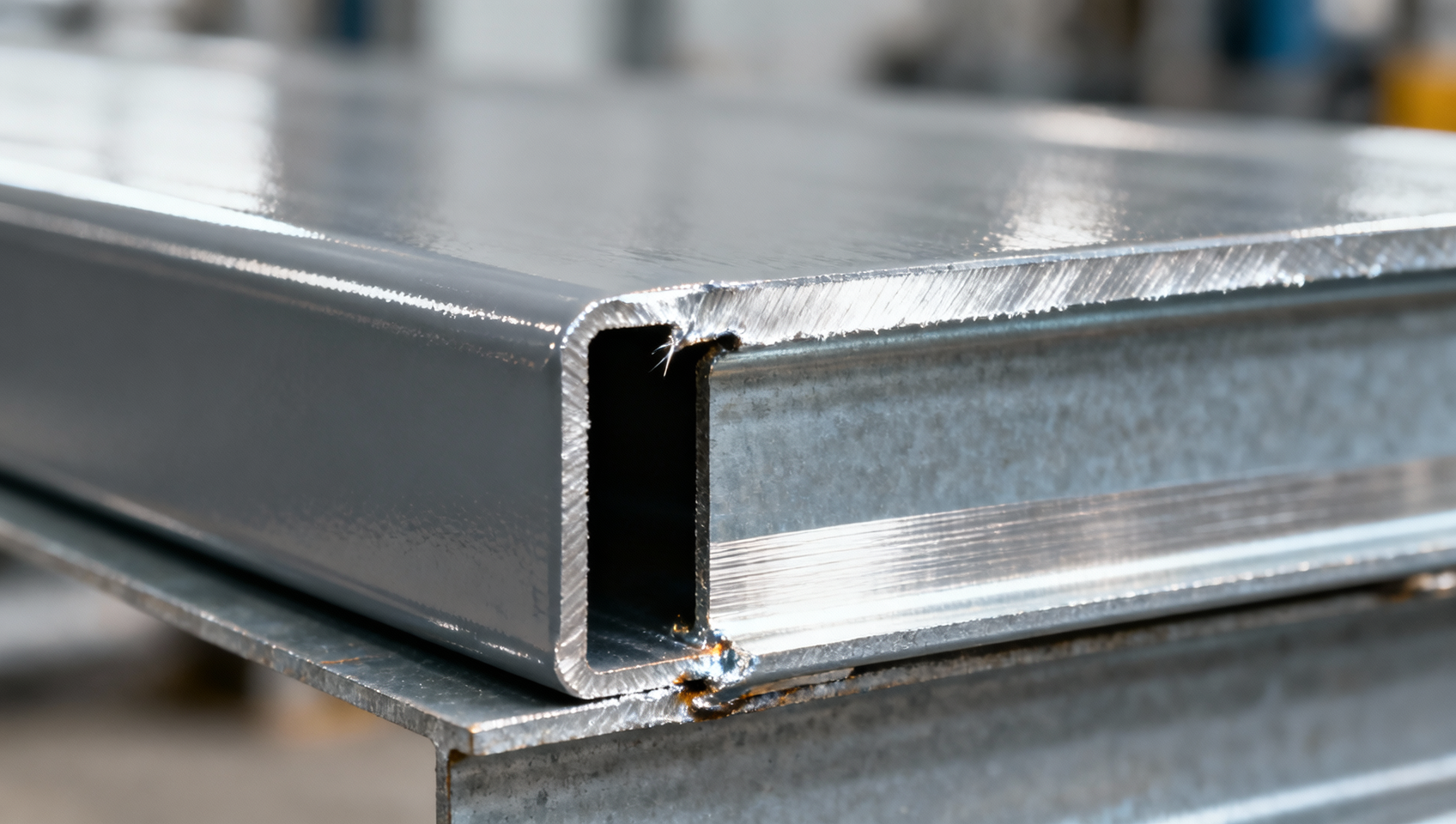
Hongteng Fengda provides customized rebar and steel pile options designed to optimize each application scenario. The company’s modern production lines ensure consistent rib geometry and surface bonding with concrete, improving adhesion and overall tensile capacity. This attention to detail improves project safety and minimizes potential concrete cracking that could escalate maintenance costs in later years. For specialized lightweight steel construction, the company also offers the Z-beam, a Z-shaped steel profile used as a wall beam or roof purlin, produced with galvanized coating and compliant with CE, SGS, BV, and ISO certifications.
Economic Factors Influencing Rebar ROI in Infrastructure Development
The return on investment (ROI) for steel rebar selection extends far beyond initial material cost. It includes lifecycle considerations—maintenance, replacement cycles, and downtime risks—that often outweigh upfront savings. High-yield or corrosion-resistant grades may appear more expensive initially, but their extended operational lifespan, lower repair frequency, and improved safety performance reduce total cost of ownership in the long term.
Project planners and procurement specialists need to evaluate project-specific factors such as environmental conditions, load-bearing capacity, and exposure to corrosive elements. For example, bridge decks in coastal regions demand rebar with exceptional corrosion resistance, while inland highway slabs may prioritize affordability with moderate-grade carbon steel bars. The same principle applies to steel pile foundations and similar load-bearing elements—a small upgrade in material quality can lead to massive savings on future maintenance and structural rehabilitation.
Hongteng Fengda’s team assists global partners in optimizing these calculations by providing engineering support and material consultation. The company’s integrated supply capability ensures stable lead times and quality consistency, benefiting contractors seeking predictable cost control. By combining the efficiencies of Chinese manufacturing with international quality standards, Hongteng Fengda has become a trusted partner for achieving financial and technical efficiency on infrastructure projects across continents.
Innovations and Sustainability Trends in Steel Reinforcement Technology
The steel industry continues to evolve rapidly toward sustainable and performance-driven materials. Technologies such as microalloying, thermomechanical treatment, and advanced surface coatings have expanded the range of options available to engineers. New-generation rebar integrates microstructure refinement for enhanced ductility and uniform strain distribution, allowing safer structural responses under seismic or heavy-load conditions.
Sustainability is also becoming a major performance metric. Recycled scrap used in electric arc furnaces reduces carbon emissions while maintaining steel purity. Hongteng Fengda follows eco-conscious manufacturing practices, ensuring efficient use of raw materials and energy savings. The use of recyclable carbon steel components makes modern infrastructure both environmentally and economically sustainable, aligning with global ESG goals. For structural versatility, components such as steel piles and cold-formed members like the Z-beam further enhance modularity and reduce installation time while ensuring system strength. These products are fabricated from premium grades like Q235B, Q345B, and A572, ensuring compatibility across international design frameworks.
Additionally, digital quality control and automated rolling processes are consistently upgrading industrial precision, reducing deviations to within ±1% tolerances. This combination of precision and sustainability is reshaping how steel manufacturers deliver products with measurable ROI on both financial and environmental dimensions.
Case Insights: Maximizing ROI through Strategic Material Pairing
Practical experience continues to show that optimal ROI in large infrastructure projects stems from a strategic material-selection matrix rather than a single focus on price. For instance, a coastal expressway project in Southeast Asia that switched from uncoated low-grade steel rebar to epoxy-coated high-tensile carbon steel achieved over 30% savings in maintenance expenses within five years. Similarly, an industrial warehouse in Eastern Europe that combined standard rebar for floor slabs with lightweight cold-formed steel sections for beam systems experienced faster assembly times and a 20% reduction in fabrication costs.
Hongteng Fengda’s engineering support contributed to many such successes by advising clients on balancing different materials—carbon steel, alloyed rebar, and structural members such as steel piles—according to site load analysis and life-cycle projection. This consultative approach ensures project managers and decision-makers obtain tangible performance verification while securing budgetary discipline. Every product line undergoes third-party certification under CE, SGS, and ISO frameworks, ensuring compliance even under international audit scrutiny.
As governments and developers increasingly value durability, sustainability, and safety compliance, the demand for high-performance rebar and dependable suppliers will continue to rise. Investments in advanced steel profiles and higher-grade rebars are no longer optional—they have become standard practices for reducing total project cost while protecting human lives and environmental resources.
Conclusion: Building Long-Term Value with Reliable Steel Solutions
In conclusion, choosing the right steel rebar grade directly influences the longevity, safety, and economics of infrastructure investments. The balance between performance and budget, between carbon steel efficiency and corrosion resistance, determines the overall ROI for developers and contractors alike. Hongteng Fengda’s global experience as a structural steel manufacturer from China positions it to deliver reliable, world-standard steel products—from rebar and steel pile to tailored beam systems—that empower enterprises to manage projects with confidence.
Through cutting-edge processes, rigorous quality control, and a commitment to sustainable growth, Hongteng Fengda ensures every shipment meets the mechanical and metallurgical demands of modern engineering. Whether your project requires high-strength rebar for seismic zones or specialized profiles for lightweight structures, the company’s customized solutions guarantee long-term performance and efficiency.
For project owners, engineers, and procurement professionals seeking to optimize material strategies and achieve maximum return on investment through superior steel solutions, contacting Hongteng Fengda is the logical next step. Explore tailored products and expert guidance today—reach out to the Hongteng Fengda team to learn more about advanced steel options that redefine reliability and project excellence.
Related recommendations
 Is acero galvanizado para exterior vulnerable to white rust formation during monsoon storage?Acero galvanizado para exterior *is* vulnerable to white rust in monsoons — but it’s preventable. Discover proven storage & handling strategies that protect your structural steel.
 Does ASTM A 36 plate meet impact toughness requirements for low-temperature bridge girders?Does ASTM A 36 plate meet low-temp bridge requirements? Short answer: no—unless specially tested. Discover why toughness matters more than strength in cold climates.
 Does ASTM A653 certification cover both zinc-coated and zinc-iron alloy coated steels?ASTM A653 covers both zinc-coated and zinc-iron alloy coated steels—but they’re not interchangeable. Learn key differences in testing, performance & certification.
 Does acero prepintado require surface pretreatment before welding or cutting?Does acero prepintado require pretreatment before welding or cutting? Discover when grinding is essential—and when it’s not—for safety, weld integrity & corrosion resistance.
Please give us a message


Please enter what you want to find