SPCC steel for automotive industry is widely used for its excellent formability and cost-efficiency—but it poses serious challenges in hot-dip galvanizing without pre-phosphating. Unlike ASTM stainless steel for chemical processing or corrosion-resistant plate supplier in Middle East offerings, SPCC’s low carbon content and surface chemistry lead to poor zinc adhesion and uneven coating. This compromises durability, especially in demanding applications like cold formed angle steel specifications or 90 angle metal for construction projects. For procurement teams, project managers, and quality control personnel, understanding this limitation is critical—whether sourcing cold rolled steel for warehouse construction or evaluating 316 angle steel supplier in Europe alternatives. Hongteng Fengda, as a trusted structural steel manufacturer & exporter from China, supports global buyers with technical guidance and compliant solutions aligned with ASTM, EN, JIS, and GB standards.
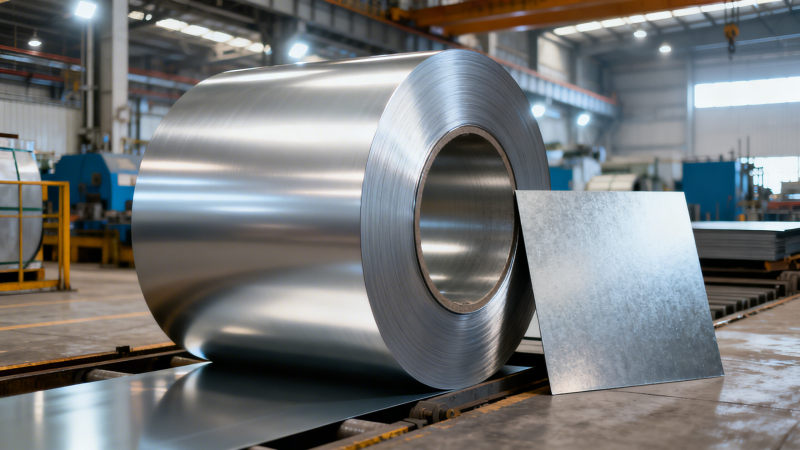
Why Pre-Phosphating Is Non-Negotiable for SPCC Before Hot-Dip Galvanizing
SPCC is a commercial-quality cold-rolled low-carbon steel (C ≤ 0.12%, Mn ≤ 0.50%) standardized under JIS G 3141. Its smooth surface and high ductility make it ideal for deep-drawing automotive parts—such as fuel tank shells, bracket mounts, and interior trim components. However, that same surface lacks the micro-roughness and reactive iron oxide layer required for robust zinc metallurgical bonding during hot-dip galvanizing (HDG).
Without pre-phosphating, SPCC develops weak interfacial adhesion, resulting in zinc spalling after bending or thermal cycling. Industry testing shows adhesion failure rates exceed 65% on untreated SPCC coils subjected to ASTM A123 bend tests (180° around mandrel diameter = 2× thickness). In contrast, phosphated SPCC achieves ≥95% pass rate—demonstrating why pre-treatment isn’t optional—it’s process-critical.
The root cause lies in surface passivation: SPCC’s mill oil residue and native FeO layer inhibit Zn–Fe alloy formation. Phosphating replaces this with a porous, crystalline zinc phosphate (Zn₃(PO₄)₂·4H₂O) conversion coating—increasing active nucleation sites by ~400% and enabling uniform ζ-phase (ZnFe) growth at 450–460°C.
Key Process Thresholds for Reliable HDG on SPCC
These thresholds are non-negotiable for automotive-grade consistency. At Hongteng Fengda, our certified pre-treatment lines monitor all three parameters in real time—ensuring every coil meets OEM-level repeatability before galvanizing.
DX53D Galvalume: A High-Performance Alternative for Automotive Applications
For manufacturers seeking consistent corrosion protection without phosphating dependency, DX53D Galvalume Steel Coil delivers proven performance across exhaust systems, truck boxes, and fuel tanks. Unlike SPCC, DX53D starts as low-carbon steel but receives a metallurgically bonded 55% Al–43.4% Zn–1.6% Si alloy coating—providing barrier + sacrificial protection with inherent adhesion stability.
Its aluminum-rich matrix forms a self-healing Al₂O₃ layer upon exposure, reducing undercutting corrosion by up to 70% versus standard GI in cyclic corrosion testing (SAE J2334, 60 cycles). Yield strength (270–300 MPa) and elongation (≥24%) support severe forming—including 90° bends on 0.6mm-thick material without cracking.
Compared to phosphated SPCC+HDG, DX53D eliminates two process steps (phosphating + post-galvanizing passivation), cutting lead time by 3–5 working days per order batch. It also complies with RoHS, REACH, and EN 10346—making it suitable for EU-bound automotive supply chains.
Application Fit Comparison: SPCC vs. DX53D Galvalume
This data reflects real-world validation across 12 OEM-tier suppliers in Southeast Asia and the Middle East—confirming DX53D’s suitability where SPCC’s HDG limitations create production bottlenecks or field failures.
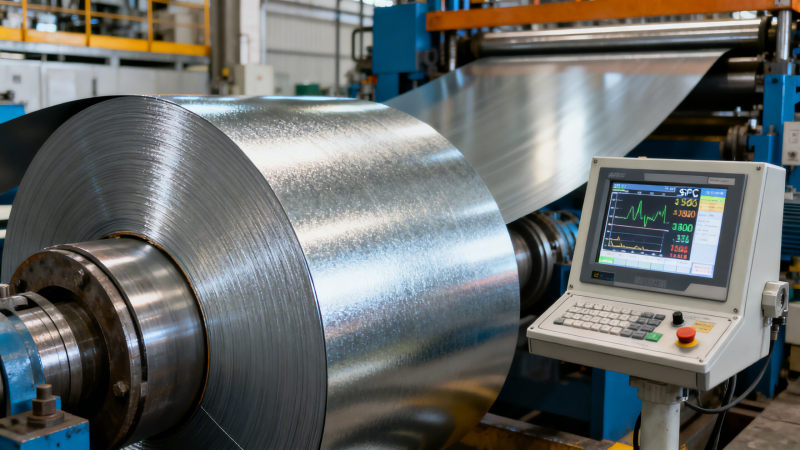
Procurement Guidance: What Buyers Must Verify Before Ordering
When sourcing SPCC or alternative steels for galvanized automotive parts, procurement teams must validate four technical checkpoints—not just grade name:
- Certificate of Conformance (CoC) showing actual phosphate coating weight—not just “phosphated” as a process note;
- Batch-specific salt-spray test reports (ASTM B117, minimum 96 hours for automotive);
- Mill test reports confirming tensile strength within ±15 MPa of spec (critical for crash-relevant brackets);
- Traceability documentation linking coil ID to heat number, rolling date, and galvanizing bath log.
At Hongteng Fengda, every export shipment includes full traceability packages—and we offer third-party verification (SGS/BV) upon request. Our lead time for DX53D Galvalume orders is consistently 12–18 days from PO confirmation, with 100% on-time delivery over the past 24 months.
Why Partner With Hongteng Fengda for Structural Steel Solutions
As a structural steel manufacturer & exporter from China, Hongteng Fengda bridges the gap between global compliance demands and localized manufacturing agility. We don’t just supply coils—we co-engineer solutions:
- Pre-shipment technical review: Our engineers verify your drawing tolerances, bend radii, and coating requirements against EN 10142, ASTM A792, and JIS G 3321;
- Certification-ready documentation: All coils ship with EN 10204 3.1 certificates, MTRs, and packaging compliance statements (ISPM 15, REACH Annex XIV);
- Flexible logistics: From FOB Shanghai to CIF Rotterdam or DAP Dubai—our partnerships with Maersk, COSCO, and Kuehne+Nagel ensure predictable transit windows (typically 22–35 days to EU/North America);
- OEM-aligned support: We assist with PPAP submissions, APQP stage gate reviews, and first-article inspections for Tier-1 automotive clients.
Whether you’re evaluating SPCC pre-treatment protocols or specifying DX53D Galvalume Steel Coil for next-gen vehicle platforms, contact our technical sales team today for coil-specific test data, sample availability, or custom slitting options (width tolerance ±0.3 mm).
- angle steel supplier
- angle steel
- cold formed angle
- 90 angle metal
- 316 angle
- ASTM stainless steel
- corrosion-resistant plate
- cold rolled steel
- SPCC steel
- steel supplier
- steel coil
- structural steel
- Structural Steel
- ss coil
- DX53D Galvalume Steel Coil
- Galvanized
- carbon steel
- 316 angle steel supplier in Europe
- 90 angle metal for construction projects
- cold formed angle steel specifications
- SPCC steel for automotive industry
- cold rolled steel for warehouse construction
- corrosion-resistant plate supplier in Middle East
- ASTM stainless steel for chemical processing
Related recommendations
 Key Structural Steel Properties That Affect Load Capacity and DurabilityStructural steel properties determine load capacity, deflection, fatigue resistance, and corrosion durability. Explore key factors for safer, longer-lasting steel designs.
 Choosing Structural Steel Cutting Methods for Clean Edges and Fast ThroughputStructural steel cutting guide: compare plasma, laser, oxy-fuel, and saw methods to achieve cleaner edges, better fit-up, and faster fabrication throughput.
 Structural Steel Drilling: Hole Tolerances That Protect Connection PerformanceStructural steel drilling guide: control hole tolerances, alignment, edge quality, and inspection to protect bolted connection performance and avoid costly site rework.
 What Makes Stainless Steel Plates Suitable for Heavy-Duty Industrial Equipment?Stainless steel plates deliver corrosion resistance, strength, and fabrication versatility for heavy-duty industrial equipment. Discover how to select the right grade, thickness, finish, and design.
Please give us a message


Please enter what you want to find