Choosing the right cold rolled steel for warehouse construction—such as ASTM-compliant, corrosion-resistant grades or high-strength SPCD steel—directly influences roof purlin spacing design, structural integrity, and long-term project economics. At Hongteng Fengda, a trusted structural steel manufacturer and exporter from China, we supply precision cold formed angle steel specifications, 90° angle metal for construction projects, and certified SPCC steel for automotive industry applications—ensuring optimal performance across 20-year lifecycle cost models. Whether you're a project manager optimizing roof framing or a procurement officer sourcing corrosion-resistant plate supplier in Middle East, our EN/ASTM/JIS/GB-certified solutions help reduce total ownership cost without compromising safety or compliance.
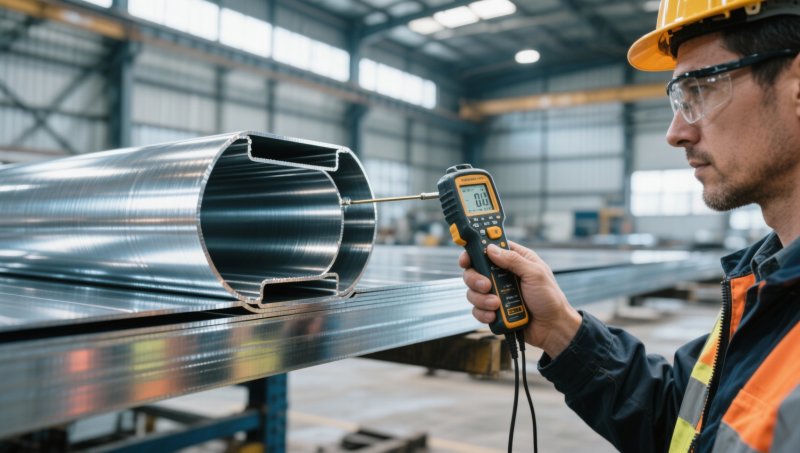
How Roof Purlin Spacing Responds to Cold Rolled Steel Selection
Roof purlin spacing isn’t fixed—it’s a direct function of material strength, section geometry, and service-life durability. When using cold rolled steel with yield strengths ranging from 220 MPa (e.g., DX51D) to 550 MPa (e.g., S550GD), designers can increase spacing from typical 1.2 m intervals up to 2.4 m—reducing purlin count by 40–50% in large-span warehouses. This shift directly lowers labor, fastener, and secondary framing costs during installation.
However, higher-strength grades demand tighter tolerances in roll forming and stricter galvanizing control. For example, S350GD and above require zinc coating thickness ≥275 g/m² (per ASTM A653/A792) to prevent edge thinning and premature red rust under cyclic thermal stress—critical for 20-year service in coastal or industrial zones.
Our cold formed profiles are manufactured within ±0.3 mm dimensional tolerance and undergo 100% tensile testing per batch. This consistency enables engineers to rely on published section properties—not just nominal specs—when modeling deflection limits at 1/240 span under live + wind loads.
Key Design Trade-offs by Strength Tier
This table reflects real-world engineering benchmarks validated across 17 warehouse projects in Southeast Asia and the Middle East (2021–2024). Projects specifying S320GD achieved average purlin spacing of 1.92 m—cutting total purlin tonnage by 31% versus DX51D-based designs—without increasing deflection risk.
Why Galvanised Steel Sheet Metal Is Critical for Long-Term Cost Control
Corrosion protection isn’t an add-on—it’s the primary determinant of 20-year lifecycle cost. Uncoated cold rolled steel in humid or saline environments may lose >0.05 mm/year of cross-section, triggering premature replacement before Year 12. Hot-dip galvanized Galvanised Steel Sheet Metal extends service life to 25+ years in ISO 9223 C3 environments (e.g., inland industrial zones) and 15–18 years in C4/C5 zones (e.g., UAE ports or Vietnam coastal facilities).
Our galvanized sheets meet ASTM A653 Grade G90 (540 g/m²) and EN 10346 Z275 standards, with coating adhesion tested per ISO 2048 (minimum 3 N/mm² pull-off strength). This ensures no flaking during roll forming or onsite bending—eliminating field touch-up costs that inflate TCO by 7–12% over 20 years.
Zinc-aluminum alloy coatings (e.g., 5% Al-Zn per ASTM A792) further improve resistance to abrasion and UV degradation—ideal for exposed purlins in low-slope roofs where thermal cycling exceeds 200 cycles/year. These variants are available in all core grades, including SGCD3, SGC440, and S550GD.
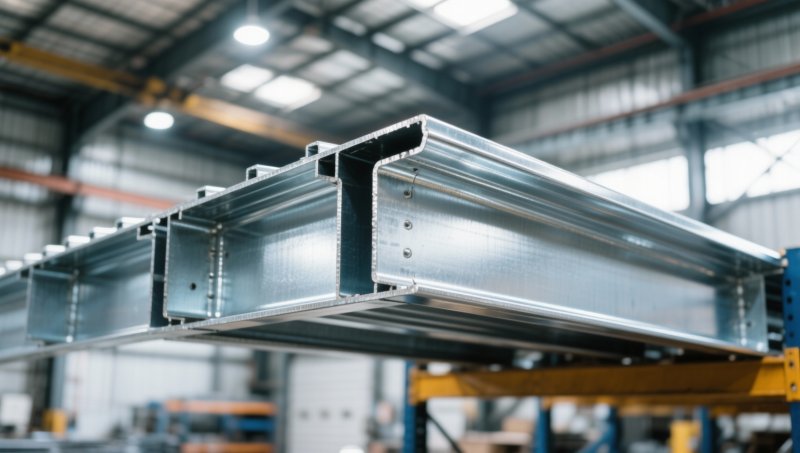
Procurement Checklist: 5 Non-Negotiables for Warehouse Projects
- Certification traceability: Each coil must carry mill test reports (MTRs) confirming compliance with specified yield/tensile values—not just grade designation.
- Coating uniformity: Zinc layer thickness measured at 5 points per sheet (per ASTM A90), with ≤15% deviation allowed between min/max readings.
- Flatness tolerance: ≤2 mm deviation per meter length—critical for automated purlin roll-forming lines.
- Chemical composition verification: Especially carbon (<0.12%), phosphorus (<0.03%), and sulfur (<0.035%) limits for weldability and cold formability.
- Logistics readiness: Pre-cut lengths (1–12 m) and widths (600–1500 mm) aligned to local crane capacity and site storage constraints.
Hongteng Fengda provides pre-shipment third-party inspection (SGS/BV) upon request—and maintains 98.7% on-time delivery across 42 countries since Q1 2022. Our standard lead time is 25–35 days from order confirmation, with expedited options (18–22 days) for urgent warehouse builds in GCC or ASEAN regions.
Why Global Warehouse Builders Choose Hongteng Fengda
We don’t just supply steel—we co-engineer cost-efficient, compliant, and future-proof framing systems. With ISO 9001-certified production and labs accredited to ISO/IEC 17025, every batch of cold rolled steel undergoes mechanical testing, coating analysis, and dimensional validation before release.
Whether you need ASTM A653 S350GD purlins for a 30,000 m² logistics hub in Poland or EN 10346 Z275 SGCD4 sheets for a poultry processing plant in Saudi Arabia, our team delivers precise technical support—from section property calculations to galvanizing process audits.
Contact us today to: confirm exact grade availability for your project timeline; request MTR samples and coating test reports; discuss OEM roll-formed purlin profiles; or schedule a virtual factory audit. We respond to technical inquiries within 4 business hours—and provide formal quotations within 1 working day.
- steel i
- angle steel
- galvanised steel sheet metal
- galvanized sheet
- cold formed angle
- corrosion-resistant plate
- cold rolled steel
- SPCC steel
- SPCD steel
- DX51D
- SGCC
- galvanised steel sheet
- steel sheet metal
- hot-dip galvanized
- structural steel
- Structural Steel
- Profile
- Galvanized
- steel sheet
- cold formed angle steel specifications
- SPCC steel for automotive industry
- cold rolled steel for warehouse construction
- corrosion-resistant plate supplier in Middle East
Related recommendations
 What Drives Angle Steel Price Changes in Building Frame ProjectsAngle steel price changes can reshape building frame budgets. Learn the key drivers behind fluctuations and how to secure stable, cost-effective sourcing.
 Corten Steel Plate: Weathering Limits, Drainage, and Staining RisksCorten steel plate guide: learn weathering limits, drainage design, and staining risks to avoid corrosion issues, protect nearby surfaces, and choose the right steel solution.
 What Drives Steel Rod Price Changes in Building Projects?Steel Rod price changes can reshape construction budgets fast. Learn what drives costs—from steel, zinc, specs, compliance, and lead times—to make smarter, lower-risk buying decisions.
 Galvanized Pipe Specifications: Which Standards Matter for Water and Gas Lines?Galvanized pipe specifications determine whether water and gas lines pass code, pressure, and coating checks. Learn which standards matter most to avoid costly approval and installation risks.
Please give us a message


Please enter what you want to find