Why Hot Rolled I Beam Remains Essential for Structural Support in Large Steel Frameworks
As global infrastructure projects grow more complex, the Hot Rolled I Beam for structural support continues to play a vital role in ensuring strength, stability, and design flexibility. For builders and engineers alike, choosing the right structural steel—whether it’s an ASTM steel beam for industrial shelving, a C section steel for trailer manufacturing, or a Z150 steel sheet for military applications—remains crucial. Hongteng Fengda, a trusted structural steel manufacturer and exporter from China, delivers dependable solutions that meet international standards for modern construction demands.

1. Structural Importance of Hot Rolled I Beam in Modern Construction
Hot Rolled I Beams, often referred to as H Beams or Universal Beams, are the backbone of many large-scale steel frameworks. Their characteristic “I” shaped cross-section offers a high load-bearing capacity relative to their weight, making them ideal for supporting heavy axial and transverse loads. This geometry enables efficient material usage—up to 30% less steel consumption compared to rectangular sections of equal strength.
In infrastructure like bridges, warehouses, shipyards, and industrial plants, I Beams are used for beam-column assemblies and truss systems that must endure stresses exceeding 250 MPa. The hot rolling process ensures material homogeneity and excellent resistance against buckling under compression, essential for high-rise or long-span structures.
From an engineering perspective, a well-optimized I Beam selection can reduce total structure weight by 15–25%, cut down raw material costs, and minimize foundation loads. Combined with Computer-Aided Design (CAD) and Building Information Modeling (BIM) analysis, project teams can calculate bending stiffness and web deformation values more accurately—often within ±0.5 mm precision during machining tolerance assessments.
The durability of the hot rolled process contributes to longer lifecycle performance. Beams produced under thermally controlled conditions, typically at 900 °C–1100 °C, possess refined grain structure, delivering predictable behavior during welding or post-fabrication treatment.
Typical Performance Comparison
The table below provides a simplified view of how hot rolled I Beams perform compared to alternative structural forms under typical design conditions.
As seen, hot rolled I Beams consistently outperform alternatives on mechanical reliability and cost-per-load ratio, making them dominant in markets where safety coefficients exceed 1.5.
2. Material and Manufacturing Advantages
The hot rolling process influences not only strength but also metallurgical integrity. At Hongteng Fengda, steel billets are rolled with precise temperature control using automated mills that adjust reduction per pass within ±1 mm. This ensures uniform flange thickness and web dimensions across beam lengths ranging from 6 m to 24 m.
The resulting products comply with international standards including ASTM A36, EN 10025, JIS G3101, and GB/T 11263. Thermal descaling, surface straightening, and ultrasonic (UT) inspection are implemented to detect internal voids as small as 0.8 mm, ensuring long-term load-bearing safety during deep-weld assemblies.
Moreover, Hongteng Fengda integrates complementary products such as the high-strength HRB600 Rebar, which offers 600 MPa yield strength—39% higher than HRB400 steel bars—reducing reinforcement quantities in concrete members without compromising stability. These combinations contribute to leaner structural solutions, beneficial for projects targeting 10–15% material optimization.
Surface quality control also includes shot blasting up to Sa 2.5 grade and anti-rust coatings exceeding 80 μm, extending corrosion resistance to 20 years or more in coastal environments.
Material Process Flow and QC Points
To maintain structural compliance, each beam passes through multiple checkpoints covering dimension control, chemical composition, and mechanical testing.
By combining automated process control and rigorous standardization, Hongteng Fengda maintains consistency across thousands of tons of monthly output, critical for global engineering contractors.
3. Application Diversity and Design Integration
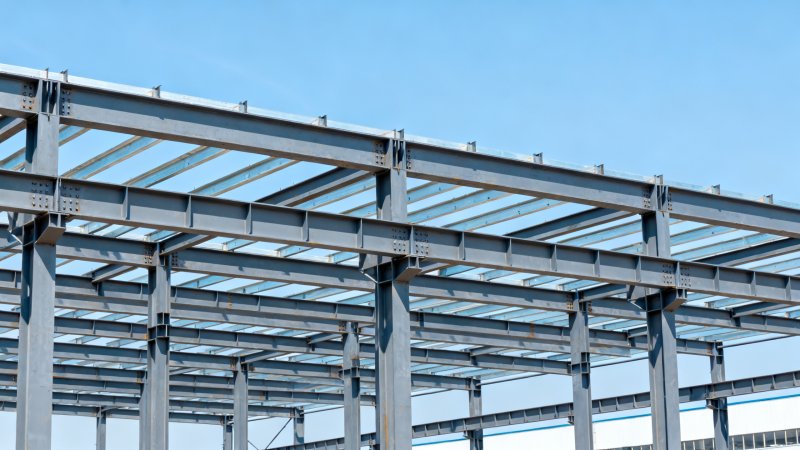
Hot Rolled I Beams are extremely versatile, suitable for a wide range of structural solutions. In large warehouses and logistics centers, they serve as primary roof girders capable of spanning 15 m without auxiliary support. For multi-story buildings, they are commonly used as composite beams combined with reinforced concrete slabs to achieve floor systems with L/360 deflection limits.
In marine and offshore engineering, corrosion-proof I Beams with galvanized or epoxy coatings can handle salt spray exposure exceeding 720 hours under ASTM B117 tests. Meanwhile, in heavy industrial setups—where dynamic loads may reach 50 kN/m²—hot rolled I Beams ensure stable mechanical performance even under cyclic fatigue tests of 2×10⁶ load repetitions.
Hongteng Fengda also supports customized steel solutions, integrating advanced profiles such as angle steel, channel steel, and cold formed sections. With a production lead time of 10–25 days depending on specification, engineers and project managers gain scheduling predictability essential for large-scale procurement planning.
Key Design Adaptability Factors
- High strength-to-weight ratio enabling longer spans and reduced intermediate supports.
- Compatibility with welding, bolting, or riveting techniques commonly used in modular assembly.
- Available in multiple standardized dimensions ranging from 100×50 mm to 900×300 mm flange sizes.
- Ideal for seismic zones with lateral load control requirements up to 10% of vertical loads.
Such adaptability reduces installation time by 15–20% in comparison with cast-in-situ concrete systems. The integrated use of pre-rolled beams and accessories like the HRB600 Rebar allows construction teams to achieve a balanced structure combining tensile and compressive strengths efficiently.
4. Procurement Considerations and Quality Assurance
For procurement professionals and project managers, evaluating Hot Rolled I Beams involves more than price comparison. Key factors include dimensional tolerance, steel grade, weldability, and supply reliability. Hongteng Fengda’s capability to export in compliance with ASTM, EN, JIS, and GB standards assures buyers that all technical parameters align with international requirements.
The company’s logistics network supports full-container deliveries to North America, Europe, the Middle East, and Southeast Asia within 3–5 weeks, depending on order volume. Each shipment includes mill test certificates and third-party inspection options according to BS EN 10204 Type 3.1 standards.
Procurement cycles can be optimized through framework agreements or OEM customization. Buyers looking for long-term partnerships benefit from stable monthly production exceeding 20,000 tons and flexible payment terms, which improve cash flow predictability during multi-year infrastructure contracts.
Procurement Checklist for Structural Steel Buyers
- Confirm compliance with ASTM A36 or EN 10025-2 S355JR.
- Check ultrasonic and dimensional inspection reports for each batch.
- Request coating certificates if applying corrosion-resistant surfaces.
- Assess supplier’s capacity utilization rate (ideally ≤ 85%) to ensure stable delivery.
- Review packaging and shipping methods to minimize transport deformation risk (tolerance ≤ 2 mm).
5. Industry Trends and Sustainable Development
The demand for high-performance structural steel continues to grow by 4–6% annually in global markets driven by infrastructure initiatives. The industry trend favors higher-grade materials like Q355B and Q420B, as well as lifecycle-oriented design where embodied carbon reduction is a decision factor.
Hot rolled I Beams align with sustainability efforts through their recyclability—steel components can be reused or remelted with >95% material recovery. Hongteng Fengda employs energy-efficient reheating furnaces that reduce CO₂ emission intensity by approximately 18% compared to older coal-fired setups.
Digital traceability through QR-coded beam tagging now enables end-users to track production batches, heat numbers, and mechanical test results instantly. This improves quality management and simplifies certification during international trade inspections.
Future Outlook
In the next 5–10 years, the integration of AI-driven process control and predictive maintenance could reduce production variability to under 1%, ensuring even more consistent structural steel offerings. Combined with client-tailored services like 3D Model Cutting and pre-assembly inspection, manufacturers such as Hongteng Fengda are well-positioned to deliver value-based solutions worldwide.
Conclusion and Contact
Hot Rolled I Beams remain an indispensable component in large steel frameworks thanks to their superior mechanical performance, cost efficiency, and design versatility. Supported by advanced production systems, Hongteng Fengda continues to supply global builders with standardized and customized structural steel that meets ASTM, EN, JIS, and GB requirements.
Whether your project involves new factory construction, bridge rehabilitation, or modular building systems, partnering with a professional structural steel manufacturer ensures predictable outcomes in both performance and delivery. Explore comprehensive products like Hot Rolled I Beams and high-strength reinforcements such as HRB600 Rebar to enhance project reliability and lifecycle sustainability.
Contact Hongteng Fengda today to obtain tailored solutions, technical consultation, or quotation support for your upcoming infrastructure developments.
- channel steel
- h beams
- h beam
- angle steel
- Z150 steel sheet
- Hot Rolled I Beam
- structural steel
- C section steel
- ASTM steel beam
- Structural Steel
- Profile
- Rebar
- S355JR
- Galvanized
- Steel Beam
- steel sheet
- steel bar
- ASTM steel beam for industrial shelving
- C section steel for trailer manufacturing
- Hot Rolled I Beam for structural support
- Z150 steel sheet for military applications
Related recommendations
 What Is a Steel Profile? Common Shapes, Uses, and Selection BasicsProfile selection starts with shape, but performance depends on load, fabrication, and standards. Learn common steel profile types, uses, and smart selection basics.
 Steel Roofing Types Explained: Corrugated, Standing Seam, and Metal ShinglesSteel Roofing guide comparing corrugated panels, standing seam, and metal shingles. Discover costs, durability, weather performance, and how to choose the best roof for your home.
 How Hot-Dip Galvanized Coating Thickness Affects Service LifeHot-dip galvanized coating thickness directly affects steel service life. Learn how the right zinc layer improves corrosion protection, controls cost, and supports smarter project decisions.
 Pipe Stainless Grades Explained: 304 vs 316 for Corrosion ResistancePipe stainless grades explained: compare 304 vs 316 for corrosion resistance, cost, and service life. Learn which stainless pipe grade fits marine, chemical, and water system applications.
Please give us a message


Please enter what you want to find