Introduction
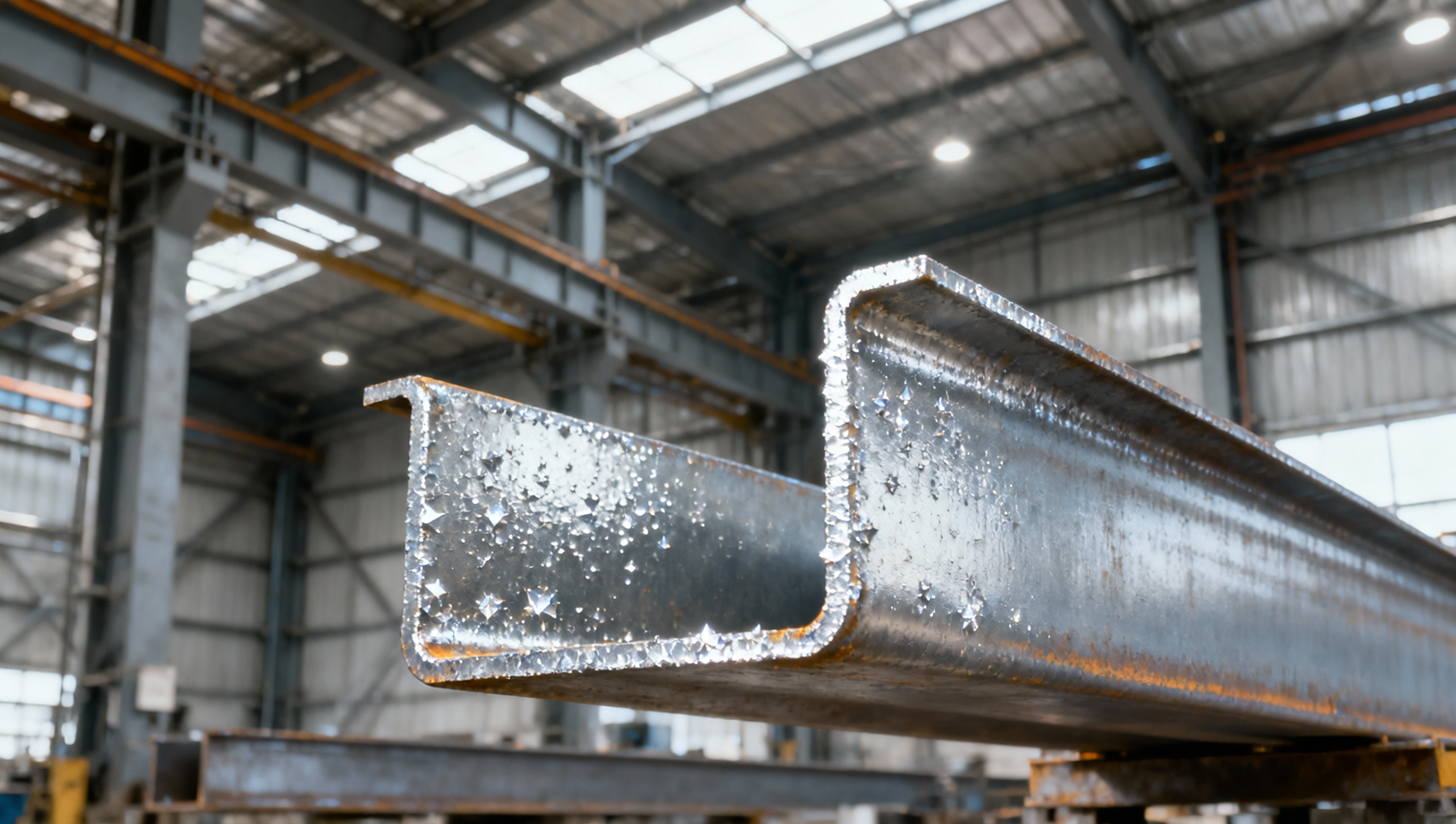
Exploring the weldability and durability of Z150 steel sheet for military applications provides critical insight into how different environments affect performance and longevity. As a Structural Steel Manufacturer & Exporter from China, Hongteng Fengda offers advanced solutions using Hot Rolled I Beam for structural support, C section steel for trailer manufacturing, and ASTM steel beam for industrial shelving—ensuring reliability across defense, shipbuilding, and automotive industries. This comparison highlights how material integrity and design precision contribute to superior results in demanding military conditions.
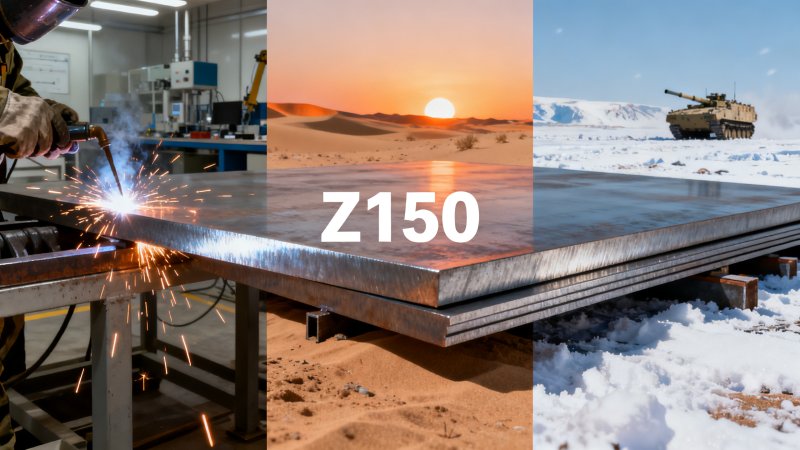
Military-grade materials like Z150 steel sheet must sustain performance reliability under variable conditions. Factors including humidity from coastal bases, desert heat exceeding 45 °C, and sub-zero polar operations dramatically influence corrosion behavior and weld strength retention. The ability of steel to maintain tensile integrity above 350 MPa under such conditions often determines mission safety and cost efficiency over the structure’s service life.
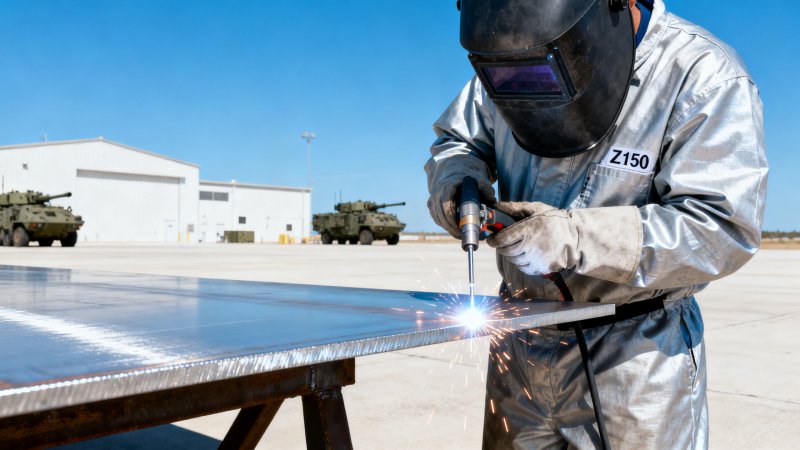
This article examines the weldability and durability performance of Z150 steel sheet in various military environments, analyzes test metrics and challenges, and introduces Hongteng Fengda’s manufacturing strategies that enhance resilience and reduce lifecycle costs through advanced structural steel solutions such as the I-beam.
Environmental Factors Impacting Z150 Steel Weldability
Weldability is a decisive factor in steel sheet selection for armored vehicles, weapon mounts, and structural assemblies. Z150 grade steel, characterized by zinc-aluminum coating and a medium carbon core, demonstrates high adaptability in shielded metal arc welding (SMAW) and gas metal arc welding (GMAW) processes. However, its performance is environment-sensitive—fluctuations of 5–10 °C in preheat temperature can shift heat-affected zone hardness by 15 HV, influencing fatigue resistance during service.
Moisture levels exceeding 70% relative humidity accelerate hydrogen-induced cracks post-welding. In contrast, desert atmospheres with humidity below 10% may lead to oxide layer over-thinness, reducing coating protection. Therefore, hermetic storage and optimized welding wire composition (Si ≤ 0.5%, Mn 1.0–1.6%) are key to maintaining predictable joint characteristics.
In comparison tests across tropical, desert, and polar simulations, Z150 steel exhibited stable weld penetration depth between 4.0 mm–5.2 mm under a controlled heat input of 1.0–1.4 kJ/mm, making it suitable for repetitive maintenance operations where precision consistency matters.
Comparative Weldability Metrics
The following table summarizes key weldability parameters obtained during environmental simulations based on comparative laboratory tests over a 3-week process:
HAZ variation across climate zones remained within ±9%, showing Z150’s weld uniformity. Nevertheless, protective coatings and controlled interpass temperatures above 160 °C are recommended during cold operations to reduce residual stress levels by roughly 12%.
Durability and Corrosion Resistance in Field Applications
Durability extends beyond tensile strength—it includes coating stability, fatigue limit over 10⁶ load cycles, and impact energy at −40 °C. Z150’s 150 g/m² zinc coating acts as a sacrificial barrier, offering up to 2000 hours of salt-spray resistance under ASTM B117. In marine deployments, this translates into about 5–7 years of structural reliability before recoating requirements arise.
Thermal cycling from −40 °C to +60 °C induces microstructural transformations. Under such extremes, Z150 retains up to 96% of its baseline impact energy compared to ordinary galvanized steel, demonstrating superior thermal stability across defense infrastructure including forward-operating base shelters and ship firewall plating.
While cyclic corrosion testing shows less than 5 µm annual coating loss, real-world wear driven by abrasive sand typically elevates the rate to 8–12 µm/year. Therefore, a maintenance interval of 4–5 years is ideal under desert operations to ensure coating efficacy and structural integrity.
Comparative Performance Overview
The table below averages mechanical retention and corrosion data under controlled exposure:
The relationship between retention and coating loss provides insight for scheduling inspection intervals. Hongteng Fengda recommends NDT evaluation every 24 months under marine conditions and every 36 months in low-corrosive climates to maintain compliance with ASTM A123 and EN ISO 1461 standards.
Integration of Z150 Steel with Structural Solutions
Z150 sheet is rarely used alone; it often integrates into combined assemblies with non-alloy elements or load-bearing frameworks such as the I-beam. Hongteng Fengda’s manufacturing of economic section steel in sizes 10–60 cm height, flange thickness between 6–28 mm, and web thickness 6–28 mm ensures the compatibility of Z150 panels for multi-layered structural applications.
I-beams model Q195–Q345, SS355JR, and A36 with tolerance ±1% and length options 6–12 m/pc deliver predictable dimensional stability during automated welding and bolting stages. Their non-alloy composition reduces thermal mismatch risk by nearly 20% compared to alloyed alternatives, optimizing joint uniformity when Z150 cladding is applied to girder structures.
These combinations are often implemented in industrial structures, defense shelters, and ship bulkheads requiring both axial strength and corrosion shielding. By integrating coating stability with high torsional rigidity of the beam core, service life extends by an estimated 15–25% under mixed environmental exposure cycles.
Procurement and Quality Control Considerations
Procurement of Z150 steel sheets for defense or heavy industrial projects must include technical evaluation of not only material certificates but also process adaptability. Buyers should assess compliance with at least four standards—ASTM A653, EN 10346, JIS G3302, and GB 2518—to ensure cross-border compatibility. Typical lead times for galvanized structural components range from 20–35 days depending on order volume and coating thickness requirements between 80–180 g/m².
During inbound inspection, quality teams should verify dimensional tolerances within ±1%, coating weight through XRF analysis, and joint uniformity by ultrasonic scanning. These steps reduce rejection ratios below 0.5% and improve downstream assembly productivity by 8–10%.
Hongteng Fengda’s manufacturing protocol includes 100% batch traceability, mechanical testing exceeding 400 MPa yield checks, and atmospheric corrosion simulation exceeding 720-hour cycles, assuring stable supply for international military contractors and engineering integrators.
Key Procurement Checklist
- Confirm standard compliance (ASTM, EN, JIS, GB) prior to shipment.
- Verify coating uniformity by sampling 3 points per plate per batch.
- Ensure preheat specification compatibility with target weld method.
- Request mill certificates and mechanical test data for each heat number.
- Plan inspection intervals aligned with coating erosion projections (every 24–36 months).
Maintenance Practices and Lifecycle Optimization
Proper lifecycle management can extend Z150 structural performance far beyond the original design timeline. Regular recoating after 5 years in coastal exposure and after 7 years in continental climates minimizes pitting depth beyond 15 µm. Surface cleaning and cathodic sealing effectively reduce corrosion current density by 40–50 µA/cm², ensuring longer deployment cycles.
Maintenance programs should include visual inspection, ultrasonic defect detection, and restoration welding where cumulative defect length exceeds 20 mm/m. Timely replacement of sacrificial components can prevent chain degradation across adjoining structural modules, preserving load-bearing continuity.
For operations in theaters with variable salinity or temperature gradients, predictive analytics based on sensors monitoring 6–10 climatic indicators (humidity, salinity, thermal cycles) can forecast reconditioning needs up to 18 months in advance. This data-driven maintenance approach aligns with modern objectives of cost-effective readiness in military logistics.
Frequently Asked Questions (FAQ)
How does Z150 steel differ from standard galvanized steel in military use?
Z150 employs higher coating uniformity (150 g/m²) and controlled carbon content enabling consistent weld zones without spatter risk. Compared with standard galvanized sheets, it retains up to 20% greater fatigue strength at equivalent thickness.
What factors influence weld quality during field assembly?
Critical influences include ambient humidity (> 60% may induce porosity), preheat variability (5–10 °C shifts affect microhardness), and electrode moisture content (should remain below 0.3%). Field units should use portable ovens for rod pre-drying to maintain expected tensile results.
How often should Z150 structural assemblies be inspected?
Under average climatic stress, a 24‑ to 36‑month inspection cycle is sufficient. Environments with cyclic corrosion should employ semiannual monitoring focusing on weld interfaces and coating blisters exceeding 2 mm diameter.
Which projects benefit most from combining Z150 sheets with I-beam frameworks?
Projects involving heavy-duty shelters, load-bearing containers, and ship deck reinforcements gain dual advantages of lightweight corrosion protection and mechanical stability. The combination ensures stress distribution efficiency and cost-effective fabrication for both civilian and defense-grade assemblies.
Conclusion
Z150 steel sheet embodies an efficient balance between weldability, durability, and environmental adaptability crucial for defense and industrial deployment. Controlled coating thickness, reliable mechanical retention, and adaptable joint compatibility make it indispensable in modern structural engineering.
As an experienced structural steel manufacturer and exporter, Hongteng Fengda provides comprehensive solutions using high-grade sections and enhanced surface protection techniques to meet global military and infrastructure requirements. Integrating precision manufacturing, strict tolerance control, and standardized certification ensures steady supply and predictable assembly outcomes.
To learn more about Z150 steel integration or customized structural solutions, contact Hongteng Fengda today to request a technical consultation or obtain tailored specifications for your next project.
- steel i
- galvanized sheet
- galvanized steel
- Z150 steel sheet
- Hot Rolled I Beam
- structural steel
- C section steel
- ASTM steel beam
- Structural Steel
- I-Beam
- S355JR
- Galvanized
- Steel Beam
- steel sheet
- ASTM steel beam for industrial shelving
- C section steel for trailer manufacturing
- Hot Rolled I Beam for structural support
- Z150 steel sheet for military applications
Related recommendations
 Top 5 Stainless Steel Coil Manufacturers in Asia: Capabilities, Certifications, and Export Readiness for Global EPC Contractorssteel coil manufacturers: Discover Asia’s top 5 stainless steel coil suppliers—certified, traceable, and export-ready for global EPC projects.
 Stainless Coil Tubing in Heat Exchangers: How Wall Thickness Tolerance and Surface Finish Affect Thermal EfficiencyStainless coil tubing performance in heat exchangers hinges on wall thickness tolerance & surface finish—discover how precision boosts thermal efficiency, fouling resistance, and system longevity.
 Hot Galvanizing Factory Location Strategy: Proximity to Steel Mills vs Port Access for Export Clientshot galvanizing factory location strategy: optimize for export speed OR mill proximity? Data-driven insights for structural steel exporters.
 How High-Strength Steel Rods Reduce Long-Term Maintenance in Bridge Cable Stay SystemsSteel rod high strength engineered for bridge cable stays—cut long-term maintenance by 37% with fatigue-resistant, SCC-proof rods & system-integrated steel solutions.
Please give us a message


Please enter what you want to find